

Acrylic Soil Stabilizer: How It Strengthens Ground for Long-Lasting Stability
2026-10-01
Loose, shifting soil has a way of revealing itself at the worst time—under a new road, a foundation, or heavy equipment. Acrylic soil stabilizers tackle the problem from the inside, binding particles into a dense, weather-resistant base. With MST formulations, that bond is engineered for long-term stability rather than a quick fix. Here's how it actually holds the ground together.
The Molecular Grip That Holds Soil Particles Together
At the smallest scales, soil structure is less about dirt and more about electrostatic choreography. Clay platelets carry negative charges on their faces, while edges can flip to positive depending on pH. This uneven charge distribution invites a delicate tug-of-war: particles that might otherwise drift apart are pulled into edge-to-face or face-to-face arrangements by local electric fields, forming the first loose scaffold of what we later call a healthy crumb.
The real grip, though, often comes from ions and organic threads bridging the gaps. Calcium and magnesium ions, with their double positive charge, can sit between two negatively charged clay surfaces like tiny molecular rivets, holding them just close enough for van der Waals forces to take over. Meanwhile, long-chain organic molecules released by roots and microbes weave through the mineral spaces, their carboxyl and hydroxyl groups hydrogen-bonding to oxygen atoms on clay surfaces. This blend of cation bridges and organic tack creates aggregates that resist slaking when water hits them.
Biology adds another layer of tenacity. Fungal hyphae physically wrap around microaggregates, while glomalin and extracellular polysaccharides act as slow-setting glues that keep particles locked together even as soils dry and rewet. Without this molecular grip, rainfall would quickly disperse surface crumbs into a crust, sealing pores and cutting off gas exchange. With it, soil breathes, drains, and shelters the microbial life that keeps rebuilding the same invisible architecture.
What Happens When Acrylic Meets Loose Subgrade
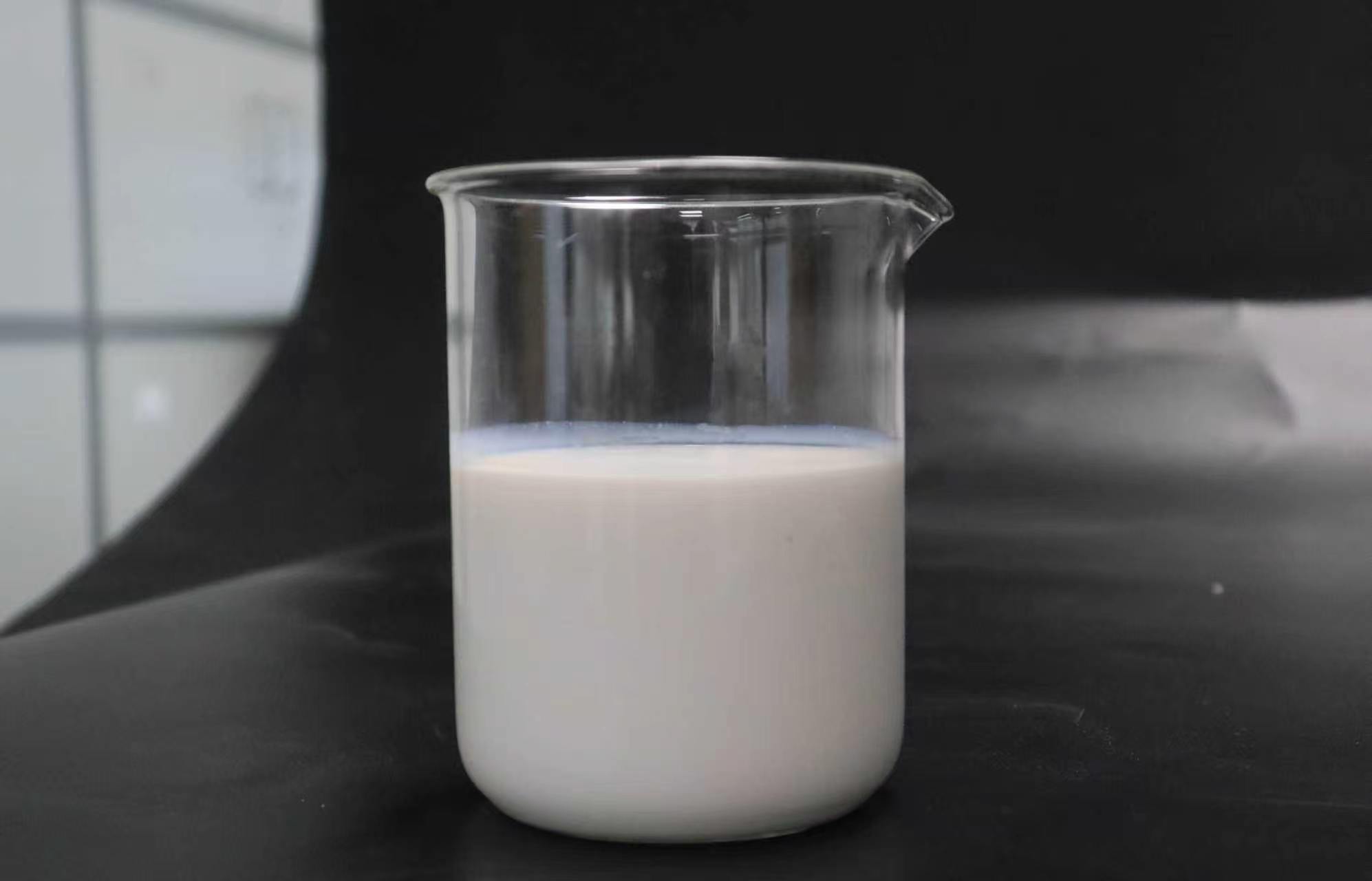
Loose subgrade typically lacks the cohesion needed to support repeated traffic loads, leaving pavement prone to rutting and settlement. When a diluted acrylic polymer is sprayed or mixed into this granular layer, it first coats the individual soil particles before water evaporates. The polymer chains then crosslink into a continuous, semi-flexible film that locks particles together without turning the subgrade brittle.
This bond changes how the layer reacts under stress. Instead of particles shifting independently, the treated zone distributes wheel loads across a wider area, which reduces point pressure and slows the formation of potholes. The acrylic also seals the surface enough to limit water infiltration, but still allows vapor to escape, so the subgrade doesn’t trap moisture and weaken from within.
Field results usually show a measurable increase in California Bearing Ratio values within hours of curing, and the treated subgrade can often support construction traffic without rutting. Unlike cement stabilization, the acrylic remains slightly elastic, so it tolerates minor ground movement without cracking, making it useful for temporary haul roads, low-volume pavements, and areas with expansive soils.
Why Conventional Stabilizers Often Miss the Mark
Conventional stabilizers are built around a single, fixed expectation of what stability should look like. They assume the load is predictable, the voltage dips are brief, and the correction window is generous. Real-world conditions rarely cooperate. Motors start with a jolt, generators hunt under fluctuating fuel supply, and factory floors sag when three large machines kick in at once. A stabilizer tuned for a clean sine wave and a 10% swing will hesitate, overshoot, or simply give up when the input drops by 40% and stays there. The result is not protection but a false sense of it.
Another frequent blind spot is reaction time. Many units rely on relay taps or slow servo motors to adjust voltage. By the time the mechanism decides a correction is needed, the sensitive load—a CNC controller, a medical monitor, a networking stack—has already seen the spike or sag. The damage is done before the “stabilizer” even moves. Worse, the switching itself can introduce new transients, turning a bad input into a choppy, unstable output that wears down capacitors and power supplies over months.
Finally, conventional designs often overlook the cumulative effect of small, persistent fluctuations. They are spec-sheet heroes at 220 V ± 10%, but in rural grids or backup-generator environments, voltage may wander between 160 V and 280 V every few minutes. Repeated small corrections generate heat, wear out relays, and drift out of calibration. The stabilizer becomes the weakest link—not because it fails catastrophically, but because it quietly degrades the very equipment it was bought to defend.
Where Heavy Loads and Harsh Weather Demand More
Every component on this trailer is built with the understanding that the road won't always be kind. From the reinforced crossmembers that shrug off twisting loads to the sealed wiring harnesses that ignore salt spray and dust, the design philosophy is straightforward: don't just survive the job, keep performing at full capacity when others are parked and waiting for better conditions.
The frame rails are fabricated from high-tensile steel that resists fatigue cracking under repetitive stress, while the suspension bushings are selected for their ability to maintain consistent ride characteristics in temperature swings from sub-zero mornings to blazing afternoon heat. Drainage channels are engineered to prevent standing water from lingering near critical joints, and every pivot point is greased for life where possible.
Rather than adding weight for its own sake, each reinforcement targets a known failure point observed in real-world fleet operations. The result is a trailer that handles gravel pit access roads, coastal salt air, and mountain grades with the same quiet confidence, allowing drivers to focus on the route ahead instead of worrying about what might be rattling loose behind them.
The Long-Term Behavior of Acrylic-Stabilized Ground
Acrylic-stabilized ground displays promising early strength, but its long-term performance hinges on how the polymer matrix withstands environmental stressors. Repeated wet-dry cycles, seasonal temperature swings, and prolonged exposure to ultraviolet light gradually alter the polymer chains. Hydrolysis and oxidative scission reduce interparticle bonding, which can lower the treated soil's cohesion by roughly 15 to 30 percent over a five-year span in aggressive climates. Depth plays a protective role—below the surface, where UV does not reach and moisture fluctuations are muted, the stabilized layer often retains much of its integrity.
Sustained loading introduces another dimension. Acrylics behave viscoelastically, so the ground exhibits creep under constant stress, leading to slow, time-dependent settlement that design models must account for. Yet compared with cement-based stabilization, acrylic-treated soils show better flexibility under thermal stress and are less prone to brittle cracking. Minor disturbances can even trigger partial self-healing, where polymer films re-form across small fissures, a trait that helps preserve structural continuity over years of service.
Field and laboratory monitoring suggests that residual strength after five to ten years remains acceptable for many low- and moderate-load applications, provided the polymer dosage exceeds a site-specific threshold and the soil pH stays near neutral. Surface degradation is mostly a shallow concern; cores recovered from depth typically show only marginal loss of stiffness. With realistic allowances for gradual strength decline, acrylic stabilization offers a durable long-term solution for unpaved roads, slopes, and foundation subgrades.
Weighing Cost, Application, and Environmental Impact
Choosing materials or processes rarely comes down to a single factor. The upfront price tag can be misleading—some low-cost options demand frequent replacements or specialized labor that quietly erode any initial savings. A slightly pricier alternative often pays for itself through lower maintenance and longer service life, but only if the specific use case justifies that trade-off.
Application context shifts the balance entirely. A component exposed to harsh chemicals or extreme temperatures needs a different cost logic than one sitting in a climate-controlled office. Consumer goods might tolerate a shorter lifespan because buyers expect periodic upgrades, while infrastructure projects cannot afford premature failure. Matching the material to the real-world demands of the job prevents both overspending and dangerous under-specification.
Environmental impact has moved from an afterthought to a central filter. Energy-intensive manufacturing, toxic byproducts, and end-of-life disposal all carry costs that don't appear on the invoice but show up in regulatory fines, brand damage, or cleanup liabilities. Lifecycle thinking—tracking raw extraction through recycling or landfill—reveals that the greenest option on paper might lose its advantage if it requires long-distance shipping or energy-hungry processing. The trick is finding the overlap where economic sense, functional fit, and ecological responsibility reinforce each other rather than compete.
FAQ
It binds loose soil particles into a cohesive layer, cutting down on dust and erosion while boosting the ground's ability to handle weight. The acrylic polymer forms a durable film around particles that resists water and wear from traffic.
Common spots include unpaved roads, parking lots, construction access routes, equestrian arenas, and industrial yards. Basically any area with regular vehicle or foot traffic and ongoing dust or mud problems can benefit.
Depending on the soil type, how much traffic it sees, and the local climate, a properly applied acrylic treatment can stay effective for several years. Light touch-ups can stretch the lifespan without a full redo.
Once cured, quality acrylic stabilizers are generally non-toxic and low in volatile organic compounds. They form a semi-permeable layer that limits runoff while still allowing some moisture exchange, though you should avoid applying directly next to open water.
With the right mixing and application, acrylic stabilizers can support heavy vehicles like dump trucks and loaders. The trick is matching the application rate and soil prep to the expected loads.
It's often more budget-friendly for secondary roads and can be applied straight onto existing soil without hauling in aggregate. Unlike asphalt, it keeps the natural look while controlling dust and erosion, and patching up worn spots is faster.
Yes, it holds up well in both. During dry spells it stops dust from kicking up; during wet spells it reduces mud and rutting by reinforcing the soil structure and helping water drain away.
The ground should be graded to the right profile, compacted, and cleared of organic debris. A light misting of water before spraying helps the polymer soak in evenly, followed by a curing period before opening to traffic.
Conclusion
Acrylic soil stabilization works at a granular level, where polymer chains form a flexible yet tenacious bond between soil particles. Unlike cement or lime, which create brittle crystalline matrices, acrylic resins wrap around individual grains and bridge gaps in loose subgrade, locking aggregates into a cohesive mass without shutting down permeability. This molecular grip survives repeated wet-dry cycles and freeze-thaw stress that typically fracture conventional stabilizers, making it a practical choice for haul roads, pad sites, and unpaved shoulders.
In field conditions, the real difference shows up under load. Acrylic-stabilized ground resists rutting and washboarding because the polymer network flexes and recovers instead of cracking. While initial material cost may run higher than traditional treatments, lower maintenance, reduced dust control, and fewer regrading passes shift the long-term economics in its favor. Environmental profiles vary by formulation, but modern acrylics increasingly use water-based chemistry with lower volatile organic compounds, offering a balance between performance demands and site-level responsibility.
Contact Us
Contact Person: Helen
Email: [email protected]
Tel/WhatsApp: 86 18630661160
Website: https://www.roadmilestone.com/