

Best Mixing Tank Features to Look For Before You Buy
2026-10-05
Choosing a mixing tank based only on capacity or price often leads to poor mixing, hard-to-clean corners, and wasted energy. The features that actually matter—like impeller design, baffle placement, and drainability—decide whether your process runs smoothly or stalls. Before you buy, this guide breaks down what to look for, with a focus on the engineering details that set DYE apart from generic tanks.
Material Choices That Go Beyond Stainless Steel
Stainless steel often feels like the default answer for durable metal parts, but plenty of projects demand something lighter, tougher, or more resistant to specific chemicals. Titanium, for instance, offers a remarkable strength-to-weight ratio and won't corrode in seawater or inside the human body, which is why it shows up in surgical implants and high-end bicycle frames. Aluminum alloys are another practical alternative when cost matters and you don't need extreme hardness—they machine quickly, anodize beautifully, and keep overall weight down.
Beyond metals, engineered ceramics and composites can outperform steel in surprising ways. Zirconia and alumina ceramics are exceptionally hard, wear-resistant, and electrically insulating, making them useful for cutting tools, pump seals, and electronic substrates. Carbon fiber reinforced polymers weigh a fraction of steel yet offer stiffness that rivals many metals, so they appear in racing car components, drones, and prosthetics where every gram counts.
Even high-performance thermoplastics like PEEK or polyamide-imide deserve a look when corrosion resistance, low friction, or high-temperature stability are critical. These materials can replace metal in gears, bushings, and medical devices, often reducing noise and eliminating the need for lubrication. The key is to match the material to the actual working conditions—temperature swings, chemical exposure, impact loads, and lifespan expectations—rather than assuming stainless steel will handle everything.
Agitator Configurations: Matching the Mix to Your Process
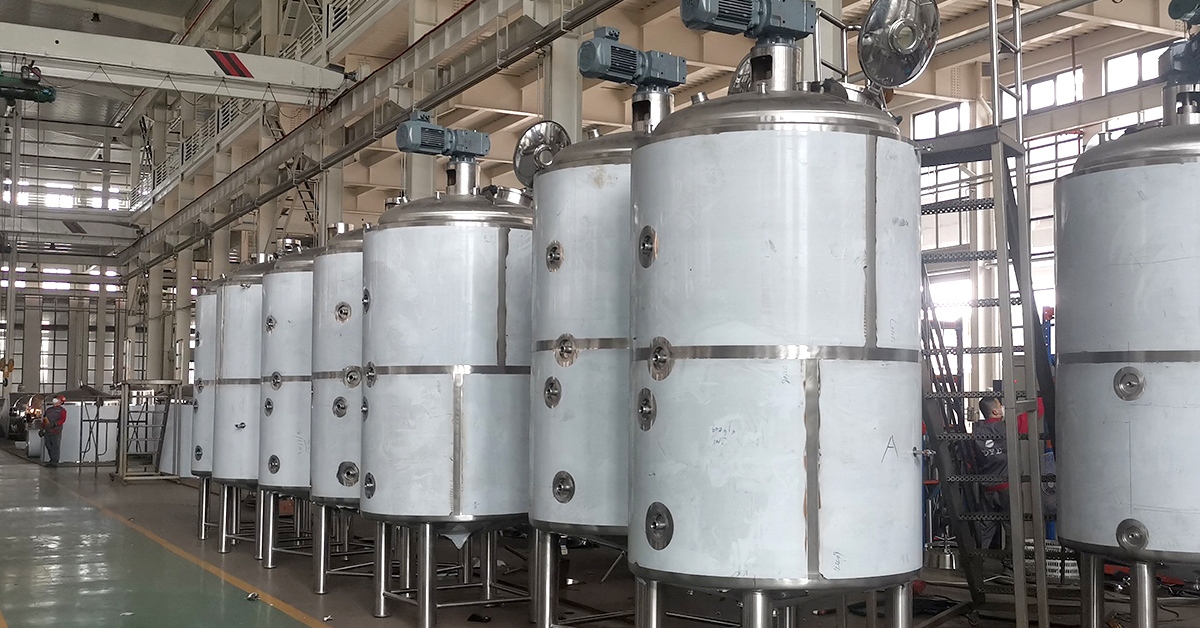
Selecting an agitator configuration goes beyond picking an impeller diameter or motor size. For low-viscosity fluids, axial-flow impellers like marine propellers or pitched-blade turbines generate a top-to-bottom circulation pattern that works well for blending miscible liquids or keeping solids in suspension. But that same setup fails when viscosity climbs. High-viscosity mixes typically demand close-clearance designs such as anchor or helical ribbon impellers, which scrape the vessel wall and promote bulk movement instead of relying on turbulence.
Radial-flow configurations earn their place when the process needs intense local shear. A Rushton turbine or a concave-blade disc turbine throws fluid outward toward the tank wall, creating high-energy zones useful for gas dispersion, emulsification, or breaking down agglomerates. However, shear-sensitive materials like certain fermentation broths or polymer solutions can be damaged by this approach. In those cases, a low-shear axial impeller combined with a sparger ring often delivers sufficient oxygen transfer without shredding cells or degrading long-chain molecules.
The number of impellers, their spacing, and the presence of baffles matter just as much as the blade shape. A single impeller in a tall vessel can leave stagnant regions near the bottom or surface, so multiple impellers are sometimes stacked along the shaft. Spacing them too closely causes interference and wasted power, while too much separation creates independent mixing zones. Baffles suppress vortex formation and improve vertical flow, but they may need to be removed or redesigned when handling highly viscous or fibrous materials. Practical tests with the actual fluid, rather than generic rules of thumb, remain the most reliable way to match the configuration to the process.
Seal Integrity: Why Leaks Happen and How to Prevent Them
Most seal failures trace back to a handful of recurring issues rather than a single catastrophic flaw. Rough shaft surfaces, inadequate lubrication during assembly, and misaligned hardware can all create micro-tears that widen under operating pressure. Even a tiny nick from a poorly chamfered bore will eventually compromise the sealing lip, letting fluid escape long before the scheduled maintenance interval.
Pressure spikes and thermal swings also play a major role. When a system cycles rapidly from cold idle to full load, the elastomer expands and contracts at a different rate than the metal housing. This repeated flexing weakens the material and can cause extrusion into the clearance gap. Without proper backup rings or tighter extrusion gaps, the seal deforms permanently and begins to leak during normal operation.
Prevention starts long before installation. Use the correct durometer and compound for the fluid and temperature range, check shaft finish against the seal manufacturer’s Ra recommendation, and always lubricate the lip with a compatible grease during assembly. After installation, run a low-pressure test to catch early weepage rather than waiting for a field failure. Small changes in gland dimensions and torque sequencing often stop leaks that would otherwise be blamed on the seal itself.
Cleanability: The Feature You'll Regret Ignoring
Few things sting more than realizing too late that a surface you loved at first sight becomes a magnet for grime, stains, and frustration. Cleanability isn't just a spec on a datasheet—it's the difference between daily joy and constant scrubbing. Porous materials may look warm and inviting, but they quietly absorb spills, oils, and odors until the damage is permanent. Think about the high-traffic zones in your home or workplace: every fingerprint, splash, and smudge tells a story that should be wiped away in seconds, not etched into the finish forever.
The real test happens weeks or months after installation, when routine maintenance meets reality. A truly cleanable surface shrugs off coffee rings, grease spatters, and even the occasional marker mishap without demanding harsh chemicals or specialized tools. If you find yourself reaching for a scouring pad or a bottle of bleach just to keep things presentable, that's a red flag you ignored early on. Smart choices here save not only time but also the cost of premature replacement—because once a material starts to hold onto stains, it rarely gets better.
Don't let aesthetics blind you to long-term practicality. The most beautiful countertop, tile, or panel is worthless if it turns into a permanent record of every meal cooked and every drink spilled. Ask the tough questions before you commit: How does it handle red wine, turmeric, or makeup? Does it need sealing, and how often? A surface that cleans up with a damp cloth and mild soap will quietly earn your gratitude every single day, long after the initial wow factor fades.
Temperature Control That Doesn't Fight You
Most thermostats either blast you with sudden heat or leave you shivering while they decide what to do next. This system reads the room the way you do—noticing that your kitchen gets sun-soaked by noon or that the bedroom runs cold after dark—and adjusts so gently you stop noticing it's working. It doesn't yank the temperature around; it eases into the comfort zone and holds it there, like a good driver who never slams the brakes.
Instead of a rigid set point that triggers a wall of warm air, the control learns from your daily rhythm. The first chilly morning of autumn, it remembers you like the house a bit cooler before coffee. On a humid July afternoon, it balances cooling with just enough airflow so the air doesn't feel clammy. There's no fighting the dial, no constant nudging it up or down. You set your preference once, and from then on it quietly negotiates with the weather outside so you never have to think about it again.
What makes this different is that it treats temperature as a feeling, not a number. Two rooms at the same degree can feel worlds apart depending on sunlight, drafts, or even how many people are laughing in the kitchen. By paying attention to those invisible cues, the system delivers what you actually want: the sense of being comfortable without ever having to ask for it. No more thermostat battles. Just a house that seems to know what you need before you do.
Sizing Your Tank for Future Growth, Not Just Today
Many teams pick a tank size based on the most recent production numbers or a single order spike. That often leads to renting extra capacity or, worse, running out of space right when demand climbs. The better move is to look at your actual growth pattern over the past three to five years—not the average, but the trend. If your usage has crept up by 8% annually, a tank that barely covers today's volume will feel tight before the next budget cycle.
There's also the question of how quickly you can add capacity later. A tank that's cheap now but requires a full shutdown to expand might cost more in downtime than a slightly larger model installed upfront. Build in some headroom for seasonal peaks, new product lines, or even a change in raw material suppliers. That extra 15–20% capacity isn't waste; it's insurance against the expensive scramble of retrofitting.
Of course, you don't want to oversize so much that the stored material degrades or the mixing efficiency drops. The sweet spot is a size that matches your projected needs two to three years out, with a clear plan for what triggers the next upgrade. Write down those triggers—whether it's a certain throughput level or a new shift—so the decision doesn't get made in a panic.
FAQ
316 stainless steel is the safe default for most corrosive or sanitary processes. If you're dealing with chlorides or acids, check the specific grade and surface finish — a 2B or mirror polish reduces product adhesion and makes cleaning far less painful.
Buy for your maximum working volume but pay attention to turndown. A tank that's too large for small trial batches will leave the impeller high and dry. Look for a design where the minimum working level still covers the impeller by at least one impeller diameter.
Yes, much more than horsepower. A high-shear sawtooth impeller is great for dispersing powders, while an anchor or helical ribbon works better for viscous pastes. Ask for a mixing study or at least viscosity and shear data before you commit.
Ignoring cleanability. Dead zones behind baffles, threaded fittings, and unpolished welds trap product and ruin batch integrity. Insist on crevice-free designs and a tank that can be fully drained without tilting.
If your process generates heat from mixing or needs temperature control for viscosity, yes. A dimple jacket is not just for heating — it also removes heat from high-speed dispersion. Without it, you may find your product degrading or your motor overloading.
Look for a flush-bottom or diaphragm valve that leaves no dead leg. Ball valves with a cavity trap liquid and are a contamination risk. Also confirm the valve can be serviced without removing the entire tank from the line.
For food, pharma, or cosmetic products, it's critical. A roughness average (Ra) below 0.8 µm is typical for sanitary work. Rougher surfaces hide biofilm and make validation a nightmare. Don't accept a "mirror finish" claim — ask for the actual Ra value and test coupons.
Only if you never need to change speed. Starting at full RPM can splash or aerate the batch, and different products often need different tip speeds. A VFD adds flexibility and protects the motor, easily paying for itself in reduced rework.
Conclusion
When shopping for a mixing tank, most people fixate on capacity and horsepower, but the details that determine daily performance are often less obvious. Material selection is a prime example: stainless steel is the default, but alloys like Hastelloy or duplex stainless can hold up far better against corrosive or abrasive fluids, and even lined carbon steel works if you're not dealing with extreme temperatures. Beyond the shell, the agitator design needs to match your actual mixing goal—axial flow impellers for blending, radial flow for dispersion, and high-shear options for emulsions. Don't just accept whatever impeller comes standard; a slight change in blade angle or diameter can cut mixing time dramatically. Seal integrity is another area where cheap designs fail quietly. Double mechanical seals with a buffer fluid barrier are worth the extra cost if you're handling hazardous or sensitive materials, because a small leak can contaminate a whole batch.
Cleanability tends to get overlooked until someone has to scrub a tank by hand at 2 a.m. Look for surfaces with a consistent finish (typically 32 Ra or better), sloped bottoms, and spray balls that actually reach every corner—otherwise you'll be fighting residue buildup every changeover. Temperature control should not be an afterthought either. A dimple jacket or half-pipe coil can heat or cool far more evenly than a simple external wrap, and pairing it with an insulated shell prevents condensation and energy waste. Finally, size the tank for future growth, not just today's largest batch. Leaving 20–30% headspace and planning for additional nozzles or a larger agitator mount now will save you from buying another tank in two years. These features rarely make the spec sheet headline, but they are exactly what separate a tank you tolerate from one you actually enjoy running.
Contact Us
Contact Person: Ada Xu
Email: [email protected]
Tel/WhatsApp: 0577-86806088
Website: https://www.dayuwz.com/