

Best Non-Rising Stem Gate Valve: A Complete Guide to Choosing the Right One
2026-08-02
When it comes to reliable flow control in pipelines, the non-rising stem gate valve often operates behind the scenes, yet its performance can make or break a system’s efficiency. Whether you’re dealing with limited installation space or demanding environments, picking the right valve isn’t just about specs—it’s about long-term dependability. That’s where expertise matters. At DRIFCO, we’ve seen how the smallest design details, from stem protection to wedge alignment, separate a good valve from a great one. This guide unpacks what you need to know before making a purchase, so you can avoid common pitfalls and invest in a solution that truly fits your application.
How a Non-Rising Stem Valve Works (And Why You Might Need It)
At its core, a non-rising stem valve uses a threaded mechanism where the stem stays put while the disc or gate moves up and down. When you turn the handwheel, the stem rotates but doesn't travel vertically—instead, the gate travels along the threads. This keeps the overall height of the valve constant, which is a clever solution for tight spaces.
You might need one if vertical clearance is an issue. Think of underground pipelines or cramped mechanical rooms where there’s no room for a long stem to poke out. They also keep the threads out of the flow path, reducing the chance of debris jamming things up. For applications where the valve is often buried or insulated, this design really shines.
While rising stem valves give you a visual cue of open/closed position, non-rising ones are more about practicality. They pair well with gate valves and are common in waterworks, oil, and gas systems. If you’ve ever struggled to fit a valve under a low shelf, you’ll appreciate why this configuration exists.
The Hidden Strengths of This Gate Valve Design
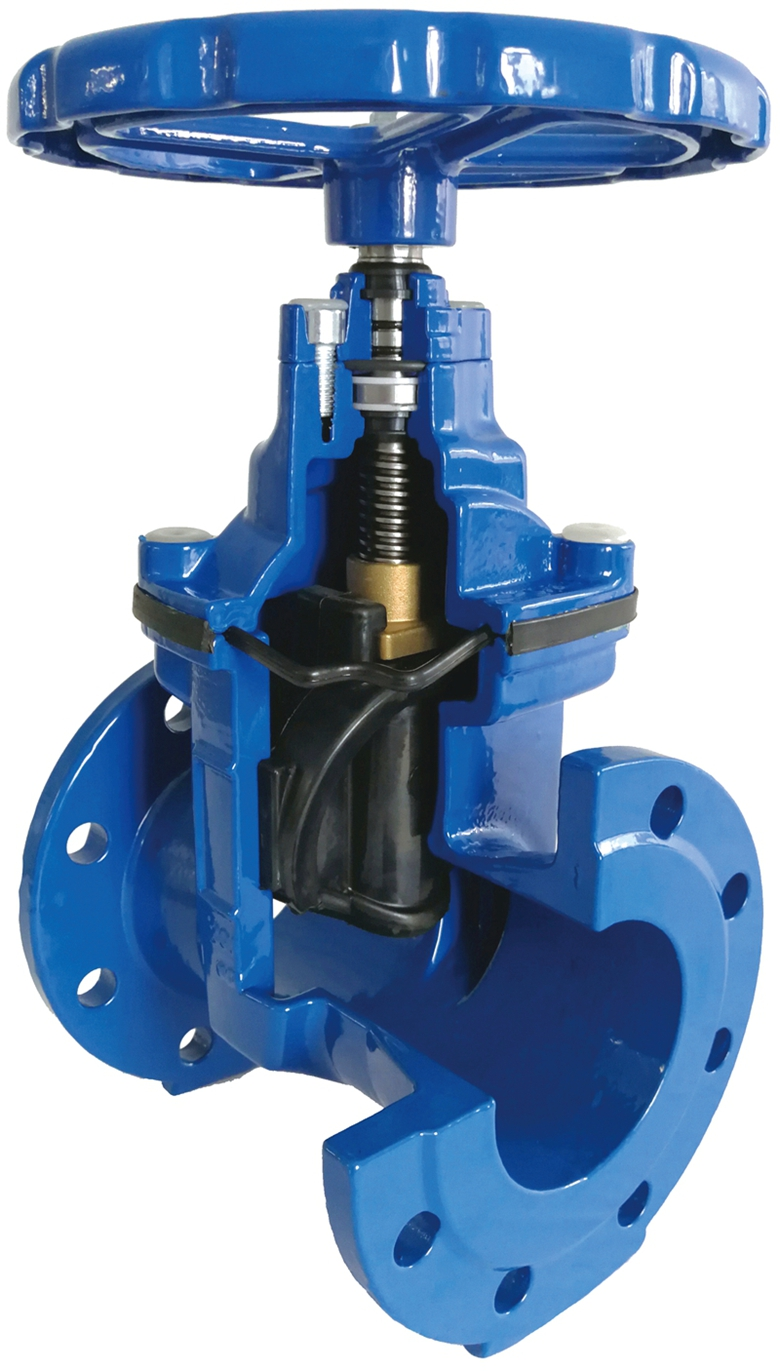
What makes this gate valve design surprisingly effective isn't just the heavy-duty construction—it's the way the wedge guides distribute stress during sealing, preventing the common problem of seat distortion that shortens service life.
Another unspoken advantage lies in the backseat bushing arrangement, which eliminates stem leakage even under full-open conditions, a subtle detail that maintenance teams come to appreciate after years of cycling.
Perhaps the most overlooked feature is the streamlined body cavity that reduces velocity-induced wear, extending the valve's reliability far beyond what catalog specs would suggest.
Key Factors You Don’t Want to Overlook When Selecting a Valve
Material compatibility is often the silent dealbreaker in valve selection—what works perfectly with one fluid can corrode or contaminate another within weeks. Beyond the obvious pressure and temperature ratings, the specific chemical makeup of your media, including trace impurities, deserves a hard look. A valve body that holds up fine in a lab test might fail aggressively in your actual process environment because of unexpected reactions with gasket materials or seal elastomers. This is where real-world service history trumps datasheet promises, so lean on case studies and field reports to spot pain points before they become shutdown emergencies.
Another dimension that rarely gets the attention it deserves is the actuation and control compatibility, not just in terms of voltage or air supply, but in how the valve behaves during partial-open conditions or emergency fail-safe scenarios. Many teams fixate on Cv values at full stroke, yet the true character of flow modulation lives in the first 20% and last 30% of stem travel. Pairing a linear characteristic valve with a system that demands equal percentage flow control can introduce hunting and instability that no PID tuning can fully tame. Also, overlooking the dynamic torque requirements under actual process pressure can leave you with an actuator that stalls when you need it most, turning a maintenance afterthought into a constant operational nuisance.
Maintenance accessibility tends to slip down the priority list when focused on initial cost, but the placement in the pipe rack can dramatically shift the total cost of ownership. A globe valve might seem bulletproof on paper, yet if its internals require a crane lift and four hours of blind removal to inspect, what was gained in robustness is lost in schedule blowouts. Conversely, a well-chosen quarter-turn valve with live-loaded packing and a top-entry design can turn a once-a-year nightmare into a same-shift routine. Smart plants are now factoring in the ergonomics of valve position indicators and lockout points as these directly influence how swiftly and safely crews can respond during upsets, turning a passive component into an active part of operational reliability.
Where These Valves Truly Excel in Real-World Applications
In settings where a slight leak can shut down an entire line, these valves simply refuse to budge. They take on aggressive chemicals, superheated steam, and particulate-laden fluids without the seat erosion that plagues standard models. Operators learn quickly that once installed, the worrying stops.
Where they truly pull ahead is in precise modulation. Crack one open just a few degrees and you get a steady, repeatable trickle—no stiction, no sudden surges. That kind of predictable behavior is invaluable in dosing, blending, and any process where consistency is king.
It’s the maintenance calendar that tells the real story. With fewer seal replacements and no persistent leakage routines, shutdowns become planned events rather than emergency calls. Over a year, that reliability quietly returns its cost in saved labor and material.
Practical Insights for Installing and Caring for Your Valve
Getting a valve to seat perfectly often comes down to the small steps we overlook. Start by cleaning both the pipe threads and the valve inlet with a wire brush—debris here is a silent culprit behind many slow leaks. When applying thread sealant, stick to the male threads only and leave the first two threads bare to prevent excess compound from sneaking into the flow path. Hand-tighten until snug, then use a wrench for just a quarter to half turn more; forcing it further can crack the body or warp the seat, especially on brass valves.
Once the valve is in place, routine care is more about observation than action. Every few months, cycle the valve fully open and closed a handful of times—this keeps the stem from seizing and sheds light on any developing stiffness before it becomes a problem. If you spot a weep from the packing nut, a slight clockwise snug usually stops it, but back off if resistance spikes, as overtightening here makes future operation a chore. In colder climates, a simple insulation wrap on outdoor valves wards off freeze damage, and it’s a lot cheaper than replacing a split body come spring.
What the Future Holds for Non-Rising Stem Gate Valve Technology
The evolution of non-rising stem gate valve technology is taking a sharper turn toward smarter materials and integrated sensing. Manufacturers are experimenting with advanced composites and duplex alloys that resist corrosion and wear far better than traditional cast iron or stainless steel. These new materials let valves operate reliably in aggressive chemical environments and high-pressure steam networks without constant maintenance. At the same time, embedded sensors are moving from novelty to near-standard, tracking stem torque, position, and temperature in real time. This data feeds into facility management systems, enabling predictive maintenance cycles that slash downtime and extend asset life.
Automation is reshaping how these valves are actuated and monitored in the field. Electric actuators with onboard diagnostics are replacing bulky pneumatic setups, giving operators finer control and instant feedback. The push toward Industry 4.0 means non-rising stem designs will increasingly communicate over wireless IIoT protocols, linking directly to central control rooms. This connectivity supports remote operation and rapid emergency response without a technician on site. As a result, the reliable, space-saving nature of these valves makes them a natural fit for modular process systems and compact plant layouts that demand both performance and accessibility.
Looking further ahead, additive manufacturing will unlock geometries that were once impossible to machine. Internal flow paths can be optimized to reduce turbulence and cavitation damage, directly extending valve life. Self-lubricating stem coatings and seal designs that adapt to pressure changes are also on the horizon, slashing routine maintenance requirements. Sustainable manufacturing practices are gaining traction, too, with a growing focus on reclaiming and recycling valve components rather than replacing entire units. Together, these advances signal a future where non-rising stem gate valves are not just hidden infrastructure, but intelligent, durable assets that quietly anchor critical fluid systems worldwide.
FAQ
A non-rising stem gate valve keeps its stem stationary while turning; the gate moves up and down internally on the stem threads. Unlike rising stem models, the handwheel position doesn't change, making it ideal for tight spaces where vertical clearance is limited.
They shine in underground installations, vaults, and areas with low headroom—think municipal water lines, irrigation systems, and shipboard piping. Their compact design also suits manifolds and spaces where a protruding stem could be dangerous or obstructive.
Start with your pipe diameter—valves should match it exactly or follow your ANSI pipe schedule. Pressure rating depends on your system's maximum operating pressure and temperature; always select a class (like 150, 300) that exceeds both by a safe margin per ASME standards.
For water and mild chemicals, ductile iron with EPDM seals works well. Corrosive or high-temperature fluids often call for stainless steel trim or full stainless construction. Seats can be metal-to-metal for abrasives or resilient for bubble-tight shut-off—match the material to your specific medium and temperature.
Always flush the line before installing to prevent debris from scoring the seats. Use the correct gaskets and torque bolts uniformly. Most importantly, install the valve with the gate partially open—never with the gate fully closed—and avoid over-tightening during mounting to prevent body distortion.
A solid wedge is simple and rigid, great for general isolation but can seize with thermal expansion. Flexible wedges tolerate slight misalignment and thermal cycling better due to their split design, maintaining a tight seal even as pipelines expand or contract—critical in steam or hot oil lines.
Cycle them periodically—at least twice a year—to prevent the gate from sticking. Check packing regularly and adjust or replace if seepage appears. Lubricate stem threads as recommended, and inspect internal parts during scheduled shutdowns for wear or corrosion.
If your application involves extreme pressures, frequent operation, or media like slurries, acids, or high-chlorine content, the extra cost pays off quickly in reliability and downtime reduction. Custom body materials or coatings can solve chronic failure issues in harsh environments.
Conclusion
Choosing the best non-rising stem gate valve starts with understanding what makes this design so effective. Unlike rising stem valves that require extra overhead clearance, the non-rising stem threads directly into the gate, keeping the stem stationary while the gate moves up and down. This compact construction is a lifesaver in tight spaces like underground vaults, shipboard systems, or cramped industrial piping. Beyond space savings, these valves naturally isolate the stem threads from the flow media, reducing corrosion and wear in dirty or harsh fluids. That hidden strength extends valve life and cuts maintenance down the line. But not all valves are equal: material compatibility with your specific media, pressure class, and end connections must be scrutinized. A misstep here can lead to premature failure, so it pays to match the valve's internals—often brass, bronze, ductile iron, or stainless steel—to the precise demands of your application.
These gate valves truly shine in applications demanding full, unobstructed flow with minimal pressure drop, such as water distribution, wastewater treatment, oil and gas transfer lines, and fire protection systems. Their ability to provide a tight shutoff makes them indispensable where isolation is critical. When installing, ensure proper alignment to avoid excessive torque and stem damage; the threads bear the thrust load, so never force a hard-to-turn valve without checking for debris or misalignment. Routine care—occasional cycling, lubrication of the stem threads if accessible, and seal inspections—can dramatically prolong service life. Looking ahead, manufacturers are refining seat materials and coatings to handle more aggressive chemicals and higher temperatures, while smart monitoring features are beginning to appear, allowing operators to track valve position remotely. In a market crowded with options, the right non-rising stem gate valve combines smart material selection, thoughtful installation, and a clear-eyed view of your operating environment.
Contact Us
Contact Person: George
Email: [email protected]
Tel/WhatsApp: 13863633883
Website: https://www.es-fire.com