

Best Polyurethane Production Line for High-Performance Manufacturing
2026-09-15
When every second on the production line counts, the quality of your polyurethane machinery decides whether you lead or lag behind. At YI ZHOU TECHNOLOGY, we don't just build equipment—we engineer high-performance manufacturing solutions that keep your output consistent, your waste low, and your edge sharp. Curious what separates a good line from a great one? Let's break it down.
Why Servo-Driven Metering Outperforms Gear Pumps on High-Viscosity Polyols
Gear pumps struggle with high-viscosity polyols because their output depends heavily on clearances between rotating teeth and the housing. As viscosity climbs, internal slip increases, so the pump must spin faster or build more backpressure to hit a target flow. That extra strain heats the fluid, accelerates wear on the gear faces, and still leaves you with a flow rate that drifts as temperature or batch viscosity changes. Servo-driven metering sidesteps this by using a positive-displacement element—usually a precision piston or a progressive cavity screw—coupled directly to a servo motor. The motor's encoder measures actual position thousands of times per revolution, and the drive adjusts current on the fly to maintain the exact stroke volume commanded. No reliance on pressure differentials means the delivered volume stays consistent whether the polyol is 20,000 or 200,000 centipoise.
Another weak point of gear pumps is shear. Polyols with long-chain polyether backbones or reactive end groups are sensitive to mechanical stress. The meshing gears create localized high-shear zones, which can break polymer chains or generate enough frictional heat to trigger premature crosslinking in moisture-sensitive formulations. Servo metering units, especially those with slow-rotating screw elements or piston chambers, produce laminar flow with shear rates easily an order of magnitude lower. You can push the same material through at 2 rpm instead of 200 rpm, preserving molecular weight distribution and reducing the risk of gel particles in the final polyurethane part. This becomes critical when dispensing into molds with narrow gates or when the polyol is blended with abrasive fillers like calcium carbonate or fiberglass.
The real advantage shows up in recipe flexibility and process control. A servo-driven meter doesn't require swapping gears or adjusting bypass valves to change output—you simply send a new position or velocity setpoint from the PLC. If the upstream supply pressure fluctuates because a drum empties or a feed pump surges, the servo loop compensates within milliseconds, holding the metered volume steady. With gear pumps, you'd typically need a separate flow meter downstream and a PID loop fighting the pump's natural non-linear response. Servo systems also use less energy at low flow rates because the motor only draws current when it moves; a gear pump runs at constant speed and wastes energy churning viscous fluid through a recirculation line. For operations running multiple polyol grades or frequent color changes, that translates to faster changeovers and less flushing solvent, since the metering chamber is sealed and can be fully retracted for cleaning without disassembling gears.
How Modular Carousel Stations Avoid Production Bottlenecks During Demolding
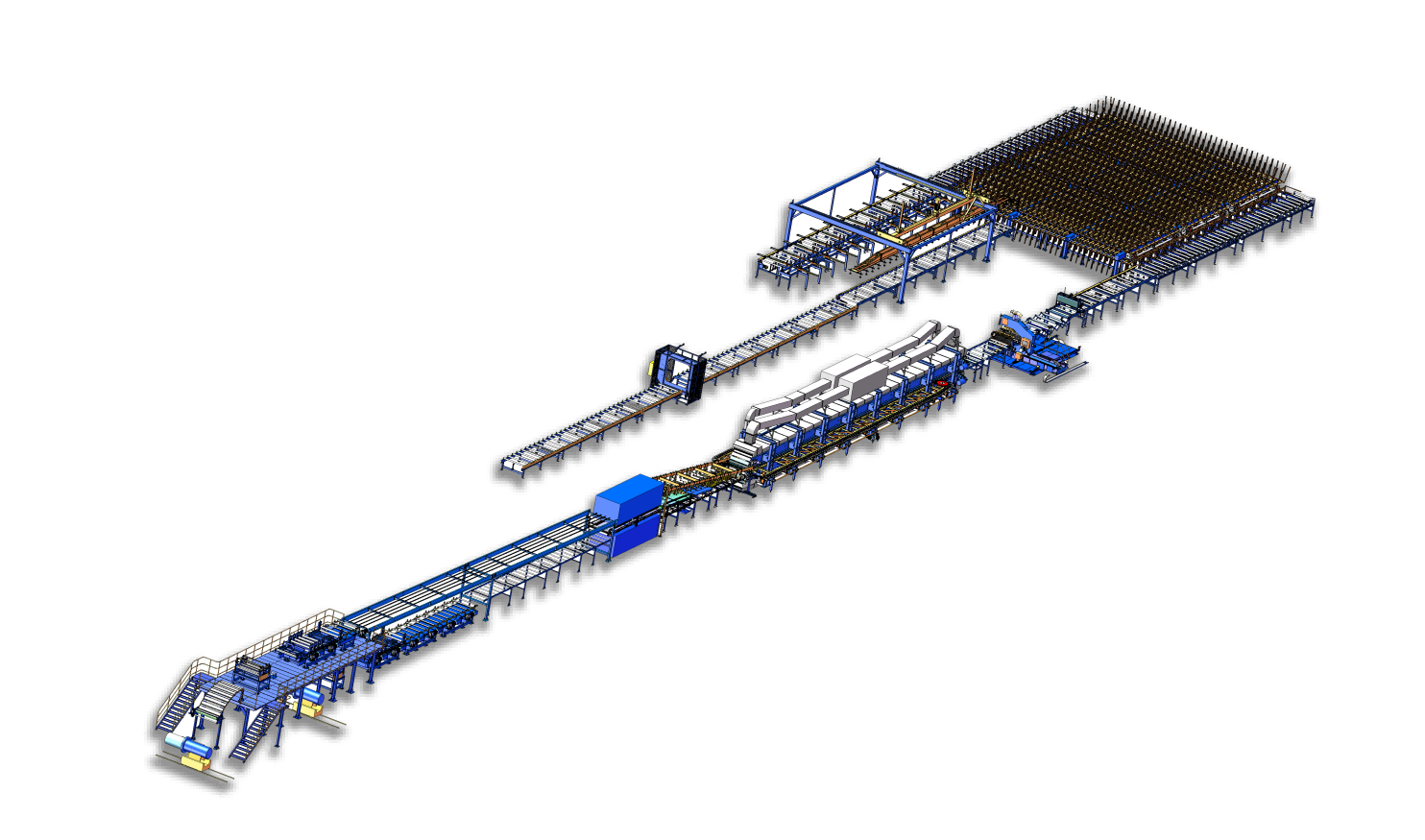
Traditional demolding often relies on a single station where the mold opens and the part is ejected before the next cycle can begin. If the part sticks or requires extra force, the entire production line waits. Modular carousel stations break this dependency by rotating multiple mold sets through dedicated demolding positions. While one mold is being opened and stripped, another is already receiving the next shot, and a third is cooling. Demolding time stops being a critical path because the carousel index overlaps it with other operations, preventing a slow ejection from dragging down the overall cadence.
The real advantage comes from the modular tooling on each station. Instead of a universal ejector that must handle every product shape, each carousel position can carry a custom demolding fixture tailored to the part geometry. When a new mold enters the station, the fixture is already aligned for that specific part, so there is no time lost adjusting pins or swapping components mid-run. If a particular product tends to hang up in the mold, the station can be configured with extra stripper plates or air poppets without affecting the neighboring positions. This localized flexibility keeps the demolding step fast and consistent, so downstream assembly or packaging never starves for parts.
Balancing Exotherm and Oven Temperature for Thick-Wall Castings
Thick-wall castings rarely heat evenly. The outer shell absorbs oven heat quickly, while the core lags behind—then the exothermic reaction kicks in and can spike internal temperatures by 40°C or more. Operators who chase a single oven setpoint often end up with surface degradation on the outside and undercured resin on the inside. The trick is to think of the casting as two thermal zones moving at different speeds, and to adjust the oven ramp so the exotherm peak lands just as the core reaches its target, not after it has already blown past it.
A practical approach is to lower the initial oven temperature by 15–25°C below the usual thin-wall profile, then hold for an extended soak before ramping up. This gives the core time to absorb heat without forcing the surface to over-react. Data loggers placed at mid-wall depth show that when the oven is staged this way, the exotherm peak aligns within 5–10 minutes of the core reaching cure temperature—close enough to avoid thermal runaway, yet still fast enough to keep cycle times reasonable. Some foundries also pulse the oven burners during the final third of the cycle, letting internal heat dissipate evenly rather than building up near the gate.
Another lever is to manipulate the exotherm itself. Using a resin system with a slightly delayed catalyst can push the exotherm peak later, which pairs well with a slower oven ramp. Or, if the oven is the bottleneck, switching to a lower-exotherm binder but increasing the peak oven temperature by 10–15°C for a shorter window can achieve the same core integrity without surface scorching. The key is to treat oven temperature and exotherm as two handles on the same dial—turning both in opposite directions often yields a casting that is uniformly cured from edge to center, with no sand burn-on or internal porosity from trapped volatiles.
The Case for Inline Vacuum Degassing Before the Mixing Head
Dissolved gases and micro-bubbles in polyurethane, epoxy, or silicone feedstocks rarely announce themselves until the part is already cured. When those bubbles pass through a static mixer and into the mold, they leave voids that compromise tensile strength, dielectric integrity, and surface finish. Batch degassing can reduce the problem, but it creates a window for re-absorption while the material sits in open reservoirs or travels through feed lines. That is why placing the vacuum step immediately upstream of the mixing head matters: it removes gas at the last possible moment before the components combine, so there is no time for air or moisture to creep back in.
An inline vacuum degasser operates as a continuous thin-film or packed-column chamber under controlled vacuum, typically between 5 and 50 mbar depending on viscosity and vapor pressure limits. The resin or hardener enters the chamber, spreads over a large surface area, and releases dissolved gases rapidly before being pulled into the metering pump and then the mix head. Unlike a batch tank, this approach keeps the degassing environment sealed and consistent. Viscosity does not shift from prolonged heating under vacuum, and pot life is not consumed while waiting for bubbles to rise. The result is a steadier pressure profile at the mix head, which improves ratio accuracy and reduces the chance of cavitation inside the pump.
For filled systems, such as alumina-loaded epoxies or mineral-filled urethanes, inline degassing before mixing also prevents the mixer from acting as a bubble trap. Entrapped gas in a high-viscosity filler-resin blend can create localized hot spots during mixing, leading to premature cure or color streaks. By stripping gas before the components enter the mixing chamber, you avoid these inconsistencies and get a denser, more uniform cured matrix. This is especially critical in electrical potting and optical bonding, where even a 50-micron void can cause partial discharge or visible distortion. The hardware adds a small footprint, but the reduction in scrap and rework often pays for it within a few production runs.
Cutting Changeover Time With Cartridge-Based Mixing Chambers
Swapping out a mixing chamber on a two-component adhesive system can eat up fifteen minutes or more when you're dealing with threaded fittings, solvent flushes, and the inevitable drips that follow. Cartridge-based designs flip that script by turning the chamber into a disposable, snap-in component. Operators pop out the old cartridge, click in a new one, and the line is ready for the next batch—no tools, no cleanup, no cross-contamination risk between different resin chemistries.
The real time savings show up in high-mix production environments where you might change materials three or four times a shift. Instead of purging the entire fluid path or storing a dedicated chamber for each formulation, you simply swap the cartridge. This approach also reduces the chance of partially cured material lodging in hard-to-reach corners, which is a common culprit behind inconsistent bead quality and unexpected downtime.
Beyond the immediate labor reduction, cartridge-based chambers let you standardize your changeover procedure across different operators and shifts. There's no “knack” to getting it right—if the cartridge clicks, it's seated. That predictability makes it easier to train new technicians and keeps your throughput numbers stable when someone calls in sick or moves to a different line.
Using Shot-Level Data Logging to Trace Defects Back to Process Variables
Shot-level data logging turns every cycle into a searchable record. Instead of relying on operator memory or a scrap bin to tell you something went wrong, the machine stores fill time, peak injection pressure, cushion position, melt temperature, and switchover point for each individual shot. When a batch of parts starts showing sink marks, you can pull the logs from those exact cavities and look for the shift that happened before the defect appeared—often a drop in cushion or a spike in fill time that points back to a worn check ring or inconsistent material feed.
The real value comes from correlating defects with variables that change within a run rather than comparing against a golden setup. A single out-of-spec part might not be enough to act on, but when twenty parts show short shots in cavity three and the logs show a gradual increase in injection time alongside a decrease in transfer pressure, that pattern isolates the cause. It moves troubleshooting away from guesswork about mold temperature or barrel heat and toward a specific process control issue like a partially blocked gate or degrading melt.
To make this work on the floor, the logging system needs to capture not just averages but the full curve and the high-resolution peaks. Some defects leave a signature only visible in the pressure curve shape, not in the summary value. Once those signatures are stored shot by shot, engineers can set tighter alarm limits around the known good window and catch drift before it becomes scrap. Over time, this historical data also helps with preventive maintenance because repeating small deviations often show up weeks before a component fails outright.
FAQ
A truly capable line pairs precision metering with robust mixing and tight thermal control. You need a high-pressure impingement mix head that can maintain stoichiometric ratio within a fraction of a percent, plus heated raw material tanks and temperature-conditioned hoses to keep viscosity stable. Add closed-loop monitoring of flow, pressure, and temperature at every stage, and the line stays consistent even during long runs.
Consistency comes from automating the variables that drift. Servo-driven metering pumps adjust in real time based on feedback from flow meters, while a vacuum degassing system removes dissolved gases before they create voids. Mold temperature control units with multiple zones prevent hot or cold spots, and automatic shot-size correction compensates for viscosity changes as ambient conditions shift.
Look beyond the stated output rate. Focus on the mixing head's laminar-to-turbulent transition capability, the repeatability of the metering system (ideally ±0.5% or better), and whether the control software stores recipe parameters for quick changeover. A line with self-diagnostics and remote troubleshooting saves more downtime than one with extra theoretical throughput.
Yes, but only if the line was designed for it. You need interchangeable mix heads with different chamber geometries, adjustable catalyst and blowing agent injection points, and software that can switch between low-viscosity and high-viscosity processing without mechanical changes. Some lines also offer dual-temperature zones for the raw material tanks so rigid and flexible systems can run back-to-back.
Automation is what turns a good line into a reliable one. Real-time viscosity monitoring allows the PLC to adjust pump speeds before a bad pour happens. Robotic dispensing integrated with conveyor tracking keeps shot placement accurate on moving molds, and data logging gives you a traceable record for every part, which is invaluable when customers demand quality documentation.
It's often underestimated. Efficient lines reclaim heat from the hydraulic system to preheat raw materials, use variable-frequency drives on mixers and conveyors, and insulate all heated components. Over a year of continuous operation, these measures can cut energy costs by 15–25%, which directly improves the line's total cost of ownership.
Daily purging of the mix head with a compatible solvent or plasticizer prevents cured material from blocking the chamber. Weekly checks of filter elements and pressure sensors catch issues before they cause ratio drift. Monthly calibration of flow meters against a gravimetric standard ensures the metering accuracy doesn't silently degrade. Many teams also schedule a full teardown of the mix head every 500 hours.
For high-performance applications, yes. Custom lines can be designed around your specific mold geometry, cycle time, and material chemistry, eliminating compromises in clamp force or pour pattern. The payback often appears within the first year through reduced scrap, faster changeovers, and the ability to run formulations that standard lines simply cannot handle.
Conclusion
The shift toward servo-driven metering on high-viscosity polyols isn't just a minor upgrade—it eliminates the pressure spikes and drift that gear pumps often introduce, giving consistent shot weights even when viscosity shifts with temperature or filler load. For thick-wall castings, the real challenge lies in balancing the exotherm against oven setpoints; too much internal heat causes scorching, while too little leaves soft centers. Pairing that with inline vacuum degassing before the mixing head pulls trapped air and moisture out of the polyol stream, cutting porosity defects that only show up after demolding. When a defect does appear, shot-level data logging turns guesswork into diagnosis, mapping every pour back to actual temperatures, pressures, and ratios rather than relying on operator memory.
Modular carousel stations tackle a bottleneck most lines ignore: demolding time. Instead of stopping the entire line for one part to cure enough to release, the carousel rotates workstations so operators or robots can pull parts while other molds continue filling. This keeps throughput high without rushing the cure. On the material-change side, cartridge-based mixing chambers swap out in minutes, not hours, because the entire wetted path is replaced as a sealed unit—no flushing solvents, no cross-contamination between color or hardness changes. For a high-performance polyurethane line running multiple product grades daily, that kind of changeover speed directly translates into more productive hours and fewer scrapped startup parts.
Contact Us
Contact Person: Sophia Jiang
Email: [email protected]
Tel/WhatsApp: +86 17367381818
Website: https://yzwelding.com/