

Best Vacuum Casting Services Solutions for Rapid, High-Quality Prototypes
2026-06-11
Bringing a new product idea to life can feel like an endless wait—until you discover a smarter path. At ProtoMat, we’ve redefined vacuum casting to deliver prototypes that don’t just match your design intent, but do so with exceptional speed and finish. Whether you’re refining intricate geometries or testing multiple material options, our process bridges the gap between a rough concept and a production-ready part. In this article, we’ll walk you through how vacuum casting works, why it might be your best bet for low-volume runs, and what sets ProtoMat’s approach apart from the usual prototyping delays and compromises.
How Vacuum Casting Bridges the Gap Between Prototyping and Production
Bringing a new product to life often hits a wall between the initial prototypes and full-scale manufacturing. Prototypes, typically 3D printed or CNC machined, prove the design but lack the material properties and surface finish of final parts. Production tooling, like injection molding, demands steep upfront costs and weeks of waiting—too risky for small batches or design tweaks. Vacuum casting sidesteps this dilemma, offering a practical middle ground where silicone molds and polyurethane resins mimic production-grade parts in days, not months.
The process shines in its ability to faithfully reproduce complex geometries, undercuts, and even overmolded textures without the need for expensive steel tools. By pouring resin under vacuum, air bubbles are pulled away, yielding bubble-free, dimensionally accurate casts that can withstand functional testing. This means teams can validate designs with materials that behave like ABS, polypropylene, or even rubber, uncovering potential flaws before committing to mass production. It’s a iterative safe zone—fast, affordable, and strikingly close to the real thing.
For startups and product developers, vacuum casting bridges the gap not just technically but financially. Small runs of 20-50 units become feasible for market pilots, trade show samples, or pre-production validation. When injection molding is simply too rigid for evolving designs, vacuum casting lets you tweak and re-cast without breaking the bank. It transforms the risky leap from prototype to production into a controlled, confident step forward.
The Unseen Precision Behind High-Fidelity Silicone Molds
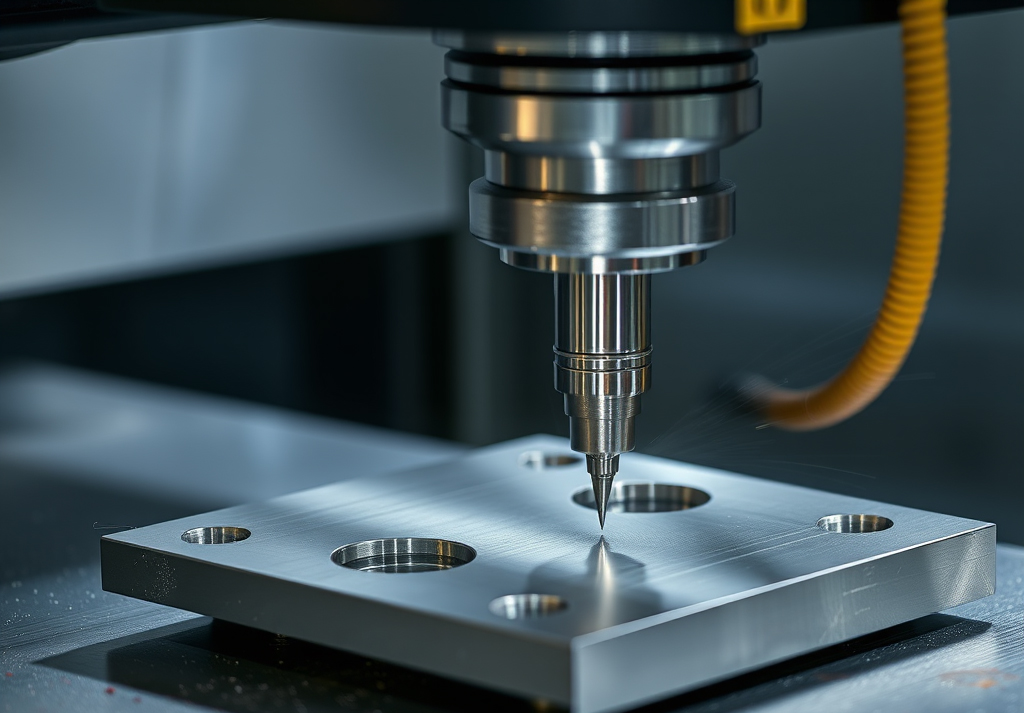
There’s a kind of quiet magic that happens before the silicone ever touches the model. It begins with the surface — a master pattern so meticulously polished that even a stray fiber from a cotton swab becomes a defect worth starting over for. Every microscratch, every subtle grain left behind during the sanding process will faithfully transfer into the final mold, then into every single cast. This is why the best mold makers hold the pattern at oblique angles under harsh light, running a fingertip across surfaces until they feel like wet glass. They’re not just chasing smoothness — they’re eliminating the invisible topography that can haunt high-fidelity reproduction.
Then comes the mix, and this is where precision shifts into a realm that numbers alone can’t capture. Degassing under vacuum pulls trapped air from the liquid silicone, but timing matters more than most realize. Pull too soon and the bubbles cling stubbornly to undercuts; wait too long and the pot life narrows into a frantic scramble. The pour itself is a slow-motion art — a thin, high stream that ribbons into the deepest cavities first, climbing upward with a deliberate, almost meditative patience. Some mold makers warm the mold box slightly, not to accelerate cure speed, but to reduce viscosity just enough to let the silicone creep into details thinner than a strand of hair, coaxing it with vibration or gentle taps that never reach the point of introducing fresh air pockets.
Curing steals the spotlight last, but it’s never just about waiting for the timer to ding. Post-cure cycles — often kept as proprietary wisdom — can dramatically alter the mold’s final properties. A slow ramp in a temperature-controlled oven might unlock superior tear resistance, while a precisely timed moisture-controlled environment can prevent the surface from blooming into that waxy, slightly sticky feel that ruins intricate surface details. The unseen precision is a series of micro-decisions that live between the steps in a standard tutorial, the difference between a mold that simply works and one that disappears into the background of the artwork it helps create.
Why Material Versatility Defines Modern Vacuum Casting
Vacuum casting has long been valued for producing high-quality prototypes and low-volume parts, but its modern identity is inseparable from the sheer range of materials it can replicate. Unlike earlier limitations to a few rigid resins, today’s process accommodates everything from glass-clear polymers to flexible elastomers and heat-resistant grades. This adaptability means a single project can yield components that not only look like production parts but also behave like them under real-world stresses.
The true impact of this versatility emerges in industries where material performance is critical. Medical device developers can cast biocompatible silicones, automotive teams can test parts in high-temperature polyurethanes, and consumer electronics brands can achieve the exact soft-touch or rigid feel their products demand. Rather than settling for generic substitutes, engineers now fine-tune hardness, color, and texture early in the design cycle, closing the gap between concept and market-ready goods.
What ultimately defines modern vacuum casting is the way material choice accelerates innovation. The ability to quickly switch resins without retooling lets teams evaluate multiple design-material combinations in days, not weeks. This freedom doesn’t just streamline validation—it encourages bolder design decisions, knowing that the casting process can faithfully realize almost any envisioned material property.
Speed vs. Quality: Where Vacuum Casting Outshines Traditional Methods
Vacuum casting rewrites the rules of prototyping by collapsing the timeline between concept and physical part. Where traditional injection molding demands weeks of machining steel tools, vacuum casting uses a master model to create a silicone mold in just a few hours. That mold can then churn out precise polyurethane parts within a day—each one capturing fine details and surface textures that often exceed expectations. The speed isn’t just about the calendar, though; it’s about how quickly designers can test, tweak, and retest, transforming what used to be a linear, slow process into a nimble loop of improvement.
On the quality front, vacuum casting has a hidden superpower: the vacuum itself. By pulling air out of the mold cavity before pouring resin, it virtually eliminates bubbles and voids that plague manual mixing. The result is a part with consistent material density, sharp edges, and a surface finish that rivals production-grade components. Engineers can even mimic a range of thermoplastics—from rigid ABS-like to flexible elastomers—with additives and pigments blended seamlessly in. This fidelity isn’t a compromise for speed; it’s baked into the method, making vacuum-cast parts suitable for functional testing, investor demos, and low-volume end-use.
Where vacuum casting truly outshines traditional routes is in the sweet spot between volume and urgency. CNC machining can deliver precision, but at a crawl when geometries get intricate. Injection molding offers speed once the tool is made, but the upfront investment in both time and money only makes sense at scale. Vacuum casting sidesteps that trade-off: it delivers a handful of flawless parts in days, not months, without the black-hole budget. For startups iterating on a wearable design or a manufacturer bridging the gap to mass production, that balance means they don’t have to choose between moving fast and making something that actually works.
From Complex Geometries to Fine Details: The Capabilities Checklist
Modern manufacturing has moved well beyond simple shapes and one-size-fits-all production. The real measure of a process today lies in its ability to handle intricate, sweeping curves, undercuts, and internal channels that would have been impossible a decade ago. Think of a lattice-structured aerospace bracket or a die with conformal cooling passages—these aren’t just parts, they’re a testament to how far we’ve pushed the boundaries of what machinery and materials can do. When evaluating any advanced fabrication method, the first question isn’t “Can it make this?” but rather “How faithfully can it reproduce every subtle nuance of the design intent?”
At the opposite end of the spectrum is the obsession with fine details: the sharpness of a corner radius, the smoothness of a micro-textured surface, or the consistency of a 50-micron wall thickness across a batch of components. These aren’t just cosmetic concerns; they directly influence function, durability, and even how a product feels in a user’s hand. A robust capabilities checklist bridges both worlds—it doesn’t merely list tolerances and feature sizes, it explains what happens when geometry gets ambitious and tolerances tighten simultaneously. For instance, maintaining a ±0.001” profile on an organically curved surface demands a completely different approach than hitting that same number on a flat prismatic wall.
What often separates a capable shop from the rest is the invisible layer of process control that ensures these extremes are met repeatably, not just once on a best-effort prototype. Material behavior under stress, toolpath strategies that balance speed with accuracy, and in-process measurement loops all play a part. The next time you look at a capability matrix, ignore the generic headline numbers and dig into the specifics: How does surface finish change with wall angle? Is there a documented drop-off in feature resolution at the edges of the build volume? Real confidence comes from understanding how a technology scales its precision from grand geometries down to the last, most demanding detail.
Real-World Applications That Demand the Vacuum Casting Advantage
From advanced medical devices to intricate automotive components, vacuum casting repeatedly proves its worth in scenarios where precision and surface quality are non-negotiable. Manufacturers rely on this process to produce prototypes and low-volume parts that closely mimic final production materials, enabling functional testing and design validation without the colossal expense of hard tooling. The ability to replicate complex geometries, undercuts, and fine textures makes it indispensable for enclosures, housings, and consumer electronics that must feel premium from the very first touch.
Beyond prototyping, the technology steps in where injection molding falls short—especially when parts require optical clarity, flame retardancy, or specific shore hardnesses that only polyurethane resins can deliver. Industries like aerospace harness these properties for ducting and interior components, while the medical sector depends on vacuum casting for ergonomic surgical instruments and diagnostic equipment housings. The speed of iteration, often delivering finished parts within days, empowers engineers to compress development cycles and respond nimbly to market feedback.
Perhaps most telling is its role in bridging the gap between 3D printed concepts and mass production. Where additive manufacturing leaves stair-stepping surfaces or limited material choices, vacuum casting fills the void with production-grade finishes and a spectrum of engineering materials. This transitional capability not only shores up confidence ahead of multi-million dollar mold investments but also serves niche markets that demand on-demand, small-batch manufacturing with uncompromising part fidelity.
FAQ
Vacuum casting is a manufacturing technique that uses silicone molds and polyurethane resins to produce small batches of highly detailed parts. It's often used to create functional prototypes that closely mimic final production materials, bridging the gap between one-off 3D prints and full-scale injection molding.
Parts made through vacuum casting typically boast excellent surface finishes, with the ability to replicate intricate textures and fine details directly from the master model. This often surpasses what's achievable with standard 3D printing, delivering a finish that rivals injection-molded components right out of the mold.
Once a master pattern is prepared, silicone molds can be produced in as little as a day, and the actual casting process yields multiple parts per day depending on the resin's curing cycle. Most projects see complete batches of 20–50 parts delivered within one to two weeks.
Absolutely. The flexibility of silicone molds permits features like undercuts and delicate ribs that would normally require complex tooling slides in hard molds. This adaptability makes it a favorite for intricate designs, including living hinges and snap-fit assemblies.
A wide array of polyurethane resins is available, ranging from rigid to flexible, clear to opaque, and even flame-retardant grades. These can be formulated to match the look, feel, and mechanical properties of thermoplastics like ABS, polypropylene, or glass-filled nylon, allowing for realistic functional testing.
For runs under 100 parts, vacuum casting often wins on cost and speed. The tooling expense for a simple injection mold can be prohibitive for small quantities, whereas silicone molds are far cheaper and faster to fabricate, making it ideal for iterative design validation or bridge-to-production needs.
Conclusion
Vacuum casting transforms the leap from design to reality, offering a practical bridge between rough prototypes and full-scale production. It starts with a master pattern—often 3D printed—that captures every intended detail, then creates a high-fidelity silicone mold capable of reproducing those details with remarkable consistency. This isn't just about copying shapes; it's about preserving surface textures, fine engravings, and subtle curves that define a product's feel. The real edge lies in material versatility: by pouring different polyurethanes into the same mold, engineers can emulate everything from rigid ABS to flexible rubber, even matching production-grade color and hardness. This means functional testing doesn't have to wait for injection molding tools, and market feedback can be gathered with samples that genuinely represent the final product.
Speed and precision rarely coexist in manufacturing, but vacuum casting manages both without compromise. A well-run process can turn around a batch of parts in days, not weeks, while holding tolerances that rival CNC machining. Complex geometries—including undercuts, thin walls, and intricate internal channels—come out cleanly thanks to the mold's flexibility and controlled vacuum draws. It's this combination that makes the method indispensable for medical device housings, automotive dashboard components, and consumer electronics enclosures, where aesthetic and functional demands are equally high. Rather than forcing a choice between fast iterations and true-to-life prototypes, the best services deliver a seamless continuum: from a single concept model to a short pre-production run, each part embodies the nuance and durability needed to validate both design and market readiness.
Contact Us
Contact Person: Joe
Email: [email protected]
Tel/WhatsApp: +8613799507208
Website: https://www.3dprotomat.com/