

Bulk Industrial Casters Company Solutions That Keep Your Operations Moving
2026-11-02
Ever had a heavy cart drag to a stop because a caster couldn't handle the load? In bulk industrial settings, that's more than an inconvenience—it's downtime, damaged floors, and lost productivity. CMCL has built its name on casters that keep operations moving under the toughest conditions. This post explores the engineering and choices behind their solutions, and why they might be the upgrade your facility needs.
Casters That Keep Carts Rolling Through Triple Shifts
When a facility runs three shifts a day, every wheel on the floor is a potential point of failure. The carts that carry parts, tools, and product out of the warehouse don't get rest breaks. That's why the casters underneath them are built with a different mindset—not for occasional use, but for a continuous, grinding routine. Hardened raceways, precision ball bearings, and thick steel top plates aren't optional extras; they're the difference between a cart that keeps its line moving at 2 a.m. and one that leaves a worker wrestling a dead axle in the middle of a shift change.
Material choice matters more than most people realize. Polyurethane treads, for instance, shrug off the oil and metal shavings that would chew through softer rubber in a week. Nylon cores handle the impact of loading docks without flattening under the weight. But the real test is heat. After eight hours of constant movement across a concrete floor, a poorly made caster starts to soften, deform, and eventually seize. The ones that survive triple shifts are designed to dissipate that friction, keeping the rolling surface cool and the bearing lubricant where it belongs—even when the ambient temperature in the plant climbs past ninety degrees.
Maintenance teams don't have time to swap casters every month. They look for wheels that can be re-greased in place, with seals that actually keep out debris instead of just looking like they do. Offset kingpins, swivel locks, and double-row ball bearings all contribute to a cart that tracks straight instead of wandering into racking. It's not glamorous engineering, but it's the kind of quiet durability that means a cart can finish its third shift of the day the same way it started the first: rolling smoothly, without a single person having to stop and ask why it stopped.
Custom Plate Sizes Without the Custom Price Tag
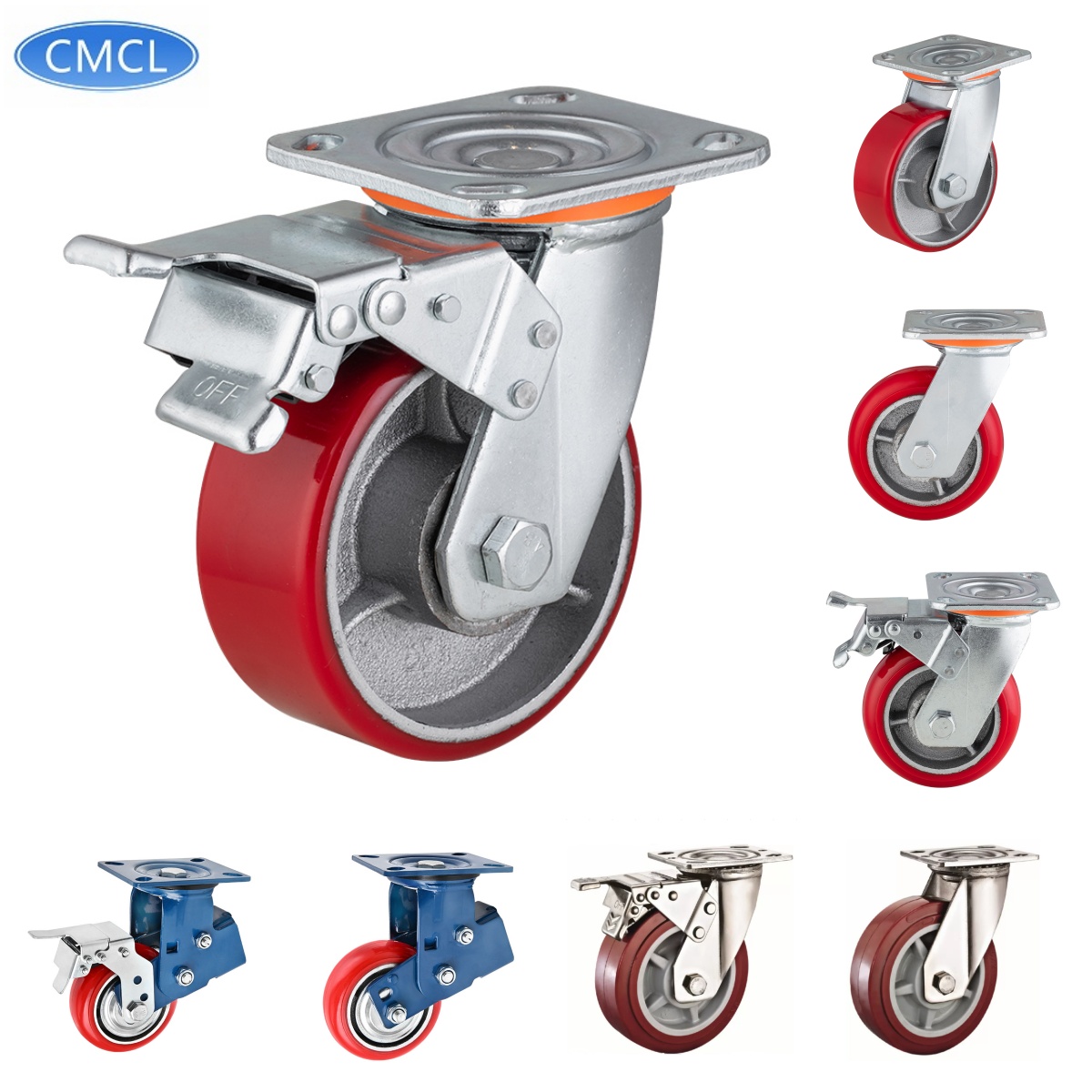
Most places treat a non-standard size as an excuse to add fees. That never made sense to us. You shouldn’t have to pay more just because your project doesn’t fit a preset list. Our process starts with your measurements, not a menu of upcharges, so the price stays the same whether you need something a few millimeters off or a completely different footprint.
The practical upside shows up quickly. You get a plate cut to the exact shape and dimensions your work requires, which means fewer gaps, less trimming, and less wasted material on your end. And because the ordering system doesn’t reset the cost every time a dimension changes, you can experiment with prototypes or small runs without watching the budget climb.
Wheel Compounds That Outlast Concrete Floors
Concrete isn't an inert backdrop; it's a grinding surface with micro-texture and exposed aggregate that steadily erodes softer wheel materials. A compound that simply feels hard on day one can lose its profile within weeks, developing flat spots or a polished, slippery tread. The formulations that last are built on abrasion-resistant polyurethane bases with a carefully tuned rebound—soft enough to absorb shock but firm enough to resist tearing at the tread edge.
Heat and shear matter as much as surface hardness. Rolling over concrete generates friction at the contact patch, and if the compound can't shed that heat, it degrades faster and begins to smear or chunk. Reinforcing fillers and internal lubricants aren't marketing extras; they reduce micro-tearing and let the wheel keep its shape across expansion joints and uneven slabs.
Real longevity shows up only after thousands of cycles on actual floor conditions, not just in a lab abrasion test. A wheel that keeps its original profile, stays grippy on dusty concrete, and avoids chunking will often outlast the floor surface it runs on—which means fewer changeouts and less downtime than bargain alternatives.
No-Flat Options for Debris-Strewn Aisles
Heavy shelving units and fallen cartons turn ordinary aisles into obstacle courses. Where debris piles up around corners, standard pallet jacks and narrow-aisle forklifts often wedge against loose fragments or struggle to pivot without scraping side racks. A practical fix is to equip the team with wide-stance order pickers that have raised chassis clearance. These machines ride over scattered wood splinters and plastic shrink-wrap without losing traction, letting operators weave around unstable stacks instead of waiting for cleanup crews to clear every yard of floor.
Debris-strewn aisles also demand a different approach to wheel and tire selection. Solid polyurethane tires with deep tread grooves handle nails, glass shards, and metal banding far better than standard cushion tires. Adding bolt-on brush guards along the lower chassis prevents loose strapping from tangling around axles or drive motors. Even with these upgrades, supervisors should mark temporary walkways through the litter with floor tape or movable cones, keeping the path wide enough for a loaded cart to pass without brushing against teetering boxes.
Finally, when racks are partially collapsed or products spill into the center aisle, assigning two-person teams works better than sending a single driver into a cramped lane. One person walks ahead to kick aside small obstructions and wave the operator around blind corners, while the driver keeps the forks low and moves at a crawl. This slower pace may cut hourly picks, but it prevents punctured tires, jammed steering, and the costly downtime that comes from extracting a stuck vehicle from a pile of split pallets.
Load-Rated Hardware That Eliminates Guesswork
Load tables printed in a catalog are one thing; having a shackle in your hand with a rating you can trust is another. That trust starts with a simple rule: if it doesn't carry a permanent load rating, it doesn't go on the job. Our hardware is marked with its working load limit, traceable to a heat number and a test report, so nobody has to squint at a generic "heavy duty" label and hope for the best.
The difference comes down to what happens before the part reaches the dock. Each batch is proof-tested and checked against its minimum breaking strength, then derated with a clear safety factor that leaves room for shock loads, angle changes, and the kind of abuse that happens on a real site. That means a 1-ton eyebolt isn't just called "1-ton" because it looks like one; it has been pulled, measured, and verified to handle the number stamped on it.
When there's no guesswork, planning moves faster and the margin for error gets narrower. Rigging crews can size a lift from a chart instead of a hunch. Anchors go in with the right capacity from the first hole. And when a gust of wind or a sudden shift adds load unexpectedly, the rating on the hardware is backed up by test data, not by someone's optimistic estimate.
Simple Upgrades That Turn Stuck Carts into Movers
A cart usually stalls for reasons that have little to do with the product. Extra steps, surprise costs, or a forced account signup can quietly push people to close the tab. Fixing those leaks doesn’t require a full redesign—just a few targeted upgrades.
Let first-time buyers check out as guests. Show taxes, fees, and delivery estimates before the payment step. Trim the form down to name, address, email, and card details. If a field fails, mark it clearly and keep the rest of the data intact so nobody has to start over.
For carts that still get abandoned, a quick follow-up email works well. List the items left behind, include a direct return link, and keep the subject line short and specific. Send it within an hour or two while the interest is still warm, and avoid stacking on heavy discounts unless that’s already part of your strategy.
FAQ
From light utility carts at around 300 pounds per caster up to heavy coil carts that see 20,000 pounds or more per caster. The key is matching the bearing and wheel compound to the actual load, not just the nameplate rating.
If the casters are in our standard range, we usually ship in three to five business days. Custom bulk orders take longer, but we give you a firm date before you commit, and we keep buffer stock on common components to avoid surprises.
For oily floors we lean toward polyurethane with a shore A durometer around 85-90, or solid nylon if chemicals are aggressive. We also offer metal detectable wheels for food areas and static-dissipative compounds for electronics assembly.
In many cases yes. We match standard top plate dimensions and bolt patterns. If your equipment uses a non-standard mount, we can supply an adapter plate that uses the existing holes, so you don't have to rework the cart or rack.
Yes, we look at your floor condition, load per wheel, speed, and duty cycle, then recommend two or three options with trade-offs on cost, noise, and floor wear. You get samples to trial before committing to a bulk order.
Bulk pricing is lower per unit, but we also hold your agreed price for a set period. That lets your purchasing team plan budgets without worrying about mid-year increases on repeat orders.
Every new brake or lock design goes through 50,000 cycles on our test rig before release. We also test roll resistance and noise levels, because a caster that works in a lab often fails in a busy aisle.
We replace or credit any caster that fails due to materials or workmanship within the warranty period. Since we keep batch records, we can trace a problem back to the production lot and isolate affected units fast.
Conclusion
Heavy carts that run through three shifts will reveal every weak point in a caster. Bulk Industrial Casters designs its products for exactly that grind. Wheel compounds are chosen to outlast the concrete floors they roll over, which means fewer replacements and less floor wear. Load ratings are clearly marked on each unit, so matching casters to cart weights is no longer a guessing game. When one wheel jams, it can slow an entire production line; the simple upgrades offered here turn those stuck carts into movers without replacing the whole cart. The hardware is built for real conditions—dust, debris, constant stops and starts—and the difference shows up in daily throughput.
Custom plate sizes usually come with a premium, but this company keeps them affordable by producing in bulk and cutting to your bolt pattern. You get a direct fit instead of drilling new holes or settling for a sloppy universal plate. In aisles littered with pallet splinters, metal shavings, or loose hardware, the no-flat wheel options keep carts rolling instead of sitting on flat tires. These wheels shrug off punctures that would sideline pneumatic tires. From a load-rated caster for a heavy rack to a no-flat wheel for a debris-strewn floor, the goal stays the same: keep every cart moving so operations never stall.
Contact Us
Contact Person: Ruby
Email: [email protected]
Tel/WhatsApp: +86 13360379367
Website: https://www.cmcl-casters.com