

Calcium Sulfate Antistatic Floor Vendor Selection Tips for Industrial Projects
2026-11-16
Most industrial flooring decisions look straightforward on paper—until a single static discharge shuts down a cleanroom or damages sensitive electronics. Calcium sulfate antistatic floors can solve that risk, but only if the vendor understands load requirements, moisture conditions, and long-term surface resistance, not just panel thickness. If you are comparing suppliers for a demanding industrial project, the right choice often comes down to details that brochures rarely cover. Lipin Floor has seen where these selections go wrong, and the following tips are built for teams that need dependable performance rather than a quick spec-sheet match.
Verify Anti-Static Ratings Before You Visit the Showroom
Walking into a showroom without checking anti-static ratings first often leads to misleading first impressions. A floor or work surface can look identical to its static-dissipative counterpart while failing under real load, humidity shifts, or foot traffic. Ask for the exact surface resistance range, test method, and whether the rating applies to the installed system or just a single sample.
It also helps to compare the claimed rating against the conditions in your own facility. If the showroom sample was tested at 50% relative humidity but your production area runs closer to 30%, the number may not hold. Request a copy of the latest test report and note the date, electrode type, and conditioning period before you make the trip.
Ask for Load Test Reports, Not Just Product Brochures
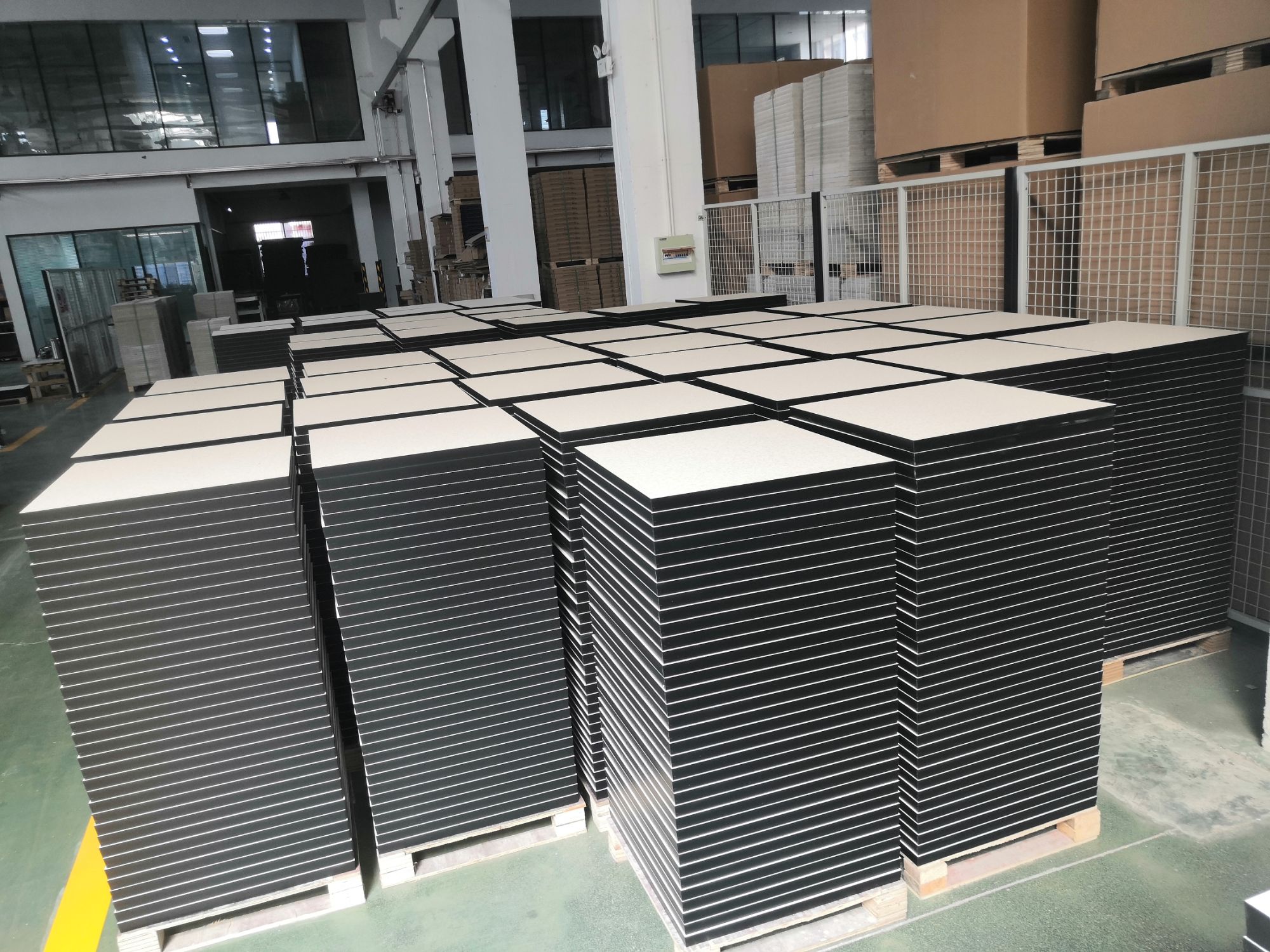
Sales decks usually show you the sunny side: peak throughput under ideal lab conditions, with every component hand-tuned and no one else on the network. What they rarely volunteer is how the system behaves at hour six of a sustained test, or what happens when one node drops mid-write. Ask for the raw load test report that includes latency percentiles, error budgets, and the exact hardware and data set used. If a vendor cannot produce a timestamped report with a reproducible script, treat the brochure numbers as decorative.
A useful report will name the bottleneck, not hide it. Look for statements like "p95 write latency degraded to 340ms when the queue depth exceeded 12,000" rather than a blanket "handles 50,000 requests per second." Ask whether the test ran against an empty database or a production-sized one, and whether retries, backpressure, and connection churn were part of the scenario. The goal is not to disqualify every product that shows weakness, but to see whether the vendor understands where its own limits are.
Finally, compare reports against your own workload shape. A system that survives a neat, uniform load may collapse under spiky, real-world traffic. Request the raw JMeter, k6, or Locust scripts and the exact data generation method, then rerun a subset of the test yourself. Product brochures are written by marketing; load test reports are written by people who have stayed up late wondering why the garbage collector paused at the wrong moment.
Installation Teams With Raised Floor Experience Make or Break the Spec
Raised floor specifications live and die on the skill of the crew bolting the panels into place. A design may call for perfectly level pedestals and zero deflection under rolling loads, but if the installers have never worked in a data hall with pre-existing cable trays or uneven subfloors, the result is a floor that squeaks, shifts, or traps air in the plenum. Experienced teams read the room before they set the first pedestal—checking column lines, door swings, and the actual slab elevation, not just the CAD overlay. They know that a quarter-inch deviation near a cold aisle can ripple into a half-inch trip hazard five tiles away.
What separates a spec-saving crew from a spec-killing one is often invisible after the fact. Veterans use laser levels not only at the start of the day but after every row to catch drift while it is still correctable. They cut stringers on site instead of forcing standard lengths, shim pedestals with machined plates rather than stacked washers, and stagger seams so that no four corners meet in a straight line across a long run. These habits prevent the slow sag that turns a 2,000-pound rack into a leaning tower, and they keep airflow from bypassing the equipment through gaping tile joints.
Post-installation, the difference shows up in small details: a perfectly flush access ramp, cutouts that follow the actual cable penetration rather than a template, and a floor that stays quiet under foot traffic. A crew with raised floor experience doesn't just meet the spec on paper—they anticipate how the floor will behave once chilled air, copper, and fiber all compete for space underneath. When the commissioning agent walks the room with a straightedge and a dial indicator, that's when the installation team's judgment becomes the real specification.
Grounding Details Matter More Than the Panel Color
A panel's finish rarely affects how it clears a fault. What keeps things predictable is the grounding path: clean metal under each lug, the right torque on the bus screws, a bonding conductor that has not been painted over, and an electrode that actually reaches moist soil. When those details are sloppy, the panel may look fine in a white or gray enclosure while neutral-to-ground voltages drift upward under load.
In practice, the problems often appear elsewhere first. Lights may flicker only when a motor starts, a network switch may reboot for no obvious reason, or a metal cover may carry a faint tingle. Chasing those symptoms usually ends at a loose ground bar, a missing bonding screw, or a corroded connection hidden behind a coat of matching paint. The fix is rarely cosmetic. Checking conductor sizing, lug contact, and the ground rod connection before worrying about panel color saves far more time and equipment later.
Check Replacement Panel Availability Before the First Order
A replacement panel that shows available on a supplier’s website can still be weeks away once your order reaches the warehouse. Before committing to a first order, ask the vendor to confirm physical stock in their own location, not just what their system lists. A quick photo of the shelf label or a serial number check takes minutes and can prevent a production line from waiting on a phantom inventory count.
Lead time matters just as much as stock. Some panels are built to order even when the catalog doesn’t say so, and a four-day shipping estimate can quietly become a four-week manufacturing delay. Ask for the actual ship date in writing, and check whether the panel is a standard finish or a custom run. If the finish, cutouts, or connector placements vary between batches, request a dimensional drawing before your first purchase.
It also helps to find out how long the replacement panel will remain available. If the model is nearing end-of-life, place a smaller first order to validate fit and function, then secure enough spares to cover your expected service window. This gives you room to test the part in your own equipment without being locked into a large quantity of a panel that may be discontinued next quarter.
Compare Total Cost After Installation, Not Just Price Per Square Meter
A low number on a price tag can be misleading if the subfloor needs extensive leveling, old flooring removal, or custom trim work. One quote might include adhesive, moisture barriers, delivery, and furniture moving, while another leaves those out until the final invoice. Comparing the fully installed cost across at least two or three detailed quotes gives a much clearer picture of what you will actually pay.
Square-meter pricing also ignores how much material gets wasted during cutting, especially in rooms with irregular shapes, closets, or stairs. A cheaper product that requires more replacement over time or special cleaning treatments can end up costing more than a mid-range option with lower upkeep. Ask each installer to break down labor, preparation, underlayment, and disposal so the numbers sit side by side.
The goal is not to find the lowest number on a sample board, but the most honest total for your specific space. When all hidden costs are itemized, the choice often shifts away from the product that seemed cheapest at first glance.
FAQ
Request the actual calcium sulfate density, panel thickness, and edge reinforcement method. A solid high-density core with sealed edges holds up far better under point loads than a lighter recycled-filler board, even if both sound similar on a spec sheet.
Insist on third-party test data for surface resistance and system-to-ground resistance at different humidity levels. Also check whether the vendor includes copper foil or a conductive under-layer and properly bonded pedestals, because the grounding path matters as much as the panel surface.
Look beyond the standard concentrated load figure. Ask for rolling load, impact load, and long-term creep behavior with the specific wheels or foot traffic your facility runs. Panels with higher density and a thicker steel bottom sheet tend to stay flatter under forklift lanes and pallet jack routes.
Calcium sulfate is naturally sensitive to damp conditions, so a panel that works in a dry server room can sag or weaken on a ground-floor slab with trapped moisture. Ask how the core is protected, whether the edges are sealed, and what relative humidity range the warranty actually covers.
Ask for full-size finished panels rather than cut samples. Check flatness, edge straightness, surface bond quality, and how the vendor controls dimensional tolerance during curing. If possible, watch how edge sealing and lamination are done, since those are where long-term failures usually start.
The vendor should be able to provide pedestal layout drawings, stringer grounding schematics, and details for equipment bases, ramps, and floor penetrations. Ask whether they offer on-site supervision or installer training, because correct grounding is often lost at the cutouts and transitions.
Confirm whether the quote covers pedestals, stringers, grounding strips, cutting, delivery lift coordination, waste removal, and warranty activation. Some vendors price panels only and leave the accessories to be added later, which can make a low initial quote misleading.
Ask for the full test reports for the finished panel assembly, not just the core. The relevant standard may be ASTM E84, EN 13501-1, or another local requirement, and you should check smoke and toxicity data if the space is enclosed or has strict evacuation constraints.
Conclusion
A vendor’s polished showroom rarely reveals what actually happens when a static-sensitive production line depends on the floor. Before any visit, ask for the exact anti-static rating under the conditions your facility will create—humidity shifts, traffic patterns, and cleaning routines can all push performance away from the lab number. Then move past brochures and demand real load test reports, preferably from completed projects that resemble yours in equipment weight and rolling load frequency. A floor that passes a static decay test but craters under a pallet jack is not an industrial solution. Also look hard at the installers themselves. Calcium sulfate panels handle differently from standard access flooring, and a crew that mostly does office raised floors can undercut even a well-made product. Ask which industrial sites the same team finished, how they handled grounding connections around columns, and what they do when subfloor leveling is off. Those details tend to show up later as gaps, rocking panels, or failed grounding checks.
Grounding is usually where vendor promises fall apart. Panel color and finish matter far less than whether the stringers, pedestals, and copper strips create a continuous path to the building’s earth point, and whether that path stays intact after panels are lifted and reset during maintenance. Ask for a grounding diagram before you compare visual samples. Replacement panel availability deserves equal weight because calcium sulfate edges can chip or wear around high-traffic zones, and a floor that cannot be matched later becomes a long-term liability. Don’t accept vague assurances about stock; ask for current inventory levels, lead times for non-standard finishes, and whether the exact panel thickness and edge detail will remain available after the project closes. Finally, compare total cost after installation rather than the price per square meter. Freight, cutting waste, leveling compounds, grounding hardware, and the labor hours needed for a tricky layout can shift the final figure well beyond the quoted panel price. A vendor that is transparent about those numbers before the order is more likely to deliver a floor that performs for years, not just one that looks right on day one.
Contact Us
Contact Person: yuki
Email: [email protected]
Tel/WhatsApp: +86 18664390732
Website: https://www.lipinfloor.com/