

China Gate Valve Supplier: Key Factors for Reliable Sourcing
2026-10-19
Ask any procurement engineer who has sourced gate valves from China, and you'll hear the same frustration: beautiful samples, terrible production runs. Reliable sourcing isn't about finding the cheapest quote—it's about reading the signals that separate a factory with real process control from one that merely photographs well. ZMV has spent years decoding those signals. Here's what to check before your next order.
Why 'Cheap' Gate Valves Often Cost More in the Long Run
The sticker price on a bargain gate valve can be tempting, but that's where the savings end. These valves are often built from thinner, lower-grade materials that corrode or crack well before their rated lifespan. When one fails, you're not just buying another valve—you're paying for the labor to swap it out, shutting down the line, and possibly dealing with water damage or process interruptions. Over five or ten years, replacing a cheap valve two or three times easily wipes out the initial discount.
Even while still “working,” cheap gate valves tend to leak. A slow drip might seem harmless, but in a municipal system or industrial plant, that adds up to thousands of gallons over a year. Beyond wasted water, a poorly sealing valve can cause pressure drops, reduce system efficiency, and make precise flow control impossible. In many cases, the cost of lost product or extra pumping energy is far greater than the difference in valve price.
Then there's the risk nobody budgets for: sudden failure. Budget valves often skip the rigorous testing and certification that quality manufacturers perform. A valve that bursts under pressure can injure workers, trigger environmental cleanup, or violate safety codes. Those incidents carry costs that dwarf any upfront savings. Spending a bit more on a properly rated, well-machined gate valve is often the cheapest decision you can make over the life of the system.
Material Certificates: The Devil Is in the Details
A material certificate can look complete at first glance—heat numbers, grade, dimensions, test results all present—but the useful information often hides in the smaller fields. A mill test report may list tensile and yield values that meet the standard, yet the referenced test temperature, specimen orientation, or applicable edition of the specification can completely shift how those numbers should be read. When those details are missing or contradictory, the certificate proves much less about the actual batch than it appears to.
Traceability is another place where documents quietly fall apart. A certificate might carry a heat number, but without a corresponding stamp on the physical item or a clear line through the purchase order and delivery note, the paper could describe a different lot altogether. Mismatched quantities, revision dates that don’t line up, or certificates issued long after delivery often indicate the document was reconstructed from records rather than pulled directly from the production file.
Signatures and accreditations deserve the same scrutiny. An ISO 17025 logo or a third-party stamp does not automatically cover every test result listed; some certificates include subcontracted tests or advisory notes that sit outside the accreditation scope. Checking who actually performed the mechanical testing, and whether their scope matches the reported method, is frequently where rejected shipments and audit findings start.
Remote Factory Audits: What to Demand From a Supplier
During a remote factory audit, reject any supplier that offers a polished, pre-recorded tour. Demand a live video walkthrough with a mobile device, not a fixed camera. Ask the operator to pan slowly across each workstation, zoom in on machine settings, and hold up a printed copy of the current purchase order with today's date. If the connection drops or the supplier tries to switch to a different area, treat that as a red flag. Real-time unpredictability is the only way to confirm you're seeing the actual production floor, not a staged set.
Raw quality records matter more than summary slides. Tell the supplier you want to see the original first-article inspection reports, in-process defect logs, and nonconformance tickets—not a cleaned-up dashboard. Ask for the last three corrective action requests and have the quality manager walk through each one, explaining root cause and containment. Also require live access to equipment calibration certificates and maintenance schedules. If the documents are dated, serialized, and match the machines on camera, you're getting a genuine snapshot. If not, push harder or walk away.
Verification should be interactive, not passive. Pick a random component from the bill of materials and ask the supplier to trace its lot number back to the incoming inspection record while you watch. Then request a live functional test or dimensional check on a finished unit pulled straight from the line. Have the operator perform the test following the actual work instruction, and compare the result against the spec in real time. Pay attention to hesitation or off-camera coaching—those are signs the supplier is hiding something. A worthwhile partner won't flinch at these demands.
Pressure Testing: The Non-Negotiable Step Before Shipping
Shipping a product without putting it through real stress is like publishing a novel without reading past the first draft. You might get lucky, but luck isn't a quality control plan. We've seen too many teams treat pressure testing as a box to check at the end, only to discover cracked enclosures, leaking seals, or firmware that panics under load after the units are already on a pallet.
The point isn't to prove your design works. It's to find out exactly how it fails, and whether that failure happens at 110% of expected load or 200%. That distinction matters more than most people admit. A good test pushes until something breaks, then you fix it and push again. Skipping this step doesn't save time; it just moves the failure from your lab bench to your customer's hands.
If you're not a little nervous before the first full-pressure run, you haven't set the bar high enough. Pressure testing shouldn't be comfortable. It should be the moment where assumptions get challenged, weak spots get exposed, and the final product earns the right to leave the building.
Lead Times and the Art of Setting Expectations
Most projects don't fail because of a lack of skill or resources; they fall apart when timelines are promised with optimism and then shredded by reality. Lead times are not just a log of days between order and delivery—they are unspoken contracts with everyone who depends on your work. The moment you guess instead of measure, you trade short-term relief for long-term distrust. Setting expectations isn't about padding numbers blindly; it's about reading the quiet signals of your workload, your supplier's rhythm, and your team's true capacity without flinching.
There's a particular discomfort in telling a client or stakeholder that something will take eight weeks when they hoped for four. But that honesty, delivered with the reasoning behind it, often earns more respect than a heroic crash that misses twice. Experienced teams learn to break lead times into visible chunks: the waiting that is genuinely out of your control, the internal handoffs that often hide half a day here and a whole day there, and the buffer that accounts for the inevitable 'one quick change' that arrives at the worst moment. A well-communicated lead time becomes a tool for alignment, not a weapon for blame.
The art lies in updating expectations before they become stale. A lead time quoted in December means almost nothing in February if raw material delays or incoming order volumes have shifted. Regular, brief updates—even when the date hasn't changed—keep the promise alive. The goal isn't to be the fastest; it's to be the most reliable. When your team consistently delivers on the dates you set, you stop having to negotiate every deadline from scratch. People begin to trust the number, and that trust is worth more than any clever scheduling trick.
After the Sale: Warranties, Spares, and Support
Warranties look straightforward on paper, but the details tend to surface only when something fails. A decent agreement should spell out exactly which components are covered, for how long, and under what operating conditions. Pay attention to exclusions around wear items, consumables, or user modifications, because those are the areas where claims often stall. If the equipment is likely to be sold or moved between sites, check whether the remaining coverage transfers to a new owner or location. Some suppliers also offer extended protection that goes beyond the standard terms, but the value depends on what it actually adds rather than the length of the certificate.
Spare parts are where the relationship with a supplier truly shows. A machine that runs well becomes a liability if a common replacement part is out of stock for weeks. Ask before buying how critical spares are warehoused, how quickly they can be dispatched, and whether genuine components are the only recommended option. Aftermarket parts may lower the immediate cost, but they can introduce fit, wear, or safety issues that void the very warranty you wanted to keep. A clear list of recommended spare holdings, including part numbers and expected service life, saves a lot of guesswork later.
Support after the sale should not mean a call centre script and a long hold time. The most useful support combines accessible technical staff, clear documentation, and a realistic escalation path for when a problem cannot be solved on the first call. Look for suppliers who provide detailed maintenance guides, wiring diagrams, firmware updates, and direct access to engineers who know the product rather than a rotating queue of generalists. A quick response matters, but so does a record of previous issues, because repeated faults need a different conversation than a one-off failure.
FAQ
Look beyond price and examine the manufacturer's history with the specific type of gate valve you need. A supplier that has spent years producing API 600 or API 603 valves for oil and gas will have different expertise than one focused on waterworks. Ask for a list of completed projects in your industry and follow up with those clients. Also pay attention to how readily the supplier shares technical data—hesitation often signals gaps in engineering capability or material traceability.
Request the full quality plan before production starts, not just a final inspection certificate. A credible supplier will walk you through their incoming raw material checks, in-process tests like shell and seat pressure testing, and final dimensional verification. If possible, appoint a third-party inspector for random batch checks. Watch for suppliers that rely only on end-of-line testing; that approach misses defects introduced early in casting or machining.
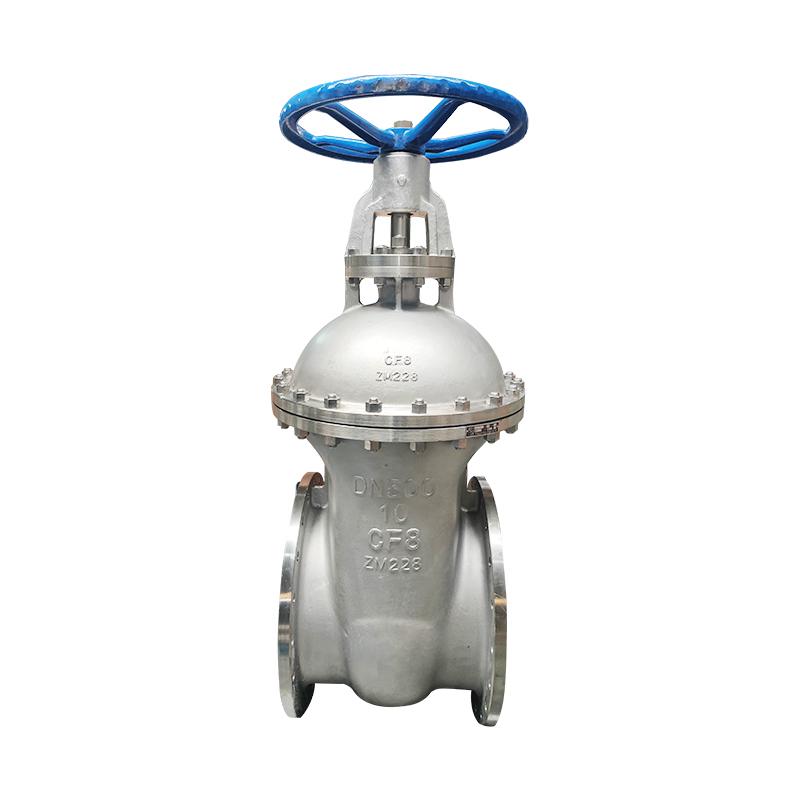
For industrial gate valves, insist on material traceability to ASTM or EN standards rather than a generic 'stainless steel' label. For carbon steel bodies, A216 WCB or WCC is typical; for stainless trim, A351 CF8 or CF8M. Pressure-temperature ratings matter too—make sure the supplier can provide actual heat numbers and mill test reports. If your application involves corrosive media, request NACE MR0175 compliance documentation instead of relying on verbal assurances.
One frequent mistake is accepting a quote that seems unusually low without questioning the material source. Some suppliers cut costs by using recycled steel or thinner wall sections that pass initial tests but fail under sustained operating conditions. Another pitfall is vague delivery terms; always define whether the price includes export packing, inland freight, and port charges. Lastly, avoid locking in a large order before you have approved a pre-production sample—this protects you from batch-to-batch variation.
Capacity directly influences whether a supplier can meet your deadlines without subcontracting to unknown workshops. Ask for their monthly output for the size range you need, and compare it with your order volume. If your order equals half their monthly capacity, they may rush or outsource. Also check the age and condition of their machining centers and testing benches; a factory running outdated equipment often struggles with tight tolerances on large-diameter gate valves.
At minimum, you should receive a material test report for every heat, a pressure test report for each valve, and a certificate of compliance with the relevant standard. For critical service, also request a dimensional inspection report and non-destructive testing records (radiography or ultrasonic). Keep in mind that documentation is only useful if it carries the supplier's official stamp and is signed by a quality engineer. Any supplier unwilling to provide these before shipment should be treated as high risk.
A factory audit reveals what brochures and websites cannot: the actual workflow, employee skill level, and how non-conforming products are handled. During an audit, you can observe whether casting defects are repaired properly, whether pressure testing is done with calibrated gauges, and whether the supplier segregates rejected parts. Many buyers discover that a supplier's claimed ISO 9001 certification is only a wall decoration. In-person or video audits, combined with a review of their internal audit records, give you confidence that quality is managed, not just claimed.
Lead times for gate valves often stretch because of raw material procurement and machining bottlenecks. Ask the supplier to break down the schedule into casting, machining, assembly, testing, and painting phases. Then add buffer time for port congestion and customs clearance. Reliable suppliers include realistic lead times in their quotation rather than promising the shortest possible date. Also confirm which Incoterm you are using—FOB and CIF have very different risk profiles—and request a packing list that matches the actual shipment to avoid customs delays.
Conclusion
Sourcing gate valves from China isn't about finding the lowest unit price—it's about avoiding failures that surface months later. A valve that seems cheap often hides porous castings, thinner walls, or substandard packing. When it leaks or seizes, the real cost hits in downtime, labor, and lost production. Equally important is the paperwork behind the metal. Material certificates mean little if they don't list actual heat numbers, chemical composition, and mechanical test results tied directly to the valve body and bonnet. Too many suppliers pass off generic mill sheets that don't match the parts in the crate. For remote factory audits, demand a live video walkthrough—not a pre-recorded tour—covering raw material storage, machining, assembly, and especially the testing bay. Ask to see the marking process and traceability tags on semi-finished components. If the supplier hesitates or switches camera angles to hide something, that's a red flag you can't ignore.
Pressure testing must be witnessed or at minimum backed by signed test reports with serial numbers, test pressure, duration, and visible leakage check. Shell and seat tests at 1.5 and 1.1 times rated pressure are standard, but only meaningful if the valve is actually on the test bench. Lead times deserve honest, granular planning. A supplier who promises four weeks when the factory is already overloaded will either rush quality or miss the shipment. Factor in Chinese holidays, raw material lead times, and port congestion. Finally, the relationship shouldn't end at delivery. Confirm warranty terms—what's covered, for how long, and whether the supplier pays freight for returns. Ask about spare parts availability for at least five years and whether technical support can respond within 48 hours. Reliable sourcing is less about finding the perfect supplier and more about verifying each of these details before money changes hands.
Contact Us
Contact Person: Lucas Lin
Email: [email protected]
Tel/WhatsApp: +8613968913000 / +8613868610141
Website: https://www.zhengmaogroup.com