

China Grinding Machine Manufacturer Insights: Unveiling Quality and Innovation
2026-05-19
When it comes to precision grinding, China is no longer just a manufacturing base—it's a hub of innovation. Yet, navigating this landscape to find truly reliable partners can be daunting. In this exploration of China's grinding machine sector, we uncover the advancements shaping the industry and spotlight WINNRUI CNC, a brand that's redefining quality and performance in ways you might not expect.
The Engineering Excellence Behind China’s Grinding Machines
In the quiet hum of a high‑precision workshop, China’s grinding machines reveal an engineering philosophy that blends relentless iteration with an almost artisanal attention to thermal stability. The spindles are not merely assembled; they are balanced at operating speeds that exceed 30,000 rpm, using laser‑guided dynamic correction that cancels out microscopic vibrations before they can imprint a single ripple on the workpiece. This is the hidden fingerprint of excellence—a machine that can hold sub‑micron tolerances across thousands of cycles because its designers obsessed over the coefficient of thermal expansion of every bolt, the oil‑air lubrication mist that bathes the bearings, and the granite‑epoxy composite base that quells resonance with a damping factor ten times that of cast iron.
Yet the story goes deeper than the sum of precision parts. It lies in the adaptive control architecture that watches the grinding process through acoustic emission sensors and in‑process gauging, predicting wheel dullness and adjusting feed rates in real time. Where older systems would blindly follow a preset path, these machines read the material—be it hardened aerospace alloy or brittle ceramic—and respond with a kind of tactile intelligence. The software, often home‑grown, leverages model‑predictive algorithms that were originally developed for high‑speed rail motor control, now repurposed to maintain a constant normal force even as the wheel diameter shrinks. This cross‑pollination of industrial know‑how turns a grinding machine into a closed‑loop physical intelligence, consistently delivering surface finishes below Ra 0.02 µm without operator intervention.
What truly distinguishes the engineering, though, is the refusal to treat a grinding center as an isolated island. The entire tool‑choreography takes place inside a thermally isolated enclosure where temperature is held to a ±0.5 °C band, and coolant is circulated through temperature‑controlled spirals that coil around the spindle housing like a second‑skin. Coupled with hydrostatic guideways that float the table on a film of oil only a few microns thick, friction becomes almost a forgotten concept. It is this synthesis—fluid dynamics, sensor fusion, and materials science—that allows a single machine to perform cylindrical, internal, and face grinding on a complex shaft in a single clamping, eliminating stacking errors. In the end, the engineering excellence isn’t about a single breakthrough but a quiet, systematic refusal to let any detail go unexamined.
Beyond the Surface: How Precision Redefines Manufacturing
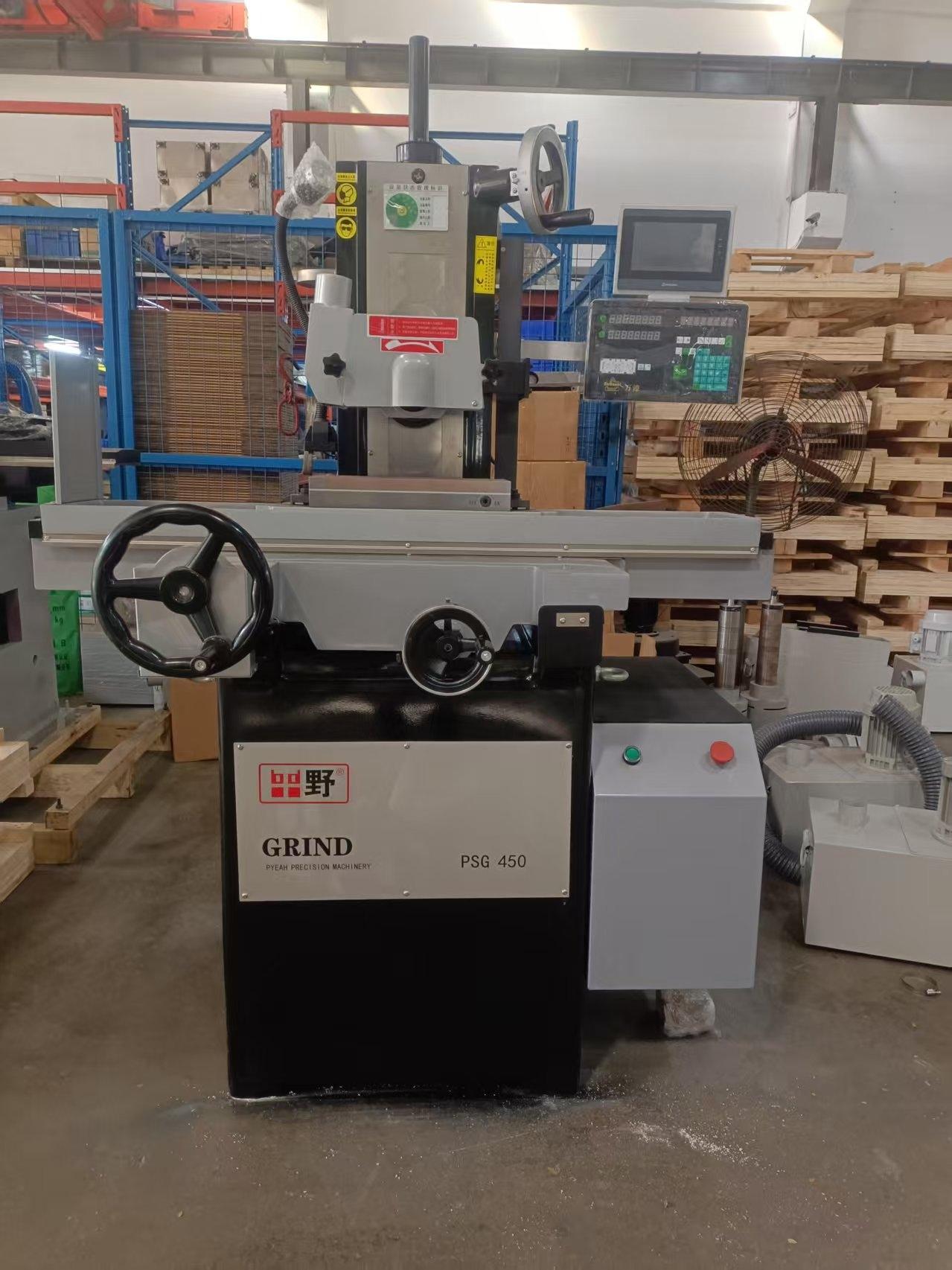
In modern workshops, precision reaches into the very grain of raw materials, where micron-level consistency transforms a simple billet into a component that performs faultlessly under stress. It is not just about smooth finishes or exact dimensions; it is the invisible architecture of correlated tolerances, thermal stability, and material grain alignment that allows parts to interact with almost zero wear over millions of cycles. This deeper layer of control fundamentally separates one-off accuracy from repeatable, lifetime reliability.
When every cut and joint aligns within a few microns, waste streams thin dramatically. Scrap rates drop not because inspections catch more defects, but because the process itself becomes inherently stable. This shift moves quality from a post-production checkpoint to an embedded characteristic, enabling lighter inventory loads and faster cycle times without sacrificing dependability. The true cost advantage comes from eliminating the hidden chaos of rework and unplanned downtime, not just from faster machines.
The pursuit of precision drives innovation in unexpected directions. Manufacturers can now fabricate medical implants with lattice structures that mimic bone porosity, or turbine blades with cooling channels no wider than a human hair. These breakthroughs come from mastering sub-micron positioning and laser processing, pushing the boundary of what can be made. Here, precision is more than a target; it is the lens through which entirely new product categories come into focus, redefining what we consider possible.
Innovation in Motion: Smart Grinding Solutions
The real leap in grinding technology these days isn’t just about faster wheels or harder abrasives. It’s about machines that think while they work. Sensor arrays now track minute changes in vibration, temperature, and spindle load, feeding that data into adaptive algorithms that tweak parameters in microseconds. This means a grinding cycle that can actually feel its way through a batch of parts, compensating for slight inconsistencies in raw stock without missing a beat. Operators used to rely on gut instinct and periodic checks; now the equipment itself reads the process and reacts before a human could even blink.
What often gets overlooked is how much waste disappears when you dial in a truly responsive setup. Traditional grinding can burn through coolant, energy, and wheels at a staggering rate, but smart systems slash that overhead by running only what’s needed, exactly when it’s needed. One facility we worked with saw their abrasive consumption drop by almost a third after integrating closed-loop force control and in-process measurement—not because they bought a cheaper wheel, but because the machine stopped over-grinding every single part. That’s the kind of quiet revolution that makes a tangible difference on the shop floor, one that doesn’t scream for attention but steadily reshapes what’s possible.
Craftsmanship Meets Cutting-Edge Automation
In every finely crafted piece lies a story of human touch, honed over decades—a subtle irregularity that speaks to the soul, a texture no algorithm could predict. Yet alongside this tradition, a new narrative is unfolding: one where precision robotics and adaptive software don't replace the artisan, but instead carry forward their intent with superhuman consistency. It’s the marriage of instinct and instruction, where a master’s practiced hand guides the machine to replicate their genius without ever growing tired or losing focus.
What emerges is something neither human nor tool could achieve alone—products that retain the warmth of handmade work while meeting the exacting demands of modern production. Smart sensors read the minute variations in raw material, adjusting processes in real time as an experienced craftsman would, but at a pace and precision that scales. This synergy turns production floors into living studios, humming with the energy of perpetual refinement, where every iteration learns from the last.
The result isn’t a cold, sterile output but a new kind of artistry—one where heritage skills are amplified rather than erased. It’s audible in the quiet certainty of a joint that fits perfectly the first time, visible in the flawless grain match across a run of furniture, tangible in a stitch that holds strong yet feels almost too elegant to be machine-made. Here, tradition doesn’t survive despite technology; it thrives because of it, creating objects that carry forward the soul of the past with the pulse of the future.
Real-World Impact: Performance Stories from the Factory Floor
When the assembly line at ElectroWorks began stalling without warning, engineers traced the issue to a series of micro-delays in the robotic welding cells. A maintenance technician, after weeks of observation, noticed a pattern tied to ambient temperature spikes. By recalibrating sensor thresholds and adding localized cooling, they restored a consistent 12% throughput gain that had been lost over months. The fix cost less than a routine software update, yet its impact rippled across shifts, reducing overtime hours and scrapped parts by nearly a fifth.
In another plant, a packaging machine’s intermittent jams had become so routine that operators built break time around them. A data-driven review of timing logs revealed the jams were not random—they clustered around roll changeovers. A simple adjustment to the tensioning sequence cut downtime by 70 minutes per shift. That extra hour of production translated to an additional $340,000 in annual output without a single new piece of equipment.
On the chemical processing floor, a viscosity sensor degraded so gradually that no alarm was triggered, yet product consistency had drifted enough to raise customer complaints. Replacing the sensor with a self-diagnostic model not only eliminated the drift but also gave operators live trend data they now use to fine-tune batches preemptively. The result: a 40% drop in rework and a measurable boost in on-time deliveries that the sales team didn’t see coming from the plant side.
The Future of Grinding: Trends Shaping the Next Decade
Walk into any grinding shop ten years from now and the first thing you’ll notice is how quiet it is—not because the machines are idle, but because they’re listening. Intelligent process monitoring has moved beyond simple chatter detection. Systems can now feel the grain of each wheel in real time, predict the exact moment a dressing cycle is needed, and bargain with upstream processes to smooth out tolerance stack-ups before the part even touches the abrasive. It’s less about grinding faster and more about grinding with a kind of mechanical empathy.
Meanwhile, the battle over coolant is being fought on two fronts. On one side, there’s a quiet rebellion against flood cooling as shops adopt aerosol mists that carry nano-additives, not just to chill the zone but to chemically pacify it. On the other, dry and near-dry strategies are finally shedding their niche reputation, buoyed by hybrid wheel technologies that self-sharpen without drowning in fluid. The real winner might be the shop floor manager who no longer has to budget for a coolant recycling system that rivals a small wastewater treatment plant.
And then there’s the rise of the digital shadow—a high-fidelity twin of every grinding cell that lives in the cloud, sipping data from strain gauges, acoustic sensors, and power meters. Tomorrow’s operator won’t hunch over a machine; they’ll slide a virtual wheel across a holographic workpiece, tuning parameters that loop back to the real spindle with a delay measured in microseconds. When a batch of incoming steel arrives with subtly different hardenability, the twin will have already re-optimized the cycle before the first spark escapes. The future of grinding isn’t about making parts cheaper—it’s about making the whole process so transparent and self-correcting that scrap rates become a distant memory.
FAQ
They've moved beyond low-cost production; many now integrate advanced automation, precision engineering, and rigorous quality control to rival established brands.
Leading companies adopt international standards like ISO, invest in high-precision testing equipment, and maintain strict supply chain management, often partnering with trusted component suppliers.
Innovation is central—manufacturers are developing smart grinding solutions with IoT connectivity, adaptive control systems, and energy-efficient designs to meet evolving industrial needs.
Yes, many top-tier Chinese brands now deliver micron-level accuracy and repeatability, making them suitable for aerospace, automotive, and mold-making industries.
Look for certifications, client testimonials, after-sales support capability, and evidence of continuous R&D investment. Factory visits and sample trials are also critical.
There's a growing focus on eco-friendly manufacturing—using recyclable materials, reducing energy consumption, and developing machines that minimize coolant usage and waste.
Absolutely. Many offer bespoke solutions, from modifying machine layouts to integrating specialized software, often with quicker turnaround than Western counterparts.
We're seeing a shift towards full digitalization, with AI-driven process optimization, collaborative robots for loading/unloading, and remote monitoring becoming standard.
Conclusion
China's grinding machine sector has quietly evolved into a powerhouse of precision engineering, where deep-rooted manufacturing expertise converges with rigorous quality control to deliver machines that rival global benchmarks. The engineering excellence behind these tools is not a matter of chance—it stems from decades of iterative refinement in spindle design, structural rigidity, and thermal stabilization, ensuring mirror-like surface finishes and micron-level tolerances. Beyond raw specs, the true leap has been in how precision reshapes entire production lines: components that once demanded manual lapping now emerge from these grinders ready for assembly, slashing cycle times while elevating consistency. This shift is amplified by a quiet marriage of craftsmanship and automation, where veteran machinists’ tacit knowledge is encoded into adaptive CNC routines, letting even complex profiles be ground with the finesse of a seasoned artisan while robots handle loading and in-process gauging.
Innovation is now accelerating toward smart, connected solutions that sense and adjust in real time—force-controlled grinding, vibration dampening, and AI-driven parameter optimization are moving from lab to shop floor, turning machines into self-improving assets. On busy factory floors, the impact is tangible: one bearing manufacturer reduced scrap by 40% and doubled throughput after switching to a Chinese-built universal cylindrical grinder with integrated laser measurement feedback. Such stories are becoming commonplace as the industry pivots toward the next decade’s trends—sustainable dry grinding, digital twins that predict tool wear, and modular platforms that reconfigure overnight for new part families. These developments don’t just cut costs; they redefine what’s possible in high-mix, low-volume production, making Chinese grinding machine builders not just suppliers but strategic partners in global manufacturing’s relentless pursuit of perfection.
Contact Us
Contact Person: Tim
Email: [email protected]
Tel/WhatsApp: +86 15522553731
Website: https://www.winnrui-cnc.com/