

China Insulated Clean Panel Production Line: Streamlining High-Efficiency Manufacturing
2026-08-12
In the fast-evolving world of industrial manufacturing, insulated clean panels have become the backbone of controlled environments—from pharmaceutical cleanrooms to food processing facilities. But behind every flawless panel lies a production line engineered for precision and speed. China’s manufacturing sector is now redefining what efficiency means, with integrated systems that reduce waste, cut energy costs, and deliver unmatched consistency. At the heart of this transformation is YI ZHOU TECHNOLOGY, a name synonymous with smart automation and reliable welding solutions. What if the next leap in clean panel production isn’t just about working faster, but working smarter? Let’s dive into the technology that’s streamlining high-efficiency manufacturing like never before.
Core Components of an Insulated Clean Panel Production Line
At the heart of any insulated clean panel production line lies a precision-engineered decoiling and leveling system. This initial stage ensures that the metal sheets—typically steel or aluminum—are fed smoothly into the line without surface imperfections. Advanced leveling rollers remove residual stress, creating a perfectly flat substrate essential for the foam injection or laminating process that follows. Without this careful preparation, even minor waves could compromise the panel’s structural integrity and final appearance.
The foam dispensing and curing station is where the panel’s thermal and acoustic properties are truly defined. Here, polyurethane or other insulating materials are injected between the two metal facings under controlled pressure and temperature. The mixing head technology plays a critical role: it must blend the chemical components uniformly while minimizing air entrapment. After injection, the panel passes through a heated press or continuous belt system, allowing the foam to expand, bond, and cure without voids, ensuring consistent insulation performance across every panel produced.
Precision cutting and edge profiling equipment complete the process, transforming the continuous panel ribbon into exact, client-specified dimensions. Automated saws or shears deliver clean, burr-free edges, while subsequent milling or forming stations create cam-lock profiles, tongue-and-groove joints, or other specialized edge details. This final step not only guarantees dimensional accuracy but also facilitates rapid on-site assembly, making the finished panels ready for immediate installation in cleanroom environments, cold storage facilities, or controlled manufacturing spaces.
Advanced Laminating Technology for Consistent Panel Quality
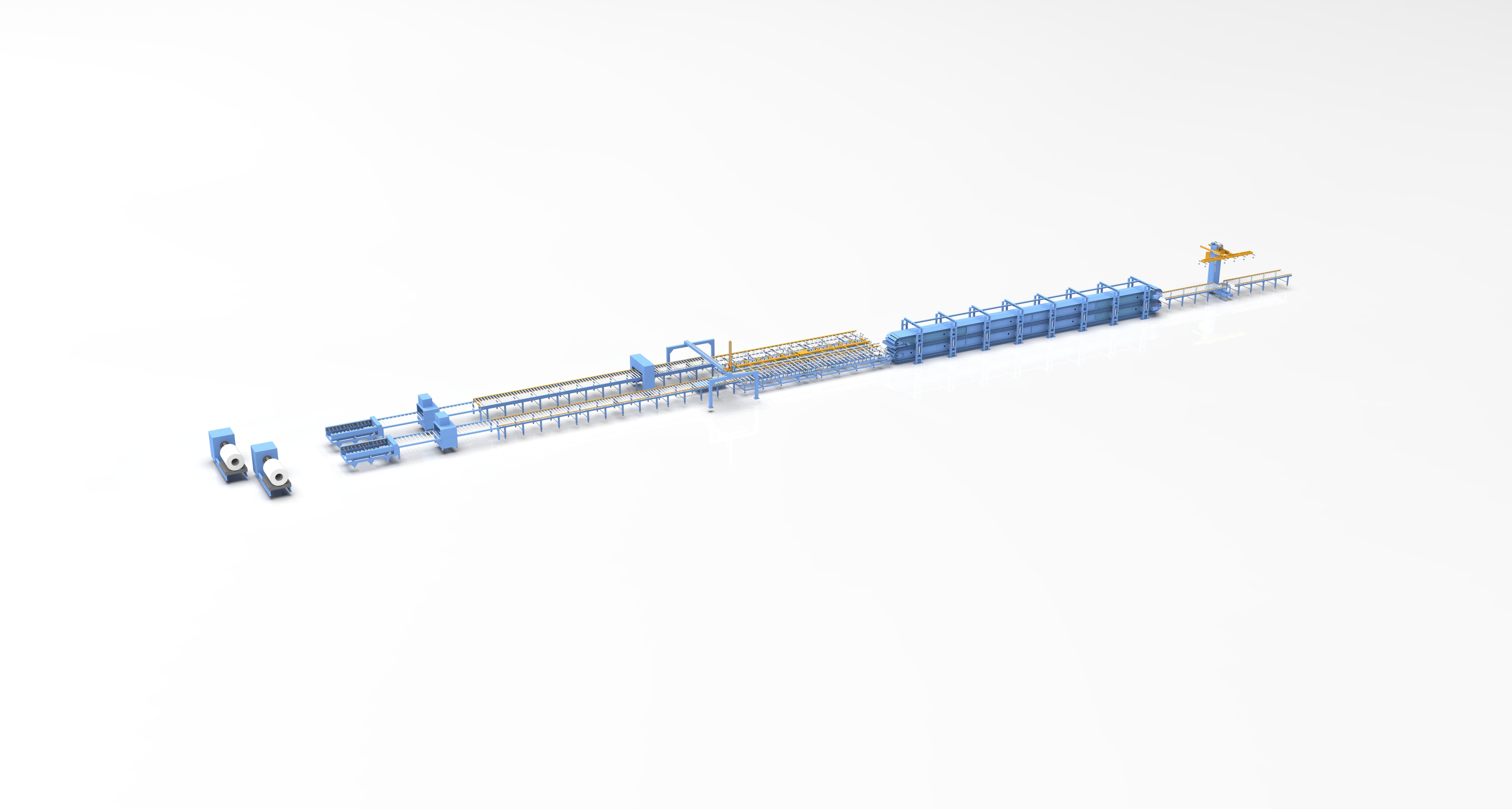
Our approach to lamination focuses on precision control throughout every stage of the bonding process. By regulating temperature, pressure, and alignment with exacting tolerances, we eliminate common inconsistencies such as bubbling, delamination, or edge lifting. This careful orchestration ensures each panel emerges with a flawless surface and uniform structural integrity, regardless of batch size or material variation.
Built on years of iterative refinement, the system adapts to diverse substrate and overlay combinations without sacrificing repeatability. Real-time monitoring detects microscopic deviations and adjusts parameters instantly, preserving consistency from the first panel to the last. The result is a finished product that not only meets tight aesthetic standards but also endures long-term use without premature wear or separation.
Automated Cutting and Edging Processes
Modern manufacturing has transformed traditional shaping methods into highly synchronized, software‑driven operations. Instead of relying solely on manual dexterity, automated cutting and edging now use optical sensors and real‑time feedback to adjust blade angles, speed, and pressure on the fly. This means even complex curves or delicate materials are handled with minimal waste, often achieving tolerances that would be difficult to reproduce by hand.
What sets today’s systems apart is their ability to learn from each run. By logging micro‑variations in material density or surface texture, the machinery adapts its approach for the next piece without operator intervention. Edge finishing, in particular, benefits from this: diamond‑tipped profilers can switch between polishing, chamfering, or beveling in seconds, delivering consistent quality whether you’re running a batch of ten or ten thousand units.
The result is a blend of precision and adaptability that redefines throughput. Rather than being a rigid series of steps, the process becomes a conversation between the equipment and the material, ensuring that every cut and edge feels intentional and refined. This is not just about speed—it’s about expanding what’s possible in complex geometries and mixed‑material assemblies.
Energy-Efficient Curing and Cooling Systems
Energy efficiency in curing and cooling systems is no longer just an option—it’s a necessity for modern manufacturing. By integrating advanced heat recovery and smart temperature controls, these systems drastically cut power consumption while maintaining precise processing conditions. The result is lower operational costs and a smaller carbon footprint without compromising product quality.
Innovations like variable-speed compressors and adaptive airflow designs allow curing and cooling equipment to respond dynamically to real-time demand. Rather than running at full capacity constantly, they adjust output to match the exact requirements of each production cycle. This intelligent operation not only extends equipment life but also eliminates energy waste during idle or low-load periods.
Many facilities are turning to hybrid solutions that combine multiple energy sources or integrate renewable power. For instance, some curing systems now use on-demand infrared heating paired with highly efficient cooling loops. These closed-loop arrangements recycle heat, using it to preheat incoming materials or to support other processes, creating a self-sustaining thermal ecosystem that pushes overall efficiency upward of 30 percent.
Integrated Quality Control and Real-Time Monitoring
Bringing together quality checks and live oversight transforms how production lines respond to deviations. Instead of relying on end-of-batch reports, the system flags an out-of-spec measurement the moment it occurs and triggers corrective actions automatically. This closed-loop approach minimizes rework and keeps processes within a narrow band of acceptable variance, even during high-speed manufacturing.
Real-time data feeds update dashboards that are shared across shifts, making sure no critical trend goes unnoticed. Machine learning algorithms continuously compare current readings against historical baselines, detecting subtle drifts long before they become defects. Operators receive prioritized alerts, along with probable root causes, which speeds up decision-making and reduces dependence on tribal knowledge.
Audit trails and traceability naturally improve when every adjustment is logged with timestamps and operator IDs. The combination of live monitoring with integrated quality modules erases the boundary between production and inspection, creating a single source of truth for yield, throughput, and compliance metrics. As a result, manufacturers can confidently scale output while meeting tighter customer tolerances and regulatory demands.
Customization Options for Diverse Cleanroom Applications
Every industry that relies on controlled environments brings its own set of demands, and cleanroom design has evolved far beyond one-size-fits-all solutions. From the strict electrostatic discharge precautions required in microelectronics assembly to the relentless sterility standards of cell and gene therapy suites, customization starts with a deep analysis of process workflows and risk points. Material selection alone can shift dramatically between projects—pharmaceutical compounding might call for seamless, chemically resistant wall panels, while optics manufacturing often needs walls and flooring that minimize vibration and outgassing.
Air handling and filtration strategies are another layer where generic approaches fail. A cleanroom producing injectable drugs typically relies on unidirectional, high-velocity airflow and HEPA coverage that blankets every square foot of the critical zone, but a research lab handling non-hazardous powders might perform perfectly with strategically placed low-wall returns and turbulent dilution. Pressure cascades, too, are tailored to the process: positive-pressure suites protect products, negative-pressure designs contain hazardous materials, and dual-purpose rooms can switch modes depending on the day’s protocol. Temperature and humidity tolerances, sometimes as tight as ±0.25 °C and ±2% RH, are engineered around the sensitivity of the product rather than generic standards.
Beyond the physical shell, customization extends to monitoring systems, lighting, and utility distribution. Some facilities need amber-spectrum lights to protect photolithography processes, while others install full-spectrum LEDs to reduce eye strain during delicate manual assembly. Gas and liquid piping can be routed through service chases that keep maintenance outside the clean zone, and real-time particle counters can trigger automated adjustments to fan speeds. This kind of fine-tuning ensures that the cleanroom is not just a certified space, but a productive tool that adapts to ever-changing research directions and production volumes.
FAQ
Insulated clean panels are composite wall and ceiling panels with a core of insulating material like polyurethane or rockwool, sandwiched between metal sheets. They are widely used in cleanrooms, food processing plants, pharmaceutical facilities, and data centers where hygiene and temperature control are critical.
A dedicated production line automates the entire process from material feeding to cutting and stacking, reducing manual handling, ensuring consistent quality, and significantly boosting output. It streamlines operations, minimizes waste, and allows for continuous, high-speed production.
Modern lines often incorporate CNC systems, precise temperature control for foaming, automatic lamination, and inline cutting saws. Advanced lines also use PLC control and touch-screen interfaces for real-time monitoring and quick adjustments, reducing downtime and ensuring uniform panel thickness and strength.
They typically process galvanized steel, stainless steel, or aluminum sheets for the facings, and polyurethane foam, rockwool, or honeycomb materials for the core. Some lines are designed to handle multiple material types for flexible production.
By maintaining precise control over parameters like temperature, pressure, and line speed, it ensures uniform foam distribution, better adhesion between layers, and consistent panel dimensions. This results in panels with superior insulation, flatness, and structural integrity.
Manufacturers benefit from reduced labor costs, higher throughput, lower material waste, and improved product consistency. It also shortens lead times and enhances their ability to meet large-scale orders, giving them a competitive edge.
Yes, most advanced lines offer flexibility to switch between different panel widths, lengths, and thicknesses through automated adjustments. This enables manufacturers to cater to diverse project requirements without extensive downtime.
Automation reduces human intervention in hazardous processes like chemical mixing, high-temperature lamination, and heavy lifting. Safety features like emergency stops, protective enclosures, and automated fault detection further minimize risks to operators.
Conclusion
In China, the shift toward advanced manufacturing of insulated clean panels has redefined efficiency in cleanroom construction. The production lines integrate high-precision core components—such as automated feeding systems, precision roller presses, and advanced laminating units—that work in harmony to streamline every stage. At the heart of this setup is a sophisticated laminating technology that ensures uniform bonding between the metal skins and the insulating core, eliminating common defects like delamination or air pockets. This consistency is maintained through closed-loop control systems that adjust pressure, temperature, and speed in real time, delivering panels with exceptional flatness and structural integrity that meet strict cleanroom standards.
Downstream, the process flows seamlessly into automated cutting and edging stations, where CNC-guided tools shape panels to exact dimensions without manual intervention, drastically reducing waste and human error. Energy-efficient curing and cooling systems further optimize the workflow—using targeted heat recovery and rapid cooling tunnels to accelerate production while minimizing electricity consumption. Throughout the line, integrated quality control with real-time monitoring sensors and AI-driven analytics catches microscopic imperfections before panels leave the factory. Crucially, these lines offer extensive customization, allowing manufacturers to adjust core materials, surface finishes, and edge profiles for diverse applications—from pharmaceutical cleanrooms to semiconductor fabs—without sacrificing speed or quality. The result is a truly streamlined, high-efficiency manufacturing ecosystem that sets a new benchmark for the industry.
Contact Us
Contact Person: Sophia Jiang
Email: [email protected]
Tel/WhatsApp: +86 17367381818
Website: https://yzwelding.com/