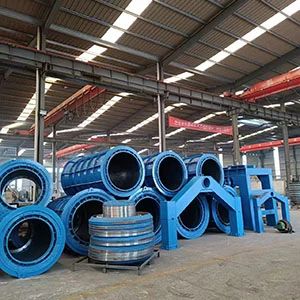

China Precast Wall Panel Equipment Factory Delivers High Performance Production Lines
2026-08-24
You can spot a great precast wall panel line by what it doesn't do: it doesn't stall, doesn't drift, doesn't need constant babysitting. That's the kind of high-performance system Qianfeng Electromechanical Equipment has been delivering from its China factory—and the reason project managers keep coming back.
What Separates a High-Performance Precast Wall Panel Line from the Rest
A high-performance precast wall panel line stands apart first in how it weaves automation with real-time data. Ordinary setups often rely on manual tweaks to adjust mix ratios or curing schedules, but a high-performance line uses embedded sensors and adaptive control loops so every step self-corrects. Mold circulation, concrete spreading thickness, and vibration frequency shift based on feedback from the current batch instead of running fixed parameters blindly. This closed-loop adjustment cuts batch-to-batch variation sharply and frees operators from repetitive judgment calls, letting them focus on genuine exceptions rather than routine monitoring.
Another differentiator lies in the mold system and compaction method. Conventional lines use rigid molds that easily chip corners during demolding; high-performance lines employ modular, adjustable side forms with flexible seals, paired with variable-frequency vibration tables that switch modes according to panel thickness and rebar density. Some lines even introduce vacuum assistance or pressure grouting to purge internal air bubbles, achieving a surface finish ready for direct painting without plastering. Quick mold changeover mechanisms allow different panel sizes to be produced within the same day without long downtime.
Quality control no longer waits for post-production sampling but is embedded at every station. Laser scanning and machine vision complete dimensional and flatness checks within seconds after demolding, uploading data automatically to the production database and comparing against the design BIM model. Out-of-tolerance panels get flagged and routed to a repair zone while the system traces likely causes—was it a slump deviation in the concrete or insufficient vibration time? This traceability gives the entire line a continuous improvement loop rather than just repeating the same daily output.
Inside the Factory Floor: How Chinese Manufacturers Assemble Key Equipment
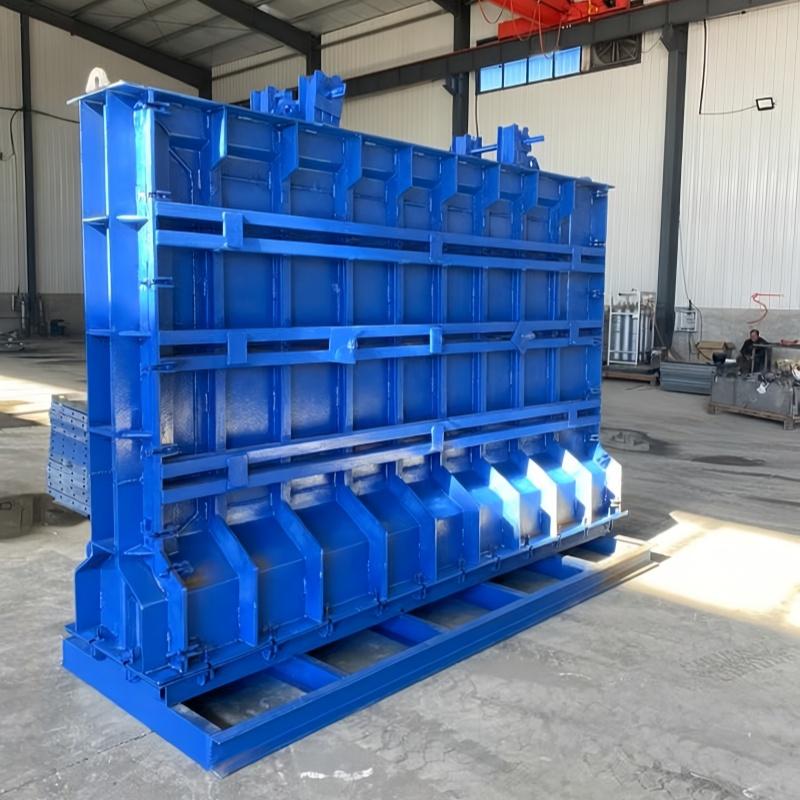
Walk onto the assembly floor at a mid-sized Chinese equipment factory and the first thing you notice is the rhythm. Components do not pile up in random corners. Parts arrive on rolling carts just as a station is ready for them, often with a barcode taped to the side that a line lead scans before the next step can begin. At one end, a technician uses a torque wrench on a gearbox housing while a colleague checks a bearing preload with a feeler gauge. There is no rush, but there is also no idle chatter. Each movement follows a sequence laid out on laminated cards at the workstation, updated whenever a defect is traced back to a specific operation.
Further down the line, the heavier work shifts to a mix of automation and manual skill. An AGV brings a welded base frame to a station where two workers align linear rails with a granite straightedge, adjusting bolts in a slow cross pattern. Nearby, a test bench cycles a finished machine through a scripted routine, logging vibration and temperature readings to a tablet that syncs with the plant's quality system. What stands out is not any single piece of technology but the way Chinese manufacturers have learned to blend low-cost, practical fixtures with tight process control. A mistake made in the morning is often turned into a one-page visual standard by the afternoon, laminated and placed exactly where the next person will look.
Matching the Line to Your Panel Size and Output Targets
A larger panel doesn't automatically mean fewer units per minute. The real bottleneck often comes from the saw or edgebander cycle time, not the panel dimensions themselves. If your target is based on square meters, you might actually hit higher throughput with bigger panels even if piece count drops, because you're spending less time on material handling per square meter. Check where the line actually stalls before adjusting speeds.
Switching between 4x8 and 5x10 sheets can eat more time than people expect. Instead of setting a single output number, break your shift into runs by panel size and assign a realistic setup buffer. That way the line speed can stay constant while the conveyor gaps absorb the difference, rather than forcing operators to rush at the end of a run.
The most reliable way to match the line is to walk the floor with a stopwatch, not a spreadsheet. Watch how long a stack of panels takes to clear the infeed, and where the machine waits on the operator. Then set your hourly target at 85-90% of that observed pace, leaving room for micro-stops and occasional misaligned sheets.
Delivery and Installation: How a Reliable Factory Handles Logistics
Logistics rarely gets the spotlight, but it's where reputations are quietly won or lost. A dependable factory treats delivery not as an afterthought but as a core part of the product experience. Instead of handing a crate to the cheapest carrier and hoping for the best, they maintain a tight network of vetted freight partners, track every shipment in real time, and build in contingency plans for ports, customs, and weather delays. The goal is simple: your equipment arrives when promised, without hidden fees piling up along the way.
Installation is where the factory’s true character shows. Many suppliers will drop a machine at your dock and disappear; a reliable one sends a technician who knows the equipment inside out. That person doesn’t just bolt things together—they level, calibrate, test-run, and then walk your team through the controls until everyone is comfortable. If a problem surfaces during setup, it gets fixed on the spot rather than becoming a blame game over the phone. This hands-on approach turns a high-stress moment into a routine handover.
What separates the best factories is that they document the entire journey. You receive a pre-shipment checklist, live tracking links, and a post-installation report with photos and readings. If a part arrives damaged or missing, replacements are expedited without requiring a dozen emails. Over time, this creates a different kind of trust—not just in the product, but in the people who get it to your floor and make it run.
Quality Checks That Catch Problems Before They Reach Your Site
Rather than waiting for materials to arrive and then discovering a mismatch, the first line of defense is an inspection at the fabricator's own yard. A third-party inspector walks the production floor with the approved submittal drawings, checking bolt hole spacing, weld sizes, and surface prep before anything gets crated. If a beam is out of square by a few millimeters here, it will only cause harder problems once the crane is on site, so these measurements get recorded against the actual tolerances, not just a quick visual pass.
Documentation is another gate that keeps surprises away from the jobsite. Before a shipment is released, the supplier has to provide mill certificates, heat numbers, and the results from any required testing—whether that’s concrete cylinder breaks or coating thickness readings. Missing or mismatched paperwork is enough to hold the truck at the gate. That way, the team on site never has to sort out whether a batch of anchor bolts actually meets the spec after they’ve been half-buried in concrete.
For custom or high-risk components, a first-article check saves a lot of headaches. The manufacturer builds one complete assembly—say, a connection plate or a modular handrail section—and sends it through the full set of measurements and, if needed, a load test. Only after that single piece passes does the rest of the production run get the green light. When the bulk order finally shows up, the site crew can focus on installation instead of playing detective with a tape measure.
After-Sales Support That Goes Beyond the Warranty Period
After the warranty lapses, most companies vanish. We don’t. Our support line stays open for the life of the product. If a motor, sensor, or control board fails at year four or five, we’ll diagnose it over a video call, ship you the exact replacement part (often at cost, sometimes free if it’s a known batch defect), and walk you through the repair step by step. You won’t hear “we don’t support that model anymore.”
We keep service records for every unit we’ve built since 2017. That means when you call about an older machine, we already know its test results, firmware version, and repair history. No generic troubleshooting scripts. No pressure to buy a new unit. Just a named engineer who has seen your exact problem before and can tell you honestly whether it’s a ten-minute fix or worth retiring.
This isn’t charity—it’s economics. A machine that stays running earns referrals. A customer who gets help after the warranty ends stays with us for the next purchase. So the warranty card in the box is just a starting point, not a deadline.
FAQ
It focuses on precast wall panel equipment, delivering complete production lines with high throughput and consistent output. The factory handles everything from initial layout design to final commissioning.
They use heavy-duty steel frames, precise vibration systems, and automated controls, and test each line before shipment. Key components are machined in-house to maintain tight tolerances.
A line usually includes a concrete batching plant, wall panel mold tables, tilting stations, curing racks, and a central control system. Optional add-ons like automatic cleaning and demolding stations are available.
Yes, they adapt layouts, mold sizes, and automation levels to fit different plant footprints and product requirements. Clients can choose between manual, semi-automatic, and fully automatic operation.
The factory provides on-site installation, operator training, and remote troubleshooting, with spare parts shipped quickly. They also offer annual maintenance visits if requested.
Standard components can be ready in 60-90 days; fully custom lines may take longer depending on complexity. Shipping time is separate and depends on the destination port.
They combine in-house manufacturing of key components with rigorous quality checks, avoiding reliance on third-party parts and reducing lead times. Their engineering team has over 15 years of experience in precast equipment.
Yes, they have experience exporting to Southeast Asia, the Middle East, and Africa, and can handle voltage, climate, and logistics requirements. Documentation for customs and local compliance is prepared in advance.
Conclusion
A high-performance precast wall panel line from a Chinese equipment factory stands apart less by raw speed and more by how well the batching, pouring, vibrating, and curing stages are tuned as one system. Inside the factory floor, assemblers pay close attention to frame alignment, weld penetration, and hydraulic hose routing, because these quiet details decide whether a line runs cleanly for years or nags you with downtime. Matching the line to your panel size and output targets starts with a simple but rigorous exchange: your wall dimensions, daily square meters, concrete mix, and whether you need solid, hollow-core, or insulated sandwich panels. Those answers shape the mold widths, tilting mechanism force, and the number of curing positions, so you are not paying for capacity you won't use or getting a line that bottlenecks at the first turn.
Delivery and installation reflect the same discipline. A reliable factory maps container space, braces every moving part, and sends a supervisor who knows where each cable and sensor should land, cutting the on-site assembly time. Quality checks before shipment catch warped side rails, weak hydraulic seals, and PLC wiring faults that would otherwise surface on your production floor. After the line is running, support continues past the warranty period with remote troubleshooting, spare-part planning, and operator retraining when you change panel types. This mix of careful engineering, honest sizing, and long-term responsiveness is what turns a standard precast wall panel production line from China into a genuinely high-performance asset for your plant.
Contact Us
Contact Person: Bill
Email: [email protected]
Tel/WhatsApp: 8615063653526
Website: https://www.qianfengjd.com