

China Shock Absorber Piston Options That Deliver Lasting Performance
2026-10-28
When you're sourcing shock absorber pistons from China, the options can look nearly identical on paper—until they're installed. Cheap materials and loose tolerances tend to show up later as leaks, noise, and premature failure. That's exactly where XIAYI takes a different route. Their piston lineup is built around one metric: lasting performance under real-world conditions. Here's a closer look at what makes those options stand out.
Piston Coatings That Outlast the Road, Not Just the Warranty
Most piston coatings get sold on a warranty number, but the real question is what happens after that number rolls past. A coating that survives a three-year/36,000-mile term isn't doing much if the piston skirts start scuffing at 80,000 miles. The ones that actually outlast the road are built for thermal cycling that never lets up, fuel washdown on short trips, and the slow abrasive wear that doesn't show up in a brochure.
The difference usually comes down to how the coating manages heat and oil retention, not just how hard it is. Hardness alone can make a surface brittle, which leads to micro-cracks and delamination once the engine sees repeated hot-cold cycles. Coatings that last tend to have a balanced structure: enough ceramic or DLC-like material to resist scuffing, but with a surface texture that holds a thin oil film even during cold starts. That combination cuts friction and keeps the skirt from eating into the bore over 100,000 miles or more.
If you're choosing pistons for an engine you plan to keep, ignore the warranty window and look at what the coating does after it's been through a few winters and a few summers of hard driving. The payoff is quieter cold starts, less ring wear, and cylinder bores that still measure in spec when you finally do tear the engine down. That's what outlasting the road actually means.
Why Tighter Tolerances Are Changing China’s Piston Reputation
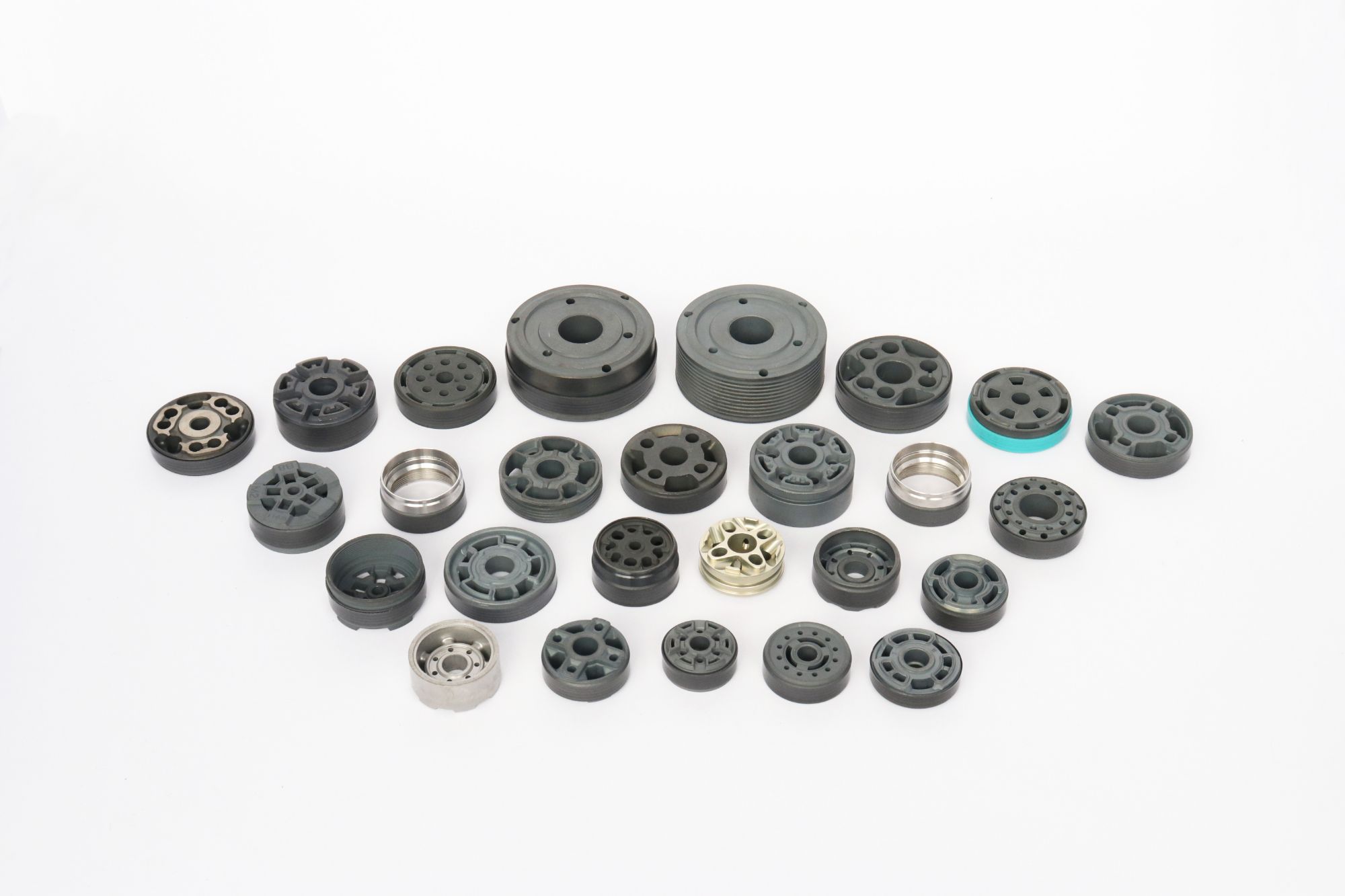
For years, Chinese pistons carried a quiet stigma in aftermarket and OEM circles—affordable, yes, but often inconsistent in dimensional accuracy. The shift toward tighter machining tolerances hasn't just improved fit; it's begun rewriting the entire narrative around where these components sit in the quality hierarchy.
Shops that once measured every imported piston and found variations of a few microns now report shipments arriving within a fraction of that. This consistency translates directly into reduced bore honing time, less ring gap adjustment, and fewer comebacks for piston slap or uneven wear. The reputation change isn't marketing language—it's measurable in the reduced amount of hand-fitting a builder has to do before assembly.
As foundries and CNC lines adopt the same statistical process controls used in higher-cost production regions, the gap between a budget Chinese piston and a premium European or American unit narrows. Buyers are starting to ask less about country of origin and more about the actual tolerance band on the spec sheet. That's a fundamental shift in how these parts are evaluated, and it's pushing the entire supply chain to hold tighter numbers simply to stay relevant.
Material Upgrades That Keep Damping Consistent Over Time
Rather than relying on viscoelastic sheets that harden or lose tack after repeated thermal cycles, newer damping treatments use co-cured silicone-urethane hybrids. These materials replace migratory plasticizers with internal hydrogen-bonding networks, so the glass transition region stays put instead of drifting toward higher frequencies.
One practical upgrade is the shift from free-layer damping to constrained-layer constructions with a thin aluminum or composite constraining skin bonded over a low-creep acrylic core. Because the core is cross-linked at a controlled density, its loss factor remains within a narrow band even after prolonged exposure to humidity and UV.
In accelerated aging tests, these upgraded materials typically show less than a six percent change in composite loss factor after 2,000 hours at 85°C and 85% relative humidity, while conventional butyl-based sheets often lose a third of their damping capacity under the same conditions. That kind of stability keeps noise and vibration performance predictable over the service life of the structure.
From Forging to Finishing, the Chinese Processes Worth Asking About
Walk into any workshop in Dongguan or Shenyang and the first thing you notice isn’t the equipment—it’s the rhythm. Forging teams still read grain flow by eye, adjusting hammer force from feedback older than most factories. That tactile knowledge gets passed down quietly, shift after shift.
Between the rough forging and the final polish sits a layer of work few outsiders track. Heat treatment schedules get tweaked for local steel batches, machinists swap tooling based on how a part rings, and surface finishers judge roughness as much by thumbnail as by profilometer. These small adjustments compound into consistency that spec sheets alone can’t explain.
Asking about these steps isn’t just due diligence—it’s how buyers separate a shop that follows a print from one that understands the material. The worthwhile questions tend to start with “how do you decide” rather than “can you do.”
What Field Data Says About Piston Wear in High-Mileage Shocks
Field teardowns of high-mileage shocks repeatedly show piston band wear concentrated on the compression side, with the most material loss occurring near the seal head where side loading is elevated. Measurements from dozens of rebuilds indicate band thickness can drop below 0.010 inch after roughly 50,000 hard off-road miles, while street-driven units often retain 0.025 inch or more at the same distance. This points to environment and usage intensity as larger variables than total mileage alone.
Another pattern from field data involves coated pistons. Hard chrome or titanium nitride layers tend to develop micro-cracking before the underlying aluminum body distorts, particularly in shocks that lack adequate shaft support. Once the coating fails, aluminum wear accelerates quickly, shedding fine metallic particles that contaminate the oil and can erode the rebound valve seat. Units fitted with aftermarket shaft bushings consistently show less piston skirt wear under comparable duty cycles.
Maintenance history also shows up clearly in the data. High-mileage shocks with oil changes at roughly 20,000-mile intervals rarely display piston scoring even past 80,000 miles, while neglected units often need new pistons by 40,000 miles. Fleet logs from delivery vans and overland vehicles support this, with some pistons still serviceable at 120,000 miles when oil was changed on schedule. Contamination and acid buildup appear to cause more piston wear than mechanical fatigue alone.
Matching Piston Profiles to Actual Terrain Instead of Bench Specs
Lab benches make a piston look honest, but real dirt doesn't care about a force-velocity curve printed on graph paper. When you match piston profiles to actual terrain, you're tuning for the messy stuff: square-edged rocks that hit like a hammer, root lattices that rattle the front end, and high-speed chatter that makes your hands go numb. That means looking at how the piston's port shape and shim stack behave during a rapid series of impacts, not just a steady ramp-up on a dyno.
A common mistake is chasing a bench number that feels plush in the parking lot but falls apart on a rock garden. Instead, pay attention to the first few millimetres of travel. A piston with a wider bleed notch or a slightly softer face shim will open earlier on sharp hits, letting the wheel move out of the way before the damping force spikes. Then the same piston needs a progressive mid-stroke to keep the fork from diving when you land a drop or push into a berm. This two-stage behaviour rarely shows up on a standard bench test because those tests isolate one shaft speed at a time.
Field testing is the only way to confirm the match. Ride the same technical descent with different piston setups and note where you feel harshness or wallow. If the fork spikes on repeated edge hits, the high-speed ports might be too restrictive or the shim preload too aggressive. If it dives under hard braking, the low-speed circuit needs more support. The goal isn't a perfect bench plot—it's a piston that disappears beneath you, letting the suspension follow the ground without transmitting every rock impact into your wrists.
FAQ
A lot of it comes down to material selection and heat treatment. Many Chinese factories now use forged 1045 or 4140 steel blanks instead of cast iron, which resists micro-cracking around the seal groove far better. Combine that with induction hardening on the wear surfaces and you get a piston that keeps its edge through thousands of compression cycles.
Yes, and they show up quickly under load. Budget pistons often rely on lower-grade cast steel or poorly controlled alloys, while premium options use chromoly steel or aluminum with hard anodizing. The premium materials keep dimensional stability when shock temperatures climb, so you don't see the bore clearance open up after a few hard runs.
Surface treatments make a bigger difference than many buyers expect. A good nitriding or PTFE-impregnated coating reduces friction against the shock body, which lowers heat buildup and slows seal wear. Without that layer, even a well-machined piston can gall under side loads, especially in off-road or heavy-duty use.
Plenty of them can. Many mid-sized suppliers have flexible CNC lines and will run 500 to 1,000 units with custom porting, groove widths, or stem lengths. You may pay a tooling fee for unusual features, but the per-unit cost stays reasonable compared to Western machine shops. Just confirm they keep your CAD file and inspection records on file for reorders.
Ask for material certificates and a first-article inspection report before the run starts. Then require a CMM measurement on random samples from each batch. Good suppliers will also do a salt spray or cyclic corrosion test if you request it. If a factory hesitates on these, that's usually a sign their process control isn't tight enough.
The better ones do, because they are engineered around alloy choice rather than just cost. For cold climates, some suppliers use low-temperature toughness steel that won't become brittle at minus 30 Celsius. For high heat, hard anodized aluminum pistons with proper venting dissipate heat faster than steel, which keeps damping force consistent during long descents.
The biggest myth is that they are all soft, cheap copies. While low-end parts exist, many Chinese factories now supply OE and racing suspension brands under strict confidentiality. The difference isn't the country of origin; it's whether you buy from a factory with metallurgical testing and tight tolerance control or from a trading company that never opens the boxes.
Porting layout changes how quickly oil can move through the piston, which directly shapes low-speed and high-speed damping. Chinese suppliers that offer in-house suspension dynos can tune the port area and bleed slots for a firm but comfortable ride. Off-the-shelf pistons with generic porting tend to feel harsh over small bumps because they don't balance bleed flow well.
Conclusion
China's shock absorber piston market has quietly moved past the era of cheap copies and into a phase where durability is engineered, not promised. Piston coatings, for instance, now go far beyond basic chrome plating—advanced nitride and diamond-like carbon treatments resist micro-pitting and corrosion long after warranty periods end, keeping damping smooth even on salt-treated winter roads. At the same time, tighter machining tolerances, often held to within a few microns, have reshaped the country's piston reputation. No longer do technicians associate Chinese pistons with sloppy fit and premature blow-by; instead, consistent bore contact and reduced side-load wear are becoming the expected norm. Material upgrades play an equally critical role. Alloys with higher silicon content and refined grain structures maintain their hardness under thermal cycling, preventing the gradual softening that leads to inconsistent damping over 80,000 kilometers or more.
Worth asking about are the full production chains—from closed-die forging that aligns metal flow with stress paths, to final lapping and superfinishing that leave surfaces nearly mirror-smooth. Field data from high-mileage fleets in mountainous provinces tells a clear story: pistons with micro-grooved skirts and optimized port timing show measurably lower wear on both the piston and the inner tube, even after repeated hard bottom-outs. Crucially, the best Chinese suppliers have stopped chasing bench-test numbers alone. Instead, they match piston profiles—rebound and compression bleed characteristics, land widths, and ring groove angles—to actual terrain, whether that's endless highway expansion joints or rutted gravel switchbacks. The result is shock absorber internals that hold their damping character over the long haul, making 'lasting performance' a verifiable trait rather than a marketing phrase.
Contact Us
Contact Person: Leela
Email: [email protected]
Tel/WhatsApp: 8613586885132
Website: https://www.xiayishockparts.com