

China Wheat Flour Mill: Inside Modern Flour Production Techniques
2026-09-25
Step into a modern wheat flour mill in China and the first thing that strikes you is how quiet the giant rollers run. Behind that calm, however, is a tightly orchestrated process: magnetic separation, tempering, multiple break rolls, and pneumatic conveying all working to turn wheat into consistent flour. Much of this efficiency traces back to equipment built by PINGLE, whose milling systems have become a familiar sight in plants chasing higher extraction rates without sacrificing safety. In this article, we go inside those production techniques—what’s changed, what’s overhyped, and what actually matters on the mill floor.
Wheat's Arrival: First Impressions at the Intake Pit
A truck backs toward the steel grate, and the first thing that hits you is the dust—fine, pale, and instantly coating everything within a few strides. The driver raises the bed, and wheat pours out in a thick, rolling stream, clattering against the bars before vanishing into the dark pit below.
Beneath the noise of grain on metal, there's a deeper rumble from the augers already pulling the load toward the first cleaning screens. The air smells of dry starch and warm straw, with a faint earthy note that changes from load to load depending on where the wheat was grown.
Within a minute or two, a sample has been taken from the cascade, checked by hand for moisture, test weight, and foreign material. The pit never really stops—another truck is already waiting, and the next golden surge begins before the dust from the last one has settled.
The Dampening Room: Why Moisture is the Mill's Quiet Partner
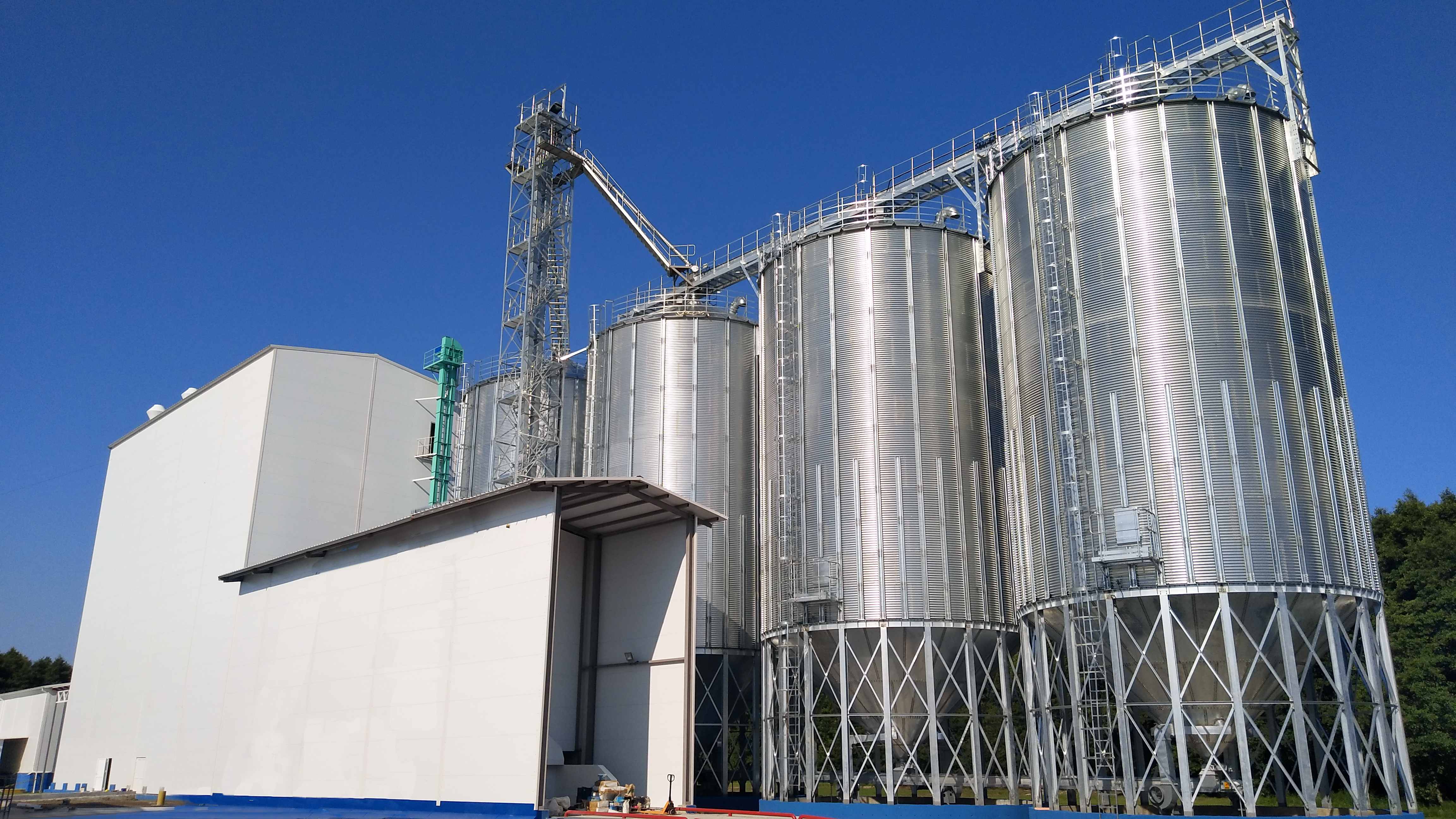
The dampening room might look like a forgotten corner of the mill, but it's where wheat does its most important work. Adding water isn't just wetting the grain; it's a timed negotiation. Hard wheat varieties need a rest of twelve to twenty-four hours so moisture can travel from the outer bran to the inner endosperm. If you rush it, the bran shatters into tiny fragments that end up in the flour, dulling its color and raising ash content.
Moisture's real trick is changing the physical character of the kernel. A properly dampened wheat berry has a bran coat that turns leathery and tough, so it peels away in large flakes during roller milling instead of crumbling into dust. At the same time, the endosperm becomes softer and more friable, meaning it breaks down into clean, uniform particles with less energy. That's why a quiet room with controlled humidity often does more to improve extraction than any piece of steel machinery on the mill floor.
Then there's the consistency angle. Ambient air in the mill changes day to day—dry in winter, humid in summer—and those swings would make flour specifications impossible to hit. The dampening room acts as a buffer, holding grain at a stable moisture target (often between 15% and 16.5% for hard wheats) before it enters the first break rolls. It's not a glamorous step, but without it, the whole milling process would be fighting the raw material instead of working with it.
Breaking It Down: The First Crack of the Roller Mill
The first crack in a roller mill is not a blunt crushing action but a controlled shear. A pair of counter-rotating, corrugated rolls grabs each wheat kernel at slightly different surface speeds. The slower roll holds the grain just long enough for the faster roll to split it open along its natural crease, exposing the pale endosperm inside while peeling away the outer bran layers in broad, intact flakes.
Roll gap and speed differential matter more than brute force here. Open the gap too wide and the kernels pass through merely flattened. Close it too tight, or run the rolls at matching speeds, and you shatter bran into fine fragments that become nearly impossible to separate cleanly later. A typical first-break setup runs the fast roll at roughly 2.5 times the speed of the slow roll, with flutes cut at a sharp angle to bite into the kernel rather than polish it.
What leaves this first nip is a rough mixture: chunky endosperm, large bran flakes, and a small amount of fines. That blend moves directly to sifters, where each particle size takes its own path. The quality of this initial break sets the whole mill’s rhythm—if the first crack is too aggressive or too timid, downstream extraction drops, and the miller spends the rest of the shift compensating.
Chasing the Perfect Particle: Sifters, Purifiers, and the Long Road to White Flour
In the late nineteenth century, millers chasing the prized white flour faced a stubborn problem: stone grinding left behind flecks of bran and germ that dulled the color and shortened shelf life. The answer arrived in the form of a new generation of sifters and purifiers. These machines did not simply separate coarse from fine; they used sieves, air currents, and vibrating screens to lift away the lighter bran particles while letting the heavier, starch-rich endosperm fall through. The result was a flour that looked almost unnaturally white compared with the grayish meal of earlier decades.
Purifiers took the quest further. A middlings purifier, often credited to Edmund LaCroix and refined by Cadwallader C. Washburn’s Minneapolis mills, blew a controlled stream of air through the stock as it moved across silk or wire mesh. That gentle blast loosened and carried off the bran specks that clung to middlings, leaving behind the purest possible particles for further reduction. Millers learned to chain these devices in long, repeated passes, scoring the wheat kernel into ever finer fractions and discarding everything that might compromise the whiteness. What emerged was not just a product but a standard: white flour became the benchmark of refinement, even as the sifters and purifiers kept working behind the scenes, quietly chasing a perfection that was always a few microns out of reach.
The Automated Floor: How PLCs and Sensors Keep Every Roll Turning
Out on the production floor, the rhythm rarely comes from a manual dial anymore. A compact PLC tucked inside a control cabinet reads a dozen inputs at once—line speed, tension, edge position—and adjusts motor commands before a roll ever thinks about slipping. Sensors mounted near each nip and unwind stand feed back real-time data, so the controller can nudge a drive frequency or trim a brake pressure without waiting for an operator to notice a wobble.
What looks like a room full of spinning steel is actually a conversation between hardware. Photoelectric eyes count revolutions, ultrasonic units measure roll diameter as it unwinds, and load cells report web tension in pounds. The PLC listens to all of it on a scan cycle measured in milliseconds, comparing actual values against setpoints stored from the last job change. When a splice is coming, outputs fire in sequence—clamp, cut, transfer—and the new roll picks up speed without a hiccup.
The real payoff is that the floor keeps moving through shift changes, material variations, and the occasional operator coffee break. If a sensor drifts out of range, the PLC flags it and either compensates or brings the line to a controlled stop instead of letting a roll tear itself apart. Maintenance can pull up the fault log and know exactly which prox switch or encoder gave out, rather than walking the line with a flashlight. It is not flashy, but it is why a mill can run three shifts and still hit tomorrow's shipping window.
Before the Bag: Final Blending, Fortification, and Quality Checks
Once the individual roast batches have cooled, they move to the blending drum where the final profile comes together. This isn't a casual toss of beans—each lot is weighed to within a few grams tolerance, then tumbled at a low speed just long enough to distribute surface oils and even out particle density without cracking the beans. If the blend requires fortification, micronized nutrients are introduced as a fine mist during the last few rotations so they cling evenly to the bean surface rather than settling as dust at the bottom of the drum.
After blending, every 50 kg pulled from the line gets a rapid extraction test to confirm the target strength and mouthfeel. Moisture content is rechecked against the profile, and anything drifting more than 0.3% is either sent back for re-drying or flagged for internal use. Only when the numbers align do the bags get filled, sealed, and stamped with the batch code.
FAQ
Before grinding, the wheat undergoes several cleaning stages—magnets remove metal, vibrating sieves and aspirators take out stones, straw, and dust, and a scourer rubs off surface dirt. It's then conditioned with water and rested in tempering bins so the bran toughens and the endosperm softens, making separation cleaner.
They blend wheat from different silos or regions and use near-infrared (NIR) analyzers at intake and after milling to monitor protein and moisture in real time. The mill's control system can adjust the wheat mix automatically to hit the target specification.
Roller mills give much better separation of bran, germ, and endosperm because the corrugated rolls cut and shear the wheat kernel gradually through several stages. Stone grinding crushes everything together and generates more heat, which can damage starch and gluten, while roller systems keep temperatures lower and allow precise particle size control.
The plansifter separates milled stock by particle size and density using stacked sieves that gyrate in a horizontal plane. Coarse bran, fine flour, and intermediate particles are sent to different destinations—some return to further reduction rolls, others become finished product—so the mill can extract maximum white flour with minimal bran contamination.
Sensors on rollers monitor vibration, temperature, and gap, while optical sorters scan grain streams and eject discolored or defective kernels with air jets. Much of this data feeds into a central PLC or SCADA system, letting operators spot a failing bearing or a drift in extraction rate before it becomes a batch-quality problem.
Most mills aim for around 15–16.5% moisture for hard wheat and slightly lower for soft wheat, depending on the desired flour and climate. Proper tempering makes the bran leathery so it flakes off in large pieces instead of shattering into flour, while the endosperm becomes mellower and easier to reduce without damaging starch.
Bran is sold for animal feed or further processed into dietary fiber products for human food, while wheat germ—rich in oil and vitamins—is often stabilized with heat to prevent rancidity and then packed as a health ingredient or used in specialty flours. Some mills also pelletize fine bran and screenings for feed.
Many plants install high-efficiency motors with variable frequency drives on pneumatic conveying fans and roll stands, recover heat from compressors, and use air-recycling systems that cut the volume of fresh air needing filtration. They also optimize roll gaps and sifter clothing based on real-time product granulation so grinding stages don't overwork the stock.
Conclusion
At a modern Chinese wheat flour mill, the process begins long before any grinding takes place. Wheat arriving at the intake pit is sampled and weighed immediately, with moisture and protein readings shaping how the batch will be handled. From there, it moves into dampening bins where precise water addition—often adjusted automatically based on incoming grain hardness—gives the bran enough toughness to peel away cleanly later. This quiet conditioning step is easy to overlook, but it decides whether the mill produces clean, high-extraction flour or a cloudy, brittle product.
Once conditioned, the wheat enters the roller mills, where the first break rolls crack the kernel rather than crush it, keeping the bran in large flakes. The resulting material passes through a cascade of sifters and purifiers, each pass separating endosperm chunks from bran and germ. It is not a single dramatic moment but a patient repetition of grinding, sieving, and classification that slowly brightens the flour. Throughout the mill, PLCs and sensors watch roll gaps, stock levels, and air currents, making micro-adjustments far faster than any human operator could. Before bagging, the flour is blended to hit exact ash and protein targets, then fortified with vitamins and minerals required for China’s national standards. Final checks include falling number, gluten quality, and color grade—every batch has to earn its way into the bag.
Contact Us
Contact Person: Jiakuo Wu
Email: [email protected]
Tel/WhatsApp: +86-13011566087
Website: https://www.pinglemachine.com