

CNC Lathe Machine Solutions: Boosting Efficiency and Precision in Modern Manufacturing
2026-07-29
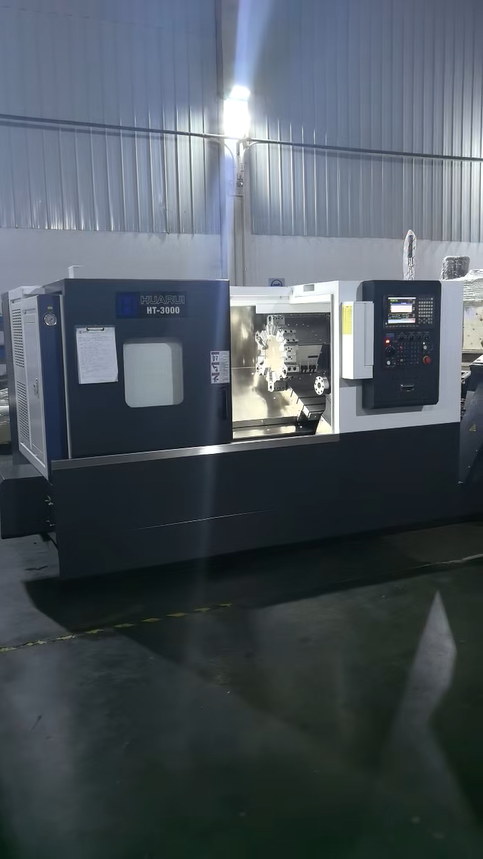
Modern manufacturing demands more than just speed—it requires precision that never wavers and efficiency that keeps costs in check. Yet many shops still struggle with bottlenecks, tool wear, and inconsistent finishes. What if there were a way not just to meet but exceed these expectations? Enter WINNRUI CNC lathe machines, engineered to bridge the gap between ambitious production goals and real-world results. In this post, we'll explore how smart design and advanced control systems are reshaping what's possible on the shop floor.
Precision Redefined: How Modern CNC Lathes Hit Micron Tolerances
Achieving micron-level accuracy requires a symphony of advanced components working in perfect harmony. Modern CNC lathes rely on hydrostatic or linear motor-driven spindles that eliminate mechanical contact, virtually erasing vibration and wear. These spindles maintain constant oil film thickness or magnetic levitation, ensuring rotational runout stays below a fraction of a micron even during heavy cuts. Paired with ultra-rigid machine beds cast from mineral composites or polymer concrete, thermal distortion is dampened far more effectively than in traditional cast iron structures. This stability is the bedrock upon which repeatable micron precision is built.
The control systems driving these machines have evolved into predictive brains. Real-time thermal compensation loops use arrays of sensors to map temperature gradients across the machine, adjusting tool offsets on the fly to counteract expansion. Glass scales or laser interferometers provide sub-micron position feedback directly from the axis, bypassing ballscrew inaccuracies. Meanwhile, servo tuning algorithms learn from cutting forces and adjust gain settings to prevent oscillations that could mar surface finish. It’s a dynamic interplay where the software constantly recalibrates the physical world to hold dimensions tighter than a human hair.
Tooling and fixturing have undergone a quiet revolution to support such extremes. Shrink-fit and hydraulic holders now deliver gripping forces that prevent micro-slippage while maintaining balance at high RPMs. Cutting tools with engineered edge geometries and nanolayered coatings slice materials with less pressure, reducing deflection that would otherwise push parts out of tolerance. Even coolant delivery is orchestrated: high-pressure through-tool systems blast chips away before they can cause recutting or thermal buildup. Every element—from the foundation pad under the machine to the tip of the insert—is scrutinized, because at the micron scale, nothing is negligible.
Slashing Cycle Times Without Sacrificing Quality
Speed and quality often feel like opposing forces in product development. The pressure to ship faster can tempt teams to skip testing or rush through design reviews, but that usually backfires with bugs and rework. Instead, the key lies in rethinking how work flows through the team. By mapping out every handoff and identifying where delays pile up, you often discover that the longest waits aren't during active coding—they're waiting for approvals, unclear requirements, or context switching. Tightening these gaps doesn't mean cutting corners; it means removing the invisible downtime that eats up the schedule without adding value.
Automation is an obvious lever, but it's easy to over-automate and end up with brittle pipelines that break constantly. The smarter approach is to automate only the repetitive, high-confidence checks—like linting, unit tests, and deployment steps—while keeping human judgment in the loop for complex decisions. Pair that with small, frequent integrations, and you catch integration issues early, when they're trivial to fix. Teams that do this well spend far less time untangling merge conflicts or stabilizing releases, which directly shrinks cycle time while maintaining a high bar.
Perhaps the most underrated accelerator is psychological safety. When developers feel safe flagging potential issues early, problems surface before they become crises. Regular but lean retrospectives that focus on process tweaks, not blame, compound into noticeable gains. Pair that with a culture where saying "I need help" is encouraged, and you avoid the silent struggles that silently stretch timelines. Quality doesn't come from exhaustive checklists—it emerges when smart people can collaborate openly and iterate quickly on a foundation of trust.
One Machine, Endless Possibilities: From Prototypes to High-Volume Runs
Tucked away in a modest workshop, a single machine hums quietly, transforming raw materials into the first tangible version of an idea. It begins with a prototype—rough around the edges, unpolished, yet brimming with potential. Layer by layer, it takes shape, guided by curiosity rather than certainty. This isn’t mass production; it’s an intimate dialogue between creator and creation, where every imperfection tells a story. The same setup that birthed a one-off concept can, with a shift in mindset, pivot to churn out thousands of identical units—without missing a beat.
There’s a quiet beauty in how the machine adapts. It doesn’t care if it’s crafting a single custom part for a niche project or feeding an assembly line. The tool heads swap, the software recalibrates, and suddenly the pace changes—but the heart of the process remains. Small businesses thrive here, using the flexibility to test markets without overcommitting. They might go from a handful of samples to a full production run overnight, all because the machine refuses to be pigeonholed. It’s not about having a dozen specialized systems; it’s about one reliable workhorse that learns new tricks.
The real magic surfaces when you realize that scalability isn’t a destination—it’s a rhythm. High-volume runs don’t dilute the ingenuity that sparked the prototype; they amplify it. What was once a fragile model becomes a rugged product, refined through the machine’s consistent precision. And when the next breakthrough idea strikes, the cycle begins again, right where it started: with a single machine, waiting to be pushed beyond its limits. That’s the sort of quiet versatility that turns a tool into a creative partner.
Smart Lathes for Smart Factories: The IoT Advantage
The integration of IoT into lathe machinery transforms these workhorses into intelligent nodes within a connected production ecosystem. Sensors embedded in spindles, tool posts, and coolant systems continuously stream data on vibration, temperature, and tool wear to a central platform. This real-time visibility allows manufacturers to move from reactive maintenance to predictive strategies, catching anomalies before they cascade into unplanned downtime. The result is a lathe that not only cuts metal but actively communicates its health and performance, enabling smarter scheduling and resource allocation across the factory floor.
Beyond maintenance, IoT-enabled lathes unlock new levels of process optimization. By analyzing historical and live cutting data, the system can automatically adjust feed rates, spindle speeds, and coolant flow to maintain tight tolerances while maximizing tool life. This adaptive control reduces scrap and rework, especially when machining complex or expensive components. Furthermore, connectivity allows for seamless integration with ERP and MES systems, so that job orders, CAD files, and quality specifications flow directly to the machine, minimizing setup errors and accelerating throughput.
The true IoT advantage emerges when multiple smart lathes form a self-regulating network. Data from one machine can inform the settings of others, balancing workloads and identifying process deviations across the fleet. Remote monitoring dashboards give operators and managers a unified view of production status from any location, fostering faster, data-driven decisions. In this environment, the factory becomes an agile, learning system where lathes continuously refine their own operations, driving overall equipment effectiveness and product consistency to levels unattainable with isolated, non-connected equipment.
Taming Tough Materials: Effortless Machining of Exotic Alloys
Machining exotic alloys like Inconel, titanium, and Hastelloy has long been a source of frustration for even seasoned machinists. These materials laugh at standard tooling, generate punishing heat, and work-harden if you so much as look at them wrong. But it doesn’t have to be a battle. With the right approach, you can turn these tough jobs into smooth, predictable processes that feel almost effortless.
The secret lies in rethinking your entire setup, not just swapping inserts. It’s about marrying smart toolpath strategies with specialized tool geometries designed to shear, not rub. Coolant delivery becomes a precise science rather than an afterthought, directing high-pressure streams exactly where they’re needed to break chips and keep things cool. When everything clicks, you’ll see consistent, beautiful finishes where others see only smoke and broken tools.
We’ve tackled the toughest alloys in real-world production environments and discovered that the true game-changer is adopting a mindset of control. By dialing in parameters that respect the material’s unique quirks—low radial engagement, consistent chip loads, and rigid workholding—you eliminate the unpredictability. Suddenly, that superalloy starts behaving more like a mild steel, and you’re completing parts in record time without the usual stress on your machines or your team.
Adapting to Tomorrow: CNC Solutions That Grow With You
In an industry where change is the only constant, your CNC equipment should never feel like a dead-end investment. We design our machines with modular architectures and open-system software that slot seamlessly into your current workflow—and evolve as your capabilities expand. Whether you’re taking on new materials, tighter tolerances, or higher volumes, our platforms accept upgrades without forcing a complete overhaul. This means you can start with the capacity you need today and add advanced spindles, automation cells, or multi-axis functionality when the time is right, all while preserving your original investment.
More than just hardware, our approach pairs each machine with a software ecosystem that learns and grows alongside your team. Real-time monitoring, adaptive feed control, and cloud-backed analytics allow the equipment to fine-tune itself as production demands shift. When a new operator walks onto the floor, the intuitive interface shortens the learning curve; when your shop begins running lights-out, the same system steps up with predictive maintenance alerts and remote diagnostics. It’s the kind of quiet intelligence that doesn’t just keep pace with tomorrow—it helps shape it.
We’ve seen too many shops boxed in by rigid, single-purpose machinery that loses relevance in five years. That’s why every system we build is backed by a long-term upgrade roadmap and a global support team that genuinely listens. From retrofitting existing units with next-gen controllers to adding collaborative robots that handle loading, the path forward is always open. You’re not just buying a CNC; you’re securing a platform that will scale, adapt, and pay dividends long after the initial purchase. That’s the difference between a tool that ages and one that matures with your ambition.
FAQ
Bringing CNC lathe technology into your workflow doesn't just speed things up—it fundamentally changes how you approach precision. You get repeatability down to microns, faster cycle times without sacrificing surface finish, and the ability to handle complex geometries that manual machines can't touch. The real gain is in unattended operation: lights-out manufacturing becomes feasible, which directly impacts your bottom line.
It's all about real-time adaptability. Modern controls use algorithms that adjust feed rates and spindle speeds based on sensor feedback—think vibration damping and thermal compensation. This means the tool path stays optimal even as conditions change, so you get consistent finishes and fewer scrapped parts. Plus, features like tool load monitoring help catch insert wear before it ruins a batch.
Absolutely, and this is where many shops miss the mark. With quick-change tooling, conversational programming, and offline simulation, setup times drop dramatically. You can go from print to part in hours, not days. The flexibility means you're not tied to massive runs to recoup costs. For custom work or prototyping, a well-equipped CNC lathe often beats manual machines on cost per part once you factor in consistency and rework.
Automation turns a great machine into a production cell. Bar feeders, gantry loaders, and robotic part handling eliminate spindle downtime. But the smarter side is process integration—like in-process gauging that automatically updates tool offsets, or chip management systems that prevent recutting. When you combine these with remote monitoring, you're looking at a system that self-corrects and keeps running without someone hovering over it.
Multi-axis machines blur the line between lathe and mill. With live tooling and Y-axis, you can drill, tap, and contour off-center features in one setup. That means no secondary operations, tighter tolerances since you're not re-fixturing, and a huge reduction in lead time. Complex parts that used to move across three machines now come off one, complete.
Look beyond horsepower and chuck size. Focus on the control's ease of use—how fast can your operators really program at the machine? Evaluate thermal stability: machines with symmetric frames and chilled fluids hold tolerances longer. Consider the ecosystem too: tool presetters, CAM software compatibility, and the vendor's support for training. A higher upfront cost often pays off in less downtime and better parts.
The days of reactive fixes are fading. Sensors on spindles, axes, and coolant systems feed data to software that spots anomalies—like a slight increase in vibration or temperature—well before failure. This lets you schedule maintenance during planned downtime instead of crashing mid-shift. Health monitoring extends component life and keeps your process stable, which is critical for tight tolerances.
We're seeing a move toward fully digitized twins, where you simulate and optimize the entire process before cutting metal. Artificial intelligence is creeping into chip formation analysis, automatically picking the best cutting strategies. And there's a growing emphasis on sustainable machining—think minimum quantity lubrication and power monitoring to cut energy use. These aren't gimmicks; they're reshaping how we think about production efficiency.
Conclusion
Today’s CNC lathes have shattered old limitations, routinely holding tolerances as tight as a few microns while dramatically accelerating production. They achieve this through advanced linear motor drives, real-time thermal compensation, and high-rigidity machine structures that damp vibration even during aggressive cuts. The same machine can switch from delicate prototype work to high-volume runs without retooling breaks, thanks to multi-axis turrets, live tooling, and automated pallet changers. Exotic materials like Inconel, titanium, and hardened steels are machined with ease using optimized cutting strategies and high-pressure coolant systems that prevent work hardening and tool wear.
Built-in IoT connectivity transforms these lathes into nodes on a smart factory network, feeding live spindle load, temperature, and vibration data to centralized dashboards for predictive maintenance and adaptive process control. Operators receive alerts before a tool degrades, slashing unplanned downtime. Moreover, the modular architecture of modern CNC platforms—swappable spindles, expandable tool magazines, upgradeable software—means the lathe evolves alongside your product line. You aren’t just buying a machine; you’re investing in a future-proof solution that tightens tolerances, shortens lead times, and unlocks new materials without replacing the entire cell.
Contact Us
Contact Person: Tim
Email: [email protected]
Tel/WhatsApp: +86 15522553731
Website: https://www.winnrui-cnc.com/