

Custom Forged Steel Check Valve Solutions for Reliable Flow Control
2026-11-20
Flow control systems live and die by the smallest components, and check valves are often the unsung gatekeepers. In demanding industrial environments, a forged steel check valve isn't just a fitting—it's the difference between continuous operation and costly backflow failures. At CRXV, we build custom solutions that refuse to compromise on reliability, because standard off-the-shelf parts rarely survive real-world pressure swings. This guide walks through what truly matters when specifying forged steel check valves for critical service.
Forged Steel Grain Structure and Its Effect on Check Valve Lifespan
The way metal flows during forging gives steel a directional grain pattern that most cast parts simply cannot match. In a check valve body, this flow lines up with the areas that experience the highest repeated stress, such as the hinge pin bosses and the seat shoulder. Instead of relying on random grain boundaries to arrest crack growth, the forged structure forces cracks to follow a longer, more tortuous path. That extra resistance translates directly into fewer fatigue failures over years of pressure cycling.
Grain refinement also matters at the surface where the disc slams shut. A tightly packed, uniform grain size reduces the small discontinuities that act as stress concentrators. Field inspections often show that cast valve bodies develop micro-cracks around the seat bore after a few thousand aggressive closure cycles, while forged bodies of the same nominal chemistry remain intact far longer. The difference is not magic; it is the result of compressive working of the steel breaking up inclusions and healing internal voids during production.
There is a practical limit, of course. Forging cannot compensate for poor material selection or an undersized hinge design. However, when all other variables are held constant, the improvement in lifespan tied to grain flow can be sizable, particularly in high-cycle steam and feedwater service where check valves open and close many times per shift. Maintenance teams that replace cast bodies with forged equivalents often report fewer seat leaks and hinge pin wear issues after the first operating year, which points to the mechanical advantage built into the base material itself.
Custom Seat Profiles That Prevent Leakage in Dirty Service
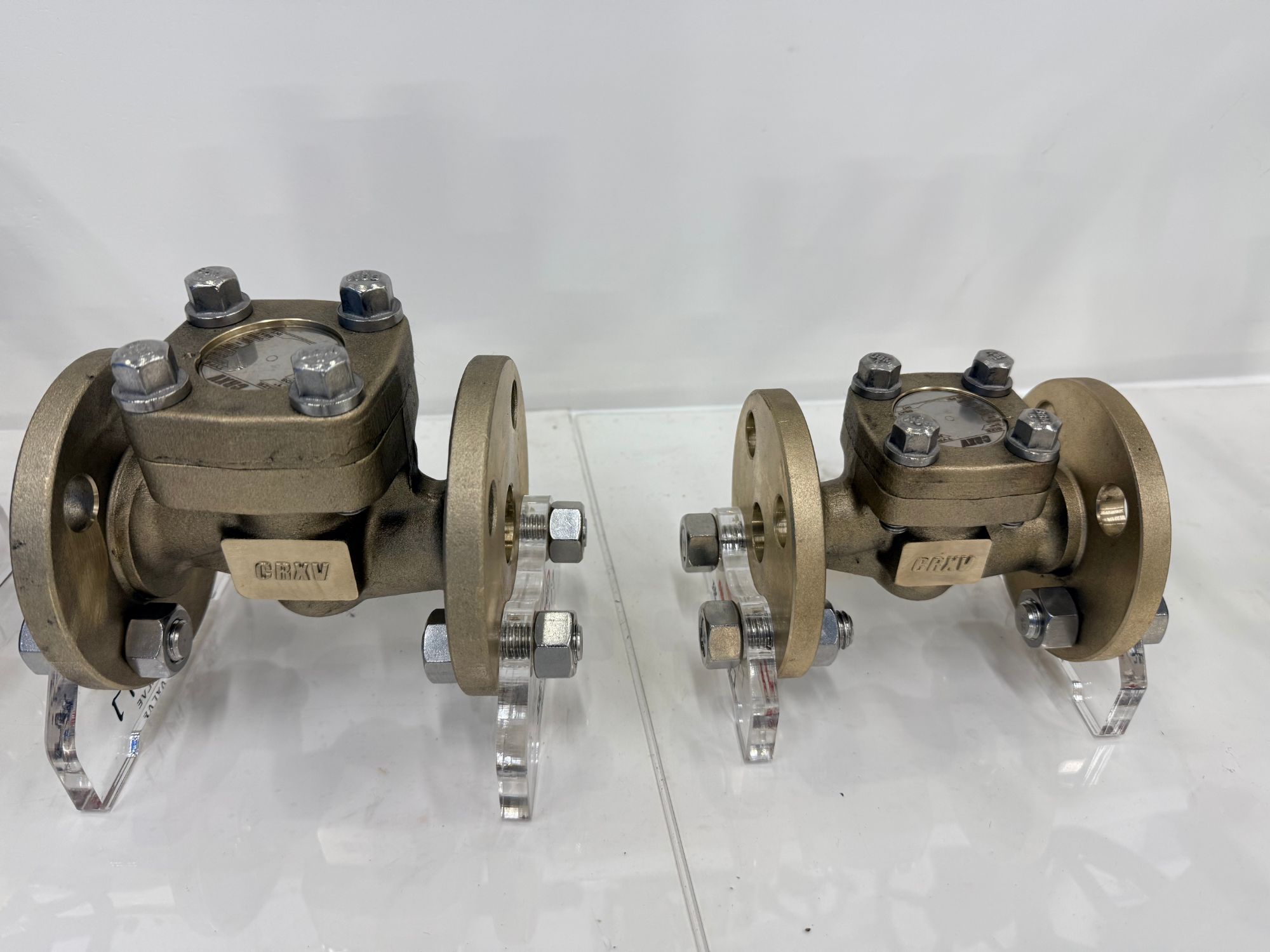
In dirty service, a standard plug-and-seat interface rarely survives long. Slurries, catalyst fines, and process solids wedge into the seating area and hold the valve slightly open. Custom seat profiles change that contact geometry. Instead of a broad lapped surface that traps particles, the seat uses a narrow, angled land with a defined break edge. The plug contacts this land first and then rotates slightly, which produces a scraping action across the sealing face. That motion clears debris before the final shutoff position is reached.
The profile can also be cut with a relief groove behind the seating land. This groove gives displaced solids somewhere to go, so they do not pack against the back of the seat and prevent full engagement. In high-cycle applications, the groove is combined with a harder facing on the plug and a slightly softer seat insert. The hardness difference allows the seat to conform to the plug without galling, while the custom profile maintains a consistent contact band even as the insert wears.
Field results tend to improve most when the seat profile is matched to the specific failure pattern. If leakage occurs after thermal swings, the profile may include a controlled flexure section that keeps the seal tight as the body moves. If the problem is sticky solids, a steeper seating angle and reduced land width usually work better. In both cases, the goal is the same: give the valve a predictable shutoff line that dirt cannot easily disrupt.
Spring and Crack Pressure Tuning for Predictable Opening
Crack pressure rarely matches the catalog number once the spring has taken a set, the seal has bedded in, and the housing temperature has shifted. A better starting point is to set preload on a test stand with a slow pressure ramp and a gauge that can catch the first measurable lift, not the point where flow becomes obvious. Small preload changes often move the opening point in jumps, so work in quarter-turn steps and bleed the line before each repeat.
If the valve opens early or chatters near the threshold, the usual culprits are stiction at the seal, a spring that is too stiff for the required band, or a poppet that cocks slightly in its bore. Loosening the spring perch may raise or lower the reading in a nonlinear way, because the effective seat area changes as the poppet unloads. Watch the pressure trace over several cycles and narrow the setting to the range where the lift is clean and return is immediate, then lock the adjuster without disturbing the spring end.
Final tuning should happen at operating temperature and with the actual process fluid where possible. A cold bench setting can drift after warm-up, especially with soft seats and aluminum bodies. Use a lower-rate spring with more initial compression when you need a flat, repeatable opening, and record the measured crack pressure after a few hundred cycles rather than relying on the nominal spring rating.
End Connections and Pressure Ratings Beyond the Standard Catalog
Standard catalog pages tend to stop being useful once a line moves into custom pressure classes or uncommon end preparations. A raised-face flange may look straightforward on a drawing, but high cyclic loads, mixed materials, or a tight piping envelope often mean the actual connection has to be reworked anyway. The same applies to pressure ratings, where the nominal class can undersell the fatigue and temperature limits the system really sees.
Beyond routine flanged and threaded ends, the practical options include butt-weld, socket-weld, hub-style, and proprietary compact flanges, along with grooved or clamped ends where field assembly time matters. Pressure boundaries above typical catalog ranges may call for API 6A flanges, intermediate class ratings, or custom facings and bolting. In those cases the seal geometry and material pairing carry more weight than a generic gasket selection, and even small changes in facing finish can shift allowable leakage or torque behavior.
The real decision usually comes down to installed cost and long-term access. A heavier weld-end valve may eliminate a flanged joint, but it also pushes inspection and welding back onto the pipe crew. A higher pressure rating can change bolt sizes, flange thickness, and the temperature envelope enough to require a different trim or body grade. Sorting out those details before the datasheet is frozen keeps the connection from becoming an expensive late revision.
Surface Treatments That Keep Forged Check Valves Working in Corrosive Lines
Corrosive service rarely attacks a forged check valve evenly. The seat faces, hinge pin bores, and disc edges collect chloride or acid traces long after the line is drained, so a treatment that only covers the outside of the body offers little real protection. High-phosphorus electroless nickel is widely used here because it plates recesses and threaded areas without building up enough thickness to alter seat geometry. It creates a reasonably hard, low-porosity barrier that handles sour water, brine, and mild acids without requiring the part to be re-machined afterwards.
When the medium also carries abrasive solids or the valve cycles often, thermal spray coatings become more useful. HVOF-applied tungsten carbide or chromium carbide gives the disc and seat a dense, well-bonded skin that resists both erosion and chemical attack. The layer still needs careful finishing and sometimes a seal coat, since open porosity can let aggressive fluids reach the substrate. On lower-temperature chemical lines, PTFE or PFA linings and coatings work well, but masking is critical around hinge pins and seating surfaces so the check valve still opens and closes cleanly instead of binding against a soft film.
Installation Practices That Avoid Water Hammer and Early Wear
Most water hammer problems start long before the system ever gets filled. One of the simplest moves is to avoid hard 90-degree elbow fittings right at the discharge side of a pump or solenoid valve. When flow has to make a sharp turn at high velocity, the pressure spike gets reflected back into the valve or pump housing. Using two 45-degree fittings spaced a few pipe diameters apart, or a larger radius sweep, gives the fluid a more gradual path and cuts down the sharp jolt that rattles pipes and loosens joints.
Pipe anchoring matters just as much as the layout. If a section of pipe can move even a few millimeters when flow stops suddenly, that movement concentrates stress at threads, flanges, and brackets. Clamps and supports should be placed close to quick-closing valves and at changes in direction, but they need to hold the pipe firmly without pinching it so tight that thermal expansion becomes a problem. A little controlled movement over a long straight run is fine; uncontrolled movement next to a valve is what leads to early wear.
Air chambers and water hammer arrestors only do their job when they are installed in the right spot and kept full of air or gas. Putting an arrestor too far from the source of the shock gives the pressure wave time to build before it hits the cushion. Mount them as close as practical to the appliance or valve that creates the sudden stop. Also avoid draining the system in a way that lets the arrestor become waterlogged, because once the air cushion is gone, the device becomes just another dead-end fitting that offers no protection.
FAQ
Forged steel has a tighter grain structure and fewer internal voids, so it holds up better under pressure cycling and thermal stress. For check valves that open and close frequently, that translates to fewer fatigue cracks and a longer service life than cast bodies.
Yes. We regularly build to odd face-to-face lengths and non-standard flange patterns. Send the old valve's dimensional drawing or a field measurement, and we adapt the body and trim without forcing piping changes.
We adjust spring load and disc stroke based on flow velocity, not just line size. For vertical or pulsating services, we can fit a damped disc or a soft-seat insert so the valve closes just before reverse flow starts instead of slamming.
Most orders fall between ASME Class 800 and Class 4500, with carbon steel bodies handling roughly -29°C to 425°C and stainless or alloy grades going higher. Actual limits depend on seat material and whether the service is corrosive or cyclic.
We do. Forged ASTM A105, A350 LF2, and F22 bodies can be supplied with NACE MR0175/ISO 15156 compliance, including controlled hardness on wetted parts and full traceability on the heat lot.
Shell and seat tests are standard, usually with nitrogen or water per API 598. For critical orders, we add helium leak testing, PMI on the body and trim, and a full dimensional report with photos. You can also witness the testing live by video.
A straightforward size with minor changes ships in about four to six weeks. Exotic alloys or special trim can push lead time to ten weeks, but we provide a firm schedule once the machining plan and raw material are confirmed.
We choose seals and seating surfaces that resist sticking and corrosion during idle periods. A resilient seat or a hardfaced disc can be fitted, and we can add a drain port if the cavity needs flushing before shutdown.
Conclusion
Reliable flow control with custom forged steel check valves begins before the valve reaches the line. The forged grain structure follows the body contours more closely than a casting, reducing weak points and helping the seat and disc hold alignment through repeated thermal cycles. In dirty service, that structural stability supports a precisely machined seat profile that sheds particulates rather than trapping them. Matching the spring rate and crack pressure to the actual system keeps the disc from fluttering or opening late, so the valve becomes a predictable boundary that opens only when it should and seats firmly when flow stops. That alignment also reduces uneven seat loading and the small leaks that develop after months of intermittent service.
The same custom approach carries into the connections and surroundings. End connections, bore sizes, and pressure ratings can be matched to existing spools or unusual flange arrangements instead of forcing a standard catalog item to fit. Surface treatments such as nitriding, hard chrome, or corrosion-resistant overlays protect internals in aggressive lines. Installation details also play a role: adequate straight-run length, slower closure, and proper air relief reduce the shock that causes water hammer and early wear. Even small changes in disc mass or travel can be revisited to suit the medium, allowing a tighter shutoff without compromising opening response. Taken together, these choices keep a forged check valve working as a quiet, dependable part of the system rather than a recurring maintenance problem.
Contact Us
Contact Person: TIM
Email: [email protected]
Tel/WhatsApp: 8615857807381
Website: https://www.crxv.com/en/