
Custom Swiss Type Lathe: Precision Machining for Complex Parts
2026-07-30
When off-the-shelf lathes can’t meet the demands of your most challenging parts, a custom Swiss type lathe becomes the key to unlocking precision. WINNRUI CNC engineers machines that tackle complex geometries with ease, delivering the accuracy and consistency your projects require. In this post, we’ll explore how tailored Swiss turning solutions can transform your machining capabilities.
When Microns Matter: The Swiss Approach to Tight Tolerances
In Swiss machining, the tolerance isn’t just a number—it’s a culture. While many manufacturers see ±5 microns as a theoretical limit, Swiss shops treat it as a starting point. This mindset emerged from centuries of watchmaking, where a gear out of alignment by a hair’s breadth could halt a movement. Today, the same rigor is applied to medical implants and aerospace components, where deviation isn’t measured in cost overruns but in lives affected.
Achieving such precision requires obsessive control over every variable. Temperature fluctuations? The entire production floor is held at 20°C ± 0.5. Tool wear? Real-time compensation systems adjust before a micron is lost. Even coolant flow is modeled to prevent micro-deformations. It’s an ecosystem where the machine, the environment, and the metrology are indivisible.
But what truly sets the Swiss approach apart is the human layer. Operators are trained not just to read a measurement but to sense when a process is ‘breathing’ wrong. They combine digital readouts with a tactile intuition passed down through apprenticeships. This blend of old-world craftsmanship and Industry 4.0 creates a resilience that pure automation can’t replicate—a quiet confidence that when the print says 5 microns, the part is exactly that, and nothing less.
Beyond Standard CNC: Tailoring Swiss Turning for Unique Geometries
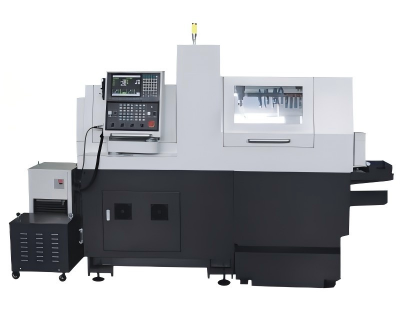
When standard CNC lathes hit their limits, Swiss turning steps in to handle the kind of shapes that make other machines stutter. It’s not just about smaller parts—it’s about the clever interplay between the guide bushing and multi-axis control that lets you machine delicate features without the workpiece flexing or vibrating out of tolerance. Suddenly, long, slender shafts with intricate off-center holes or bizarrely contoured medical bone screws become routine rather than risky.
What really sets Swiss turning apart is how it rethinks the cutting zone. Instead of the tool moving to the part, the part slides through a precision-ground bushing, giving it support right next to the action. This means you can dive into eccentric geometries, deep cross-drilling, and thread whirling with a stability that feels almost like cheating. Complex profiles that would normally demand multiple setups or specialized fixtures get merged into a single smooth operation.
The real artistry comes from combining live tooling with synchronized spindle movements. Imagine milling a polygonal contour on the face of a thin-walled tube while simultaneously turning its OD and ID—all without unchucking. That’s the kind of unique geometry work that turns heads on the shop floor. It pushes Swiss machining beyond traditional pin-and-bushing territory into a realm where the only limit is how creatively you can program the toolpath.
Mastering Complexity: How Custom Lathes Handle Multi-Axis Challenges
In modern manufacturing, the demand for parts with intricate geometries and tight tolerances has pushed conventional lathes to their limits. Custom multi-axis lathes rise to this challenge by integrating additional axes—beyond the standard X and Z—directly into the turning process. These machines can move cutting tools along multiple planes simultaneously, enabling operations like off-center drilling, angled contouring, and complex profile generation in a single setup. This not only eliminates the need for secondary operations but also drastically reduces cycle times while maintaining exceptional accuracy.
The secret behind this capability lies in advanced control systems and bespoke mechanical designs. Custom lathes often incorporate live tooling that rotates independently, Y-axis offsets for milling and boring, and even sub-spindles for back-working. High-speed servos and rigid construction work in concert to synchronize these movements, absorbing cutting forces and preventing vibration even during aggressive multitasking. Every machine is tailored to the specific workpiece family, with tooling configurations and axis travels optimized for the unique blend of features required—whether it’s a medical implant with compound curves or an aerospace component with deep, angled ports.
Perhaps the most underrated advantage is how custom lathes simplify programming for complex parts. Instead of juggling multiple machines and fixtures, engineers can use integrated CAD/CAM workflows to generate toolpaths that leverage the full kinematic chain of the lathe. Real-time collision detection and simulation ensure that every move is validated before chips are ever cut, eliminating surprises on the shop floor. The result is a streamlined production process where even the most geometrically demanding workpieces—once considered unmanufacturable—are delivered with consistent quality and speed, giving manufacturers a decisive edge in competitive markets.
From Prototype to Production: Scaling Precision with Swiss Engineering
Swiss engineering is often associated with meticulous craftsmanship, but the real test comes when a prototype must evolve into a production-ready solution. In this transition, tolerances tighten from microns to sub-microns, and processes that worked at a one-off scale can crumble under the demands of repeatability. The art lies in preserving the precision of the original design while adapting workflows to industrial volumes—a challenge that calls for a blend of traditional machine-building expertise and modern automation strategies.
At the heart of this scaling effort is a deep understanding of material behavior and process stability. Instead of simply adding more machines, engineers refine the entire manufacturing chain: thermal compensation keeps measurements accurate across fluctuating shop-floor temperatures, in-process gauging corrects deviations in real time, and specially designed fixtures eliminate human error. These methods allow a single, expertly calibrated cell to deliver consistency that rivals mass production without sacrificing flexibility—a hallmark of the Swiss approach.
Perhaps the most telling detail is the role of apprenticeship and institutional knowledge. Scaling precision isn't just about technology; it's about passing down techniques for deburring, alignment, and finish that can't be captured in a CAD file. By pairing this tacit knowledge with data-driven monitoring, Swiss manufacturers achieve the paradoxical result of making each component as if it were the first prototype, even when producing thousands. The outcome is not merely parts that meet spec, but a reputation for unyielding quality that becomes the standard for everything from aerospace actuators to medical implants.
Material Matters: Optimizing Swiss Machining for Exotic Alloys
Exotic alloys like Inconel, titanium, and Hastelloy bring unmatched strength and corrosion resistance to critical components, but they also introduce serious machining headaches. These materials tend to work-harden, generate intense heat at the cut, and quickly degrade tooling. Swiss-style lathes, with their guide bushing support and precise coolant delivery, can tame these beasts—if you dial in the right approach. The key lies in understanding how each alloy behaves under the shearing forces of micro-turning and adjusting your parameters to stay ahead of the deformation curve.
Tooling choices make or break the process. Standard carbide inserts often crumble when facing the relentless abrasion of nickel-based superalloys, so many shops turn to advanced coatings like AlTiN or diamond-like carbon, paired with sub-micron grain substrates that maintain edge integrity. Even with premium tooling, speeds and feeds must walk a tightrope: too slow and you rub instead of cut, work-hardening the surface; too fast and thermal shock claims another tip. Tiny chip breakers and high-pressure through-tool coolant become essential to flush heat away from the sheer zone and prevent built-up edge.
Beyond the cut, the entire Swiss ecosystem must adapt. Barstock preparation needs extra attention—any surface imperfections can cause chatter or guidance issues in the close-tolerance guide bushing. Oil viscosity and nozzle placement are fine-tuned to each exotic material, often moving away from standard recipes. Some alloys demand creep-feed conditions or pecking cycles that reduce tool engagement time. When everything aligns, though, Swiss machines can produce complex, burr-free parts from these stubborn alloys with cycle times and surface finishes that conventional turning can’t touch.
The Silent Advantage: Reduced Vibration, Elevated Accuracy
When a tool hums rather than shakes, something remarkable happens at the point of contact. Reduced vibration isn't just about comfort—it directly feeds into precision. Muscles stay steady, the bit or blade tracks true, and the margin for error shrinks without any conscious effort on your part. It's the kind of quiet engineering that separates a rough cut from a clean line, a wandering drill from a dead-center bore.
Less vibration also means less micro-chatter that deflects cutting edges by fractions of a millimeter you can’t even see—but your results definitely reveal. In practice, that translates to joints that fit the first time, surfaces that need less sanding, and assemblies that come together without persuasion. The accuracy gain isn’t loud; it shows up as fewer do-overs and a finish that looks like it took twice as long to achieve.
FAQ
Its sliding headstock design and guide bushing support the workpiece right at the cutting zone, so you get unmatched stability and accuracy even on parts with very small diameters and long length-to-diameter ratios.
Custom tooling layouts, special spindles, and automation add-ons let you tackle everything from micro-machining to multi-axis contouring in one setup, turning the lathe into a dedicated solution for high-mix low-volume or complex family parts.
Absolutely. Because the guide bushing keeps deflection near zero and you can do milling, drilling, and tapping in the same clamping, many parts come off the machine fully finished to ±0.0002 inches or better, skipping grinding and honing steps.
From tough superalloys like Inconel and titanium to free-machining brass and even medical-grade plastics, the right inserts, coolant delivery, and tuned spindle speeds allow efficient turning of a wide spectrum without compromising tool life or surface finish.
Stringy chips can jam around the guide bushing and scratch the part. High-pressure coolant through the tool, chip-breaker geometry, and programmable pecking cycles break those ribbons into manageable bits, keeping the process safe and hands-off.
The sub-spindle can grip the parted-off end to finish the back side of the part while the main spindle starts the next piece, eliminating a separate clamping operation and letting you produce drop-off-complete components in one continuous cycle.
Thermal growth can shift tool positions by a couple microns. Built-in cooling systems, linear scales, and smart compensation loops keep the machine thermally stable, so you hold tolerances hour after hour without manual adjustments.
Conclusion
Crafting parts that push the boundaries of precision demands more than just standard equipment—it calls for a machine built around the challenge. Custom Swiss type lathes bridge the gap between design intent and real-world accuracy, holding tolerances down to a few microns even in long production runs. The unique sliding headstock design and guide bushing construction minimize deflection, so thin, intricate components emerge with flawless consistency. By tailoring setups to each job—whether it involves unusual geometries, oddball materials like Inconel or titanium, or the need to combine turning, milling, and cross-drilling in a single pass—these lathes tame complexity that would push ordinary CNCs past their limit. The result is a process where complexity becomes routine, and prototypes scale to full production without a sacrifice in quality.
The real magic happens in the details machines are often overlooked. Advanced spindle synchronization and vibration damping keep tool chatter nearly nonexistent, translating directly into smoother surface finishes and longer tool life. Multi-axis capability isn’t just a spec sheet item; it’s the difference between multiple setups and a single, uninterrupted cycle that eliminates stack-up errors. From medical bone screws to aerospace connectors, the ability to process exotic alloys without compromising dimensional stability separates a custom Swiss solution from off-the-shelf alternatives. In an industry where a few microns define success or failure, these purpose-built lathes deliver an understated but critical advantage: repeatable precision that never drifts, even when the material is unforgiving and the geometry leaves no room for error.
Contact Us
Contact Person: Tim
Email: [email protected]
Tel/WhatsApp: +86 15522553731
Website: https://www.winnrui-cnc.com/