

Eco-Friendly Sandwich Panel Production Line: Sustainable Manufacturing for Modern Construction
2026-08-09
Imagine a construction process where speed meets sustainability—where every panel produced reduces waste and energy consumption without compromising strength. That’s the promise of eco-friendly sandwich panel production lines, and at the forefront of this revolution is YI ZHOU TECHNOLOGY. These advanced systems are redefining modern construction by integrating green materials and precision engineering, making sustainable building not just an ideal but a practical reality.
Rethinking Building Materials: The Rise of Eco-Conscious Sandwich Panels
For decades, construction has leaned heavily on concrete and steel, materials with staggering carbon footprints that are no longer easy to ignore. A quiet but significant shift is now underway, driven by a collective reexamination of how buildings come together. Instead of defaulting to these heavy, resource‑intensive options, designers and builders are increasingly looking for assemblies that trim waste without sacrificing performance—and that’s exactly where sandwich panels begin to turn heads.
What makes the newest generation of sandwich panels stand out is the deliberate choice of core materials. Gone are the days of simply sandwiching foam between two metal sheets; today’s eco‑conscious versions incorporate recycled PET, mineral wool derived from volcanic rock, or even bio‑based foams that perform just as well thermally while quietly lowering the panel’s overall environmental impact. The rigid outer skins still provide structural muscle, but it’s that thoughtful middle layer that truly changes the equation, slashing heating and cooling demands inside the building envelope.
The momentum isn’t happening in a vacuum. Stricter energy codes and green building certifications are nudging the industry forward, yet the appeal goes deeper than checklist compliance. Architects are rediscovering the design flexibility that comes with a lighter, thinner wall system, and contractors appreciate the rapid, dry‑installation process that reduces on‑site disturbance. It’s a convergence of practicality and principle—a sign that rethinking materials isn’t a compromise, but a smarter way to build.
Inside the Production Line: How Clean Manufacturing Shapes Tomorrow's Skylines
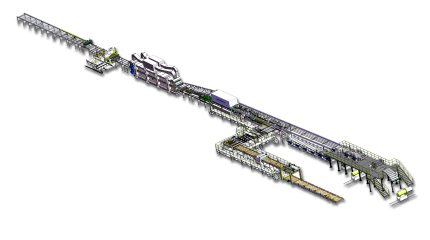
Walk into a modern fabrication hall and the first thing you notice isn’t the noise—it’s the quiet. Dust-free floors, precisely calibrated robotics, and sealed assembly zones have redefined how structural components come to life. This shift toward ultra-clean production environments isn’t just about pride in appearance; it directly influences the integrity and longevity of the steel, glass, and composite systems that will one day stretch across city horizons. When contaminants are stripped away from the manufacturing equation, welds hold stronger, coatings bond truer, and tolerances tighten to levels that were unthinkable a decade ago.
Beyond quality, there’s a ripple effect on design freedom. Architects no longer need to over-engineer simply to compensate for impurities introduced during fabrication. Curtain wall mullions can be slimmer, joints nearly invisible, and load paths more daring. Clean manufacturing allows material properties to be fully expressed rather than compromised, giving rise to transparent facades that seem to float and soaring atria bathed in natural light. In many ways, the skyline itself becomes a direct reflection of the purity maintained back at the factory bench.
Sustainability threads through this transformation as well. Processes that recycle cutting fluids, filter airborne particulates, and reuse thermal energy are dismantling the image of manufacturing as a dirty trade. The towers being erected today carry embodied stories of resource-conscious production cycles—something that resonates deeply as cities demand lower-carbon footprints. Ultimately, every beam hoisted into place and every curtain wall panel bolted on carries a silent promise: that the future we build upward is shaped by the care we exercise at ground level, inside those meticulously controlled production lines.
From Waste to Wall: The Circular Journey of Sustainable Panels
Every sustainable panel begins its life far from a showroom, in the overlooked corners of our cities—construction rubble, discarded packaging, and agricultural leftovers. Instead of heading to landfill, these castoffs are gathered, sorted, and ground into raw particles. The process might seem messy, but it’s here that the transformation takes root. The mixed fragments are bound together under heat and pressure, emerging as solid boards that carry the textures and stories of their former lives. No two panels turn out exactly the same, each bearing faint flecks and fibers that hint at its origins.
Once pressed, the panels enter a quiet evolution. They’re cut, sanded, and sometimes faced with a thin layer of reclaimed veneer or low-impact finish. This stage is more about restraint than reinvention—the aim is to keep the material’s raw character intact while making it fit for walls, furniture, or shelving. A panel that once was a rice husk or a cardboard box now sits in an architect’s hand, considered for its warmth and irregularity rather than pretending to be flawless. The shift is subtle: waste stops looking like waste and starts reading as texture, grain, a kind of honesty.
The final leg of the journey happens in the spaces we inhabit. A finished wall cladding or a cabinet door bears the panel’s past in plain sight—tiny specks of color, a slightly uneven surface, a reminder that this thing has lived before. And when its time is up, the board can return to the cycle, ground down and pressed again without losing its strength. That’s the loop closing, not with a dramatic finale, but with a quiet promise: the wall you lean on today might have been a crate yesterday, and a desk tomorrow.
Energy-Smart Production That Cuts Carbon Without Cutting Corners
Behind every low-carbon product, there’s a smarter way to make things. We've redesigned production cycles to use less energy without compromising speed or quality. By leaning on real-time monitoring and adaptive machinery, we squeeze more out of every watt—cutting waste before it ever hits the meter. The result? A leaner line that doesn't just meet sustainability targets, it outperforms old methods on cost and output.
Instead of patching emissions at the end of the pipe, we embed efficiency deep into the process. Our lines use predictive load balancing, so equipment runs only when needed, and never idles at full draw. This isn't about sacrificing performance for a green label—it's about rethinking the logic of manufacturing so that each step does more with inherently less. That means shorter cycle times, cooler running gear, and fewer carbon offsets to buy later.
What looks like a simple tradeoff between profit and planet actually dissolves when you treat energy as a raw material. By tightening voltage curves and recovering process heat, we turn what used to be losses into usable gains. Engineers on the floor don't just see carbon saved; they see faster changeovers and fewer interruptions. It's production that respects both the bottom line and the atmosphere—without making excuses for either.
Why Architects Are Choosing Green Sandwich Panels for High-Performance Buildings
Modern architecture demands materials that balance structural integrity with environmental responsibility. Green sandwich panels have emerged as a natural fit, offering exceptional thermal performance thanks to their high-efficiency insulating cores. This directly translates to buildings that consume far less energy for heating and cooling, helping projects meet rigorous efficiency standards without costly add-ons or complex construction techniques.
Beyond energy savings, architects appreciate the design flexibility these panels provide. Available in a wide range of finishes, textures, and colors, they can replicate traditional materials like wood or stone while maintaining a lightweight profile that simplifies structural requirements. The panels’ modular nature also accelerates on-site assembly, cutting construction timelines significantly and reducing labor costs—a practical advantage that doesn’t compromise aesthetic vision.
Durability and sustainability go hand in hand with these materials. Many green sandwich panels are manufactured using recycled content and are fully recyclable at the end of their long service life. Their resistance to moisture, mold, and pests ensures minimal maintenance over decades, while their factory-controlled production eliminates waste and ensures consistent quality. For architects aiming to create high-performance buildings that endure, these panels offer a quietly compelling blend of innovation and reliability.
The Silent Revolution: Automated Lines Driving Zero-Waste Construction
In an industry long defined by dust, debris, and disposal, a quiet transformation is underway. Automated production lines are reshaping how we build, turning construction sites from waste-generating behemoths into models of material efficiency. These systems don't just speed things up—they fundamentally rethink the flow of resources, ensuring that almost nothing ends up in a skip. By using precise digital instructions, robotic arms cut, shape, and assemble components with millimetric accuracy, virtually eliminating offcuts. Meanwhile, integrated software tracks inventory in real time, ordering only what’s needed and redirecting surplus to other projects before it becomes waste.
What makes this shift truly revolutionary is how it blurs the boundary between manufacturing and construction. Prefabrication facilities, humming with automated assembly lines, produce entire wall panels, bathroom pods, and structural elements under controlled conditions. Here, waste is designed out from the start—materials arrive pre-cut, pre-sorted, and ready for assembly, leaving behind a trail of recyclable packaging rather than mixed rubble. On-site, autonomous machinery takes over the remaining tasks, laying bricks with algorithmic precision or 3D-printing structures layer by layer. Each movement is optimised to minimise surplus, and every salvageable fragment is captured for reprocessing, creating a closed loop that traditional methods never could.
Perhaps the most striking aspect of this silent revolution is that it doesn't just reduce waste—it elevates the very notion of what construction can achieve. Automated lines enable a level of customisation and adaptability that was once unimaginable, all while shrinking the industry’s environmental footprint. Buildings are no longer assembled from standardised parts that require extensive trimming and adjustment; instead, they emerge from a seamless digital-to-physical workflow where every cut is calculated, and every offcut has a predetermined second life. It’s a quiet, determined march toward a future where construction leaves no trace—except the structures themselves.
FAQ
It focuses on reducing energy use during manufacturing, incorporates recycled or renewable core materials like mineral wool or bio-based foam, and minimizes waste through precision cutting and closed-loop material handling systems.
By producing panels with high thermal insulation, it lowers buildings' energy demand for heating and cooling. The line itself operates with low emissions and can use solar power, aligning with green building certifications like LEED or BREEAM.
Yes, it's engineered to handle post-industrial steel scraps for facings and recycled polymers for cores. Quality control sensors ensure bond integrity and structural performance remain consistent with virgin material standards.
A high-efficiency hot press with heat recovery reuses thermal energy, and a water-based adhesive system replaces solvent-based ones, cutting VOC emissions. The continuous process also optimizes line speed to prevent overcuring waste.
Quick-change tooling and adjustable roller conveyors allow seamless switches between thicknesses (50-200mm) and lengths. It accepts various cores—PIR, EPS, mineral wool—without recalibration delays, making small-batch custom orders viable.
Inline ultrasonic scanners detect delamination, while thermal cameras verify consistent insulation thickness. Every panel is laser-measured for dimensional accuracy, and automatic edge trimming ensures perfect fit for airtight building envelopes.
Not really. The HMI uses intuitive dashboards with real-time sustainability metrics, and augmented reality guides walk technicians through changeovers. Most teams achieve full proficiency within two weeks.
It uses a dynamic nesting software that calculates optimal cutting patterns for facings, reducing offcuts by up to 30%. Dust extraction systems collect and briquette foam trimmings for reuse in other industries.
Conclusion
The construction sector is quietly rethinking its material palette, and eco-friendly sandwich panels are emerging as a practical answer to the call for lower-carbon buildings. Rather than extracting virgin resources, many of these panels repurpose industrial waste and recycled polymers into rigid cores and durable facings, completing a circular journey from discarded materials to structural walls. Inside a modern production line, precision layering and low-emission foaming processes reshape how we manufacture building components—each step is tuned to use less energy, capture offcuts, and eliminate toxic byproducts, proving that high-volume output need not come at the environment’s expense.
Architects and builders are increasingly drawn to these panels not simply for their green labels, but for the performance gains they unlock. The lightweight composite formations reduce foundation loads, speed up on-site assembly, and lock in decades of thermal efficiency, slashing operational carbon without cutting corners on strength. Behind the scenes, automated cutting and just-in-time mixing systems are driving a silent shift toward zero-waste manufacturing: every offcut is reground and fed back into the line, so virtually nothing leaves the factory as scrap. The outcome is a fresh generation of high-performance buildings that rise faster, consume less, and quietly redefine sustainable construction from the ground up.
Contact Us
Contact Person: Sophia Jiang
Email: [email protected]
Tel/WhatsApp: +86 17367381818
Website: https://yzwelding.com/