

Energy Storage Cabinet Technology Provider Selection Guide for Reliable Power Systems
2026-11-16
Choosing the right energy storage cabinet technology provider isn’t just about comparing spec sheets—it’s about keeping critical power systems alive when nothing else works. One under-specified cabinet can turn a brief grid disturbance into a full operational shutdown. This selection guide cuts through the vendor noise and focuses on what actually separates dependable partners from the rest: thermal management, cell chemistry, safety certifications, and real-world lifecycle support. Whether you’re retrofitting an industrial site or designing a microgrid from scratch, a wrong decision gets expensive fast. That’s why we’ve documented the criteria that matter, based on field failures and hard lessons—not brochure promises. At UNC, we build cabinets to survive the scenarios vendors don’t put in their marketing. Read on—this might save you more than just downtime.
Decoding Cell Chemistry Choices for Daily Cycling Stress
A one-hour easy spin and a four-hour hard ride are not the same event, yet many riders treat them identically at the cellular level. The easy day barely taps glycogen, while the long day leaves mitochondria swimming in calcium and reactive oxygen species, and depletes magnesium faster than sodium. If you replace only sodium and water, you're answering yesterday's problem, not today's actual stress.
Mitochondrial membranes get stiff under repeated heat and oxidative load. That stiffness slows electron transport, which shows up as dead legs even when fueling looks correct on paper. Adding a modest amount of omega-3 from fish or algae, plus CoQ10 on high-volume weeks, gives those membranes more fluidity. But the timing matters: taking the same dose on a rest day does little except add liver work, so it's better to tie the intake to the ride calendar rather than the clock.
Carbohydrate chemistry is the last piece most people decode. On low-intensity days, letting insulin stay low helps cells remember how to oxidize fat. On interval days, fast glycogen turnover requires a sharper insulin response and quicker carb delivery. The choice is not "low carb" or "high carb" as a fixed identity; it's reading the stress signature of each ride and adjusting cell chemistry within that window. That narrow, timed response usually beats a broad daily supplement stack.
Reading Between the Lines of Cabinet IP and Corrosion Ratings
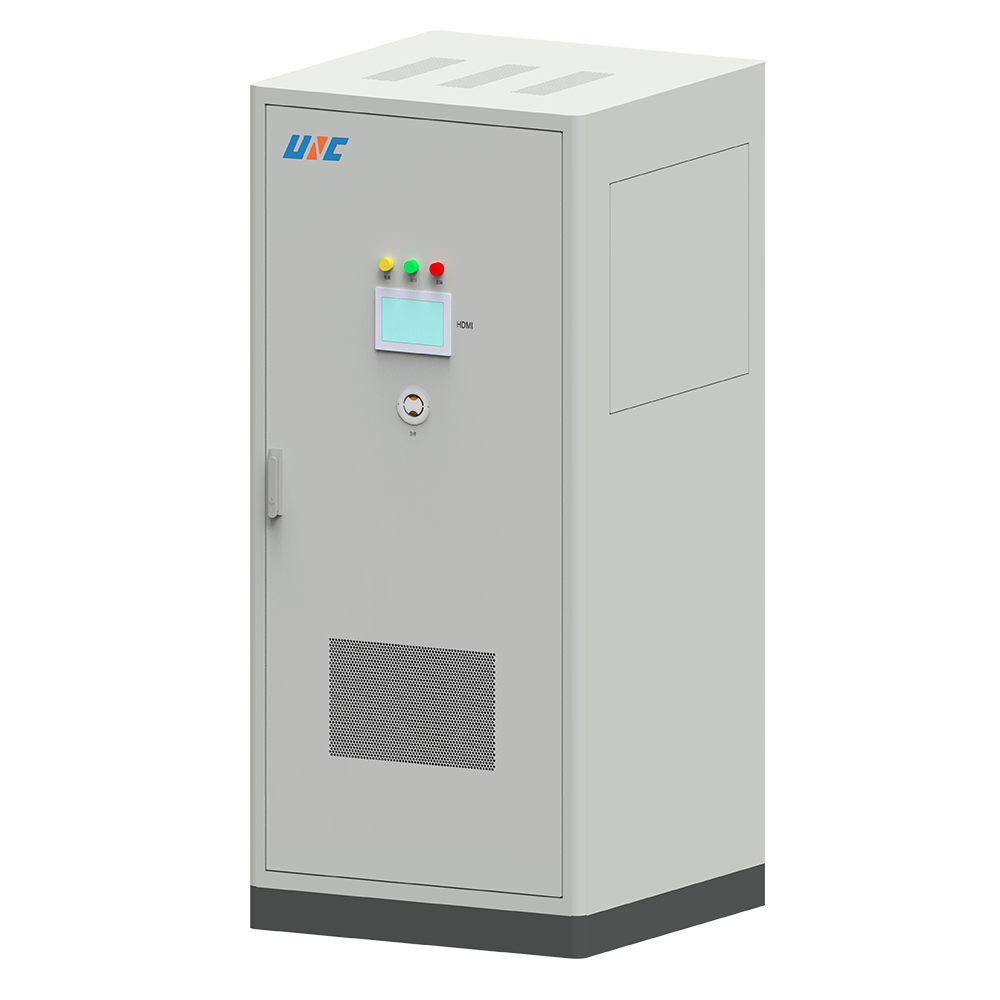
Most people glance at an IP rating and a corrosion class label, assume the cabinet is ready for anything, and move on. The reality is messier. An IP66 enclosure might shed rain and dust in a clean warehouse, but park the same box near a coastal chemical plant and the story changes. The rating tells you how well the seals resist water jets and particles under ideal lab conditions. It says nothing about what happens when salt mist creeps into every micro-gap, or when the zinc layer on a hinge starts sacrificing itself to save the steel beneath.
Corrosion ratings work on a different clock. A C4 or C5 classification comes from accelerated tests, often with specific coating systems, not from years of actual weather. Outdoor cabinets in industrial zones pick up invisible damage long before visible rust appears. The combination of an IP rating and a corrosion class sounds reassuring on a datasheet, but it rarely accounts for thermal cycling, UV exposure, or the simple fact that installation crews sometimes scratch the powder coat while mounting brackets. Those scratches become the entry point where the real test begins.
If you want to read between the lines, ask what is not in the spec. How thick is the coating at sharp edges? Does the gasket material stay elastic after five summers of direct sun? Has anyone tested the cabinet with both high humidity and airborne chlorides simultaneously? A rating is a starting point, not a guarantee. The most honest engineers admit that a long service life depends less on a badge printed on the door and more on drainage design, maintenance access, and whether the enclosure was actually built for the specific microclimate it will face.
Thermal Management Designs That Survive Peak Shaving Duties
Peak shaving duties punish thermal hardware in ways a steady full-load profile never does. The alternation between near-idle and full-burst operation creates repeated expansion and contraction that can shear solder layers and pump thermal grease out of the interface gap. Designs that survive this regime treat every cold plate, baseplate, and TIM as a fatigue component. An anisotropic graphite spreader keeps local heat flux from concentrating under individual dies, while spring-loaded mounting brackets maintain clamping force as materials breathe.
Adding thermal inertia at the right spot changes the shape of the load curve before it reaches sensitive electronics. A phase-change layer—say paraffin infused into a finned aluminum carrier—soaks up the sharp edge of a peak-shaving event and releases it slowly during the off-peak valley. This narrows the junction temperature swing and extends the life of IGBT or SiC modules far more effectively than simply adding a larger fan or a thicker heatsink.
The cooling loop itself must be agile. Fixed flow rates either starve the cold plate during a surge or waste pump energy during idle hours. A variable-speed pump tied to a load-sensing controller can jump from trickle circulation to full turbulence in under a minute, but the manifold and fin pitch need to be designed for that transition. Sharp inlet corners and oversized plenums create stagnant zones that become corrosion initiation points when flow suddenly changes, so the plumbing has to be as dynamic as the electrical load.
Supplier Due Diligence Beyond the Standard Plant Tour
A typical plant tour shows you the polished floor and the rehearsed greeting. Real due diligence starts when you ask for the documents that never make it into the welcome packet: six months of overtime records, wastewater discharge logs, and the names of the subcontractors who handle the overflow work. If the supplier hesitates or offers a summary instead of raw files, that hesitation is data.
Go beyond the certifications on the wall. Pull the ownership structure and cross-check it against customs records and shipping manifests. Interview line supervisors without the plant manager in the room, and ask about the last time a safety incident went unreported. A supplier that looks clean on paper can hide pressure cracks in shift scheduling, material substitution, or maintenance deferrals.
Finally, look at financial health and insurance coverage as part of the same conversation. A supplier with thin cash reserves may cut corners when demand spikes, and a lapsed environmental policy often means more than an expired certificate. The goal is not to find a perfect factory, but to understand which risks you are actually buying.
Total Cost Models That Include Replacement Labor and Downtime
Most cost spreadsheets treat replacement labor as a simple line item: the hourly rate of a temp or a junior employee filling in. That approach misses the slower setup times, higher scrap rates, and the extra supervision a less experienced worker usually requires. On a production line, these small delays compound quickly when a machine sits idle. A realistic model should capture the full learning curve, not just the wage difference.
Downtime costs shift depending on whether the stoppage is planned or unexpected. Planned maintenance can be scheduled during low-demand windows, but if the replacement operator isn't familiar with the equipment, the window stretches and overtime charges kick in. Unexpected downtime is worse: a critical machine down for six hours at $8,000 per hour of lost output already totals $48,000, and that figure doesn't include expedited parts, missed delivery penalties, or the ripple effect on downstream processes.
A more useful total cost model separates replacement labor and downtime into their own budget categories instead of burying them in general overhead. It also forces managers to compare the recurring expense of temp workers and lost production against one-time investments in cross-training, automation, or better predictive maintenance. Once these numbers are visible, decisions about staffing buffers or equipment upgrades become less about guesswork and more about straightforward arithmetic.
Grid Interoperability Checks Before You Sign the Contract
Utility interconnection agreements often hide clauses that assume your equipment will talk to their monitoring systems without a hitch. That assumption falls apart the moment a protocol mismatch surfaces, so ask for a live simulation or a written test report covering IEEE 2030.5, SunSpec Modbus, or DNP3 before any signature goes down.
Hardware compatibility isn't just about voltage and frequency. Inverter response to volt-watt and frequency-watt curves, anti-islanding sensitivity, and ride-through settings all need to line up with the local grid code. If the vendor can't produce a compliance letter from a recognized lab for your utility's specific revision, walk away.
Also pin down data handoff responsibilities. Who owns the telemetry feed, and what happens when a firmware update breaks the command channel? Get the interoperability test plan appended to the contract, with clear pass/fail criteria and a defined remediation window.
FAQ
Look beyond brochure specs. Examine the provider's engineering depth—how they handle fault tolerance, cell balancing, and enclosure integrity under real-world load swings. Ask for detailed failure mode analyses from past installations, not just uptime percentages.
Request reference sites with similar operating profiles and visit one if possible. Talk to the facility's maintenance team about unscheduled interventions, spare part lead times, and how the provider responded to anomalies. A provider that hesitates to share customer contacts is a red flag.
Chemistry dictates cycling endurance, thermal sensitivity, and degradation curves. For daily deep cycling, LFP often outperforms NMC in cycle life and safety margins, but verify the specific cell datasheets—not just the marketing name. Match the chemistry to your actual charge/discharge patterns, not hypothetical use cases.
Temperature swings accelerate aging and can trigger derating or shutdowns. A well-designed cabinet maintains cell-to-cell temperature delta under 3°C across the full operating range. Ask for computational fluid dynamics simulations and third-party thermal test reports, not just ambient ratings.
The BMS and energy management system must offer granular cell-level data, predictive fault alerts, and secure remote access. Demand a live demo with your own test scenarios—simulate a sensor failure or communication drop and see how the software logs and recovers. Clunky interfaces often hide weak underlying control logic.
UL 9540 and UL 9540A are non-negotiable for fire safety, but also check IEC 62619 for industrial use and local grid codes. More importantly, ask for the provider's internal test reports on thermal runaway propagation—vendors who only cite minimum compliance often haven't stress-tested beyond the checklist.
Calculate the levelized cost of storage over 10-15 years, including round-trip efficiency degradation, auxiliary power consumption, and expected replacement intervals. A cabinet with 5% higher upfront cost but 2% lower annual degradation often wins by year seven. Push vendors to provide bankable performance warranties tied to measured capacity retention.
Clarify response time guarantees for critical faults, whether spare modules are stocked locally, and who pays for firmware updates. Ask for the actual service-level agreement language—not a summary. Also confirm if remote diagnostics can pre-authorize parts replacement without an on-site visit, which reduces downtime dramatically.
Conclusion
Selecting an energy storage cabinet provider for reliable power systems demands scrutiny far beyond glossy datasheets. Daily cycling stress exposes weaknesses in cell chemistry that static specifications never reveal; lithium iron phosphate often outperforms alternatives when subjected to repeated partial-state operation, while nickel-manganese-cobalt blends may degrade faster under the same regimen unless derated deliberately. Equally telling are the cabinet's IP rating and corrosion resistance claims—an IP54 enclosure might suffice indoors, but coastal or industrial sites require verified salt-mist and chemical exposure data, not just a number stamped on the door. Thermal management designs face their hardest test during peak shaving duties, where heat builds quickly and unevenly; liquid cooling loops and strategically placed temperature sensors can prevent premature cell aging, whereas passive air cooling frequently falls short after the first year of aggressive operation.
Beyond the hardware, supplier due diligence must move past the standard plant tour. Request third-party audit reports, failure rate data from existing installations, and a written escalation path for warranty claims. Total cost models that ignore replacement labor and downtime miss the real expense: a cabinet with a lower upfront price but higher cell failure frequency can cost twice as much over a decade when you account for field service visits, lost dispatch revenue, and safety inspections. Grid interoperability checks should be completed before signing any contract—verify that the provider's power conversion system and communication protocols have been tested with your specific utility's requirements, including ride-through settings for voltage and frequency disturbances. Only by weaving these technical, financial, and operational threads together can you identify a provider whose equipment will hold up under real-world stress rather than idealized test conditions.
Contact Us
Contact Person: Manager Leng
Email: [email protected]
Tel/WhatsApp: 8613764878967
Website: https://www.unc-energy.com