

Energy Storage Cabinet: Which One Is Right for You?
2026-09-01
Choosing an energy storage cabinet isn’t just about picking a box for batteries. It’s about matching your power needs, space constraints, and safety expectations — before the first blackout or peak-rate surprise. Whether you’re outfitting a home, a business, or a microgrid, the wrong cabinet can quietly undercut your whole system. At Chang Song, we’ve seen how the right enclosure turns a good battery into a great investment. This guide walks through what actually matters, so you can decide with confidence instead of guesswork.
Your Energy Habits Deserve a Closer Look First
Most of us flip switches, adjust thermostats, and charge devices without a second thought. Those tiny, automatic choices rarely feel significant in the moment, but they form patterns that quietly shape your monthly bills and overall consumption.
A closer look often reveals surprises—like a spare refrigerator running half-empty or electronics sipping power overnight. Naming these habits isn't about guilt; it's about spotting the handful of adjustments that actually move the needle.
Start with a simple audit of a typical day. Notice when you leave lights on, how often you run partial loads, or which appliances stay plugged in around the clock. Small shifts in these routines tend to stick better than grand overhauls.
Not All Battery Chemistries Age the Same
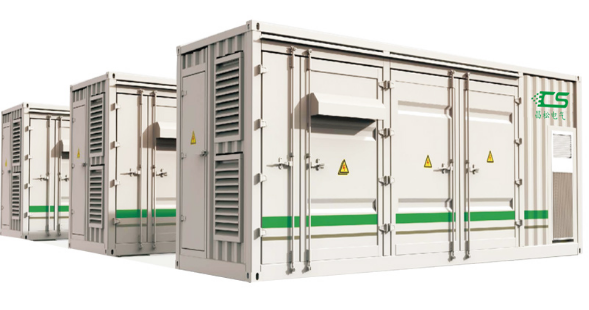
Lithium-ion cells built around nickel-rich cathodes often lose capacity faster under repeated fast charging, while lithium iron phosphate packs tend to hold up better over thousands of cycles even if their energy density is lower. The difference comes down to how the crystal structure reacts to lithium ions being pulled in and out, and how aggressively the electrolyte breaks down at elevated voltages.
Solid-state designs are still maturing, but early data suggests their aging profile could look very different from today's liquid-electrolyte cells. Dendrite growth and contact loss at the solid interface pose unique failure modes that don't map neatly onto the calendar-aging curves we know from conventional batteries. Meanwhile, sodium-ion chemistries often show a gentler fade curve in partial-state-of-charge use, which makes them interesting for stationary storage even when their cycle life under deep discharge is less impressive.
So when comparing battery life, the chemistry itself is only part of the story. Operating temperature, charge voltage limits, and how deep the discharge goes each day can shift a cell from a five-year lifespan to over a decade. Two batteries with the same nameplate capacity can age at wildly different rates depending on what's inside the casing and how they're used in the real world.
The Cabinet's Footprint Will Shape Your Daily Routine
Open any kitchen cabinet in the first five minutes of your day and you'll see how much its footprint matters. If your cereal is on a shelf just above your natural reach, you might skip breakfast or leave the box on the counter. That's not laziness—it's friction. Cabinets with shallow upper shelves or pull-down inserts bring daily items into your zone, which means fewer abandoned routines and less clutter by noon.
The footprint also shapes the room's circulation. A base cabinet that sticks out into a walkway doesn't just sit there; it elbows you every time you pass. Over a week, you'll start taking a wider arc around it, which pushes you into the stove or the trash bin. That subtle dance is the cabinet's real cost. By contrast, a cabinet that's just a few inches narrower or mounted higher can restore a clean path and make the whole kitchen feel less combative.
When you stop treating cabinet dimensions as a fixed given and start seeing them as adjustable levers, your routine becomes less about adapting to the furniture and more about the furniture adapting to you. Maybe that means swapping a deep pantry for a wall of shallow pull-outs, or replacing a bulky vanity with a floating shelf unit. The change isn't just visual; it's behavioral. You'll put things away because the cabinet's footprint makes it easier than leaving them out, and that single shift can ripple through the rest of your day.
Certifications You'd Be Wise to Check Twice
Plenty of organizations hand out certificates that sound impressive but carry little weight once you dig into who actually accredits them. A quick look at the issuing body’s background can reveal whether a credential is backed by a recognized industry group or just a polished logo and a registration fee.
Before you list a certification on your resume or accept a vendor’s claim at face value, verify that the program requires real coursework, testing, or continuing education. Credentials that are renewed with nothing more than an annual payment often do more to pad a marketing budget than to prove competence.
If a certificate leans on vague phrases like board certified or internationally recognized without naming a specific regulatory or professional authority, treat that as a red flag. A few minutes spent checking the issuing organization’s history, board members, and complaint record can save you from an embarrassing credential misstep.
The Price Tag Hides a Longer Story
A price tag is a quiet summary of countless decisions made before you ever held the item in your hands. It doesn't mention the late nights spent refining a design, the search for materials that won't fall apart after a season, or the hands that assembled each piece with a rhythm only years of practice can build. When you glance at that small sticker, you're really looking at a condensed history—one that skips the trial and error, the rejected prototypes, and the quiet insistence on doing things properly rather than quickly.
Take a well-made leather bag, for instance. The number on its tag won't tell you about the tannery that spent months vegetable-tanning the hide, or the stitching that had to be redone three times because the thread tension wasn't quite right. It won't mention the maker who inspected every edge before it left the workshop, or the fact that this bag will outlast five cheaper ones. But all of that lives inside the price, folded away like a note you only find after you've owned the thing for years.
Once you start reading prices this way, the story gets longer and richer. Instead of asking “why does this cost so much?” you begin to wonder what was traded away to make the cheaper version possible—what shortcuts, what compromises, what quiet losses. A tag never just names a cost; it hints at a whole chain of choices. And the longer you look, the more you realize the real question isn't what you pay today, but what you're actually buying into for the long run.
Local Weather Can Make or Break Performance
The same route can feel dramatically different from one day to the next, and often the invisible hand behind that shift is the sky above. A stiff headwind on an exposed stretch of road can turn an easy spin into a grinding slog, sapping energy that no amount of pacing can fully recover. Conversely, a tailwind that arrives just as fatigue sets in can feel like a gift, smoothing out the final miles and making the legs forget the earlier struggle. Riders who ignore these daily shifts often blame their legs or their nutrition when the real culprit is simply the air they are pushing through.
Temperature and humidity add another layer of complexity. On a scorching afternoon, the body diverts blood to the skin for cooling, leaving less for the working muscles and driving heart rate upward at a given power output. High humidity compounds the problem by slowing sweat evaporation, so the cooling system runs at full capacity but delivers little relief. Early morning starts in cooler air can mask dehydration until the sun climbs, and by then the damage to pacing is already done. Smart riders adjust not just their clothing but their effort targets based on the forecast, accepting that the same wattage might feel ten percent harder on a muggy day.
Even subtle changes such as a passing cloud bank or a shift in wind direction can rewrite the script mid-ride. A climb that felt manageable in the shade becomes a furnace in direct sunlight, while a descent that promised recovery turns sketchy when crosswinds gust through tree gaps. The best performers treat weather not as a fixed backdrop but as a dynamic opponent, one that demands constant recalibration of effort, hydration, and line choice. Those who adapt early ride smoother and finish stronger, while those who fight the conditions often find themselves undone by an enemy they never fully acknowledged.
FAQ
Residential units typically sit between 5 and 15 kWh, run on single-phase 240V or 120V, and use passive cooling so they stay quiet inside a garage or utility room. Industrial cabinets start around 30 kWh and often exceed 100 kWh, need three-phase power, active thermal management, and sometimes a dedicated fire suppression system. The battery chemistry can be the same, but the enclosure, inverter, and safety certifications are much heavier on the commercial side. If you see a cabinet with forklift slots or a 200+ kg weight spec, you are out of residential territory.
Start with the loads you refuse to lose during an outage: refrigerator, lights, internet, maybe a well pump or medical equipment. Add up their daily kilowatt-hours, then double that number if you want a full day of autonomy without solar. For most homes, 10 to 15 kWh covers the essentials comfortably. Don't size for whole-home air conditioning unless you're ready to pay for 30+ kWh and a beefy inverter. Also check the cabinet's continuous output rating; a 10 kWh battery that can only deliver 3 kW will struggle with a well pump startup.
Mostly yes for residential use. LFP has a higher thermal runaway threshold, longer cycle life, and no cobalt, which makes it less prone to the dramatic failures you see with older NMC chemistries. But safety also depends on the enclosure design, cell quality, and battery management system. A cheap LFP cabinet with no UL 9540 listing and a poorly tuned BMS can still be risky. For home installs, look for UL 9540 or IEC 62619 certification, not just the cell chemistry label.
Only if the cabinet is explicitly rated for outdoor use. Check the IP rating: IP65 or IP66 means it can handle rain and dust, but even then direct sun on a hot concrete pad can derate charging speed. Many 'outdoor' cabinets still need a small roof or shade structure if you live somewhere with extreme heat or snow. Also make sure the operating temperature range matches your climate; cold winters will reduce usable capacity unless the unit has an internal heater.
Very little if installed correctly. LFP cabinets are sealed and don't require watering or equalization like old lead-acid banks. You should check firmware updates from the manufacturer every few months, keep the air vents clear, and occasionally inspect cable connections for tightness. A yearly thermal scan of the terminals can catch a loose lug before it becomes a hot spot. Beyond that, the BMS handles balancing, and most faults will appear in the app long before you notice any physical symptom.
Usually yes. Modular cabinets let you start with, say, 5 kWh and add another 5 kWh module later without swapping the inverter or rewiring everything. The alternative — buying a sealed all-in-one unit — is cheaper upfront but becomes a brick if you add an EV or heat pump later. Pay attention to whether the inverter supports mixed module ages; some systems require new modules to be within a certain voltage range of existing ones. If the manufacturer allows firmware updates for expansion, that's a good sign.
First check the inverter situation. If you already have a string inverter, you may need an AC-coupled battery with its own inverter, like a Powerwall-style unit. If you have microinverters, AC coupling is almost always the answer. For new installs, a DC-coupled system can be more efficient because it avoids a double conversion. The key spec is the battery's charging current and voltage window; your solar charge controller or hybrid inverter must be able to operate within that range. Don't assume a 48V cabinet will work with a 400V string setup.
Installation labor, permitting, and possibly a main panel upgrade are the big three. Many homes need a subpanel or a critical loads panel so the battery doesn't try to backfeed the grid during an outage. If your existing electrical service is 100A, you may need to upgrade to 200A before the utility approves the setup. Also budget for concrete pad or wall mount hardware, conduit, and a dedicated breaker. Some areas require a disconnect switch visible to first responders, which adds a few hundred dollars. Get a line-item quote before comparing cabinet prices.
Conclusion
Before you get lost in specs, spend a week or two tracking when you actually pull from the grid. If your evenings are heavier than your mornings, a cabinet sized for overnight discharge might matter more than a bigger inverter. Battery chemistry deserves equal weight: lithium iron phosphate tends to forgive daily cycling with less degradation, while other lithium blends may pack more punch per pound but age faster under constant heat. And don't underestimate the physical cabinet. A unit that blocks a walkway or shadows a garden becomes a daily annoyance, so measure the spot where you'll actually place it, not just the floor plan you imagine.
Certifications are the kind of thing you hope you never need to test. Look past the marketing badges and verify that the product carries the safety marks your local inspectors actually recognize, because a missing approval can stall an installation and void your insurance. The price tag also tells only the first chapter. Compare total cost over a decade, including replacement cells, monitoring fees, and whether the warranty prorates. Finally, think about your local climate. Humid coastal air corrodes exposed terminals, while freezing winters sap usable capacity unless the cabinet includes heating. Matching the cabinet to your weather patterns turns a good purchase into a reliable backup for years.
Contact Us
Contact Person: Tonglun Chen
Email: [email protected]
Tel/WhatsApp: 8618906642555
Website: https://www.cncsele.com