

Fuel Dispenser Pump Manufacturer: What to Look for in a Reliable Supplier
2026-10-28
A fuel dispenser pump is only as dependable as the manufacturer behind it. For station owners and procurement managers, cutting through supplier claims to find real reliability isn't a formality—it's what keeps queues moving and revenue flowing. Before you sign a contract or expand your network, it pays to know what separates a proven partner like BEILIN from the rest. This guide lays out the non-negotiables.
Factory certifications that go beyond the wall plaque
A stack of framed certificates in the lobby tells you what a factory was once able to pass. It says very little about the maintenance log under the conveyor, the quarantine area for non-conforming parts, or whether the night shift gets the same access to calibration tools as the day shift. Certification only becomes visible when you watch a new operator being trained—if the senior worker corrects a small deviation without checking a manual, that's when the standard is actually alive.
Plenty of facilities can pass an audit with enough notice. The ones worth keeping as suppliers are the ones where the audit feels almost redundant. Their batch records are legible in the middle of a production rush. Their pest control maps are not just laminated sheets but updated with dated findings. Their corrective action reports don't end with “retrained staff” as a one-line fix; they show why the problem happened and what changed physically on the line.
How many years they've been building pumps—and why that alone won't save you
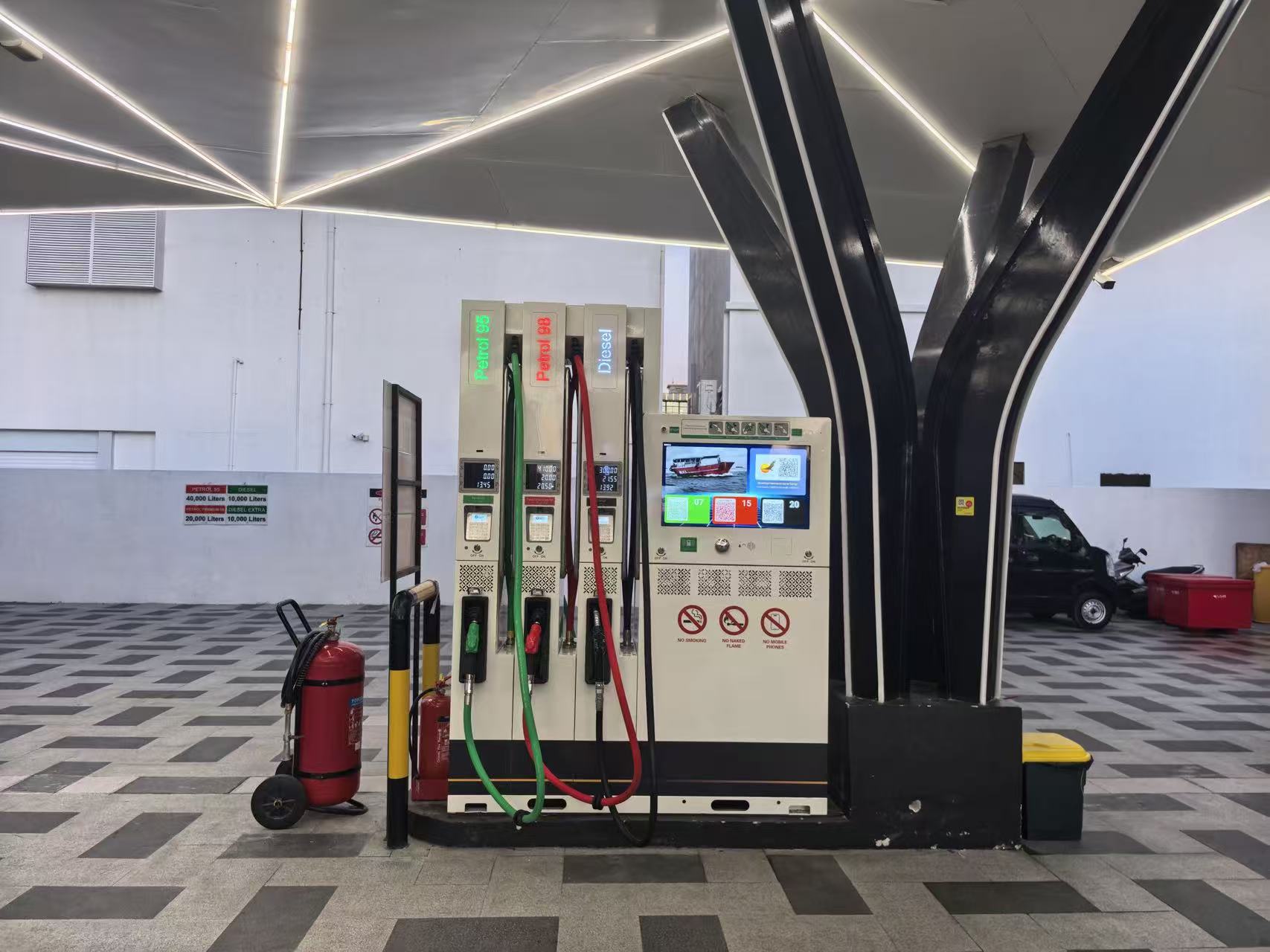
A lot of pump manufacturers lean hard on the number of years they've been in business, as if the calendar alone guarantees a reliable product. But longevity mostly tells you they survived, not that they adapted. Plenty of companies have been making the same cast-iron designs for decades, incrementally polishing a legacy that no longer matches modern operating conditions. If all those years were spent avoiding meaningful R&D, then the age of the company is just a trivia fact, not a reason to trust the pump when it's under load.
What actually matters is how those years were used. Did the manufacturer learn from field failures? Did they change seal materials, improve impeller geometry, or redesign bearing housings after seeing repeated leaks and vibration issues? A long history can be an advantage if it produced a deep library of real-world data and led to iterative fixes. But many firms simply rest on their founding date, continuing to ship the same units while competitors—sometimes much younger ones—are the ones testing, breaking, and rebuilding to find better solutions.
In fact, an older company can sometimes be slower to change because it's tied to legacy tooling, supplier relationships, and institutional habits. A newer team might come in without that baggage and rethink what a pump should look like for today's fluids, pressures, and maintenance expectations. So when someone tells you they've been building pumps for forty years, the next question shouldn't be about how impressive that sounds. It should be: what did they actually learn in all that time, and what did they change? If the answer is just another variation of claiming they've been around forever, that history won't save you when a seal fails on a Friday night.
The components they source and what that says about their standards
Every hinge, circuit board, and fabric swatch tells a quiet story about who a company really is. When a brand picks a supplier that still hand-finishes edges or refuses to accept batches with more than a two-millimeter variance, that choice isn't just about cost or lead time—it's a signal. The components they bring in reveal whether the design team ever walked the factory floor or simply approved a spec sheet from a distance.
Consider the difference between a generic off-the-shelf actuator and one that has been subtly reinforced for repeated daily use. Most consumers will never open the casing, but the engineers know. The decision to source the latter often comes down to an internal standard that nobody markets: a quiet refusal to let a part fail at month thirteen when the warranty ends at twelve. This is the kind of sourcing that doesn't show up in press releases but does show up in five-star reviews written three years after purchase.
Standards like these also have a trickle-down effect on the people who assemble the final product. When a company is obsessive about the provenance of its raw materials, that rigor tends to reach the production line. It becomes less about chasing certifications and more about a shared understanding that a single compromised gasket or a poorly mixed polymer batch can undo years of trust. The components are never just components—they're the clearest, least filtered expression of what a company believes is acceptable.
Testing every unit before it leaves the loading dock
No box gets past the final checkpoint without a full run-through. Each unit is powered on, cycled through its core functions, and checked against a short list of real-world conditions—voltage dips, signal drops, and brief overloads. It's not a spot check or a batch sample; it's one unit at a time, by hand or by rig, with the results logged before the pallet wrap goes on.
That last test at the dock catches what the line missed. A loose connector, a firmware mismatch, a switch that feels fine but sticks after fifty presses—these show up when the unit is cold and ready to ship. If something fails, it doesn't get patched and sent anyway. It gets pulled, tagged, and fixed on the spot or routed back for a deeper look. No exceptions, no rush jobs.
For the customer, it means the unit in the box has already done its first hour of work. For us, it's cheaper than a return and faster than a service call. The dock isn't just a loading zone; it's the last line of defense, and every unit earns its way past it.
What happens after the invoice clears
Once the invoice clears, the approved amount moves from the payer's account to the supplier's account, though the exact timing depends on the payment method and banking network. Many accounting platforms automatically match this incoming payment to the original invoice, removing the need for manual reconciliation. Any remaining holds or pending approvals tied to that invoice are released at the same time.
After the payment settles, the invoice status changes to paid, and the system sends out notifications to the relevant departments or vendors. If the invoice was part of a recurring billing cycle, the next scheduled date may be locked in automatically. For teams tracking budgets, this cleared payment also updates real-time spend reports without extra data entry.
Finally, a complete transaction record is stored in the audit trail, including timestamps, payment references, and any related fees. This data becomes useful for cash flow forecasting and helps finance teams spot duplicate payments or unexpected delays before they become larger issues.
Questions to ask that reveal more than a polished brochure
A glossy brochure can make any place look idyllic, but the real story lives in the questions nobody thinks to ask. Instead of asking about the highlights, try asking about the mediocre days—what does a typical Tuesday actually look like? What happens when something goes wrong, and who do people turn to for help? These quieter details often reveal whether the polished image matches daily reality.
Pay attention to turnover and time. Ask how long the current team or cohort has been together, and where the people who left are now. If the answer is vague or defensive, that says more than any mission statement. You might also ask about the last time a mistake was made and how it was handled—an honest response shows whether problems get fixed or quietly buried.
Finally, ask for the unscripted moments. Can you speak with someone who chose not to participate, or who had a mixed experience? The willingness to connect you with critics—not just cheerleaders—is a strong signal. Polished brochures are curated, but a few direct questions can turn a sales pitch into something closer to the truth.
FAQ
Look for current OIML or MID certificates for metrology, ATEX or IECEx for hazardous area compliance, and ISO 9001 for quality management. But don't stop at the company level—ask for certificates tied to the exact pump model you're buying. A supplier that hands you an expired or generic certificate is often hiding gaps in testing.
Request a cutaway or partial teardown of the dispenser, not just a glossy brochure. Check whether the housing uses corrosion-resistant materials, if electronics are properly sealed against fuel vapor, and whether the flow meter has a proven endurance rating. Ask for real test hours or field data from existing installations. If a manufacturer is reluctant to show internal components, treat that as a warning sign.
A dispenser that sits idle directly cuts fuel sales, and downtime often costs more per day than the price difference between suppliers. Before signing, ask where their spare parts warehouse is located, what the typical dispatch time is for a technician, and whether they have trained local partners. A cheap unit with a two-week wait for a simple seal or board replacement can wipe out any upfront savings.
Ask if they have experience with the vapor recovery and fuel compatibility rules in your region, and request third-party test reports for accuracy and safety. Also question how software updates handle changing metrology or environmental standards. A responsible manufacturer should be able to explain exactly how their pump meets local laws, not just say 'fully compliant'.
Request reference sites that use similar fuels—such as ethanol blends, biodiesel, or diesel with additives—and ask about available nozzle configurations, display options, and payment system integration. Find out whether customization is handled in-house or outsourced. If a manufacturer only offers a fixed set of options and can't discuss material compatibility for alternative fuels, they may not be a good fit for your needs.
Listen for vague answers when you ask about the brands of flow meters, motors, or electronic boards. A supplier that avoids naming component manufacturers or uses generic 'industry standard' parts is often cutting corners. Also read the warranty closely—if it excludes common failure points like seals, displays, or power supplies, that tells you where they expect problems.
Strong support includes remote diagnostics, regular firmware updates, and a clear maintenance schedule—not just a phone number. Without it, every minor fault means either waiting for a factory technician or paying a local contractor to learn your equipment. Ask about average response times, whether they offer operator training, and if there's a preventive maintenance program. That kind of support usually pays for itself by preventing one or two major breakdowns.
Conclusion
A supplier’s wall of certificates means little if you never check what those audits actually covered. Look for ISO 9001 or OIML approvals, but push further: ask for the audit scope, the date, and the non-conformities they had to fix. A ten-year-old factory can still cut corners on seals and meters if management changed hands. Longevity matters only when paired with a paper trail of design revisions and recall responses. The real tell is in the components they buy. If they use no-name solenoids or low-grade aluminum for the meter body, their final assembly won’t outrun the warranty. Reliable manufacturers name their component suppliers—Parker, Veeder-Root, or similar—and can show incoming inspection records. Before any unit ships, it should run through a full wet test: flow rate accuracy at low and high pressure, vapor recovery, and safety shut-off. Ask to see the actual test log, not a sample certificate. A pump that leaves the dock with a signed checklist beats a dozen marketing claims.
After the invoice clears is where many suppliers vanish. Confirm whether they stock spares for at least ten years, offer firmware updates for the electronics, and have a local service partner or their own technicians within reach. A polished brochure won’t answer the hard questions: how many pumps did you recall last year? What was the average response time for a breakdown in my region? Can I speak to three customers who bought your pumps more than five years ago? Also ask for the bill of materials on the exact model you’re considering, not a generic spec sheet. If they hesitate to share that, walk away. The best suppliers treat your purchase as the start of a maintenance relationship, not a one-time sale. They schedule a post-installation calibration check, train your staff on daily leak detection, and keep a digital service history for every unit. In short, look for a manufacturer that can prove their work before, during, and long after the pump is bolted to your forecourt.
Contact Us
Contact Person: Jason
Email: [email protected]
Tel/WhatsApp: 8615876017548
Website: https://www.bei-lin.com/