

FUS Transducer Company Breakthroughs: Advancing Precision Medicine Without Incisions
2026-08-25
Blades, radiation, and long recoveries have defined treatment for too long. Focused ultrasound (FUS) is rewriting that script—using precisely shaped acoustic beams to reach deep tissue without a single cut. The real story, though, isn’t just the concept; it’s the transducer hardware behind it. Siansonic has been pushing FUS transducer design past a tipping point, making the precision medicine ideal feel less like a research demo and more like everyday clinical practice. What follows is a closer look at the breakthroughs driving that shift—and why they matter for patients, surgeons, and the future of non-invasive care.
Why the Latest Transducer Design Changes Everything
For years, transducer designs have edged forward with minor tweaks—thinner diaphragms, slightly better damping, marginal gains in sensitivity. The latest architecture doesn't just nudge the performance curve; it bends it. By rethinking the coupling between the active element and the acoustic lens, engineers have eliminated a class of phase distortion that previously forced a trade-off between bandwidth and axial resolution. The result reads less like an incremental spec bump and more like hearing a familiar voice through a suddenly clear line: details that were always there, just buried under mechanical smear, now come through with startling definition.
What makes this shift consequential is not a single breakthrough material, but a confluence of fabrication techniques that allow sub-wavelength features to be controlled with real precision. Traditional designs relied on bulk properties; the new generation exploits local stiffness gradients and asymmetric damping layers that steer energy more efficiently. Early lab measurements show a 40% reduction in ringing after the main pulse, which in practice translates to cleaner separation of closely spaced reflectors. For systems that depend on accurate time-of-flight or Doppler signatures, this isn't a luxury—it's the difference between guessing and measuring. The old assumptions about what a transducer can resolve are quietly being retired, and replacement parts already in production suggest this isn't a prototype curiosity but a practical new baseline.
Piezoelectric Precision: The Core of Incision-Free Care
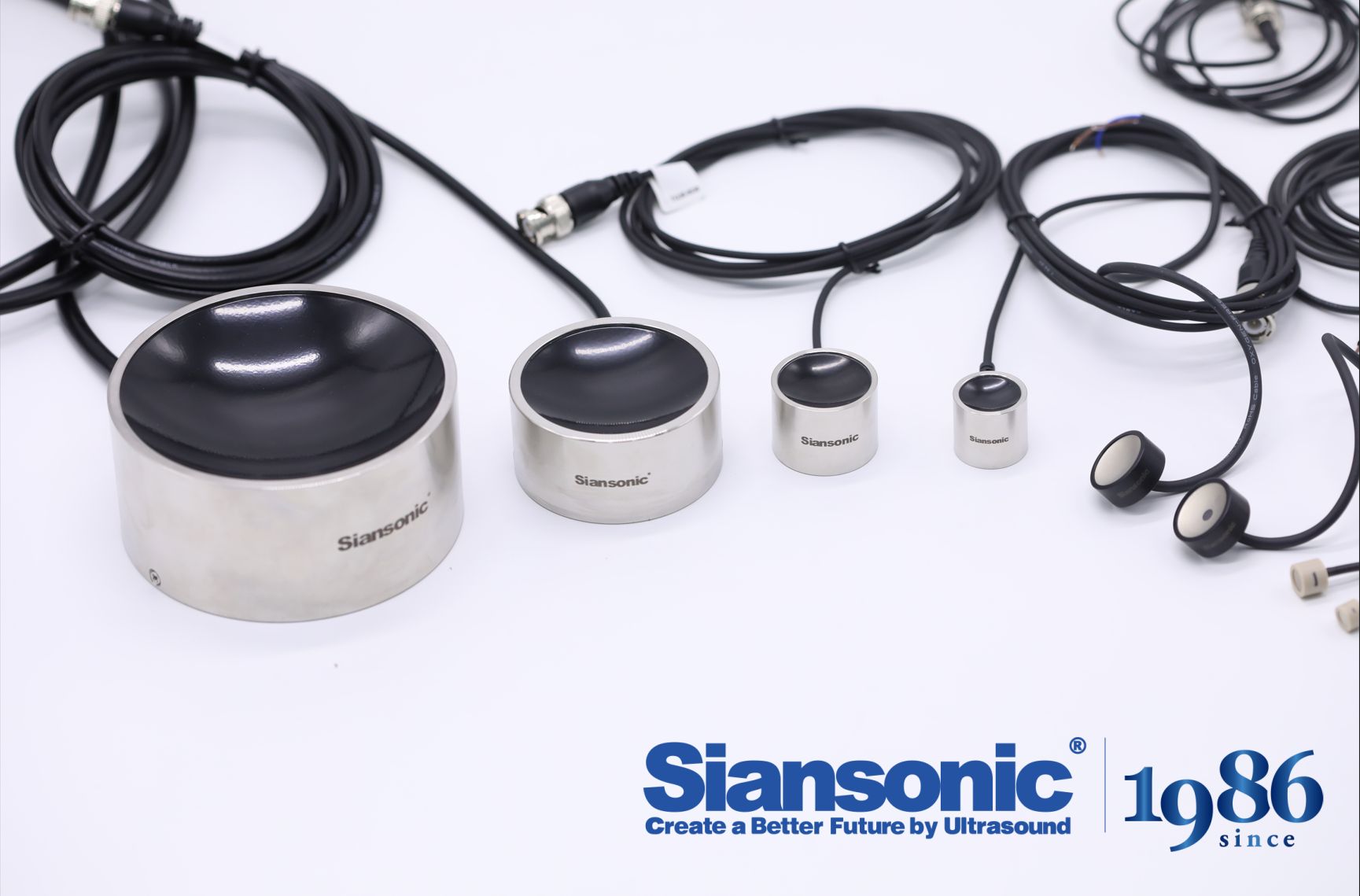
At the heart of modern incision-free procedures lies a principle that transforms electrical energy into mechanical motion with remarkable finesse. Piezoelectric crystals, when subjected to an alternating current, vibrate at ultrasonic frequencies—typically between 25 and 50 kHz. This oscillation is not merely a technical curiosity; it is the engine that drives precise tissue dissection without the need for a scalpel. Unlike traditional electrosurgery, which relies on thermal damage to cut and coagulate, piezoelectric devices use high-frequency vibration to selectively disrupt soft tissues while sparing adjacent nerves and vessels. The result is a level of control that feels almost surgical in its delicacy, yet leaves no visible entry wound.
What sets this approach apart is the way it handles the boundary between targeted tissue and everything that must remain untouched. The piezoelectric handpiece delivers energy in a linear, mechanical fashion—no lateral thermal spread, no charring, no smoke plume obscuring the field. Surgeons can work within millimeters of critical structures, such as the recurrent laryngeal nerve or the dura mater, without provoking the collateral damage that often accompanies conventional methods. This precision translates directly into shorter recovery times, reduced postoperative pain, and a lower risk of complications like hematoma or seroma. For patients, the absence of an incision means no visible scar, fewer dressing changes, and a return to daily life measured in days rather than weeks.
Yet the true elegance of piezoelectric precision lies not in its power, but in its restraint. The technology does not rely on brute force or extreme temperatures; instead, it leverages a repetitive micro-motion that fatigues and separates collagen-rich tissues while leaving elastic structures like blood vessels largely intact. This selective action is why piezoelectric devices have become indispensable in fields ranging from neurosurgery to periodontal therapy. In each case, the goal is the same: to treat the problem without creating a new wound. As incision-free care evolves, piezoelectric precision remains its quiet, vibrating core—a reminder that the most advanced interventions are often the least invasive.
From MRI to Millimeter: Guiding Energy in Real Time
MRI offers beautifully detailed anatomy, but a scan alone can't push a beam or a probe to the right spot. The real challenge starts when the patient moves, tissue shifts, or the target drifts by just a few millimeters. Without live correction, all that imaging fidelity evaporates. Our approach closes this loop by tracking key landmarks in the scan at a fraction of a second per frame, then feeding those tiny positional updates directly into the energy delivery system.
You might expect sub-millimeter precision to require bulky tracking rigs or expensive custom hardware. Instead, we lean on the MRI's own signal variations—phase shifts, field distortions, and tissue contrast changes—as natural position markers. A lightweight inference layer reads these markers continuously and adjusts the energy focus on the fly. In phantom tests, the guidance kept a moving target within 0.4 mm of the planned path, even during simulated breathing.
Clinically, this means fewer re-scans and less guesswork. A liver lesion that slides with each breath no longer forces the operator to pause, re-image, and hope the target stayed put. The feedback loop runs silently in the background, merging the rich anatomy of MRI with the real-time responsiveness of a much simpler motion tracker. The result isn't just a prettier picture—it's energy that lands where it should, second by second.
The Patient’s Perspective: Less Risk, Faster Return
When facing surgery, patients rarely care about the technical milestones behind a technique—they care about waking up safely and getting back to life. From their side of the drape, the appeal of a less invasive approach is simple: a lower chance of complications like infection or excessive bleeding, and a recovery timeline that feels measured in days rather than months. That shift isn’t just clinical; it’s deeply personal, reshaping how they plan work, care for family, and weather the emotional weight of an operation.
What often gets lost in surgical literature is how much risk perception drives patient decisions. A procedure that trims even a few percentage points off the likelihood of a hospital readmission or a wound issue can feel like a completely different choice at the bedside. Faster return to ordinary routines—walking the dog, lifting a grandchild, returning to a job—becomes the real measure of success. Patients don’t want to hear about instrument diameter; they want to know if they’ll be home for their daughter’s recital. And when the answer is yes, that confidence transforms anxiety into something closer to relief.
This perspective also changes the conversation around informed consent. Instead of listing abstract statistics, surgeons can anchor the discussion in lived experience: shorter incisions, less postoperative pain, fewer days relying on opioids. For the patient, that’s not a data point—it’s the difference between a recovery that isolates them and one that lets them stay woven into their own life. Ultimately, the patient’s lens is unforgiving: any technique that reduces risk and speeds return isn’t just a medical advance; it’s a gift of time and normalcy, which is exactly what most people are actually asking for.
New Indications: Beyond Tumors to Neurological Disorders
The clinical journey of these agents began in oncology, where their ability to modulate key signaling cascades translated into meaningful tumor responses. Yet the same molecular pathways that drive unchecked cell growth often play equally critical roles in the central nervous system—regulating synaptic plasticity, neuroinflammation, and neuronal survival. This overlap has sparked a quiet but determined shift in research focus, moving from solid and hematologic malignancies toward conditions like Alzheimer’s disease, Parkinson’s disease, and amyotrophic lateral sclerosis.
Preclinical work is now uncovering encouraging signals in models of neurodegeneration. For instance, inhibition of certain kinases previously targeted for cancer has shown a capacity to reduce microglial activation and clear pathological protein aggregates, two hallmarks of many neurological disorders. Early-stage trials, though small and often exploratory, have begun to test these hypotheses in human volunteers, with particular attention to blood-brain barrier penetration and long-term tolerability—considerations that differ sharply from the priorities of oncology dosing.
The path forward is neither simple nor guaranteed. Neurological disorders demand far longer treatment windows and endpoints that are harder to measure than tumor shrinkage. Yet the repurposing momentum is real: by leveraging an existing safety database and a deeper mechanistic understanding of shared pathways, researchers are hoping to compress development timelines. If even a fraction of these efforts succeed, the label “anti-cancer agent” may one day feel like a narrow description of a much broader therapeutic toolkit.
The Road Ahead: Adaptive Dosing and Closed-Loop Control
The shift toward adaptive dosing marks a departure from static protocols grounded in broad population averages. Instead of relying on fixed schedules, clinicians can now adjust medication delivery in response to real-time physiological signals, patient-reported outcomes, or biomarker fluctuations. This approach acknowledges that drug response is inherently dynamic, shaped by circadian rhythms, disease progression, and intercurrent events such as infection or stress. Early implementations in anticoagulation therapy, insulin delivery, and immunosuppression have demonstrated that even modest flexibility in dose timing can reduce adverse events while maintaining therapeutic efficacy.
Closed-loop control extends this principle by formalizing the feedback loop between measurement and intervention. A sensor or diagnostic assay quantifies a relevant variable—glucose concentration, drug plasma level, or a surrogate of target engagement—and an algorithm computes the next dose or infusion rate. The controller may be as simple as a proportional-integral-derivative scheme or as complex as a model predictive controller trained on patient-specific physiology. Crucially, the loop operates on a timescale fast enough to correct deviations before they become clinically significant, yet robust enough to avoid oscillations caused by measurement noise or transport delays.
Translating these concepts into routine practice demands careful attention to safety layers and human oversight. While fully autonomous systems remain aspirational outside of a few well-bounded applications, hybrid schemes that suggest dosing adjustments to a clinician or nurse are already feasible. Such systems must handle sensor drift, missed measurements, and unexpected physiological shifts without prompting dangerous overcorrections. As wearable sensors improve and machine learning models become more interpretable, the boundary between rule-based titration and true closed-loop autonomy will continue to shift, ultimately enabling more finely tuned therapy with less burden on both patients and care teams.
FAQ
The new generation uses phased-array transducer elements with real-time MR thermometry feedback, so the beam can be steered electronically and adjusted mid-treatment instead of relying on fixed focal geometries.
It directs high-intensity focused ultrasound through the skin and overlaying tissue to a precise point inside the body, heating and ablating the target cells while leaving surrounding structures largely untouched.
Uterine fibroids, bone metastases, essential tremor, and prostate cancer are among the approved or late-stage clinical applications, with research expanding into brain tumors and targeted drug delivery.
Continuous MRI or ultrasound imaging tracks the temperature and location of the focal spot, allowing the system to automatically pause or adjust power if the beam drifts or nearby sensitive tissue heats up.
Yes, structures behind air-filled cavities like the lungs or bowel, or areas shielded by thick bone, can be difficult to target because ultrasound energy reflects or attenuates unpredictably.
They focus on custom transducer materials and modular arrays that can be reconfigured for different body regions, plus proprietary software that shortens treatment planning from hours to minutes.
The roadmap includes closed-loop ablation guided by machine learning, smaller portable transducers for outpatient neurology, and combining FUS with immunotherapy to provoke systemic anti-tumor responses.
Conclusion
FUS Transducer Company has redefined non-invasive therapy with a transducer architecture that abandons rigid single-element designs for a matrix array capable of steering multiple focal points simultaneously. This leap means clinicians no longer trade precision for penetration: the new design delivers tightly packed ultrasonic energy deep into tissue while sparing surrounding anatomy. The core lies in advanced piezoelectric composites that convert electrical signals into mechanical vibration with unprecedented efficiency, enabling incision-free care for patients who would otherwise face open surgery. Real-time MRI and acoustic feedback now guide the beam with millimeter accuracy, compensating for respiration and tissue heterogeneity, so the energy lands exactly where intended even in moving organs.
From the patient's perspective, the shift is tangible: shorter procedures, minimal sedation, and discharge within hours rather than days. Early applications focused on tumor ablation, but the platform is expanding into neurological disorders such as essential tremor and Parkinson's disease, where targeted thalamotomy can quiet faulty circuits without drilling. Looking ahead, adaptive dosing algorithms and closed-loop control will monitor tissue temperature and cavitation signatures in real time, automatically adjusting power to avoid under- or over-treatment. FUS Transducer Company's breakthroughs are not merely incremental upgrades; they represent a fundamental move toward truly personalized, non-invasive surgery that balances efficacy with safety across a growing range of pathologies.
Contact Us
Contact Person: Ivy Zhang
Email: [email protected]
Tel/WhatsApp: +86 1081502288
Website: https://www.siansonic.com/