

Gearless Flexo Press Export Guide for Global Market Expansion
2026-11-16
Chasing export growth with gearless flexo presses isn’t about shipping more—it’s about navigating shifting trade rules, local print standards, and buyer expectations that vary wildly from one market to the next. This guide pulls back the curtain on proven strategies from HuiPeng, blending real-world field insights with actionable steps for global expansion. If your current export playbook feels stuck on repeat, the next few sections might change how you map your next move.
Where Gearless Flexo Presses Find Their Strongest Export Buyers
Gearless flexo presses have carved out a surprisingly loyal following in markets where short-run, high-detail packaging is the norm. Buyers in Western Europe, especially Germany and Italy, consistently lead the pack, driven by a mature converting industry that refuses to compromise on register accuracy or repeatability. These presses slot neatly into operations producing pharmaceutical cartons, premium labels, and flexible packaging that demands zero dot gain drift. The absence of mechanical gears means fewer wear points, a selling point that resonates with plant managers tired of rebuild schedules.
Across Southeast Asia, the picture shifts but the demand stays sharp. Thailand, Vietnam, and Indonesia have seen steady adoption, often replacing older CI flexo lines that struggle with modern plate technologies. Local converters value the quiet operation and lower energy draw, but the real driver is the ability to handle thinner substrates without tearing. Food packaging exporters in the region, shipping to Australia and the Middle East, find gearless designs easier to validate against stringent retail standards. Service networks, though thinner than in Europe, are expanding quickly as regional agents add dedicated application engineers.
Latin America, particularly Brazil and Mexico, has emerged as a third anchor. Here, buyers often run hybrid workflows—gearless flexo for high-coverage graphics on shrink sleeves, then digital for versioning. The presses' modular construction allows converters to buy a base unit now and retrofit drying or web-cleaning upgrades later, which suits capital expenditure cycles that hinge on harvest seasons and export contracts. Interestingly, a niche but growing cluster of buyers in Poland and the Czech Republic is also worth watching, as they position themselves as lower-cost production hubs for Western European brands without sacrificing print quality.
Understanding the Real Cost Drivers Behind Global Flexo Press Shipments
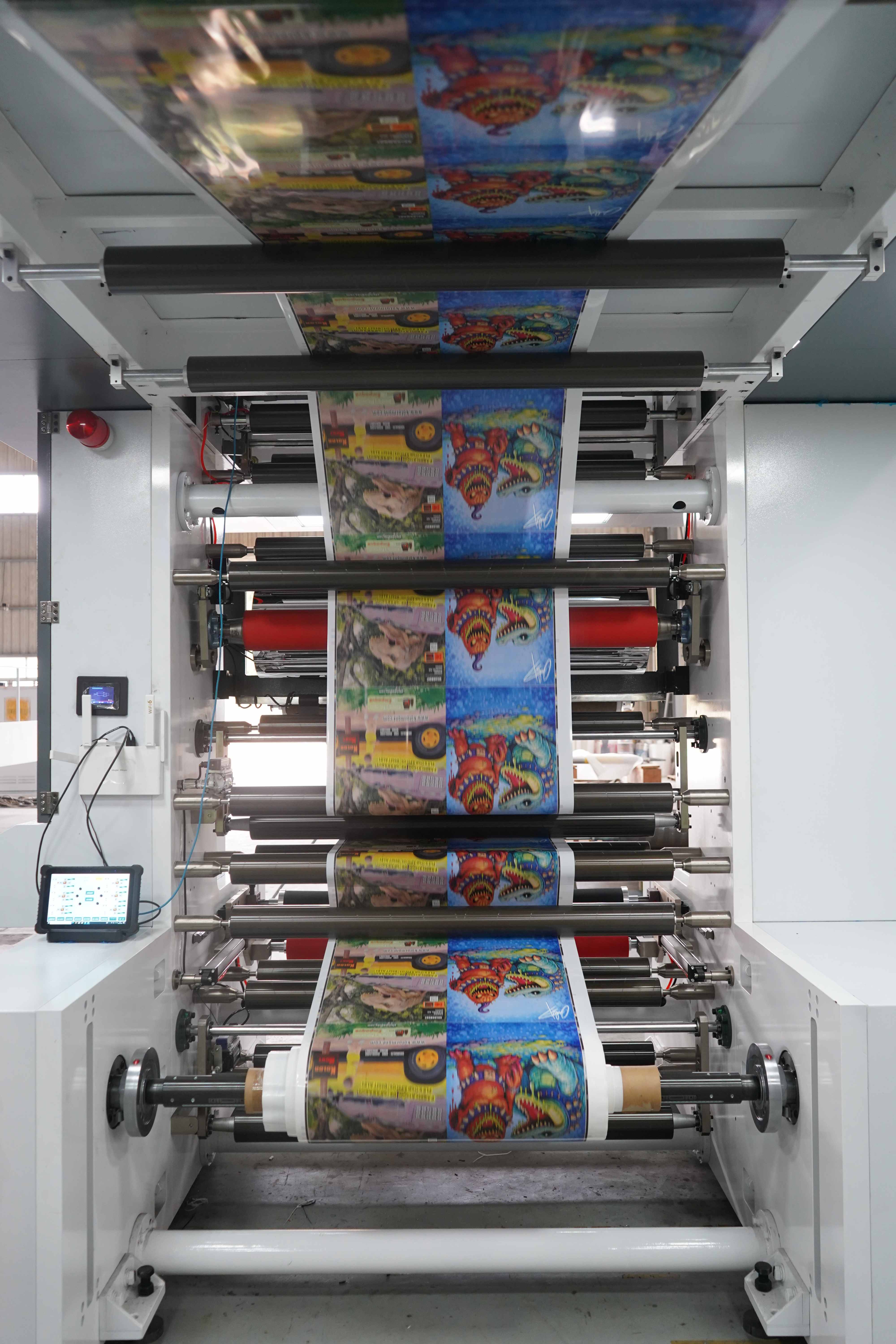
Freight and logistics often overshadow the base machine price. A flexo press built in one region and shipped to another can see total landed cost shift by 12–18% depending on container rates, port fees, and inland trucking. For wide-web models, the need for specialized handling, cranes, and sometimes police escorts through narrow routes adds line items that rarely appear in initial quotes.
Currency volatility and trade duties play a quieter but equally sharp role. Suppliers may quote in euros or yen while buyers budget in local currency; a three-month swing can erase thin margins. Tariffs on automation components, servo drives, and ceramic anilox rolls further distort the comparison between domestic and imported presses, pushing some converters toward regional assembly hubs.
Configuration choices made at order time drive long-term costs more than the invoice suggests. Drying systems, register controls, and sleeve storage influence energy use, waste rates, and changeover labor. A press specified with minimal automation may ship cheaper but cost more per square meter printed once idle time and substrate scrap are counted. Buyers who benchmark only the shipment price often miss the true economic ownership.
Adapting Your Pitch to Regional Print Market Expectations
Regional print markets reward writers who understand that a pitch isn't just a story idea—it's a tailored conversation with a specific readership. What flies with a coastal literary magazine may fall flat with a Midwest lifestyle monthly, so before you type a single word, study a few recent issues. Look at the tone, the recurring columns, the ad base, and even the letters to the editor. Those details tell you whether the audience wants practical service pieces, data-driven trend analyses, or first-person essays with emotional stakes. Your pitch should mirror that rhythm without parroting it: mention a recent article you admired, then propose something that extends the conversation rather than repeats it.
One common mistake is sending the same query to every regional outlet with only the masthead changed. Editors can spot that instantly, and it signals you haven't considered their particular geography or readership. Instead, build each pitch around a regional angle—a local legislator's policy shift, a niche industry that drives a small-town economy, or a cultural event that reveals a larger tension. When you reference specific neighborhoods, landmarks, or local controversies, you demonstrate that you're not just chasing bylines; you're offering a story that belongs in their pages. Keep the language concrete: say "the refurbished grain elevator on County Road 9" rather than "rural infrastructure renewal."
Finally, adjust your expected length, deadline, and payment discussion to match the market's realities. A quarterly literary review may respond to a three-paragraph pitch with a short sample paragraph, while a weekly city paper often wants a bulleted outline and your availability for a quick phone call. Avoid over-explaining your credentials; instead, let your pitch's regional specificity and your suggested structure show you've done the homework. If you pitch a seasonal feature, align it with the correct lead time—regional print often works two to four months ahead. And never apologize for your rate; simply state it as part of the working arrangement if asked, framed as "my standard fee for this length and research." The goal is to make the editor think, "This writer already knows how we work."
Overcoming Hidden Trade Barriers in Flexo Press Exports
Every export manager in the flexographic printing industry eventually hits a wall that isn't about tariffs or shipping costs. It's the quiet friction of paperwork mismatches, unannounced certification updates, and local service expectations that never make it into the sales contract. A press that prints flawlessly in Germany can stall at customs in Brazil because the motor's energy efficiency label doesn't match the importer's latest filing requirements. These hidden barriers don't just delay shipments; they erode margins through storage fees, re-inspection charges, and the cost of flying an engineer to untangle a voltage rating that was perfectly legal last quarter.
The fix starts with treating export readiness as an engineering task rather than an administrative afterthought. Smart manufacturers now map every destination country's technical file months before the first quote is sent. They build a matrix of voltage tolerances, safety interlocks, ink-system certifications, and even noise emission limits for the specific suburb where the press will run. Instead of relying on a generic CE mark, they prepare modular documentation kits that let a distributor swap in the local test report without rewriting the whole machine manual. This preemptive engineering turns a potential three-week customs hold into a two-day verification.
Another underused lever is building local proof points into the export bid itself. A flexo press sold into Vietnam shouldn't be presented as just a machine; it should come with a documented case study from a similar humidity and power grid environment. Buyers trust what their neighbors already run. When the hidden barrier is not technical but perceptual—like a belief that only Japanese or German presses survive tropical conditions—the fastest way over it is to show a running line in Hanoi, not to argue about specifications. Pair that with a local service partner who can demonstrate a stocked spare parts shelf for the exact model on offer, and the invisible wall often crumbles before formal negotiations begin.
What Buyers Actually Check Before Committing to a Gearless Press
Most serious buyers move past the printed tonnage curve quickly. They bring one of their own dies to a demo and watch what happens at partial stroke, off-center loading, and the top end of the rated speed. Ram parallelism is measured under load, not just at setup, because a few hundredths of a millimeter across the bed changes finish quality and tool life. They also ask to see the frame deflection data for a worst-case die scenario, not the ideal centered load shown in the brochure.
Thermal behavior gets more attention than expected. A gearless press can look stable for the first twenty minutes, then drift as the main bearings and drive motor reach steady state. Buyers often request a long-run test with the same stroke rate they plan to use in production, checking oil temperature rise, slide position repeatability, and whether the control compensates for any drift automatically. Idle power draw is another quiet checkpoint, especially in plants where presses sit between shifts but stay powered on.
Then comes the less technical but equally decisive side: how easy is it to mount existing dies, reach the bolster for cleaning, and get at the motor or brake without pulling half the machine apart. Toolmakers and setup crews tend to have strong opinions about T-slot spacing, knockout bar clearance, and whether the ram adjustment can be done from one side. If a supplier cannot show a nearby spare parts stock or a technician who has actually rebuilt the same drive system, many buyers hesitate, regardless of the demo numbers.
Turning After-Sales Support into a Competitive Export Advantage
Many export teams still treat after-sales support as a cost center, something to react to only when complaints pile up. That mindset leaves money on the table. Buyers in competitive markets rarely compare just the machine or the unit price; they compare what happens after delivery. A supplier that can guarantee a clear diagnostic path within 48 hours, keep common spares in a nearby warehouse, and avoid forcing the customer through endless email chains gains an edge that no glossy catalog can match. This kind of reliability turns a one-time order into a long-term relationship.
Support can also become a revenue stream of its own. Extended warranties, maintenance contracts, and remote monitoring packages carry real value in markets where local repair skills are scarce or downtime costs are brutal. Instead of bundling everything for free, exporters can structure tiered service levels, letting customers pay for the response speed and parts availability they actually need. Pairing with local service partners not only shares the cost but also puts you closer to how equipment behaves in the field, feeding useful insights back into product development.
To make this work, the shift has to go beyond marketing language. Sales incentives need to reward customer retention and response times, not just signed contracts. When after-sales commitments are written into the deal as measurable promises, competitors who rely on price cuts alone find it much harder to steal business. Support stops being overhead and starts acting like the differentiator it should have been all along.
FAQ
Many firms overlook port handling charges at the destination, inland trucking with escort vehicles for oversize crates, and demurrage if customs clearance stalls. Voltage-specific motor rewinds and local safety recertification also add up quickly, so a landed-cost worksheet should include at least 12 line items beyond the invoice price.
Look beyond GDP and packaging output. Compare the installed base of narrow-web converters, average press run lengths, and whether local printers already buy servo-driven equipment. A mid-sized market with a shortage of used gearless presses but growing flexible packaging demand often yields faster traction than a large market crowded with entrenched suppliers.
Remote diagnostics alone will not close deals. You need regional technicians trained on gearless registration, at least one local partner stocking servo drives and print cylinders, and a clear escalation path that does not force the customer to ship parts back to your home country. Without that, even a strong demo unit becomes a liability.
Start with the electrical safety mark required locally, such as CE, UL, or EAC, then check machine guarding rules and any packaging ink migration standards that affect printing on food-contact substrates. In some countries, you also need a factory inspection certificate before the press can clear customs, so verifying that early prevents a stranded shipment.
Lead with conversion speed and waste reduction data from actual jobs, not brochure claims. Offer a 90-day trial with a local brand owner’s artwork, bundle operator training in the buyer’s native language, and quote a transparent spare parts price list for the first two years. These moves reduce perceived risk far more than a lower purchase price.
A strong agent can pre-qualify converters, arrange demo visits, and explain local financing norms, but never outsource technical credibility. The most effective model pairs a commission-based agent for market access with a factory-employed applications engineer who handles trials, color matching, and registration proof before the contract is signed.
The common cause is neither print quality nor mechanics but expectation mismatch around job changeover times and substrate range. A press tuned for 12-micron film may struggle with thick carton board unless the buyer was told upfront. Pre-shipment acceptance should use the customer’s own substrates and at least two real jobs, not just standard test patterns.
Many converters in emerging markets cannot absorb a 30% down payment followed by full balance before shipment. Splitting payments into pre-shipment, installation, and post-acceptance milestones, or working with a local leasing partner, often closes more deals than a direct bank transfer requirement. Credit insurance and a standby letter of credit can protect your factory while still giving the buyer room to verify performance.
Conclusion
For an export-focused manufacturer, knowing exactly where demand concentrates is half the battle. Gearless flexo presses are not a one-size-fits-all product: they find their strongest buyers in packaging hubs where short-run, high-quality label and flexible packaging work is expanding—think Southeast Asia, Latin America, and parts of Eastern Europe, alongside established converters in North America and the EU that are replacing older mechanical machines. Yet identifying the right market is only the start. Real shipment costs are shaped less by the machine's sticker price and more by local currency swings, inland freight, port fees, and compliance-related documentation. That means your quote should break down these elements honestly instead of hiding behind a single figure. On top of that, the way you present the press needs to shift with regional expectations. A buyer in Vietnam may care most about fast job changeovers and operator-friendly controls, while a German converter wants precise tension control data and long-term energy consumption figures. Neither responds well to a generic pitch.
Hidden trade barriers often surface after the order is signed. Tariff classifications, local certification marks, language requirements for manuals, and even spare parts import rules can delay delivery and sour the relationship. Smart exporters map these before quoting, not after. Buyers, meanwhile, tend to run their own checks. They ask for references from similar converters, request live demonstrations on their actual substrates, and scrutinize the availability of remote diagnostics and local service engineers. If your after-sales story ends with an email address, you lose. The strongest positioning treats support as a product: scheduled maintenance packages, proactive wear-part replacement, and a regional spare parts hub become the argument for choosing you over a lower-priced rival. In markets where downtime eats margins fast, that guarantee of uptime often outweighs a 5 percent price difference. That is how a gearless press export strategy moves from selling machinery to earning long-term partnerships.
Contact Us
Contact Person: Isaias
Email: [email protected]
Tel/WhatsApp: 86-13868693129
Website: https://www.hpflexo.com/