

Gray Iron Castings We Recommend for Tough Applications
2026-10-03
Some parts don't get a second chance. Pumps, compressors, gearboxes, hydraulic manifolds—when they're pushed hard, the casting inside either holds up or it doesn't. Gray iron has earned its place in these tough applications, but only when the right grade and design come together. That's exactly what we focus on at Zhaoyuqi, and it's why we're sharing the gray iron castings we recommend most often for demanding service.
Why Gray Iron Still Dominates Heavy-Duty Applications
Gray iron has held its ground in heavy-duty applications for reasons that go beyond mere tradition. Its microstructure, characterized by graphite flakes, creates natural stress-raising points that give it exceptional damping capacity. This means vibrations from massive diesel engines, compressor blocks, and industrial gearboxes are absorbed rather than transmitted, protecting nearby components and reducing fatigue failures. No other cast ferrous material matches this combination of noise suppression and structural integrity at a comparable cost.
Another overlooked advantage is its thermal behavior. In applications like brake drums, clutch plates, and exhaust manifolds, gray iron retains its shape under intense thermal cycling. The graphite flakes also act as internal lubricants during machining, so tool wear stays low even when cutting complex heavy castings. This translates directly into lower production costs and tighter dimensional stability for parts that must fit precisely after years of service.
Perhaps the most practical reason for its continued dominance is sheer castability. Gray iron can be poured into intricate molds with minimal risk of hot tearing, allowing foundries to produce massive components like engine blocks or pump housings in a single pour. The material’s high fluidity and low shrinkage mean fewer defects, which matters when a failed casting could halt a mining operation or a marine propulsion system. That reliability, combined with an abundant raw material supply, keeps gray iron the default choice for engineers who cannot afford surprises.
Gray Iron in Agriculture: Withstanding Dirt, Shock, and Time
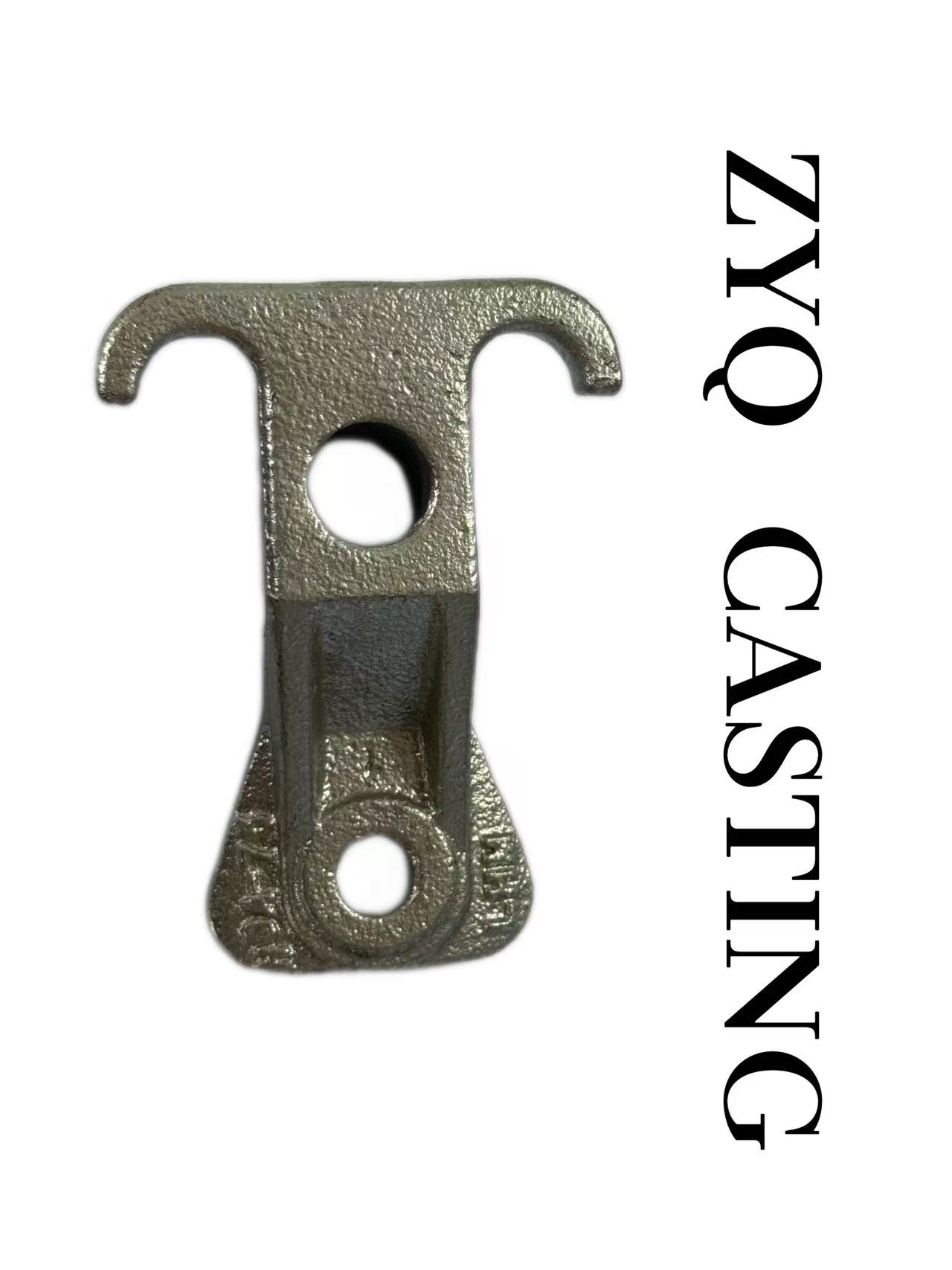
Farmers don’t buy equipment for showroom shine. Gray iron shows up in harvester frames, plow shares, and gear housings because it tolerates abrasive soil without any fuss. Its graphite flakes let fine particles embed instead of grinding the surface away. A plow bottom cast from gray iron can drag through sandy loam season after season and still hold its shape.
Shock loads are just part of the job when a tractor hits a hidden rock or a baler’s plunger compacts hay. Gray iron’s damping capacity is the quiet advantage that keeps things intact. It absorbs vibration and impact energy rather than cracking at the first hard jolt. Transmission cases and axle supports rely on that ability. The metal flexes on a micro level, bleeding off stress that would shatter a stiffer alloy.
Time in the field means constant exposure to moisture, manure, and fertilizer. Gray iron doesn’t stay shiny; it develops a stable surface patina that actually slows further corrosion. This isn’t the flaky rust that eats through sheet metal. On gray iron components, surface oxidation becomes a protective skin, so old implements often keep working long after their paint has faded. That kind of longevity makes gray iron a quiet workhorse of agricultural machinery.
Gray Iron vs. Ductile Iron: The Real Cost of Toughness
Toughness in cast iron is never free, but the bill arrives in different ways depending on the alloy. Gray iron gets its easy machinability and vibration damping from graphite flakes that also act as crack starters, so it tends to snap rather than bend when a load spikes. Ductile iron, by contrast, uses spherical graphite nodules to interrupt crack growth, giving it real elongation and impact resistance—at a price that includes magnesium treatment, tighter process controls, and more frequent testing.
The real cost difference shows up long after the foundry invoice is paid. A gray iron casting is cheaper per pound, but if it fails in service because someone dropped it during installation or overloaded a mounting bracket, you are eating replacement labor, downtime, and possibly a customer complaint. Ductile iron often allows a thinner, lighter section because its higher yield strength does more work per pound, which can close the material cost gap and reduce freight and handling charges.
When a component faces shock, fatigue, or repeated stress cycles, paying for ductile iron usually means fewer replacements and less unplanned maintenance. Gray iron still makes sense for parts that need rigidity and chatter control, but relying on it for anything remotely load-bearing is a gamble with a long tail of hidden costs. Toughness is not just a material property—it is an insurance policy, and the premium is often smaller than it first appears.
Designing with Gray Iron: Getting Damping and Strength for Free
Gray iron's flake graphite structure gives it high damping capacity relative to steel. The graphite flakes disrupt vibration transmission, converting mechanical energy into heat. In machine tool bases, engine blocks, and pump housings, this means less resonance and chatter without adding viscoelastic dampers or changing geometry. That damping is intrinsic to the material, not an extra design feature.
Compressive strength is also high due to the interconnected metallic matrix, and designers get this alongside damping. Because the graphite flakes act as stress risers under tension, gray iron is best suited for compression-dominated parts. By placing ribs, walls, and load paths to keep stresses compressive, you leverage the material's natural strengths. No special alloys, no post-casting treatments—the foundry process itself yields both damping and load capacity, which is why gray iron remains a cost-effective choice for rigid, vibration-sensitive structures.
Wear Resistance on a Budget: Gray Iron's Overlooked Advantage
Most engineers chasing wear resistance automatically reach for hardened steels, bronze, or specialized coatings. Gray iron rarely gets a second look, and that is exactly where the savings hide. The graphite flakes that give gray iron its name act as built-in solid lubricants. Under sliding contact, those flakes shear and smear across the surface, reducing friction and preventing metal-to-metal galling in ways that more expensive alloys often cannot match without additional lubrication.
On a tight budget, gray iron also wins because the wear protection is not a surface treatment you pay extra to apply. It exists throughout the entire casting. Machine a gray iron component, and the fresh surface still carries the same lubricating graphite structure. That means less worry about wearing through a thin hard layer or coating, and it simplifies repair or remachining in the field. The result is predictable wear behavior without the hidden costs of secondary processing.
None of this makes gray iron a universal replacement, but for moderate loads, dirty environments, and applications where lubrication is intermittent, it often outperforms its reputation. The real overlooked advantage is not just lower material cost, but lower total cost over the life of the part because the wear resistance is built into the metal itself.
What to Look for in a Gray Iron Foundry Before You Commit
Start by asking where their metal actually comes from and how they verify each heat. A gray iron foundry can show you an ISO certificate and still ship castings with chilled edges or porosity. Ask to see melt logs, spectrometry reports, and the corrective actions tied to specific heats. If they can't explain why a particular batch's carbon equivalent drifted, that's a red flag. Look for a foundry that pours test bars from the same ladle as your castings, not from a separate "control" pour that never sees production conditions.
Next, walk through their core and sand handling. Gray iron is forgiving in some ways, but a sloppy sand system will show up as rough surfaces, sand inclusions, or dimensional drift on your parts. Ask how often they test sand moisture, compactability, and active clay. If they hesitate or give you a vague "we've been doing this for thirty years" answer, dig further. The best foundries are almost boring in how methodically they track these variables, and they won't mind showing you the daily logs.
Finally, pay attention to how they talk about scrap and rework. Every foundry makes bad castings; the difference is whether they catch them before you do. A trustworthy gray iron supplier will walk you through a recent job that went sideways, what they found in the scrap analysis, and what changed. If instead you only hear about perfect on-time delivery and zero defects, treat that as sales theater. You want a partner who sees your casting design as a set of risks to manage, not a guaranteed win.
FAQ
Gray iron contains graphite flakes that act as a natural lubricant and heat conductor. This helps brake drums shed heat quickly and resist scoring under repeated hard stops, which is exactly what tough braking applications demand.
Gray iron excels in compressive strength and vibration damping, while ductile iron is better for high-tensile or impact loads. For housings, bases, and parts that see constant vibration but not sharp tensile shocks, gray iron often performs better at a lower cost.
Heavy equipment, agriculture, construction, and industrial machinery rely on gray iron for parts like pump housings, gearbox cases, hydraulic manifolds, and machine tool beds. These environments throw dirt, vibration, and thermal swings at components, and gray iron holds up.
Its graphite structure helps distribute heat evenly, so castings resist warping and cracking during thermal cycling. That is why you see gray iron in exhaust manifolds, engine blocks, and brake components that see repeated temperature changes.
Gray iron is not as impact-resistant as ductile or malleable iron, so it is a poor fit for components that take sharp tensile or shock loads. However, many tough applications involve compressive forces and vibration, where gray iron is perfectly suitable.
Keep wall thickness as uniform as possible, avoid sharp internal corners, and use generous fillets. These steps reduce stress risers and shrinkage defects. For highly loaded sections, specify a higher class like 35 or 40 to get the needed tensile strength.
Yes, gray iron is one of the most machinable cast metals because the graphite flakes break up chips and reduce tool wear. This makes it practical for complex housings that need tight tolerances after casting.
Look for proven control over melt chemistry, consistent hardness readings, and experience with similar heavy-duty parts. A supplier that vacuum-tests or pressure-tests critical castings can also help catch porosity before parts reach your assembly line.
Conclusion
Gray iron continues to earn its place in heavy-duty equipment because it handles compressive loads, vibration, and thermal stress without cracking the way stiffer materials do. On a farm, components like gear housings, axle brackets, and pump bodies sit in dirt, take shock loads, and face constant abrasion. The graphite flakes in gray iron dampen vibration and create paths for heat to dissipate, which prevents premature failure. When comparing gray iron to ductile iron, toughness is not just about tensile strength. Ductile iron offers more ductility for certain high-stress parts, but gray iron wins on damping, machinability, and cost where elongation is not the primary requirement. Many buyers mistake higher strength for better toughness, yet in applications with vibration and sliding contact, gray iron often lasts longer because it absorbs energy instead of transferring it.
Designing with gray iron means getting inherent damping and compressive strength without adding expensive alloys or secondary treatments. The material can be cast close to final shape, reducing machining time and preserving the surface skin where the graphite flakes act as a solid lubricant. This wear resistance is underrated: parts sliding against gray iron tend not to gall or seize, which matters in clutch plates, brake drums, and hydraulic components. When choosing a foundry, look beyond the quote. A reliable supplier controls melt chemistry, monitors cooling rates, and checks microstructure for type A graphite. Ask how they handle pattern changes, short runs, and defect prevention. A foundry that understands gray iron will recommend the right grade for your load and wear conditions instead of pushing the cheapest mix. That kind of guidance is what separates a casting that works from one that fails in the field.
Contact Us
Contact Person: Nico Yin
Email: [email protected]
Tel/WhatsApp: 8618561567088
Website: https://www.ductileironparts.com/