

HDPE Pipe Production Line Supplier How to Evaluate Quality and Avoid Downtime
2026-11-16
Selecting the right HDPE pipe production line supplier can make or break your manufacturing efficiency. While many vendors promise high output, hidden quality flaws often lead to costly downtime and inconsistent product batches. At COMRISE, we believe true supplier evaluation goes beyond spec sheets—it demands a hard look at extrusion stability, cooling uniformity, and after-sales responsiveness. In this guide, you'll discover practical checkpoints to separate reliable partners from costly compromises, so your production line keeps running smoothly with minimal interruptions.
Before signing, walk the production floor
A signed agreement can look bulletproof in a boardroom. But paper doesn't hum, leak, or stall. Walking the production floor before you commit reveals what the slides omit—machine maintenance logs that stop six months ago, tooling scattered between workstations, and workers improvising because the documented process no longer matches the actual one.
Watch how materials move. If you see pallets staged in odd corners or inventory stacked without labels, that's not a minor housekeeping issue; it's a warning about scheduling and traceability. Ask operators, not just managers, how often they stop the line. Their pauses, glances, and workarounds tell you more about real capacity than any spreadsheet.
The goal isn't a perfect factory tour. It's to catch the friction that will eventually land on your order. If the floor feels chaotic today, it will be chaotic with your product on it—only now the delays become your problem. A short walk can save you from a long contract.
Dig into extrusion temperature stability
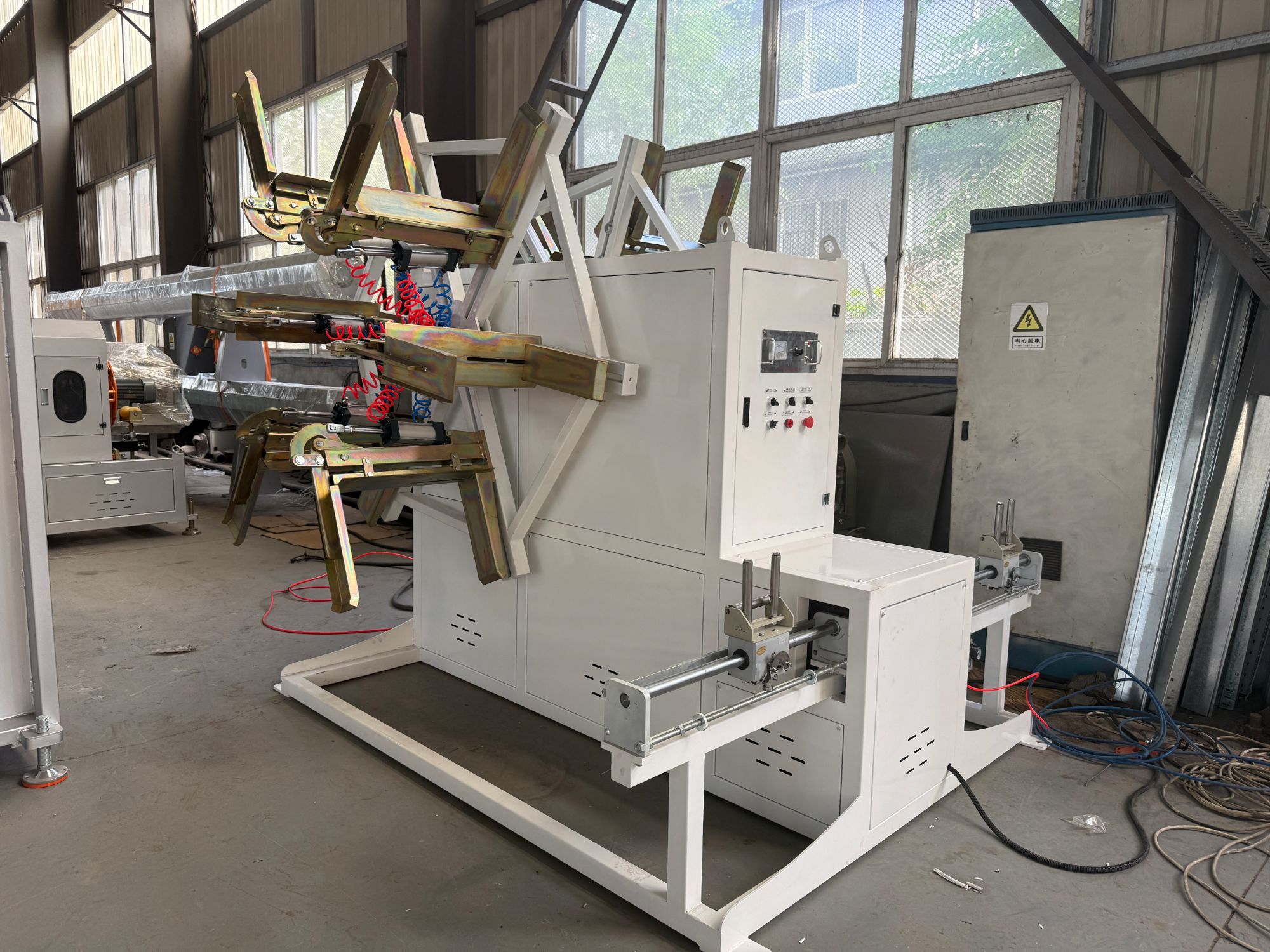
Extrusion temperature stability isn't just a setting on a control panel—it's the quiet backbone of every consistent melt. When the barrel zones drift even a few degrees, you'll see it first in surging output, then in dimensional drift that no downstream calibrator can fully correct. The real trick is not chasing the perfect setpoint, but understanding how each zone's thermal inertia interacts with screw speed and back pressure. A well-mapped temperature profile lets you push line speeds without sacrificing wall thickness or surface finish.
Operators often overlook the role of thermocouple placement and response lag. A sensor buried deep in the steel may read stable while the melt at the screw tip swings wildly. Pairing barrel readings with an infrared melt probe—even occasionally—reveals the true thermal picture. Small adjustments to cooling fans or heater band duty cycles can flatten those hidden swings. Over time, this granular attention reduces scrap from ovality and improves layer adhesion in coextrusion.
Material changes expose instability fastest. Switching from a fractional-melt HDPE to a high-flow LLDPE without rebalancing zone temps invites melt fracture and gel formation. Build a reference chart for common resins: note the ideal flat zone, the compression zone ramp, and the metering zone override. Then test with a short purging compound to confirm the barrel returns to baseline before the next production run. Stability isn't a one-time fix—it's a habit of verifying, not assuming, your thermal control.
Vacuum sizing tank needs real flow checks
Most operators assume the vacuum sizing tank is pulling enough water because the pump is running and the gauge shows pressure. That assumption falls apart the moment tubing starts to collapse or surface finish goes dull. A real flow check means opening the return line, catching water in a bucket for exactly thirty seconds, and comparing the volume to what the pump curve promises at that pressure. If the numbers don't match, you've got a clogged strainer, a kinked hose, or a worn impeller hiding behind a perfectly normal-looking pressure reading.
Flow checks also reveal problems that pressure alone can't. When the spray bars inside the tank get partially blocked, the pressure stays high because the restriction acts like a nozzle, but the actual water volume moving past the hot extrudate drops sharply. That's why you'll see one side of the pipe cooling faster than the other, or the profile developing a rhythmic wave pattern. Catching the actual discharge rate and logging it once a shift costs ten minutes, but it beats running an entire production batch only to find out the tank was starving the product for half the day.
There's a simple rule to keep things honest: if you can't measure it, you can't manage it. Put a flow meter inline permanently, or at least mark a bucket with a fill line and keep it next to the tank. When operators do a real flow check instead of just glancing at a pressure needle, they catch the slow drift in performance before it becomes a scrap event. The tank doesn't need more water—it needs enough water moving through it, and only a real flow check tells you that.
Ask for a week of live uptime data
A full week of live uptime data is usually enough to separate real reliability issues from random noise. Instead of reacting to a single red alert, you can look at the trend over seven days and see whether a problem is isolated or part of a larger pattern.
When requesting this range, pay attention to how the data gets sliced. Hourly checks will catch brief dips that daily summaries miss, while a regional breakdown can reveal that one data center is struggling even though the overall uptime looks fine.
If the default view only shows a day or two, you may need to adjust the query window manually or use a start and end timestamp. Pulling the full week from the beginning also gives you a cleaner baseline for later comparisons.
Spare parts shelf says more than a warranty
A well-stocked spare parts shelf isn't just a storage solution — it's a statement. When a customer walks into a service center and sees organized bins, labeled drawers, and ready-to-install components, they read something deeper than a paperwork promise. That shelf tells them the business plans to be around next year, not just until the warranty expires. It says the team trusts the equipment enough to invest in its long-term upkeep, and that breakdowns will be met with action rather than excuses.
Compare this with a bare corner and a binder full of warranty terms. One invites confidence; the other invites doubt. A full shelf means shorter downtimes, fewer return trips, and a repair culture built on preparedness instead of reaction. It also signals to technicians that their work matters — the parts are there because failures are expected, understood, and planned for. No fine print can replace that kind of visible commitment.
In the end, the shelf becomes a quiet negotiator. It backs up every claim made in a brochure, every handshake after a sale. A warranty may cover a defect for twelve months, but a stocked shelf covers the relationship for years. Customers may forget the exact warranty period, but they remember the time a simple seal or sensor was replaced on the spot, no waiting, no shipping delay. That memory is worth more than any contract clause.
Operator training can hide supplier flaws
A line worker who knows exactly how to finesse a slightly warped bracket into place doesn't fix the bracket. They just make the assembly line keep moving. Over time, that skill becomes a quiet patch over a supplier's inconsistent tolerances, and the root problem stays hidden in the daily output numbers.
The same dynamic shows up when operators adjust torque settings, trim excess flash, or rework connectors without logging the extra steps. Management sees steady throughput and assumes the supply chain is healthy. In reality, the team is absorbing defects that should have triggered a corrective action request months ago.
Supplier scorecards then reflect a false stability. The operators' competence becomes the buffer that prevents a crisis, but it also delays the conversation about material specs, incoming inspection, or switching vendors. Once that buffer disappears through turnover or a sudden volume spike, the flaws surface all at once, and the cost is far higher than if they'd been addressed early.
FAQ
Look at the frame alignment, how the barrel supports are welded, and whether the vacuum tank has proper water seals. A supplier that pays attention to these less glamorous details usually doesn't cut corners on temperature control zones or screw metallurgy either. Ask to see a line running the same diameter and wall thickness you plan to produce.
In our experience, the screw and barrel wear out faster than anything when running high-density material with regrind. The vacuum calibration tank is next, usually from degraded seals or clogged spray nozzles. A good line will have hardened, nitride-treated screws and a vacuum pump sized with at least 30% spare capacity.
Don't just compare kg/h numbers. Ask for a documented run with your exact material grade and pipe dimension, including melt temperature, screw speed, and specific energy consumption. A supplier that is confident will offer a trial run on their floor or connect you with an existing customer running similar product.
Daily check the vacuum pump water level and filter, and inspect haul-off pads for wear. Weekly, verify temperature controller accuracy with a probe. Many plants skip gearbox oil analysis, but it catches bearing wear early. Also, keep spare heaters, thermocouples, and a set of calibrator sleeves on hand.
Very important, but not because of fancy graphics. Look for fault logging that tells you exactly which sensor tripped, remote access for the supplier to diagnose over VPN, and automatic shutdown sequences that don't leave melt in the die. A simple PLC with well-documented alarms is often more reliable than a complex touchscreen system.
Request the L/D ratio, compression ratio, and whether the barrier flight design is optimized for your typical MFI range. For high output with minimal degradation, a 33:1 or 36:1 barrier screw with a mixing section works well. Also ask about the nitriding depth and hardness—if they can't provide that spec, walk away.
Check their spare parts inventory and where it's located. A supplier with regional warehousing can ship a gearbox or barrel next day, while one that relies on air freight from overseas will cost you days. Ask for two references from customers who had a major failure and see how quickly they were back running.
Conclusion
Choosing an HDPE pipe production line supplier means looking past glossy brochures and sales promises. Before you sign anything, walk the actual production floor where the machines are built and tested. Watch how the extrusion line runs under real conditions, not just a short demo. Ask to see temperature logs from the barrel zones over several hours—stable melt temperature is what keeps pipe wall thickness consistent and prevents costly scrap. Then move to the vacuum sizing tank. Many buyers assume a tank with gauges is enough, but you need to see real water flow and vacuum pull, because weak flow leads to ovality and uneven cooling that only shows up after weeks of operation.
Beyond the machinery, demand a full week of live uptime data from existing customers, not the supplier’s cherry-picked highlights. True downtime reasons—like screw wear, calibration drift, or emergency stops—will appear in that raw data. Also visit the spare parts shelf. A supplier that keeps critical parts like screws, barrels, and sizing sleeves on hand for immediate shipment is telling you they understand real production pressure. Finally, look closely at operator training. If the supplier blames your team for every issue during commissioning, that often hides design flaws or poor documentation. The best suppliers train your operators on troubleshooting, not just button pushing, and they leave behind clear, practical manuals. Quality is built into how the supplier handles normal chaos, not just how the line runs on day one.
Contact Us
Contact Person: LISA LEE
Email: [email protected]
Tel/WhatsApp: +86 13780696467
Website: https://www.qdpipemachine.com