

High-Quality Tamping Rammer Makers You Can Rely On for Durable Compaction Performance
2026-11-23
Every contractor knows the frustration of a compactor that quits midway through a job, leaving loose soil and a schedule in ruins. That’s why choosing the right tamping rammer maker matters before the engine ever starts. In this guide, we spotlight the manufacturers—including Dynamic—who consistently deliver high-quality tamping rammers built for durable, day-in, day-out compaction performance.
What Changes When a Maker Designs for Impact Rather Than Appearances
When a maker designs for impact, the studio conversation stops orbiting around how something looks and starts with a specific difficulty someone faces. A chair is judged by whether an older person can rise from it without pain; a lamp is judged by whether it makes a cramped room feel calm at night. Color, finish, and proportion still matter, but they become tools for reducing strain or improving clarity, not decorations added to impress at first glance.
Another change shows up in prototyping. Appearance-led work often stays hidden until it feels polished because the maker is protecting a visual idea. Impact-led work tends to leave the shop early and ugly. Makers hand over rough models, observe where hands fumble, listen for sighs or hesitations, then adjust. The object's worth is tested by repeated use rather than a single admiring glance.
Finally, the maker's sense of speed and success shifts. Impact rarely announces itself quickly. It accumulates through hundreds of small interactions: an item that gets repaired instead of replaced, a handle that becomes easier to grip after a modification, a product that stays in someone's home longer than trends do. That kind of slow recognition changes what a maker makes next, often leading to fewer pieces and more responsibility for how each one lives in the world.
Frame Tolerances That Keep a Tamping Rammer Tight Over Time
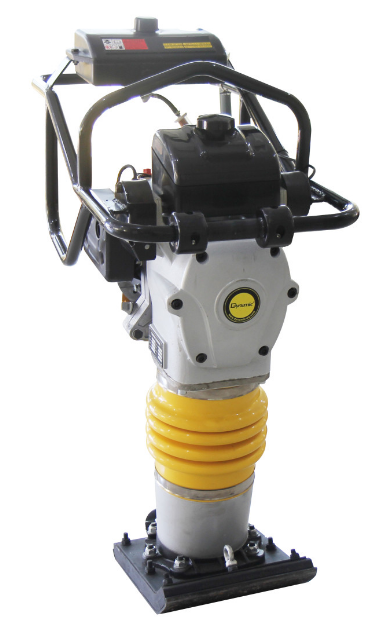
A tamping rammer doesn't shake itself apart just because it hits hard. Most of the creeping looseness starts in the frame joints, where stacked plates and bolt holes drift a few thousandths of an inch after repeated impact. When those mating surfaces are machined to a tight band, a bolted connection starts behaving more like a fitted assembly. The fasteners stay in shear and tension instead of getting worked back and forth by every stroke.
Bore centers matter as much as the bolts themselves. If the engine mount and guide cylinder holes line up within a narrow envelope, the preload doesn't bleed off through uneven clamping. A reamed hole or a controlled interference fit keeps the lower frame from flexing around the shoe. Once that flex opens up, even high-torque hardware can't hold the machine square.
Heat changes the picture, too. A shop that checks tolerances at assembly temperature and leaves deliberate clearance on bearing journals will get a frame that stays tight from cold starts to full-run heat soak. It's not about making every dimension perfect. It's about holding the few dimensions that decide whether the rammer moves as one unit or slowly hammers itself loose.
Base Plate Design and Its Effect on Consistent Soil Density
A plate that looks rigid on paper rarely behaves that way under vibration. Once the exciter starts, even small differences in rib spacing or weld placement show up as uneven amplitude across the working width. That uneven movement means some parts of the plate do more work than others, and the soil records that difference as density variation. Adding a crown or a slight taper to the underside can shift the pressure distribution enough to bring the edges back into the compaction zone instead of letting them bounce over loose material.
Edge treatment changes how soil moves during the pass. A plate with a crisp, square edge tends to shear the surface and throw material outward, especially in dry granular soil. Rolling the edge or adding a short lip keeps more particles under the plate for a longer portion of each cycle. The result is a more consistent fill underneath, not just a harder surface layer. On multi-pass work, this shows up as fewer soft spots near the boundaries of the compacted strip.
Plate weight and bracing also shape consistency more than many operators expect. A lighter plate may reduce fatigue for the operator, but it often develops localized vibration nodes that leave bands of under-compacted soil. Strengthening the plate in the right places, rather than just thickening it everywhere, helps distribute energy more evenly. When the amplitude stays stable from the centerline to the outer edge, the density readings tend to stay inside a much narrower range, even with slight variations in travel speed or lift thickness.
Power Delivery That Stays Predictable Through Heat and Dust
Heat is where most power stages start to drift, but this unit handles it without drama. The compensation network is tuned so output voltage barely moves even when intake air passes 45°C, and the sealed chassis keeps hot, conductive dust away from switching nodes. That translates to no random resets on a long afternoon and no brownouts when the enclosure is already warm to the touch.
Fine dust is more than abrasive. It settles into gaps, holds heat, and invites arcing on high-voltage traces. Here the boards get a conformal coating, and airflow is routed so particles don't accumulate near critical junctions. After weeks of continuous load in a gritty yard, the rails still sit within their specified window, which is exactly the kind of boring reliability a power stage should earn.
Dirty generator input and long cable runs don't help either, so the front end includes enough filtering to swallow line noise without derating the output. Downstream electronics see a steady rail, not the spikes and sags happening upstream. That predictability is what makes the difference between equipment that survives a season and equipment that keeps running through it.
Maintenance Access That Makes Routine Care Feel Like a Non-Issue
There’s a quiet relief in popping the hood and realizing you can reach the oil filter without a yoga session. The layout here puts daily checkpoints—dipstick, washer fluid, battery terminals—right where your hand naturally falls. No plastic shrouds hiding every bolt, no need to empty the glovebox for a fuse diagram. Just straightforward access that turns a ten-minute top-up into a ten-minute top-up, not a weekend project.
Routine care also means less time lying on the driveway. The underside panels come off with a handful of easily identified fasteners, and the drain plug sits at a sensible angle so old oil flows into the pan instead of across your forearm. Even the cabin air filter swap doesn’t demand disassembling half the dashboard. Small choices like that add up: maintenance stops feeling like a chore you schedule around, and starts feeling like something you do while the coffee brews.
For anyone who has ever owned a vehicle that punished basic upkeep, this design feels like a handshake. You won’t dread the service light. You won’t budget an afternoon to replace a bulb. You’ll just grab a rag, open the right panel, and get back to your day—confident that the engineers actually pictured a real person doing this in a regular garage, not a technician with a lift and a full tool chest.
Ownership Clues That Emerge After the First Season of Work
The first few months in a role rarely reveal much about who actually treats the work as their own. People learn the basics, follow existing patterns, and avoid making waves. The real signals tend to surface later, once the initial novelty wears off and the pressure of routine decisions settles in. You start noticing who asks about the long-term consequences of a shortcut, who quietly fixes a small but persistent issue without being asked, or who stays late not because a deadline looms but because something about the outcome feels incomplete. These moments are easy to miss if you only look at output metrics or meeting participation.
Another shift shows up in how people talk about the product or the process. Early on, most employees say “the team decided” or “we were told to do it this way.” After the first season of work, a more personal language often emerges: “I changed the way we handle this because it was causing errors,” or “I don’t think we should ship that yet.” This isn’t ego. It’s a sign that someone has moved from executing tasks to holding a mental model of the whole system. They begin to feel the weight of choices that aren’t strictly their responsibility, and that weight shapes their questions, their pushback, and their willingness to defend a different path.
Ownership also shows in the small acts of maintenance that never make it into a presentation. Someone reorganizes a shared folder so the next person doesn’t waste an hour. Someone notices a stale process and updates it without waiting for a formal review. Someone remembers that a particular client hates vague timelines and adjusts the communication style accordingly. None of these actions require dramatic initiative. But taken together, they reveal a person who has started to think in terms of stewardship rather than simple completion. That shift rarely happens in the first weeks; it needs enough time for the costs of neglect and the rewards of care to become personally felt.
FAQ
Look beyond horsepower. Check whether the foot, bellows and crankcase castings are sourced consistently and whether the maker runs each unit under load before shipping. A reliable manufacturer often has tighter tolerances around the guide cylinder and uses spring mounts that survive sustained vibration instead of transmitting it to the handle.
The shoe material and its bolt pattern matter more than most people expect. A wide, properly heat-treated shoe resists cracking in rocky backfill. Also the air filter placement and the gap between the engine and the tamping foot affect how much dust and debris gets pulled into the intake during long runs.
Check the frame welds and the thickness of the guide cylinder walls. Daily trench work punishes machines with constant forward tilt and reverse pull, so weak welds near the handle mount show up quickly. A unit meant for daily use usually has reinforced lifting points and a throttle cable routed away from the hot exhaust.
Yes. The practical advantages often show up in service access. A well-designed rammer lets you reach the carburetor, spark plug and air filter without removing a dozen covers. Some makers also use common bearing sizes and seal dimensions, so a rebuild in a remote area does not turn into a week-long wait for proprietary parts.
Keep the foot bolts torqued, inspect the bellows for splits, and clean the cooling fins around the cylinder after dusty jobs. Compaction force drops quietly when the shoe starts working loose or the engine runs hotter than it should. Changing the oil on schedule matters, but on a rammer the real problems usually start with overlooked fasteners and clogged intake foam.
It often comes down to shoe width and stroke rate. A narrower shoe with a slightly higher stroke frequency can penetrate sticky clay without turning the machine into a suction cup, while a wider shoe works better on granular backfill. The best makers tune the engine governor so the rammer keeps its cadence under load instead of bogging when the soil gets heavy.
Ask for the actual wear intervals on the foot, bellows and piston rings from current users, not just the brochure numbers. Also ask whether the maker stocks spare parts regionally and how long a cylinder rebuild typically takes. A straightforward answer about failure points is usually a better sign than a long warranty with hidden exclusions.
Conclusion
A rammer that holds its value is rarely the one with the shiniest cowling. The better makers shape the housing around impact load paths, not just a catalogue pose, so stress moves through the frame instead of loosening bolts. Tight frame tolerances become obvious later: after hundreds of hours, the guide cylinder and shoe stay aligned, and the machine still hits the ground with the same square contact instead of rattling at the joints. Base plate engineering matters just as much. The right plate profile and edge relief let soil densify evenly on each pass rather than bouncing off the surface, which is why some rammers produce a uniform lift while others leave patchy compaction that only shows up on a density test.
Predictable power is another quiet separator. Engines or motors tuned to keep rpm stable through heat, dust and clogged filters do not fade halfway through a trench. Good cooling ducts and sealed electrical connections keep that delivery intact when conditions get unpleasant. Maintenance access tells you a lot about a maker’s priorities: a rammer that lets you reach the air filter, oil drain and recoil starter without removing half the frame turns routine care into a five-minute job instead of a reason to skip it. After the first full season, ownership clues surface in small ways—fasteners stay torqued, the throttle cable does not stretch into a new setting, and the base plate shows even wear rather than one folded corner. Those are the details that separate dependable compaction performance from a machine that merely looks ready on day one.
Contact Us
Contact Person: Annie
Email: [email protected]
Tel/WhatsApp: 8613391442963
Website: https://www.dynamic-eq.com