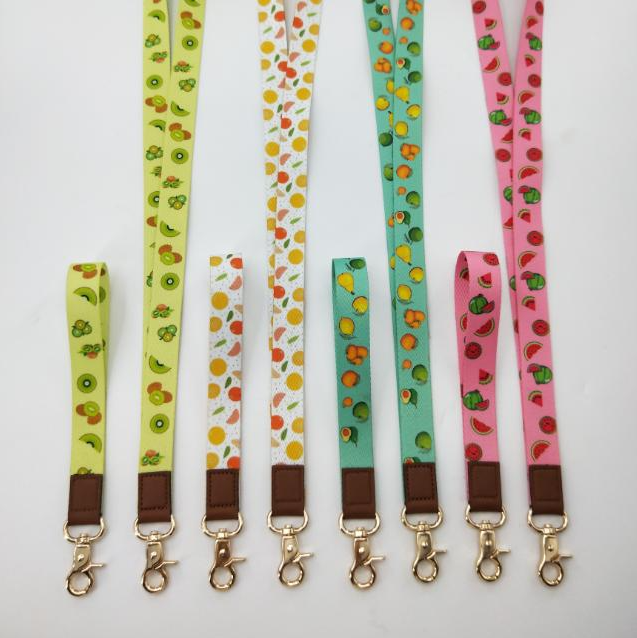

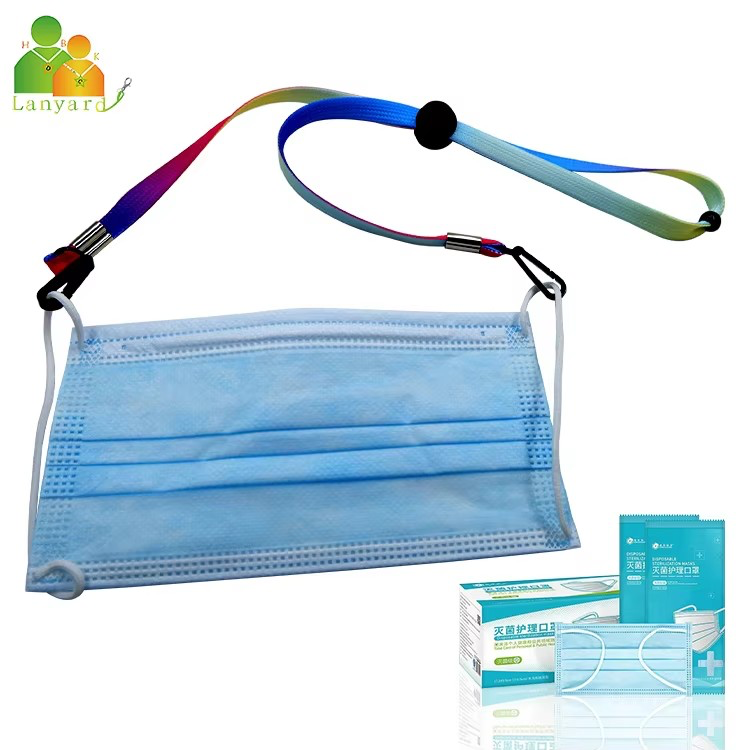
Mask Holder Lanyard Manufacturer Guide to Comfortable and Durable Everyday Use
2026-11-23
Most mask holder lanyard guides stop at listing materials, but the real difference between a strap that digs into your neck by noon and one you forget you're wearing comes down to how a manufacturer balances softness, weight, and hardware stress. DONGCHUANG approaches everyday carry from the production floor up, so this guide focuses on what actually makes mask lanyards comfortable for all-day use and durable enough to survive keys, bags, and repeated washing. If you have ever lost a mask to a snapped clip or a scratchy cord, keep reading.
Why Most Mask Lanyards Feel Fine for an Hour and Awful by Noon
The first hour usually feels fine because most lanyards are just soft enough at the start. The trouble is that the materials tend to work against you once you move, talk, or bend your neck. A thin cord that sits comfortably in the morning can start to dig in after repeated friction, especially where the strap meets the collar or the back of the ears. That early softness often comes from a bit of stretch, but stretch isn't stability; it slowly allows the mask to pull unevenly.
By late morning, the real problem comes from a lack of adjustability and poor weight distribution. A fixed-length lanyard might seem fine when you first put it on, but it forces you into small, constant corrections—tugging it down, shifting the clasp, or tilting your head to keep the mask from riding up. Those tiny movements add up, and the clasp or plastic breakaway can press into the collarbone or tangle with hair. You end up with tension in your neck and a strap that feels tighter than it did at 8 a.m.
By noon, humidity and movement make everything worse. Sweat softens the skin, and any rough edge, seam, or stiff latch becomes a clear irritant. A mask lanyard that hasn't been designed to spread pressure will keep concentrating it on the same spot. A better option is one with adjustable length, a wider or rounded contact surface, and no hard edges near the neck. That's the difference between something you forget you're wearing and something you can't wait to remove.
The Everyday Wear Points That Decide Comfort Before You Even Notice
Most people blame a long day for that low-grade irritation that creeps in by mid-afternoon, but the real culprits tend to be the touchpoints you never consciously check. A collar that sits slightly off-center can pull against the back of the neck every time you lean forward, and a waistband with too much stretch keeps tightening its grip whenever you sit down or stand up. These small mismatches quietly stack up until comfort feels like something the garment just refuses to give.
Fabric gets too much credit in these conversations. Two shirts with identical fiber labels can feel completely different because one armhole is cut a few degrees too shallow, or the shoulder seam lands a centimeter past its natural edge. That tiny excess asks your body to work around the clothing instead of with it. Before you register stiffness in the shoulders or keep tugging at a cuff, the fit has already made the call.
Even less obvious details carry weight: a care label that holds its starched edge, a hem fold that flips upward after washing, or a button thread tied with too much tension. The best everyday pieces disappear within minutes, not because they are loose, but because every contact point has been resolved. When nothing tugs, scratches, or resists your movement, comfort stops being a selling point and becomes simply an absence of friction.
What a Factory Actually Checks When It Says a Strap Is Durable
A strap that survives a single hard pull is not necessarily durable. Most factories mount the sample on a flex tester and run it through tens of thousands of bends at a set radius, usually with the buckle attached and under slight tension. What they are watching is not just for a snap. They look for surface cracks, delamination between layers, elongation around the pinholes, and any shift where the strap meets the lug. A material that feels tough in the hand often starts showing micro-tears in the finish long before it actually fails.
The second check is chemical. Sweat is rarely just salt water, so the test bath usually includes acetic acid, ammonia, and a trace of lipids. Samples soak or are repeatedly sprayed, then moved into a humidity chamber at skin temperature. After each cycle the factory checks color bleed, stiffness, and whether the edge paint or stitching has swollen. Metal hardware is judged separately for pitting or rust where it touches the strap, because corrosion at the spring bar can destroy a band even when the strap material itself still looks fine.
Hardware attachment gets more attention than most buyers expect. Quick-release levers, spring bars, and tang buckles are cycled through repeated engagement and removal while a side load is applied. The goal is to find the first component that loosens, because a clicking quick-release or a slightly bent pin becomes a warranty return. If the strap passes the flex, chemical, and hardware cycles without visible migration or loosening, that is usually when the factory signs off on the word durable.
Choosing Materials That Survive Sweat, Sunscreen, and Repeated Washing
Sweat does more than dampen fabric. The salt, lactic acid, and trace minerals left behind can gradually weaken elastane and cause colors to turn dull or uneven. For anything worn close to the skin, tightly woven nylon and polyester blends tend to hold up better than cotton because they dry faster and resist the abrasive effect of salt crystals that form as perspiration evaporates.
Sunscreen creates a different challenge. Many formulas use oil-based carriers and chemical filters that can bind to fibers, leaving yellow or orange stains that become more visible after washing. Smooth, densely knit synthetics give sunscreen less opportunity to soak in, while fabrics with a water-repellent or stain-release finish allow residue to sit closer to the surface and rinse away more easily.
Repeated washing exposes weak points in construction before the fabric itself fails. Long-filament yarns, flat seams, and reinforced high-friction areas survive laundering with fewer pills and less distortion. In stretch garments, look for swim- or sport-grade elastane that resists chlorine and sweat degradation, and favor high-gauge knits that keep their shape rather than thinning out after a summer of use.
How Small Hardware Choices Keep a Lanyard from Becoming a Neck Irritant
The difference between a lanyard that disappears from awareness and one that feels like sandpaper by noon often comes down to the tiny metal or plastic parts most people never name. A swivel hook with a flat, polished backplate sits flush against the shirt instead of digging into the collarbone. Rounded edges on split rings and smooth barrel clasps remove the micro-abrasions that cheap stamped connectors tend to leave along the nape of the neck.
Weight distribution matters just as much as surface finish. A lightweight clip at the attachment point keeps the cord from dragging or twisting, which reduces that constant readjusting motion. When the hardware is too heavy, the strap sways and rubs the same spot repeatedly; when it is balanced, the contact stays stable and unremarkable. Even the choice of a side-release buckle over a fixed join lets the lanyard sit beneath the collar without creating a pressure point.
Small details like a matte coating on metal rings or a plastic housing over any exposed seam also help. These choices stop salt, lotion, and sweat from turning a minor friction point into raw skin by the end of a shift. In practice, improving the hardware is less about adding padding and more about removing anything that catches, pulls, or holds heat against the neck.
A Manufacturer’s Guide to Making Daily Use Feel Effortless
The easiest products to live with are rarely the ones with the fewest parts. They are the ones where every edge, grip, and release point was measured against a single question: does this motion ask anything extra from the person holding it? A slightly recessed cap, a trigger that breaks at just under two pounds of pressure, or a neck that tapers where a palm naturally rests can remove the small hesitations people never consciously notice. Those hesitations are what make daily use feel like work, and removing them is more about restraint than invention.
Consistency matters more than cleverness. When a lid snaps shut with the same pitch on the tenth use as on the first, the hand learns the routine and eventually stops paying attention to the object altogether. That silence is the goal. It comes from tight tolerances, honest material choices, and a refusal to hide weak mechanics behind extra steps. A pump that does not wobble, a seam that does not catch a thumbnail, a weight that feels stable without being heavy—these are not features to advertise. They are the quiet infrastructure of effortlessness.
True effortlessness is not about doing less. It is about aligning the shape of a product with the rhythm of a person’s day. If someone has to read a label, switch grips, or use more force at a certain angle, the design has not finished its job. Manufacturers who revisit these details after the prototype stage—coating a surface for wet hands, shortening a throw so a child can finish the stroke, balancing a base so it can be set down without looking—end up making objects that fade into the background. That disappearing act is the clearest proof the guide was followed.
FAQ
The strap needs to stay narrow enough to feel light but wide enough to avoid digging into the neck. Softened or rolled edges help a lot, and the hardware should sit flat rather than twisting against the skin.
Woven polyester and silicone tend to handle moisture and repeated rubbing well. Silicone resists odor and wipes clean easily, while a tight-weave polyester keeps its shape without turning rough after a few weeks of use.
Look for stainless steel or coated brass swivel clips and cord locks. Weak points usually appear where metal meets strap, so a reinforced loop or sturdy crimp at that junction matters more than the clip style.
A sliding barrel lock gives a wider range than fixed loops and doesn't slip as much as a simple bead. Placing the adjuster away from the back of the neck also prevents pressure when people lean back or wear collars.
The issue is often the edge finish or the clasp position. Unfinished cut edges, sharp metal burrs, or a clasp that keeps rotating against the collarbone create friction over time, so rounded edges and smooth hardware finishes reduce that irritation.
Run repeated pull tests on the attachment points, leave samples in warm soapy water, and check for fading or stiffness after sun exposure. A basic daily-use item fails more often at the small connection points than in the strap itself.
Keep the attachment clips compact and avoid long dangling ends. A slightly stiffer strap material or a small slider that holds the loose section in place can stop it from knotting around keys and earbuds.
Double-stitching where the strap folds over hardware and using a protective coating on metal parts gives a noticeable difference. Consistent edge sealing also prevents fraying, and those steps cost less than replacing failed components later.
Conclusion
Most mask lanyards earn a quick nod when first put on, then quietly turn into a nagging scrape behind the ears or a damp cord that clings to the neck by midday. The difference rarely comes from a single flaw. It shows up at the points nobody inspects until they ache: the angle where the strap crosses the collar, the edge finish along the cord, and the weight of the hardware resting against the chest. A manufacturer that takes daily use seriously treats these contact zones as primary design targets, not afterthoughts. That means rounding edges, keeping the drop length stable, and choosing connectors that sit flat instead of twisting with movement.
Durability checks need to go beyond a simple pull test. Sweat, sunscreen, hand sanitizer, and frequent washing age a strap faster than office air ever will, so material trials should mimic repeated wetting, drying, and mild abrasion rather than one dramatic yank. The goal is a lanyard that still feels unobtrusive at the end of a long shift, with no rough spots, no stretched-out cord, and no hardware that has begun to bite into the skin. When comfort and durability are tested against real routines, the result is a product people forget they are wearing, which is exactly what good everyday gear should do.
Contact Us
Contact Person: Bill Huang
Email: [email protected]
Tel/WhatsApp: 8613829102720
Website: https://www.dclanyard.com