

Octagonal Cage Factory: Crafting Custom Enclosures for Industrial and Agricultural Needs
2026-10-28
Octagonal cages aren't just for combat sports—they're quietly holding together everything from livestock enclosures to heavy-duty industrial storage. But not all octagonal cages are created equal. In this post, we look at how a dedicated octagonal cage factory turns raw steel into custom enclosures that fit specific agricultural and industrial demands, and why PandaWin Sports has become a name worth watching in this space.
Designing Custom Octagonal Cages Around Your Site
Placing octagonal cages on your property starts with reading the land itself. Walk the perimeter at different times of day and note how sunlight, wind, and foot traffic move across the space. The eight-sided form naturally creates pockets of quiet and visibility, so position each cage where its angled faces can frame a view or break a prevailing breeze. Avoid lining them up like soldiers; slight rotations of ten or fifteen degrees make the structure feel anchored to the site rather than dropped onto it.
Think about how the cage meets the ground. A custom octagon can hug a gentle slope by stepping the foundation or by letting one side hover over a low planting bed. Use the space between the eight posts to define thresholds: one face might open toward a path, while the opposite face stays solid to block a neighbor’s sightline. This push and pull between openness and enclosure gives the cage a sense of purpose without making it feel like a fortress.
Finally, treat the cage as a frame for what already exists. Let a mature tree sit partially inside one of the angles, or align a pair of cages so their edges catch the last light on an autumn afternoon. Because octagons have no single front, they reward moving around them slowly, revealing new relationships with the garden and the house from every step.
Material Choices That Stand Up to Corrosion and Wear
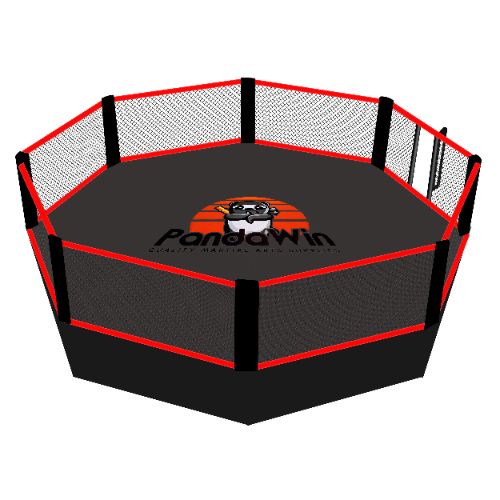
Picking materials for harsh environments often feels like a trade-off between strength and longevity, but some alloys quietly break that rule. Duplex stainless steels, for instance, blend austenitic and ferritic structures to resist pitting in chloride-heavy settings while keeping costs lower than exotic nickel grades. Their secret lies in a balanced mix of chromium, molybdenum, and nitrogen, which patches micro-crevices before corrosion can take hold.
Wear resistance tells a different story. Instead of fighting abrasion with hard coatings that eventually flake off, designers increasingly turn to ceramic-reinforced composites or nitrided tool steels that develop a self-healing oxide layer under friction. The real advantage surfaces in wet, gritty conditions where corrosion and abrasion attack together—materials like high-chromium white iron or tungsten carbide overlays shrug off both, because their microstructures channel stress away from grain boundaries where rust usually starts.
One overlooked tactic is pairing dissimilar materials at the design stage. A polymer liner inside a steel pump housing doesn’t just prevent metal-to-metal wear; it shifts the galvanic potential so the steel sacrifices itself more slowly. This kind of deliberate mismatch—often ignored in favor of a single superalloy—can double service life without doubling the budget.
Why Eight Sides Outperform Four in Wind and Impact
Four-sided structures tend to catch wind on their flat faces, turning every gust into a direct shove against a broad surface. An eight-sided form breaks that frontal assault into angled deflections. Air slides off the chamfered corners instead of piling up, so the structure feels less push and more slip. It is the difference between standing behind a sheet of plywood in a storm and standing behind a wedge.
Impact behaves in a similar way. When a thrown branch or flying debris hits a flat side, the energy concentrates at a single point on a large unsupported panel. On an eight-sided surface, the angled faces redirect that energy. The blow glances off, spreading the force along a shorter span, which means fewer cracks and dents. Repeated hits that would eventually fatigue a four-sided wall simply lose their bite against the faceted geometry.
There is also a subtle advantage in how stress travels through the frame. Four corners create long, uninterrupted stretches of material that flex and vibrate under changing loads. Eight corners interrupt those spans, adding natural stiffening points. The result is a quieter, more stable structure when the wind shifts direction suddenly or when a heavy object strikes without warning.
Inside Our Welding and Coating Process
Every weld starts with a close look at the metal's grain and temper. We adjust amperage, travel speed, and filler feed by hand, not by preset menus. The torch angle changes with each joint geometry, so the heat lands where it strengthens rather than distorts. It is slower, but the result holds up under fatigue and shock loads that factory settings often miss.
Coating comes only after the surface passes a white-glove wipe down. We mix our own primers and topcoats in small batches, matching them to the specific alloy and exposure conditions. A thin etch layer goes on first, then two barrier coats with a different cure time for edges and recesses. Thickness is checked with a wet-film gauge, not just visual gloss, so every square inch carries the same protection.
Between stations, parts are never rushed through cooling racks. We keep a log of ambient humidity and metal temperature, because a cold morning or a humid afternoon shifts how the coating flows and bonds. If a panel shows micro-pinholes under a loupe, it gets stripped and redone. That kind of rework costs us time, but it is the only way to guarantee a finish that survives salt, solvents, and years of direct sun.
Matching Cage Dimensions to Livestock or Equipment
Start with the animal's actual body measurements, not a generic weight chart. A mature ewe can squeeze through a 45 cm gap, so a lambing jug needs solid sides at least 90 cm high and an interior width that lets her lie flat without pressing against a wall. For cattle, measure from the tailhead to the point of the shoulder while the animal stands relaxed; that length plus 25 cm gives a squeeze cage that won't bruise hips or leave too much room for a calf to turn around.
Equipment fit matters just as much as animal fit. If you're using a portable corral with 10-foot panels, the cage footprint should match that module so gates swing without hitting a post. Check the trailer deck height before welding a loading cage onto a skid steer fork frame—eight cm of mismatch means a lip the animal will balk at. Hydraulic chutes need at least 15 cm clearance on both sides for hoses and pivot arms.
Leave a vertical gap of 10 to 15 cm above the tallest animal's back, but no more. Too much headroom encourages rearing; too little scrapes hides and breaks tails. For mixed groups, add a few extra centimeters of length for the dominant animals rather than making the whole cage oversized, because an undersized corner will still trap the smallest one.
Field-Tested Cases Where Standard Cages Fell Short
During a routine inspection at a chemical processing plant, a standard carbon steel cage protecting a pressure relief valve showed deep pitting after only eighteen months of service. The atmosphere carried trace amounts of hydrogen sulfide and chlorides that the specification sheet didn't account for. When the valve activated, fragments of the weakened cage broke away, scoring the valve stem and forcing an unplanned shutdown. Nobody had considered that the generic material choice would fail so quickly under those specific corrosive conditions.
On an offshore platform, a standard aluminum cage around a level transmitter became a nesting site for seabirds. The open design allowed guano to accumulate directly on the instrument lens, fouling readings within weeks. More critically, the cage's thin struts bent during a routine maintenance walkdown when a technician leaned on it for balance. The bent frame pressed against the transmitter housing, creating a stress point that later cracked during a storm swell.
A food processing facility discovered that their standard stainless steel cage around a mixing tank level sensor trapped product residue in its crevices. Despite daily washdowns, the cage's complex geometry held moisture and organic matter, turning into a bacterial harborage point. Swab tests repeatedly failed in that zone until the cage was replaced with a solid, sloped shield that shed water completely. The original cage met the basic sanitary standard on paper but failed in actual production because nobody accounted for how the geometry interacted with the cleaning cycle.
FAQ
We focus on octagonal cage systems built for both industrial and agricultural use. This includes equipment housings, storage bins, livestock holding pens, and protective barriers. Each unit is fabricated to order, so the final structure matches the specific operational demands rather than forcing a standard design onto your site.
Custom dimensions and load ratings are a core part of what we do. You can specify height, panel width, doorway placement, and even reinforced floor anchoring. Our engineering team reviews the intended use and environmental factors before finalizing the drawings, so the cage performs as expected under real working conditions.
For industrial environments, we commonly use hot-dip galvanized steel or powder-coated carbon steel for added corrosion resistance. Agricultural clients often choose galvanized wire mesh panels with timber or steel frames, depending on whether the enclosure will house animals, feed, or machinery. We also offer stainless steel for food-grade or chemical exposure scenarios.
The octagonal layout distributes pressure more evenly across the frame, which reduces weak points compared to square corners. For livestock, it eliminates sharp corner traps and improves animal flow. For equipment storage, the shape allows better air circulation and easier access from multiple sides without increasing the overall footprint significantly.
Most custom octagonal cages are completed within three to five weeks after the design is approved. Complex projects with special coatings, integrated roofing, or electrical components can take up to eight weeks. We provide a clear schedule once the material list and fabrication steps are confirmed.
Outdoor durability is standard. We use weather-resistant fasteners, drainage gaps, and UV-stable coatings where applicable. For coastal or high-humidity areas, we recommend an upgraded galvanization layer or stainless steel hardware to prevent premature rust.
Every order includes detailed assembly drawings and a step-by-step guide. If you need hands-on help, we can arrange a supervisor or full installation crew depending on your location. We also provide video walkthroughs for common assembly stages to speed up the process.
Maintenance is minimal. An annual inspection of joints, hinges, and anchor points is usually enough. For galvanized or powder-coated surfaces, a mild detergent wash once or twice a year keeps buildup from trapping moisture. If a panel gets damaged, individual sections can be replaced without dismantling the whole enclosure.
Conclusion
At Octagonal Cage Factory, every enclosure starts with the site itself rather than a pre-set template. Our team walks the terrain, measures the clearances, and maps out access routes so the cage can wrap around existing equipment, uneven ground, or narrow service corridors without forcing costly rework. That site-first approach pairs with material choices built for harsh environments: hot-dip galvanized steel where fertilizer and manure eat away at ordinary frames, marine-grade aluminum for coastal humidity, and powder-coated alloys that shrug off chemical splash and constant abrasion. The eight-sided geometry is not a gimmick—it spreads wind load more evenly than a square, reducing stress risers at corners, and it deflects impacts from machinery or livestock without buckling. In practice, that means fewer bent rails, longer coating life, and safer containment under pressure.
The difference carries into our welding and coating line, where every joint gets a continuous, sealed bead before the full cage moves through a multi-stage wash and cure. That consistency lets us cut cages to exact animal or machine dimensions: farrowing crates with narrow bar spacing for piglets, tall walk-in enclosures for bulls, or compact guards around hydraulic power units. Over years of field testing, we have replaced plenty of standard four-sided cages that failed at the first hard knock or salt season. One dairy operation saw square pens flex open at the corners during storms, while our eight-sided units stayed true. A grain handling site switched after repeated corrosion pitting left standard cages unsafe. Those failures are what pushed us to craft enclosures people do not have to re-buy every few seasons.
Contact Us
Contact Person: Fei Xu
Email: [email protected]
Tel/WhatsApp: +8618631245578
Website: https://www.pandawinsports.com/