

OEM Aluminum Intake Manifold: Boosting Performance and Efficiency
2026-07-03
Every engine builder knows the secret to unlocking hidden horsepower often lies in the details most overlook. The intake manifold is one of those critical components, and stepping up to an OEM aluminum design can transform your engine's breathing. At DDR, we've seen how a sturdier, heat-resistant manifold not only sharpens throttle response but also keeps intake temps down when the pressure's on. If you're chasing consistent performance without sacrificing daily drivability, the right manifold choice makes all the difference. Let's dive into what sets these aluminum upgrades apart.
Why Aluminum Outperforms Stock Plastic Manifolds
Aluminum intake manifolds handle engine heat without warping, unlike plastic units that often deform after repeated heat cycles. This stability keeps the intake path precise, so air moves exactly as engineered, preventing the gradual performance drop seen with plastic that sags or cracks over time.
Durability is another clear edge. Plastic manifolds can become brittle and crack from constant thermal expansion and contraction, leading to vacuum leaks and rough idling. Aluminum holds up to these stresses, maintaining a tight seal and consistent fuel trims year after year.
Beyond just surviving, aluminum allows for better port matching and surface finishing. The rigid structure can be machined to exact tolerances, reducing turbulence and maximizing airflow. A plastic manifold’s surface can’t achieve the same smoothness, and minor flexing under pressure distorts the internal shape, compromising efficiency.
The Engineering Behind Improved Airflow
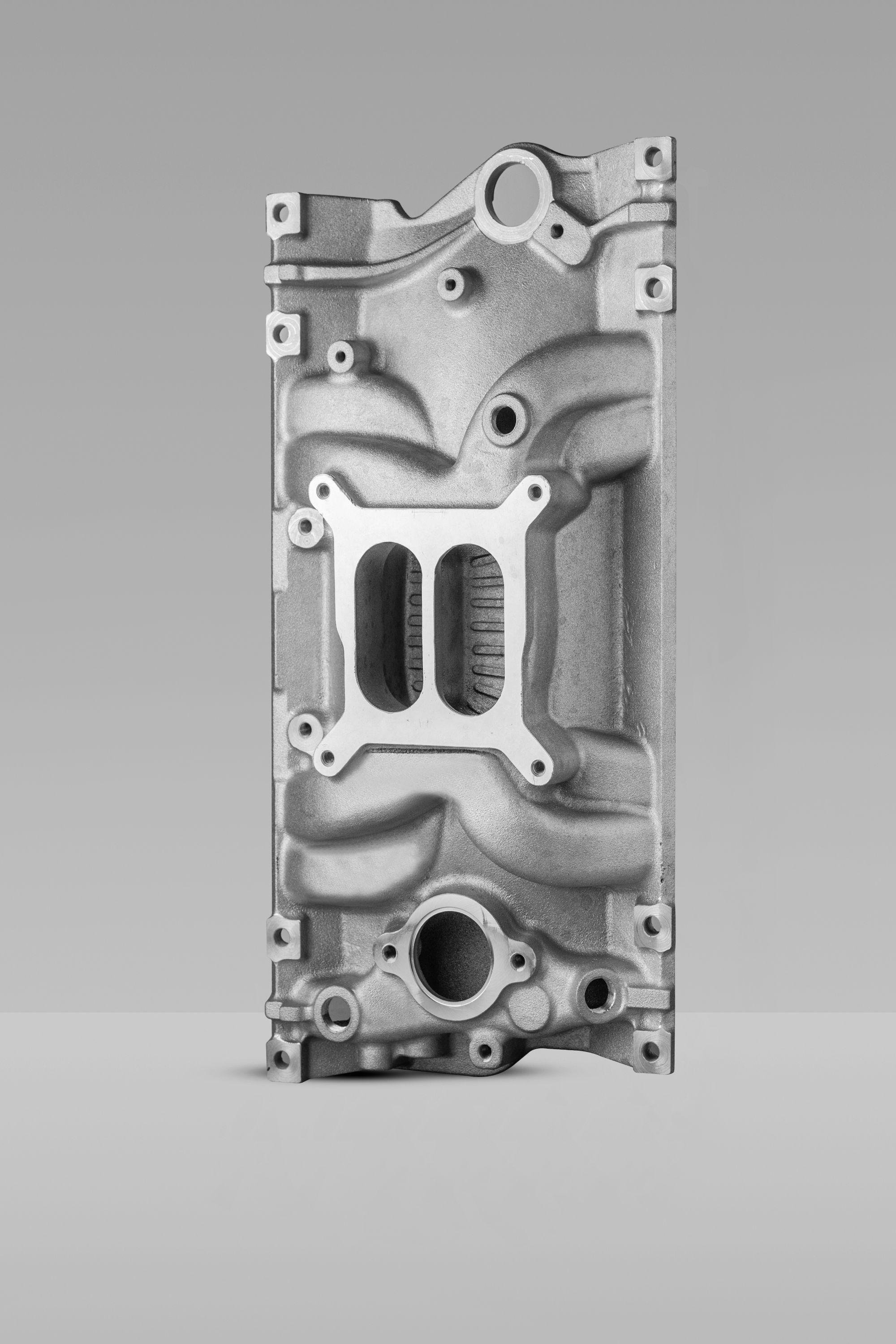
Getting air to move efficiently through a space isn't just about bigger fans. At the core, engineers treat airflow like a fluid that follows the path of least resistance, so every curve, bend, and surface texture matters. By studying how pressure differences and boundary layers behave, they can shape ducts and inlets to coax air into smooth, organized streams rather than chaotic turbulence. This means fewer energy-sapping eddies and more actual movement where it counts—whether that's cooling a server rack or refreshing a room.
Materials and surface finishes play a surprisingly big role too. A polished metal surface might sound slick, but it can actually increase friction in certain flow regimes. Instead, microscopic riblets modeled after shark skin or specially textured polymers can reduce drag by manipulating the thin layer of air that clings to walls. These engineered surfaces keep the core flow humming along with less effort, which directly translates into quieter systems and lower power draw.
Then there's the geometry of the path itself. Designers use computational modeling to see how small tweaks—like adding a gradual expansion after a fan instead of a sharp corner—prevent pressure drops that starve downstream components. Even something as simple as the angle of louver blades can be optimized to guide air without creating noise-inducing vortex shedding. The result is a system where every component harmonizes, pushing air exactly where it's needed without unnecessary strain.
Real-World Power Gains You Can Expect
When we talk about horsepower and torque figures on paper, they rarely tell the whole story. Real-world power gains are what you actually feel from behind the wheel—the surge when you merge onto a highway, the responsiveness when you step on the throttle mid-corner, and the ease with which you overtake on a steep grade. It’s less about peak numbers and more about how broadly the torque curve spreads across the rev range, how quickly boost builds, and how sharply the engine reacts to your inputs. A tune might only claim 20 extra horsepower, but if it fills in the mid-range and sharpens throttle response, the car can feel entirely transformed. That’s where the smiles per gallon really count.
Many modifications that advertise impressive dyno results fail to translate to the street because they sacrifice low-end driveability for top-end hero numbers. A bigger turbo, for instance, might give you a rush of power above 5,000 rpm, but in daily driving you’ll spend most of your time between 2,000 and 4,000 rpm—where lag can make the car feel sluggish. The best setups balance airflow, fueling, and timing to deliver gains where you actually use them. Upgrades like a well-matched turbo-back exhaust, a freer-flowing intake, and a custom ECU calibration often yield tangible improvements in part-throttle response and passing power without waiting for the tach needle to climb. It’s the difference between a car that’s fast on a spreadsheet and one that’s genuinely quick in the real world.
Consistency also matters more than a one-time peak number. Heat soak, altitude, and fuel quality can all chip away at the power your engine makes on a cold morning dyno pull. Real-world power gains hold up in the conditions you actually encounter—sitting in traffic on a hot day, climbing a mountain pass, or running on 91-octane pump gas from a no-name station. Quality intercooling, proper heat management, and conservative tuning with headroom built in will keep your gains on tap when you need them, not just in ideal conditions. That’s where you truly notice the difference: a car that pulls hard every time, without the computer pulling timing to save itself.
How Better Heat Dissipation Elevates Efficiency
Thermal buildup silently erodes performance in ways that often go unnoticed until thresholds are crossed. When components overheat, their internal resistance climbs, forcing them to draw more power just to maintain the same output—a wasteful loop that cuts directly into efficiency. Effective heat dissipation breaks this cycle by pulling thermal energy away before it can degrade conductivity, keeping electrical pathways clear and response times sharp. The result isn’t just cooler hardware; it’s a system that does more with every watt, avoiding the invisible throttling that creeps in when temperatures spike.
Beyond raw speed, steady thermal management preserves the material integrity of conductors and semiconductors over time. Repeated heating and cooling cycles stress solder joints and microcircuits, causing microscopic fractures that gradually raise impedance and leak energy as unwanted heat. By stabilizing operating temperatures, well-designed cooling solutions slow this aging process, maintaining peak efficiency across the lifespan of the device. It’s a quiet kind of optimization—one that doesn’t just chase benchmark numbers but ensures that the design’s full potential remains accessible long after the first power-on.
Fitment and Compatibility Made Simple
Ever found yourself juggling part numbers and vehicle models, only to end up more confused than when you started? We’ve been there—and that’s exactly why we flipped the script. Our fitment system cuts through the noise, matching your exact make, model, and year in seconds, not hours. No cryptic charts, no guesswork—just a straightforward path to the part that fits like it was always meant to.
We don’t just stop at basic compatibility either. Behind the scenes, our database cross-references subtle model variations, engine types, and even production splits that most checkers overlook. So whether you’re tracking down a component for a standard commuter or a limited-run specialty vehicle, the answer stays clear and reliable. It’s like having a seasoned mechanic whispering “yes, that’s the one” in your ear—only faster.
Best of all, we’ve wrapped this logic in something delightfully simple. Enter your vehicle once, and everything you see from then on is tailored to fit. It means fewer returns, less downtime, and more confidence to hit the road. Because getting the right part shouldn’t feel like solving a riddle.
Long-Term Durability That Pays Off
Investing in long-term durability isn't just about avoiding repairs—it's about building a foundation that grows more valuable with time. When materials and construction are chosen for their enduring strength, the real payoff comes in the quiet confidence of knowing your space won't demand constant attention. It's the kind of quality that works silently, year after year, turning a higher upfront cost into a smarter financial decision.
This approach transforms the way you think about maintenance. Instead of a list of recurring tasks, you get back weekends and sunny afternoons that would otherwise be spent on fixes. Over the decades, what you save in replacement parts, professional service calls, and premature upgrades becomes a fund for the things that actually matter—whether that's expanding your dreams or simply enjoying a well-earned peace of mind.
Still, the real luxury isn't in the numbers. It's waking up to a home or workspace that feels just as solid as the day you moved in. Floors that don't creak, surfaces that resist wear, systems that run efficiently without intervention—these details accumulate into a daily sense of ease. That's the hidden return on an investment in durability: a space that ages gracefully, surrounding you with comfort that never feels outdated.
FAQ
An OEM aluminum intake manifold is a direct replacement part manufactured to the original equipment specifications, but cast from aluminum instead of the composite plastic used in many modern vehicles. It matches the fitment of the factory manifold while offering better heat dissipation and greater durability under high-stress conditions.
Aluminum dissipates heat more effectively than plastic, reducing intake air temperatures and increasing air density. Cooler, denser air carries more oxygen, which allows the engine to produce more power. Additionally, many aluminum manifolds have smoother internal runners, reducing airflow resistance and improving throttle response.
Yes, by lowering intake air temperatures and improving volumetric efficiency, the engine can extract more energy from the same amount of fuel. This often translates to better fuel economy during steady cruising, though the gains are most noticeable when the engine is under load.
Aluminum offers a great balance of strength, thermal conductivity, and weight. It's far more resistant to heat and pressure cycling than plastic, so it won't crack or warp over time. Unlike some aftermarket materials, it can be precision-cast to meet OEM tolerances, ensuring a reliable seal and consistent performance.
For someone with basic mechanical skills and the right tools, it's a straightforward weekend project. The manifold is designed as a direct bolt-on part, so you won't need to modify anything. Just be sure to follow the proper torque sequence for the bolts and replace any one-time-use gaskets or seals.
Absolutely. Since it's built to OEM specs, the aluminum manifold connects directly to the stock throttle body, fuel rails, and sensors without any adapters. It's been engineered to fit exactly like the original, so you can keep all your existing hardware.
Very little. Aluminum naturally forms a protective oxide layer, so internal corrosion isn't an issue. You'll only need to occasionally check the gaskets for leaks during routine service intervals, which is the same as with any intake manifold.
Conclusion
Upgrading to an OEM aluminum intake manifold transforms your engine's breathing capability far beyond what stock plastic units can offer. Plastic manifolds are prone to heat soak and structural flex under high pressure, limiting airflow consistency. Aluminum, with its superior strength and rigidity, maintains precise internal geometry even under extreme conditions, ensuring a smooth, uninterrupted path for air to reach the cylinders. This rigidity also allows for more aggressive port designs, reducing turbulence and maximizing volumetric efficiency. On the engineering side, these manifolds often feature larger plenum volumes and tapered runners that are carefully tuned to broaden the torque curve. The result is a noticeable bump in horsepower and torque, especially in the mid-to-high RPM range where factory setups fall flat. Real-world driving reveals sharper throttle response and stronger pull during overtaking or spirited driving, making the car feel more alive.
Beyond raw power, aluminum’s excellent thermal conductivity actively pulls heat away from the intake charge, lowering air temperatures and increasing air density for more complete combustion—directly boosting efficiency. Cooler air also reduces the risk of detonation, allowing for more aggressive timing maps if you tune your ECU. Installation is engineered to be direct bolt-on, matching OEM mounting points, sensor bosses, and throttle body flanges, so you don’t have to hack up your engine bay. Compatibility with factory fuel rails, hoses, and accessories ensures a hassle-free upgrade that even a weekend mechanic can tackle. Over the long haul, aluminum shrugs off the cracking and warping that plague plastic manifolds under repeated heat cycles and pressure stress. This durability means consistent performance year after year without the hidden cost of early replacement. Ultimately, an OEM aluminum intake manifold is a practical, multi-faceted upgrade that pays dividends in power, efficiency, and reliability.
Contact Us
Contact Person: Shelly
Email: [email protected]
Tel/WhatsApp: 8613967667688
Website: https://www.yongyu.com/