

OEM Custom Fit Ford F150 XL XLT STX Pickup Seat Covers Worth Choosing for Your Truck
2026-11-17
If you own an F150 XL, XLT, or STX, you already know the stock seats work hard but show wear even harder. Instead of settling for loose, one-size-fits-all covers that bunch and slide, OEM custom fit seat covers from Red Rain are worth a closer look. They follow the exact contours of your pickup’s cab, keep daily grime off the factory cloth, and make the interior feel less like a job site. Here’s why they deserve a spot in your truck.
How the Covers Follow the Exact Seat Lines of an F-150
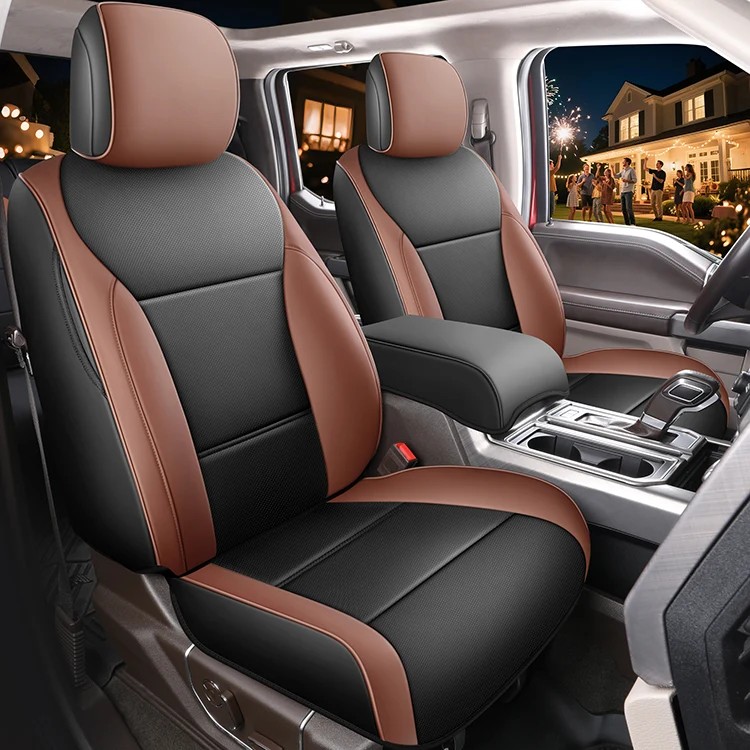
The seat covers are not a loose drape over the cushions. They follow the exact contours of the F-150's factory seat lines, including the double-needle stitching patterns and the sculpted side bolsters. The pattern is digitized from laser scans of the original upholstery, so the seams land precisely where the originals do.
That means no baggy corners, no shifting when you slide in and out, and no fight to realign the cover after every drive. The foam-backed panels are pre-shaped to match the seat's curves, and the built-in channels allow the cover to settle into the original creases without bunching.
On the F-150's taller headrests and the wider center console lid, the same exact-fit logic applies. Every fold, tuck, and piping line mirrors the truck's upholstery geometry, so the covers look less like accessories and more like a second skin from the factory.
Why XL, XLT, and STX Trim Differences Are Already in the Pattern
Ford locked these three trims into distinct roles a long time ago, and the current truck still reflects that original division. XL exists for fleets, first-time buyers, and anyone who wants a blank slate; XLT carries the comfort items that make a full-size truck livable day to day; STX adds visual punch by pulling pieces from the sportier end of the shelf. None of this is accidental, which is why the gaps between them feel less like random packaging choices and more like a familiar rhythm that repeats across model years.
The pattern also survives because it is cheap for Ford to maintain. The cab, frame, and powertrain stay shared, so the trim levels become mostly a distribution exercise for wheels, grilles, bumpers, seating surfaces, and screen sizes. XL leans into dark, durable, and simple finishes. XLT swaps in chrome, alloy wheels, and upgraded cloth. STX borrows body-color trim and black accents from the performance-oriented look without forcing a jump to a higher price bracket. Once that structure is in place, changing it would add cost without adding many new buyers.
How These Fabrics Handle Daily Grime, Mud, and Spilled Drinks
Everyday messes don't stand much of a chance against these weaves. A quick swipe with a damp cloth usually lifts dust, crumbs, and the kind of faint smudges that come from hands, paws, or the occasional shoe. Liquids bead up on the surface instead of soaking straight in, which means a spilled coffee or a dribble of juice tends to sit there long enough to be blotted away without leaving a watermark.
Mud is a slightly different beast, but not a difficult one. Let it dry rather than attacking it while wet—brushing off the crusted bits first prevents smearing the dirt deeper into the yarn. What remains after that is typically a light stain that lifts with a mild soap and cool water. The tight construction keeps grit from working its way between the fibers, so even after a rainy hike or a messy paw incident, the fabric doesn't turn into a dirt trap.
For darker spills like red wine or soda, speed helps, but the material is forgiving. Blot from the outside in to avoid spreading the stain, then rinse with a little club soda or plain water. Because these fabrics resist absorbing liquids quickly, most common drink accidents can be handled without specialized cleaners—just patience and a clean cloth. Over time, regular cleaning keeps the surface looking even, without the blotchy wear patterns that cheaper materials tend to show.
Where Installation Stays Simple Without Removing the Seats
One of the most overlooked frustrations in mobile electronics installation is the assumption that upgrading your audio or adding new tech means ripping out seats, unbolting consoles, or wrestling with factory brackets. Here, the process is designed around the idea that the hardest part should be the decision-making, not the teardown. Panels pop loose with gentle pressure, wiring channels run along natural seams, and most hardware secures using existing mounting points that are already empty from the factory.
The result is a workspace that feels more like a careful swap than a demolition project. You keep the original carpet, the seat rails stay untouched, and there is no need to figure out how to re-torque a bolt you never should have removed. Because the layout respects the vehicle's original structure, the finished job looks less like an aftermarket add-on and more like a factory option that simply arrived late.
That simplicity changes the tone of the whole project. Instead of setting aside a full weekend and a pile of plastic bags for mystery screws, you finish with clean hands, a tidy interior, and no leftover hardware rattling around under the floor mat. It is the kind of install that rewards patience rather than brute force, and it leaves the cabin exactly as comfortable as it was before the tools came out.
How Airbag Panels and Latch Points Remain Fully Functional
Airbag panels depend on precisely molded tear seams rather than material thickness alone. These seams are engineered to split along a predictable path the instant the inflator fires, so the panel swings open instead of shattering. Any rework that alters the surface skin or adds layers can change how that seam behaves, which is why repair methods stick to factory-approved backing materials and leave the tear groove geometry untouched.
Latch points stay functional because they are designed as controlled retention, not rigid anchors. The inner hooks or clips release at a set load while the outer edge remains hinged, allowing the cover to pivot away without becoming a projectile. Reinstallation that respects the original clip orientation and seating depth preserves that release threshold. Even small changes like forcing a bent clip into place or swapping in a stiffer fastener can shift the deployment timing enough to matter.
The materials around these areas are also held to tighter tolerances than they appear. Grain patterns, score depth, and hinge flexibility are checked against reference panels so the finished surface looks uniform but still lets the bag exit through the intended opening. Keeping solvents, adhesives, and heat away from the seam area prevents local hardening, which is one of the quiet reasons a repaired panel can still behave like an untouched factory part.
The Difference Between a True Custom Fit and a Loose Universal Cover
Most universal covers are cut to satisfy a broad range of seat shapes, so the extra material gathers at the edges and shifts the moment you adjust your position. A true custom fit starts with the actual measurements of the seat, including side bolsters, headrest openings, and control cutouts, which lets the cover follow the original lines instead of fighting them.
Straps and elastic can only do so much to hide loose fabric. On a long trip, a generic cover tends to slide, wrinkle, or interfere with seat adjustments. A custom-shaped cover stays close to the upholstery, so it feels less like an added layer and more like part of the seat itself.
The real test is after weeks of sliding in and out. A loose cover announces itself with bunched seams and crooked piping, while a custom-fit piece stays put without constant attention. You stop noticing the cover and simply feel the seat the way it was meant to be used.
FAQ
Custom-fit patterns are built around the factory seat contours rather than a one-size-fits-all shape. That means the stitching, headrest openings, center console cutouts, and rear armrest areas line up with the specific bench or bucket setup in your truck. Even small differences like a fold-down armrest or a rear seat release strap are accounted for instead of being buried under loose fabric.
Universal covers tend to stretch in some spots, bunch up in others, and slide every time you climb in. A custom-fit cover uses the actual seat dimensions for your cab style, so it stays put and keeps the controls, seat belts, and folding hardware usable. After a few weeks it still looks like part of the interior, not a slipcover that needs constant adjusting.
They are designed with reinforced side panels and tear-away stitching where the factory airbag deploys. The openings for recline levers, power controls, and seat-back release handles are cut to line up with your truck, so you are not fishing around under fabric to make an adjustment.
That depends on the fabric you pick. A heavy woven or vinyl-style material can be wiped down after a muddy shift, and dog hair usually brushes off instead of working into the weave. For a truck that sees real dirt, choosing a darker or textured face material hides wear better and saves the original cloth from soaking up stains.
In most cases yes. The front covers go on with straps, clips, and hooks that run under the seat, and the rear covers are installed by folding the seat back forward or lifting the lower cushion. Some SuperCrew rear sections may require unbolting the bottom cushion, but it is usually a simple hand-tool job and takes an hour or two the first time.
The difference shows up in the small areas: edge binding, hook placement, and how tightly the cover wraps around the seat base. Budget covers often start to sag around the bolsters or pop loose at the front edge after repeated entry and exit. A cut that matches the factory seat shape keeps the cover from shifting, so it protects better and lasts longer before it needs re-tightening.
You need to know the model year, cab type, and front seat style before ordering. A Regular Cab, SuperCab, and SuperCrew can each have different rear seat shapes, and front benches with a fold-down console are not the same as bucket seats. Confirming whether the rear has a center headrest or armrest also makes a difference, so the cover does not arrive with the wrong cutouts.
Some materials add a light foam backing or quilted layer, while others are thin and closely follow the original cushion. If you want to keep the stock seat feel, choose a low-profile fabric rather than a padded design. The main change is usually the surface texture, not a dramatic difference in firmness or support.
Conclusion
A seat cover only earns its place in a work truck when the fit feels closer to factory upholstery than an afterthought. These covers are patterned from the actual F-150 seat contours, so the stitching runs along the same bolsters, shoulder lines, and lower cushion breaks instead of pulling tight across them. That matters more than most people expect: XL, XLT, and STX trims carry small differences in seat shape, center console clearance, and adjustable headrest positions, and the patterns already account for those variations. The result sits snug without shifting under hard braking or when you slide in and out with tools on your belt. Installation does not require removing the seats, disconnecting harnesses, or wrestling with the center console, because the covers follow the factory seams and use the existing gaps for a clean path. Airbag panels are placed where the side airbags deploy, and the child seat latch points remain accessible, so safety equipment does not get buried under slack fabric.
Daily grime, mud from a job site, and spilled drinks are the real test for any pickup interior. The fabric options here are chosen to resist staining and clean up without soaking through to the original cloth underneath. A quick wipe usually handles coffee or soda before it turns into a sticky mess, and dried mud can be brushed off without leaving a permanent ring. This is also where the difference between a true custom fit and a loose universal cover becomes obvious. Universal covers rely on straps and stretch panels, which bunch up under your knees, slide around the backrest, and often block seat controls or fold-down armrests. A cover shaped specifically for the F-150 keeps those controls open and the seat profile intact, so the truck still feels like the truck you bought rather than a seat wrapped in a generic tarp.
Contact Us
Contact Person: Ms. Zhu
Email: [email protected]
Tel/WhatsApp: 86-15906860931
Website: https://www.redrainseatcovers.com