

PPAL Factory Pioneers Next-Generation Manufacturing Excellence
2026-10-21
Walk through PPAL Factory and you’ll quickly realize this isn’t just another manufacturing site—it’s a living blueprint for what’s next. As the facility pushes the boundaries of next-generation manufacturing excellence, every process reflects a commitment to smarter, faster, and more sustainable production. Central to this vision is LANYUN, whose expertise quietly powers the innovations unfolding on the floor. In the sections ahead, we’ll explore the key breakthroughs that put PPAL Factory at the forefront.
From Raw Stock to Ready-to-Ship: The Journey Inside PPAL
Every sheet of raw material that enters PPAL carries its own set of expectations. Forklifts move carefully between towering racks, each pallet tagged with a date and a destination that only becomes clear once the cutting machines start their work. There's no room for guesswork here—the first scan happens within minutes of arrival, linking each batch to a production order that might be halfway across the building.
From there the stock doesn't just sit. It moves through a sequence of stations where operators read hand-written notes taped to bins, adjust blade angles by a fraction of a degree, and listen for the telltale sound of a clean cut. Quality checks happen at odd moments—a pause to compare thickness with a caliper, a quick wipe of a surface to check for burrs. What passes moves on to assembly, where parts are matched, fastened, and given a final once-over under bright lights.
By the time a finished unit reaches the shipping dock, it's already been handled by half a dozen pairs of hands, each leaving a small signature—a tightened bolt, a folded corner of protective film, a handwritten code on the side of a box. The load gets strapped down, the paperwork is clipped to the pallet, and the door rolls shut. What leaves PPAL isn't just a product; it's the accumulated attention of a place that treats raw stock as a promise, not a pile.
The Machines Have a Memory, But People Still Make the Calls
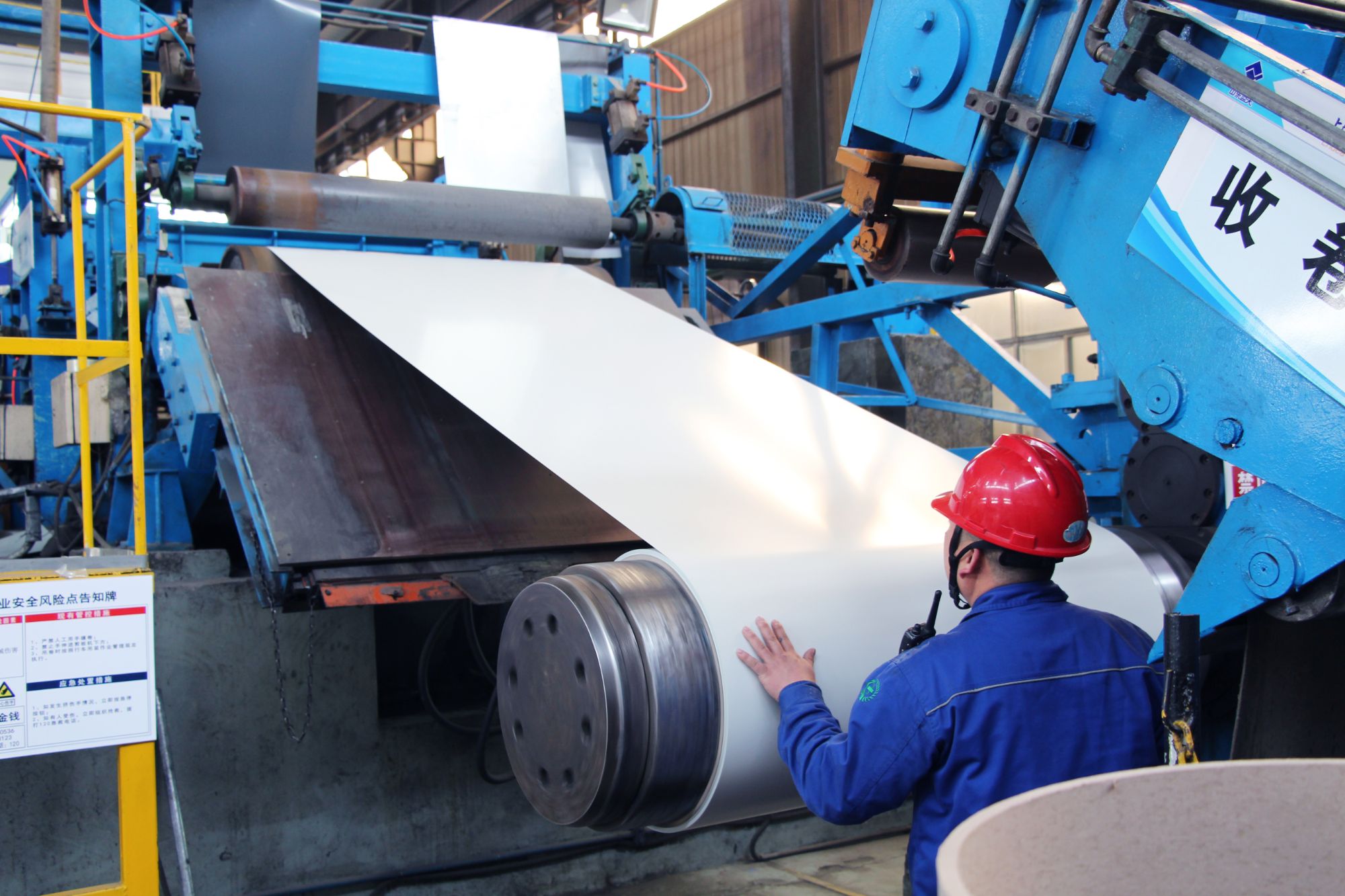
In a late-night control room, screens flicker with predictive models that remember every fault, every traffic spike, every equipment hiccup from the past decade. That institutional memory is invaluable—it flags what's likely to break, what route will clog, what customer might churn. But when the alarm sounds, nobody waits for the algorithm to issue a command. A shift supervisor, half a cup of cold coffee in hand, weighs the forecast against the feel of the room. The machine recalls; the person decides.
This split is easy to miss if you only look at dashboards. Automation offers recall without fatigue, but judgment still runs on context, relationships, and the kind of quiet intuition that doesn't fit neatly into a training set. A dispatcher might override a routing suggestion because he knows a particular neighborhood floods in the rain, or a nurse might question a triage score based on one patient's unspoken fear. Data narrows the options; it doesn't choose among them. The best operations treat machine memory as a well-worn map—not the driver.
Why Our Quality Checks Happen Before the First Tool Touches Metal
In most shops, inspection is what happens after a part comes off the machine. Here, it starts long before that. We review material certifications, verify cutter geometry against the actual workpiece setup, and simulate toolpaths against the digital twin of the fixture. If a dimension or tolerance cannot be held cleanly at this stage, the job doesn't move forward until the method is corrected.
That pre-flight discipline carries into programming. Every toolpath is checked for clearance, chip evacuation, and entry strategy before a single spindle hour is spent. Our machinists and programmers sit through the same setup sheet review, so there is no gap between what was planned and what actually happens at the control. The result is fewer surprises when metal is finally cut, and less variation from the first part to the last.
That is why a tool is never the first thing to move. Raw stock waits until the method, the fixture, and the programmed path have all passed the same bar. Putting quality at the front of the process costs a little more time up front, but it is the only reliable way to hold tight tolerances without relying on rework or inspection sorting at the end.
A Factory Layout That Changes as Fast as Customer Needs
On Monday the line builds compact SUV battery packs; by Thursday the same floor space is turning out charging modules for electric buses. In older plants that kind of switch would take weeks of downtime, new tooling anchor points, and a stack of change orders. Now the layout is treated less like a fixed piece of real estate and more like a set of movable, reconfigurable modules. Wheeled workstations, plug-and-play utilities, and floor markings that are updated with laser projection let crews re-sequence assembly steps in a single shift.
This speed comes from designing for movement before any machine is bolted down. Equipment sits on casters or air skids, power and data drop from overhead busbars instead of being buried in concrete, and each station has a digital twin that maps exactly where it can go next. When customer orders shift, production engineers run a quick simulation, push new coordinates to autonomous mobile robots, and the line physically changes shape. No jackhammers, no six-month capital project.
The result is a factory that behaves more like a living system than a monument. It flexes with demand spikes, accommodates new product variants without a greenfield expansion, and lets teams test layout hypotheses in days rather than quarters. Customers rarely see the floor, but they feel it in shorter lead times and custom options that don't trigger a cost penalty.
No Scrap Left Behind: The Hidden Loop in Our Production Line
Walking the floor after a shift, you won't find bins overflowing with offcuts or rejected parts. That's because our line routes nearly every leftover fragment back into the start of the process. The trim from stamped metal, the tails from injection molding, even the dust from finishing stations—each stream gets sorted, shredded, or re-melted, then blended with virgin material at a controlled ratio. This isn't just waste management; it's a daily habit of treating scrap as a raw material with a different shape.
The hidden loop lives in the routing software. Instead of sending leftovers to a central collection point, the line uses small buffer zones near each work cell. Operators drop specific scrap types into labeled chutes, and the system tracks weight and composition in real time. When a downstream process needs a particular regrind mix, the buffers release just enough. This keeps material moving in shorter, tighter circles, lowering handling costs and cutting the chance of contamination.
Keeping the loop invisible to the customer doesn't mean hiding it from the team. Shift leads review scrap flow each morning, not as a scorecard, but as a tuning exercise. If a certain die starts producing more trim than usual, the conversation shifts to tool wear or feed speed rather than blaming the operator. Over time, that focus has pushed our scrap rate below three percent, with most of that returning as usable stock within the same week.
The Real-Time Nervous System Behind Every PPAL Order
When a PPAL order lands, it doesn't sit in a queue waiting for someone to notice. Instead, a mesh of microservices immediately starts talking to each other — inventory, routing, pricing, and fraud checks all fire within milliseconds. This isn't a batch process that runs every few minutes; it's a living signal flow that adjusts with every click, every stock change, every carrier delay. The moment you hit submit, the system already knows whether the item is in a nearby warehouse, whether a split shipment makes sense, and whether the delivery window is still valid.
What makes this nervous system feel almost human is its capacity for self-correction. If a warehouse reports a damaged unit right as an order is being confirmed, the allocation engine reroutes to the next best location without pausing the checkout. If a sudden weather event closes a major hub, the routing layer recalculates alternate paths before the order even reaches the packing station. None of this is done through predefined rules alone — real-time telemetry from sensors, scanners, and carrier APIs feeds into a decision layer that continuously re-optimizes. The result is that every PPAL order is not just processed, but actively steered from the moment it exists.
Underneath, this requires a shift from traditional databases to event streaming and in-memory state. Every action — a cart add, a payment hold, a shelf scan — becomes an event that ripples through the system instantly. This means a customer can see an item go out of stock in their cart without refreshing, or receive a revised delivery estimate before they've even closed the confirmation page. It's not about speed for speed's sake; it's about keeping the entire order lifecycle coherent, so that what the customer sees, what the warehouse executes, and what the carrier promises are never more than a second apart.
FAQ
By integrating adaptive automation, data-driven quality checks, and modular production cells that can switch between product variants without lengthy retooling.
Energy recovery systems and closed-loop material handling are built into the floor layout, cutting waste before it reaches the bin.
Yes, its digital twin setup lets engineers simulate a new order's flow in minutes, so even small batches move through without disrupting high-volume lines.
Inline sensors compare every unit against a live golden reference, and any drift triggers automatic adjustments rather than waiting for end-of-line inspection.
Operators act more as process coaches than button pushers, using augmented work instructions that update with each production change.
It uses open communication protocols, so legacy ERP systems and supplier portals can exchange data without custom middleware.
It shows up in small metrics—shorter lead times, fewer defects per thousand, and less energy per unit—tracked openly on shop-floor displays.
Scenario planning is built into its scheduling engine, allowing rapid rerouting around material shortages or machine downtime.
Conclusion
Inside PPAL, raw stock doesn't sit idle waiting for a schedule. It moves through a journey that starts before the first tool touches metal, where quality checks are already embedded in the process—not tacked on at the end. The machines remember every cut and tolerance, but they don't run the show; people still read the signals and make the calls. That balance is deliberate. A layout that shifts with customer demand means no line is sacred, and no process is too proud to be rearranged overnight. What emerges at the other end is a ready-to-ship part that never had to be reworked twice.
What sets PPAL apart isn't a single piece of automation—it's the hidden loop where scrap gets rerouted instead of discarded, and the real-time nervous system that tracks every order without a spreadsheet in sight. Each work order carries a live pulse, feeding back into the floor so the next run is already learning from the last. That's the next generation of manufacturing: not louder machines, but quieter intelligence. A factory where memory belongs to the system, judgment belongs to the people, and nothing leaves the door without earning its place.
Contact Us
Contact Person: Nia
Email: [email protected]
Tel/WhatsApp: +86 18954360337
Website: https://www.sdppgi.com