

Protein Bar Line Manufacturer: How to Choose the Right Partner for Your Production Needs
2026-11-16
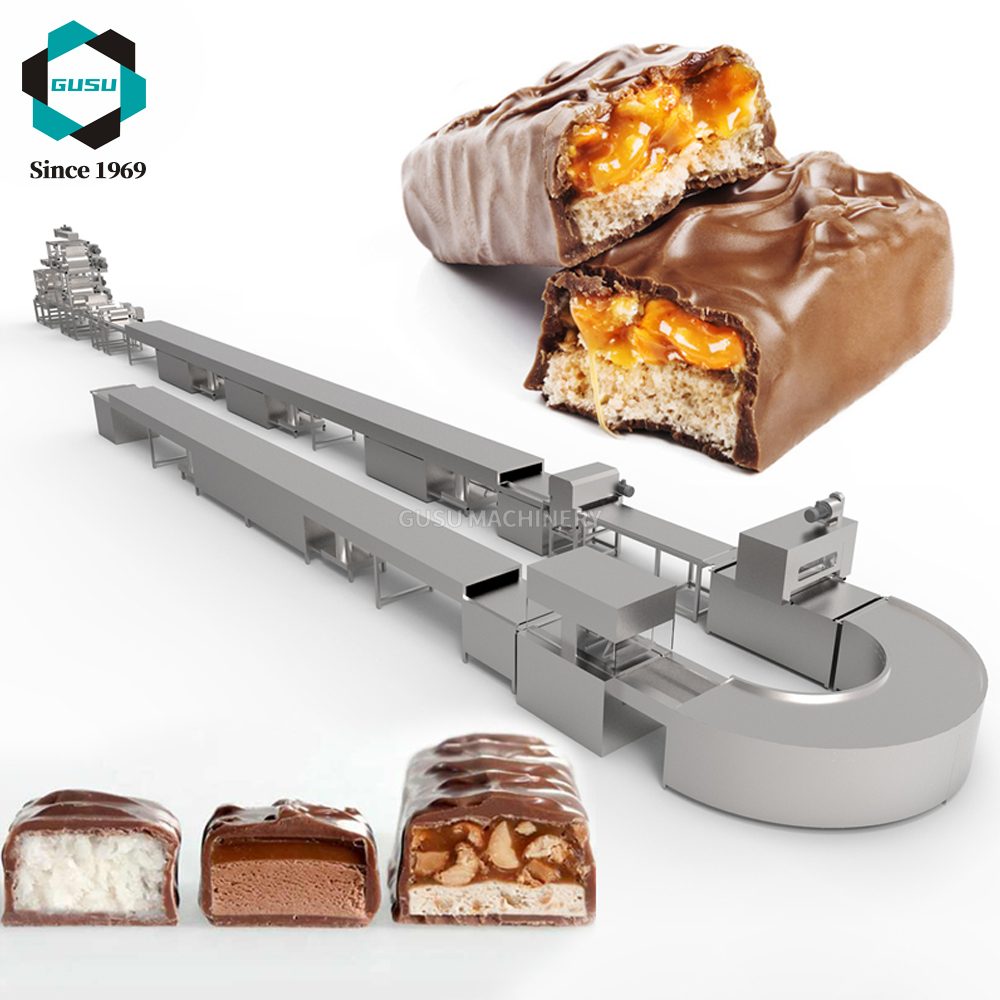
Selecting a protein bar line manufacturer isn’t just about machinery—it’s about securing a partner who understands your production goals from day one. Whether you’re scaling up or launching a new bar, the right equipment can make or break your efficiency, consistency, and bottom line. That’s where GUSU comes in: a team that combines engineering precision with real-world snack production insight. In this guide, we’ll walk through the key factors to consider—from throughput and flexibility to sanitation and after-sales support—so you can choose a partner that keeps your line running smooth and your products on shelf.
When Recipe Development Outgrows the Test Kitchen
The first sign is usually a missing ingredient. Not in the recipe itself, but in the process: a spice blend that worked perfectly in a two-quart saucepan suddenly tastes flat in a forty-gallon kettle. A fermentation time calibrated in a climate-controlled room goes rogue in a warehouse without air conditioning. The test kitchen, for all its precision, is a bubble, and once a dish steps out of it, every assumption gets stress-tested by real-world chaos. Recipe development stops being about perfecting a single batch and starts being about surviving variability—suppliers switching paprika sources, line cooks improvising under pressure, customers reheating leftovers in a microwave with wildly uneven wattage.
When development outgrows the test kitchen, the work shifts from measuring cups to constraint mapping. You start writing recipes with tolerance ranges instead of exact numbers, flagging pivot points where a cook can substitute without breaking the dish's soul. You build in sensory checkpoints—not just "season to taste" but "the onions should smell nutty, not sharp, before you add the tomatoes." Team communication becomes a design problem: a recipe card that made sense to a food scientist might baffle a prep cook who learned by watching their grandmother. The best versions become living documents, annotated after every batch, every location, every season.
Outgrowing the test kitchen is less a failure of culinary craft and more an admission that food never stops changing. The recipe that finally works in ten different kitchens is no longer a single perfect version—it's a set of principles with enough slack for human hands and honest ingredients. That shift can bruise the ego of anyone who loves the purity of a controlled bench test, but it's also where flavor becomes resilient. And resilience, not perfection, is what keeps a dish alive beyond the first enthusiastic week.
The Texture Trap: Matching Equipment to Your Bar's Bite
A barbell's knurling isn't just a cosmetic detail—it's the handshake between athlete and steel. Chasing the deepest, sharpest texture often backfires once calluses tear or reps get sloppy. Instead of defaulting to the most aggressive pattern, pay attention to how your grip actually behaves under load. A center knurl that bites hard during squats might shred your shirt and neck, while a passive knurl on deadlifts can force you to use more chalk than necessary just to keep the bar from rolling.
Matching the bar to the lift means respecting the different demands of each movement. Olympic weightlifting thrives on a moderate volcano knurl that allows quick hand adjustments during a clean or snatch, whereas powerlifting deadlift bars often reward a sharper, finer tooth that digs into the palm without causing premature fatigue. If your training mixes multiple disciplines, you may need two bars—or at least a clear understanding that one texture cannot satisfy every grip style.
The real trap is buying based on how a knurl feels in a showroom. Dry hands, room temperature, and a quick squeeze won't reveal how the bar behaves after twenty minutes of sweat or chalk buildup. Test bars during actual working sets, note where blisters form, and don't be afraid to lightly file down a hot spot. The right texture should feel present but not punishing, letting you focus on the lift rather than your skin.
Sourcing Integrity: Where Your Proteins Actually Come From
Every batch of protein we sell starts with a paper trail, not a promise. Our suppliers are required to log farm coordinates, feed records, and harvest dates before any ingredient reaches our facility. That data isn't hidden in a spreadsheet—it gets printed on the back of each pouch, so you can look up the exact pasture or fishery your scoop came from.
We also run unannounced audits. Not the friendly, scheduled kind where everyone tidies up beforehand. These visits check for things like whether the grass-fed cattle actually graze outside, or if the wild-caught fish were processed within 24 hours of landing. If a supplier cuts a corner, we drop them. No second chances, no quiet probation.
Because when a label says 'whey isolate from Wisconsin dairies' or 'pea protein from regenerative farms in Saskatchewan,' you should be able to verify that claim down to the truck that hauled it. Sourcing integrity isn't a marketing bullet point—it's the only honest way to sell something you put in your body.
Certifications Beyond the Wall Plaque
Earning a certification is often reduced to a single moment: a framed plaque on the wall, a name in a database, a line on a resume. But the real substance of any credential lives in the hours of unglamorous practice, the mistakes quietly corrected, and the refusal to settle for surface-level understanding.
What you don't see behind that plaque is the deliberate repetition of difficult tasks until they become second nature, the late nights spent reviewing edge cases, and the honest self-assessment that turns raw knowledge into dependable judgment. The plaque is just a reminder; the competence is built long before it arrives.
When someone asks about our certifications, we rarely point to the wall. Instead, we talk about the specific problems those certifications taught us to solve, the blind spots they exposed, and the ongoing commitment to stay current that no single test can fully capture. That is what sets genuine expertise apart from a decorative credential.
Reading Between the Lines of a Co-Packing Quote
A co-packing quote rarely tells you the full story at first glance. The headline number might look clean, but buried in the line items are assumptions about run speeds, changeover frequency, material yields, and who pays for freight. Many brands get tripped up by an "all-inclusive" price that quietly excludes the cost of rework, label application, or inventory holding. Reading between the lines means asking what happens when a batch fails QA, whether that cost is passed through or absorbed, and how the packer handles ingredient overages.
One of the biggest tells is how the quote treats setup and cleanup. A low per-unit price often comes with a separate line for sanitation, line clearance, or machine calibration that can double the true cost on short runs. If a quote lumps "miscellaneous" or "administrative" fees into a single line without detail, that's a signal to push for breakdown. Similarly, minimum order quantities can be used to lock you into more units than you need while making the per-unit math look better. The real negotiation happens in the footnotes, not the total.
Compare quotes by asking each packer to define the same terms: what does "full service" include, who owns the packaging material waste, and what happens if production runs long? A quote that seems higher might actually be cheaper if it caps changeover costs and includes secondary packaging, while a cheaper quote may leave you exposed to variable color matching, batch testing, or expedited freight. Look for the absence of a line item as much as the presence of one. The gaps between the bullet points are where co-packers either build trust or hide margin.
Flexibility Tests That Reveal a True Production Partner
A factory that handles last-minute design tweaks without drama is rare. You can send revised CAD files at 9 p.m. and wake up to an updated production plan, not excuses. True flexibility shows up when a supplier adjusts order quantities mid-run, swaps a material due to supply hiccups, or shifts delivery dates to match your product launch. If they treat every change as a problem rather than a normal part of business, they are not your long-term partner.
Ask for a sample run with deliberately incomplete specs. A rigid partner will stop and demand clarity on every minor point. A flexible one will make reasonable assumptions, flag them clearly, and deliver a usable sample anyway. Also test their tolerance for mixed SKUs in one shipment, or their willingness to split a single purchase order across multiple destinations. These small requests reveal how deep the operational adaptability goes.
Watch how they respond when your forecast drops by half after tooling is already made. Do they renegotiate pricing fairly, or do they lock you into obsolete inventory? A genuine production partner absorbs some of the shock, offers creative logistics like delayed delivery windows, and keeps communication open without penalties. Flexibility is not just about saying yes; it is about finding a workable path when the original plan falls apart.
FAQ
Look for a partner that understands how ingredients like whey isolate, nut butters, and inclusions behave under continuous mixing and forming. You want someone who can offer modular designs so you can switch between cold-pressed and baked bars without rebuilding the entire line. Equally important is their track record with dense, sticky doughs and their ability to integrate checkweighers or metal detectors without slowing throughput.
A well-designed line should let you run different bar sizes, layer thicknesses, and topping combinations with minimal changeover. Ask about quick-release guarding, tool-less width adjustments, and recipes saved in the PLC. If the manufacturer hesitates to show changeover videos or provide cycle time data, treat that as a warning sign.
Prioritize open-frame construction, sloped surfaces, and IP69K-rated components if you plan to use wet cleaning. Also check whether the line includes CIP-ready hoppers and conveyors that can be pulled apart without special tools. The goal is to avoid hidden niches where protein powder and almond butter can build up overnight.
Request a trial run with your actual recipe, not their standard demo mix. Pay attention to how the former handles sticky masses, whether the slab release is clean, and if they can maintain consistent bar weight at full speed. A good partner will also discuss temperature control, because high-protein dough often stiffens when cooled.
Insist on clear response times for remote diagnostics and on-site service. Ask if they stock critical wear parts like cutting blades and belt scrapers locally, and whether they offer training for your operators. Avoid manufacturers that rely heavily on third-party integrators without a dedicated service team.
It depends on your tolerance for coordination. An integrated supplier can streamline the handshake between bar forming and flow wrapping, reducing misfeeds. However, mixing best-in-class brands often gives you better individual components. If you go separate, confirm that the line builder has experience with your chosen packaging equipment's infeed requirements.
Look beyond the quote. Ask about their installed base, typical spare parts spend as a percentage of line value, and their policy for software updates. A transparent manufacturer will share reference contacts and let you visit an existing site running similar products. Beware of low upfront pricing paired with vague lifecycle costs.
Conclusion
Scaling a protein bar from your own test batches to full production rarely goes smoothly if you treat the manufacturer as just a machine shop. The first real test is admitting your kitchen recipe no longer works when a continuous mixer and extrusion line are involved. You need a partner who asks about your bar's exact bite—chewy, crisp, baked, cold-pressed—and can show you the specific forming and cutting equipment that preserves that texture at speed. Even the best equipment won't matter if the protein blend isn't traceable. Ask for the actual country of origin for whey, pea, or collagen, and check how the manufacturer handles allergen segregation and lot-level testing. A wall full of certificates means little if the facility hasn't been audited recently or if the person quoting you has never stepped onto the production floor.
Quotes from co-packers often hide costs that surface later, such as changeover fees, minimum order penalties for custom inclusions, or moisture-loss adjustments that quietly shrink your bar's weight. Ask for a line-by-line breakdown and compare it against a trial run, not the sales pitch. True partnership shows up under pressure: can they adjust the formula without a six-week wait, hold a slot if your packaging is delayed, or run a small pilot batch before you commit to a full order? The right manufacturer treats your product as a shared project, not a one-time job, and they prove it by how they respond when something inevitably goes off-spec.
Contact Us
Contact Person: Zhang Wei
Email: [email protected]
Tel/WhatsApp: 8618662577837
Website: https://www.chocomachinery.com