

Rapid Prototyping Service Solutions for Faster, High-Quality Product Development
2026-10-22
Speed and precision rarely go hand in hand—until now. Product teams know the pain of waiting weeks for a prototype, only to find a flaw that sends them back to square one. ProtoMat flips that script with rapid prototyping services built for teams that refuse to choose between velocity and quality. In the sections ahead, we'll unpack how smart prototyping shortens design cycles, catches costly errors early, and gets your best ideas into users' hands faster than you thought possible.
Your Design, Turned Physical by the End of the Week
Most rapid prototyping services promise speed, but few actually deliver on a timeline that matches your creative momentum. We’ve rebuilt our production pipeline from the ground up so that a file uploaded on Monday morning becomes a physical object in your hands before Friday afternoon. No vague “two to three weeks” estimates, no hidden queues — just a defined weekly cutoff and a shipping notification that lands while the idea is still fresh.
This isn’t about rushing your design through a generic process. Every print, cut, or mold is handled in small batches by technicians who treat your part as the priority it deserves. Whether you’re iterating on a product prototype, replacing a broken component, or testing a concept you sketched on a napkin, the week-long turnaround gives you room to think — without giving the momentum time to die.
The result is a workflow that feels less like traditional manufacturing and more like having a workshop next door. You keep designing, we keep building, and by the weekend you’re holding something that started as pixels on your screen.
Test Real Parts, Not Just Screen Simulations
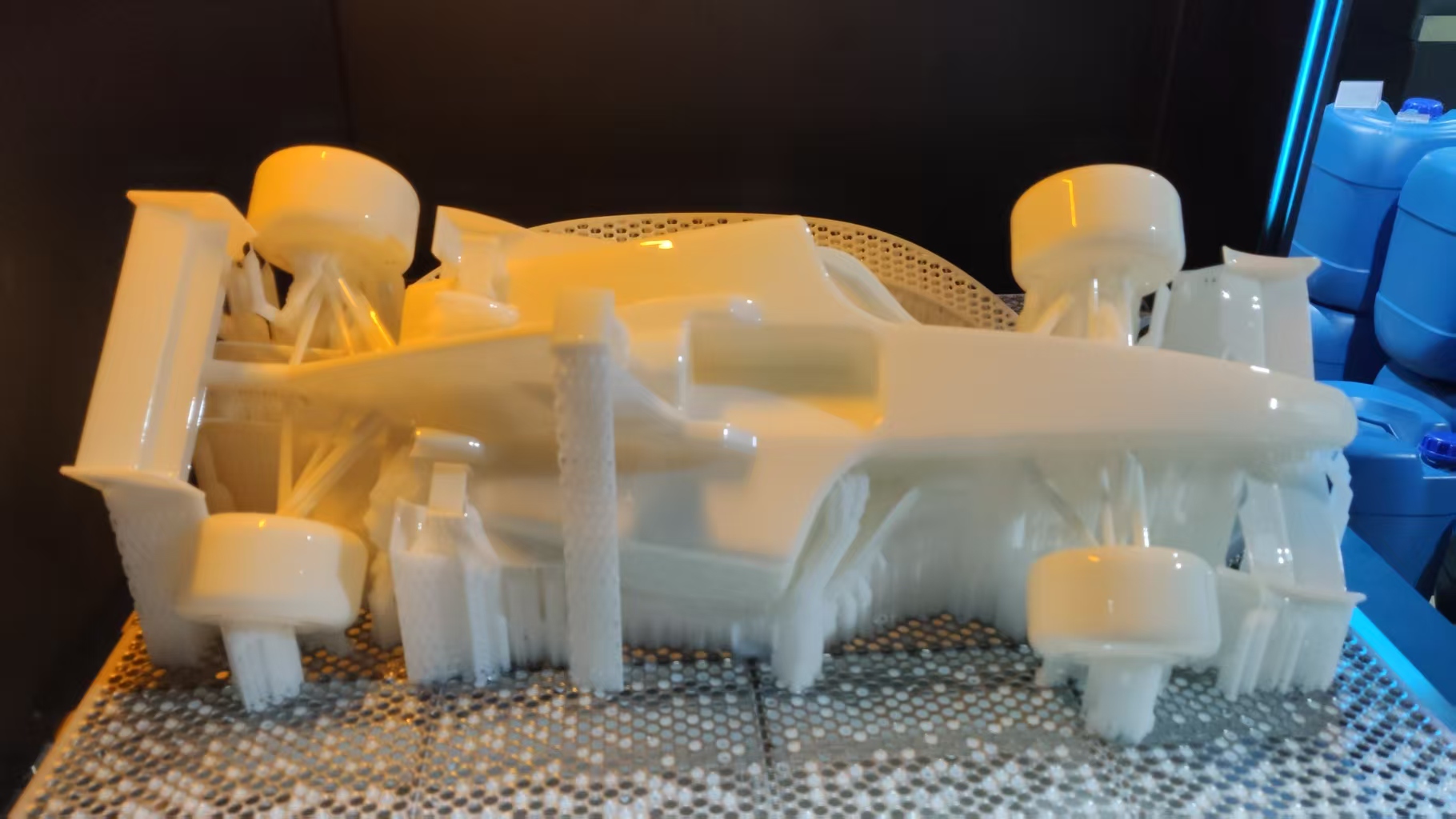
When a design looks flawless on a monitor, it's tempting to assume the physical part will behave identically. But pixels can't capture how a bearing wears under off-axis load, or how a slightly warped injection-molded housing changes the feel of a snap-fit. Running real components through actual motion cycles reveals those subtle deflections and material quirks that simulation software either glosses over or gets wrong by a few percentage points—enough to cause field failures.
Prototype assemblies often expose mismatches that no amount of virtual tolerance analysis would flag: a connector that binds after thermal expansion, a gasket that compresses unevenly because of surface finish, or a fastener that loosens from vibration in a specific axis. Pulling parts off a 3D printer or a short-run mold and twisting, pressing, and dropping them isn't just due diligence—it's how you catch the failures that would otherwise surface on a customer's equipment. Screen-based checks are a useful first pass, but they should never be the final verdict.
Skip the Tooling, Keep the Tolerances
Many machine shops still assume that holding a tight tolerance means building a custom fixture or grinding a dedicated form tool. That assumption adds lead time and cost before the first chip is even cut. In practice, modern CAM strategies and probing routines let you skip most of that tooling. The tolerance gets locked into the toolpath and verified against a known datum structure, not against a physical artifact that drifts with wear and temperature.
Additive manufacturing pushes this further. A metal 3D printed part can meet ±0.1 mm on critical features if you compensate for thermal distortion in the model and plan the post-processing sequence correctly. No mold, no electrode, no special collet. The tolerance lives in the process parameters and the coordinate system, and it stays repeatable across short runs because you're not copying a worn master.
For low-volume or one-off work, skipping the tooling changes the economics entirely. You don't pay for a fixture you'll use twice, and you don't wait three weeks for a custom cutter. Instead, you invest in measurement feedback. Probing cycles and in-process inspection close the loop, so the machine adjusts for variance that a traditional setup would have hidden in the tooling. That's how tolerance becomes a data problem rather than a hardware problem.
Prototype in the Same Materials You'll Mass Produce
Building a prototype with materials that differ from your final production choice can quietly undermine the entire validation process. A 3D-printed mockup might look right on a desk, but it won't tell you how the part behaves under real stress, temperature swings, or repeated use. If the prototype feels flimsy because you used a cheaper resin, you might overengineer the design to compensate, adding cost and weight where none was needed. Or worse, a prototype that feels sturdy in a material you'll never mass produce could give false confidence, only for the first production batch to crack, warp, or wear out prematurely. Using the same material from the start means the feedback you collect is actually relevant to what you'll ship.
Material properties influence far more than just strength. Surface finish, flexibility, thermal expansion, and even how a part feels in the hand are all tied to the specific polymer, metal, or composite you choose. Imagine prototyping a snap-fit enclosure in PLA while planning to injection mold it in nylon. The PLA snaps easily when flexed, so you might add ribs and gussets to stiffen it. But nylon is far more ductile, and those extra reinforcements could make the production part overly rigid, difficult to eject from the mold, or prone to sink marks. By prototyping in the actual production material—even if it costs more or requires a different process like CNC machining or low-volume injection molding—you eliminate these disconnects early.
Locking in your material supplier and grade before prototyping also shortens the path to mass production. When the prototype performs well in the same material you'll use at scale, you can hand off a complete material datasheet, processing notes, and real-world test data to your manufacturing partner. This avoids the common scramble of re-validating a design after switching from a prototype-only material to a production-grade one, which often leads to costly tooling changes or delayed launch dates. In short, treat material selection not as a later stage but as a non-negotiable part of the prototype itself.
Low-Volume Batches Without the Setup Costs
Most manufacturers treat small production runs as an inevitable compromise: pay the same steep setup charges whether you need fifty units or five thousand, or get pushed to the back of the queue while bigger orders take priority. That model breaks down fast when you're prototyping a new design, testing a regional variant, or keeping spare parts alive for a legacy product. We took a different route. By modularizing our tooling and using quick-change fixtures that snap into place without recalibration, we stripped out the labor and downtime that normally make short runs punishing. You get clean, repeatable parts at a per-unit cost that actually makes sense for the quantity you're ordering—not a padded bill pretending you ordered ten times more.
The practical upside shows up in real workflows. A designer refining a bracket for a medical device can order twenty iterations without burning the project budget. A service team supporting discontinued industrial equipment can restock fifty critical housings instead of warehousing two thousand. Because our setup is fast and cheap, we don't need to impose minimum order quantities or inflate prices to justify the run. You order what you need, and the parts arrive machined to spec, not rushed through a process that treats low volume as an afterthought.
This also changes how you plan inventory. Instead of committing to a large batch to amortize setup costs, you can pull smaller, more frequent orders that track actual demand. If a design changes next month, you're not stuck with a shelf of obsolete parts. If a slow-moving spare suddenly spikes, you can restock within days rather than waiting for a production window. The old trade-off—pay more per part or order more than you need—simply doesn't apply here.
Every Build Checked, Every Deadline Met
No build ships without a full inspection. Each commit goes through automated checks, code reviews, and a final manual pass before it leaves the repo. If a single test flakes, we stop the line, fix the root cause, and re-run the suite until it's green. That's the only way to ship with confidence.
Deadlines aren't suggestions here. We plan in reverse from the release date, leaving buffer for unexpected issues. Daily standups flag blockers early, not the night before. When the calendar says a feature is due, it's already been built, checked, and documented—no last-minute heroics required.
This discipline shows up in the details: every pull request references a ticket, every merge is tied to a passing pipeline, and every release note is written before the tag is cut. That's why our team has a track record of shipping on time without scrambling, and our users never have to wonder if the latest update will break their workflow.
FAQ
It lets teams validate form, fit, and function in days instead of weeks. Catching design flaws early prevents expensive downstream changes, and modern processes like multi-jet fusion or DLP maintain tolerances that once required full production tooling.
We cover FDM for quick concept checks, SLA or DLP for fine details, SLS for durable functional parts, and CNC machining for metal prototypes. The decision hinges on what you need to test: appearance, mechanical stress, thermal resistance, or production-like material behavior.
Many people assume prototypes are fragile placeholders. In practice, you can prototype in production-grade resins, nylon, aluminum, and even stainless steel, so you can run real functional tests rather than just visual reviews.
STEP, STL, or native CAD files from SolidWorks, Fusion 360, or similar work well. If you only have a sketch or a rough drawing, we can also help through a design-for-manufacturing consultation.
NDA-friendly workflows are standard. Files are handled on a need-to-know basis, and we can isolate projects so only assigned engineers see your data.
Overlooking wall thickness minimums, adding unnecessary undercuts, or not leaving clearance for moving parts. A quick design review with us before printing can save an entire iteration cycle.
Depending on the method and complexity, we ship functional prototypes in as little as 24 to 48 hours. Multi-step finishing or CNC metal parts usually take 3 to 5 business days.
Yes. We bridge the gap between one-off prototypes and pilot production, often using the same digital files to keep consistency and reduce transition risk.
Conclusion
The real constraint in product development is rarely the idea—it's the wait. A design can look flawless on a monitor, pass every simulation, and still fail the moment it meets a threaded insert or a living hinge. Rapid prototyping services collapse that feedback loop. You upload a file on Monday, and by the end of the week you're holding a part you can drop into a real assembly, torque to spec, and flex until it breaks. That kind of physical truth has no substitute. Screen simulations tell you what should happen; a prototype in your hand tells you what does happen. Tolerances, clearances, surface finish, and even the way a material creaks under load all become tangible. The result is fewer embarrassing discoveries at the tooling stage and a development process that actually rewards trying things quickly.
Just as important is what you don't have to give up. Traditional prototyping forced a choice: pay the tooling bill early or settle for a look-alike model in the wrong material. Modern services erase that trade-off. You can skip hard tooling entirely and still hold production tolerances, and you can run low-volume batches in the exact resins, metals, or thermoplastics you'll use for mass production. Setup charges don't swallow your budget before the first useful test. Every build gets inspected as if it's about to ship, and deadlines are treated as fixed points, not vague estimates. What emerges is a workflow where iteration is cheap enough to be routine and accurate enough to be trusted.
Contact Us
Contact Person: Joe
Email: [email protected]
Tel/WhatsApp: +8613799507208
Website: https://www.3dprotomat.com/