

Red Light Therapy Mask Factory: Inside the Manufacturing Process and Quality Control
2026-08-25
Red light therapy masks promise salon-level skin rejuvenation at home, but what actually goes on behind the factory walls? Many brands outsource production, leaving quality as an afterthought. At Omeina, the story is different: every mask is built with meticulous attention to LED wavelength accuracy, material safety, and real-world durability. In this behind-the-scenes look, we walk the production floor—from raw diode sorting to the stress tests that separate premium masks from the rest. If you've ever wondered whether your light therapy device is truly worth it, this is where the answer begins.
Silicone, Not Just Plastic: Why the Mask Base Starts with Medical-Grade Materials
Most people assume a mask base is just molded plastic, but the choice of material changes everything. Medical-grade silicone is fundamentally different from the rigid thermoplastics often used in cheap beauty devices. It starts as a platinum-cured elastomer, free of latex, BPA, and phthalates, and it passes biocompatibility testing for prolonged skin contact. That means no off-gassing, no tacky film, and no irritation—even after forty minutes of wear.
The real advantage shows up in how the material behaves against skin. Rather than sitting stiffly on the face, a medical-grade silicone base flexes with the contours of the cheeks, nose, and jaw, creating a soft seal without pressing hard. That pliability also prevents pressure points and red marks, which becomes critical when a device is meant to be used several times a week. It’s a small detail that separates a therapeutic tool from a novelty gadget.
Durability is another reason to pay attention to the base. Medical-grade silicone doesn’t yellow, crack, or absorb skincare residues the way cheaper polymers do, so the surface stays hygienic with a simple wipe-down. Over months of use, that stability protects both the electronics inside and the skin outside. When the foundation is right, the rest of the device can focus on doing its job.
Hand-Soldered vs. Automated: The Truth About LED Placement on Flexible Boards
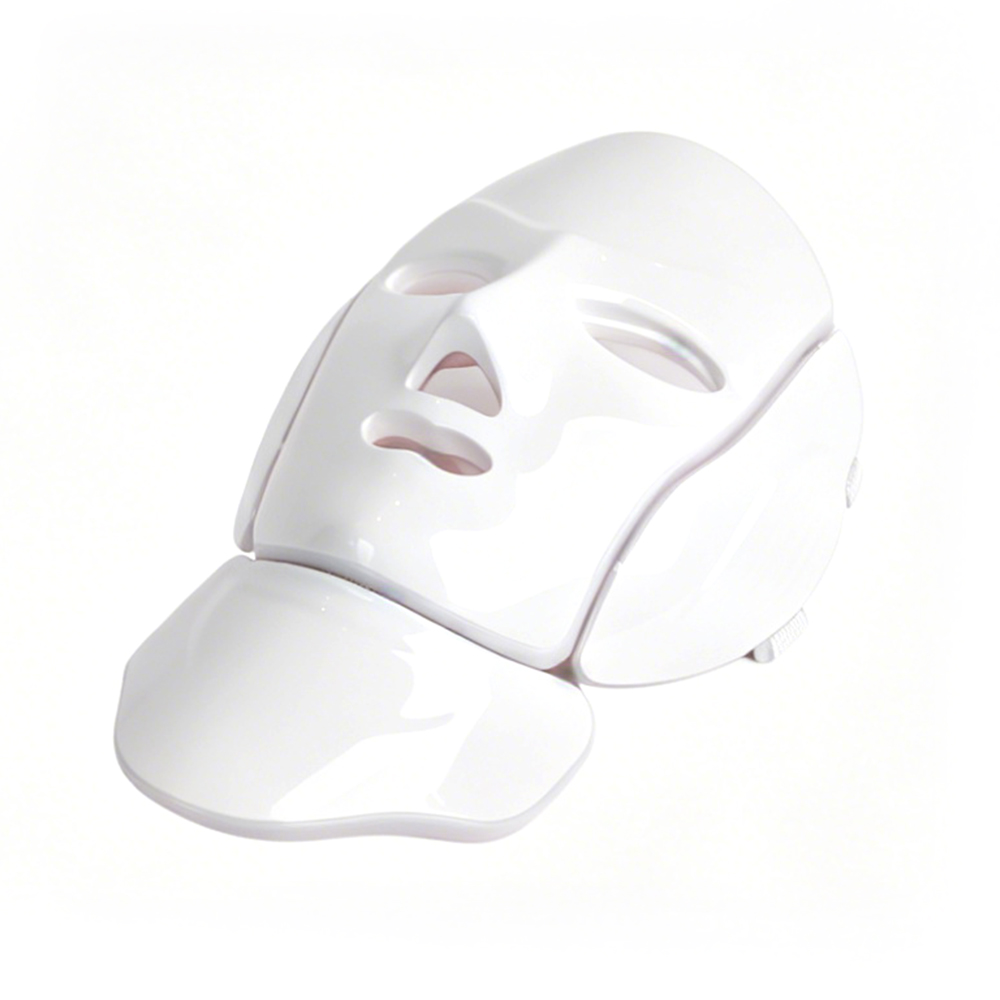
Hand soldering LEDs onto flexible boards often gets romanticized as a craft, but the reality involves microscopic tolerances. A human technician working with tweezers and a fine-tipped iron can manage one-off prototypes, yet heat management on polyimide substrates becomes a silent killer—too much dwell time lifts pads or warps the film. Automated pick-and-place, by contrast, uses dedicated nozzles and vision alignment to place 0402 or even 0201 LEDs within ±0.05 mm, at speeds no pair of hands can match.
The real difference shows in repeatability. A skilled hand-solderer might place 95 out of 100 LEDs perfectly, but those five misaligned parts cause tombstoning, uneven light output, and rework that risks further damage. Automated lines combine solder paste inspection, component placement verification, and reflow profiling to produce boards where every LED sits flat and centered. For low-volume custom strips, hand work remains a practical compromise; for anything beyond a few dozen units, the automated route isn't just faster—it's the only way to avoid binning expensive flex boards for cosmetic defects.
However, not all automation is equal. Some contract manufacturers still run outdated equipment with worn nozzles or poor thermal compensation, resulting in placements as crooked as a tired human's. The truth is that LED placement quality on flex depends less on the label "hand vs machine" and more on process control: solder paste viscosity, stencil thickness, reflow ramp rates, and gentle board handling. When you combine a tuned pick-and-place with proper adhesive fixturing, the flexible circuit stays flat during reflow and the LEDs land exactly where the design intends.
Wavelength Verification Isn't a Sticker: Inside the Spectrometer Check
A wavelength check starts with a known light source, not a printed label. When a spectrometer rolls into the lab, the first move is to let it read something with traceable emission lines—think deuterium, mercury, or holmium oxide. If the peaks land 0.3 nm off from where they should be, the sticker on the housing means nothing. The correction has to be measured, adjusted in the software, and then re-measured until the residual error stays inside the instrument's own tolerance band.
What actually happens inside that check is less about glamour and more about repeatability. The grating angle, slit width, and detector alignment each pull the wavelength scale in different directions. A proper verification cycles through several reference peaks, fits the drift curve, and applies a polynomial correction rather than a single offset. Only then can you trust that a peak at 254 nm is genuinely 254 nm, not 253.6 nm wearing a confident label.
Field instruments face a different wrinkle: temperature swings and mechanical shock can undo a lab-perfect calibration. A robust verification protocol therefore includes a quick check against a portable reference filter before each batch of measurements. That way, wavelength accuracy becomes a documented measurement, not an assumption bolted to the chassis.
Dust, Gloves, and Gowns: A Look at the Cleanroom Where Masks Come Together
In the cleanroom where masks come together, every movement is measured. Technicians slide their hands into nitrile gloves with practiced ease, the material snapping softly against their wrists. Gowns rustle like paper as they cross the sticky mat, leaving behind the grit of the outside world. Overhead, air filters hum a steady note, pushing down a curtain of purified air that no one can see but everyone trusts. It is a place where dust is the enemy, and the smallest lapse in protocol could undo hours of careful work.
The masks themselves start as flat layers of polypropylene and melt-blown fabric, but here they gain their shape. A machine folds the material into precise pleats while a worker checks the nose wire alignment under bright light. Gloved fingers press the edges, sealing the layers without ever touching the inner surface. Another station welds the ear loops with a quick, hot pulse, and the mask falls into a bin, ready for inspection. Each step is simple, but the room itself bends around a single idea: keep the product as clean as the breath it will filter.
What strikes an outsider is the quiet discipline. No one rushes, because rushing stirs particles. Conversations are low, held over the whir of the packaging line. At the end of the shift, the gowns are peeled off and discarded, the gloves turned inside out, and the floor is wiped with a solution that leaves no residue. The masks leave in sealed cartons, but the cleanroom stays behind—a sterile bubble where dust is tracked, counted, and defeated by routine.
The Drop Test and Beyond: How Factories Simulate Years of Wear in Days
It begins with a simple, almost brutal ritual: a device is hoisted to a set height and released, slamming into steel, concrete, or plywood at precise angles. Engineers log every dent and cracked seam, because a single failure at waist height can doom a product that would otherwise survive years of gentle use. But the drop test is only the opening act. Behind closed factory doors, the real time-compression happens in chambers where temperature swings from -40°F to 160°F in minutes, UV lamps blast surfaces with a week of sunlight per hour, and salt fog eats at metal finishes overnight.
To fake a decade of pocket wear in a single afternoon, technicians mount prototypes on six-axis shakers that rattle them at frequencies matching real-world car dashboards or washing machines. They cycle buttons, twist cables, and slide screens in and out thousands of times, all while sensors record the exact moment a hinge loosens or a coating flakes. The goal isn't just to catch early failures—it's to map the shape of decline, so a product released on Monday already carries the fatigue history of one dropped on pavement for ten years.
Some lines add a human element: robotic fingers press keys with the same force and angle as an impatient commuter, and abrasive fabrics rub edges to simulate pockets and purses. The result is a wear pattern that feels authentic, not laboratory-sterile. Factories then use that data to adjust materials, tighten tolerances, or reinforce weak points before the first unit ever ships. What looks like destruction is really a controlled time machine—one that trades a few days of abuse for years of customer trust.
From First Batch to Final Box: The Paper Trail That Keeps Quality Honest
Quality doesn't happen by accident, and the paper trail exists to prove it. Every raw ingredient that enters the facility gets its own batch code, and that code follows the material through mixing, filling, and packaging. Operators sign off at each stage, noting time, temperature, and any deviations from the standard. It's not bureaucracy for its own sake—it's the only way to recreate a problem if something goes wrong, or to confirm that nothing did.
The real test comes when the final boxes are sealed and ready to ship. Before they leave, the batch record is reviewed line by line. A missing signature or an out-of-range reading triggers a hold, not a shrug. That review connects the first batch to the final box, so a customer who opens a product six months later can trace it back to the exact mixer, the exact shift, and the exact test results. It's a chain of accountability that keeps honest quality from being just a slogan.
FAQ
We mainly use medical-grade silicone for the parts that rest against the face and polycarbonate for the outer shell. The silicone is chosen for its skin-safe profile and flexibility, while the polycarbonate needs to be tough enough to protect the internal electronics without adding too much weight. Incoming batches are checked for hardness, tear strength, and any off-gassing before they reach the production line.
The LEDs are placed with automated pick-and-place machines that use vacuum nozzles, so there is no mechanical stress on the lens. After placement, the boards go through reflow soldering in a nitrogen-rich oven, which prevents oxidation and keeps the joints strong. We then inspect every board under magnification and run an electrical test before it moves to assembly.
Each LED is binned by wavelength and brightness before it reaches the line, and we reject any that fall outside a narrow band. After assembly, each mask is placed in a light-integrating sphere that measures total output. If the reading deviates more than five percent from the target, the mask is either recalibrated or scrapped, depending on the cause.
We use a spectrometer to read the actual peak wavelength of every array, not just a sample. The control board is then programmed to adjust the drive current slightly so the output lands within a few nanometers of the specified red and near-infrared ranges. Calibration data is stored on the mask's controller, which lets us trace the exact settings used for each unit.
Finished masks are run through a burn-in cycle of at least eight hours at full power to catch early failures. We also flex the hinges and straps thousands of times, expose the mask to temperature swings from cold storage to body heat, and spray the outer surfaces to verify water resistance. Any unit that shows a drop in output or a loose connection is pulled from the batch.
Those parts are checked for burrs, sharp edges, and surface defects under bright inspection lights. We also run a cytotoxicity test on each silicone lot to confirm it meets biocompatibility requirements. Before packing, a final hands-on check makes sure there are no rough spots that could irritate the skin during a treatment session.
The factory is ISO 13485 certified for medical device manufacturing, and the masks are designed to meet IEC 60601 electrical safety requirements. We also keep records for RoHS compliance on every component. Regular audits by notified bodies and customer-specific inspections are part of our normal routine, so the paperwork trail is as strict as the production line itself.
Conclusion
Walking into a red light therapy mask factory, the first thing that hits you isn't the glow of LEDs but the smell of medical-grade silicone curing. The base of every mask starts as a platinum-cured elastomer, chosen because it sits against skin for hours without leaching plasticizers or triggering reactions. On the assembly line, you'll notice a split in philosophy: some stations have technicians with fine-tip soldering irons placing each LED by hand on flexible circuit boards, while other lines run automated pick-and-place machines. The truth is neither is universally better—hand soldering allows for custom repairs and small batches, whereas automation keeps tolerances tight for high-volume runs. Either way, every board then goes through a spectrometer check, not a sticker check. A technician places the mask over an integrating sphere and confirms that the peak wavelength sits within a few nanometers of the target, usually 633 or 660 nm for red and 830 or 850 nm for near-infrared. If the spectrum drifts, the whole batch is quarantined.
Once the LEDs are verified, the masks move into a cleanroom where workers wear gloves, gowns, and hairnets. This isn't cosmetic theater; a single dust particle trapped under a lens can create a hot spot or reduce optical output. Then comes the abuse: factory floors run drop tests from waist height, cyclic bending of the flexible arms, and accelerated aging in environmental chambers that cycle temperature and humidity to simulate years of nightly use in just a few days. All of this generates a paper trail—every batch has a traveler document that records lot numbers for the silicone, LEDs, drivers, and even the solder paste. If a customer reports a failure three years later, the factory can trace it back to a specific reel of LEDs or a particular cleanroom shift. That documentation isn't just for audits; it's what separates a therapeutic device from a novelty gadget.
Contact Us
Contact Person: Tina Liu
Email: [email protected]
Tel/WhatsApp: 8618681405932
Website: https://www.omeinabeauty.com/