

Shock Absorber Coil Spring Exporter Selection Tips for Global Buyers
2026-11-28
Finding a shock absorber coil spring exporter that actually ships what it promises is harder than most sourcing teams expect. Too many buyers learn the difference only after a failed load test or a rusted batch reaches the warehouse. This guide lays out practical selection tips for global buyers, with input from XIAYI on the checks that separate dependable manufacturers from costly shortcuts. Read it before you sign the next contract.
When a Low-Price Coil Spring Turns Into a High-Cost Warranty Problem
The trouble usually begins with a harmless-looking purchase order. A coil spring comes in at a price low enough to make the numbers look good, and for a while nobody asks too many questions. The parts pass incoming inspection, get fitted to the vehicle, and quietly do their job until the first snap happens well inside the warranty period.
After that, the costs start moving in the wrong direction. One broken spring often means replacing the pair, plus alignment, labor, and a loaner vehicle while the car sits in the service bay. The early savings on unit price disappear under a growing stack of claims, and the warranty team is left chasing a problem that began months before anyone connected the dots.
What makes it worse is the quiet damage to trust. Service managers notice the repeat failures, parts departments start stocking extra inventory, and customers remember the inconvenience long after the repair is covered. A low-priced spring in the front suspension rarely stays cheap once it has to be explained to a customer standing at the service counter.
Factory Audit Questions That Go Beyond the Standard Checklist
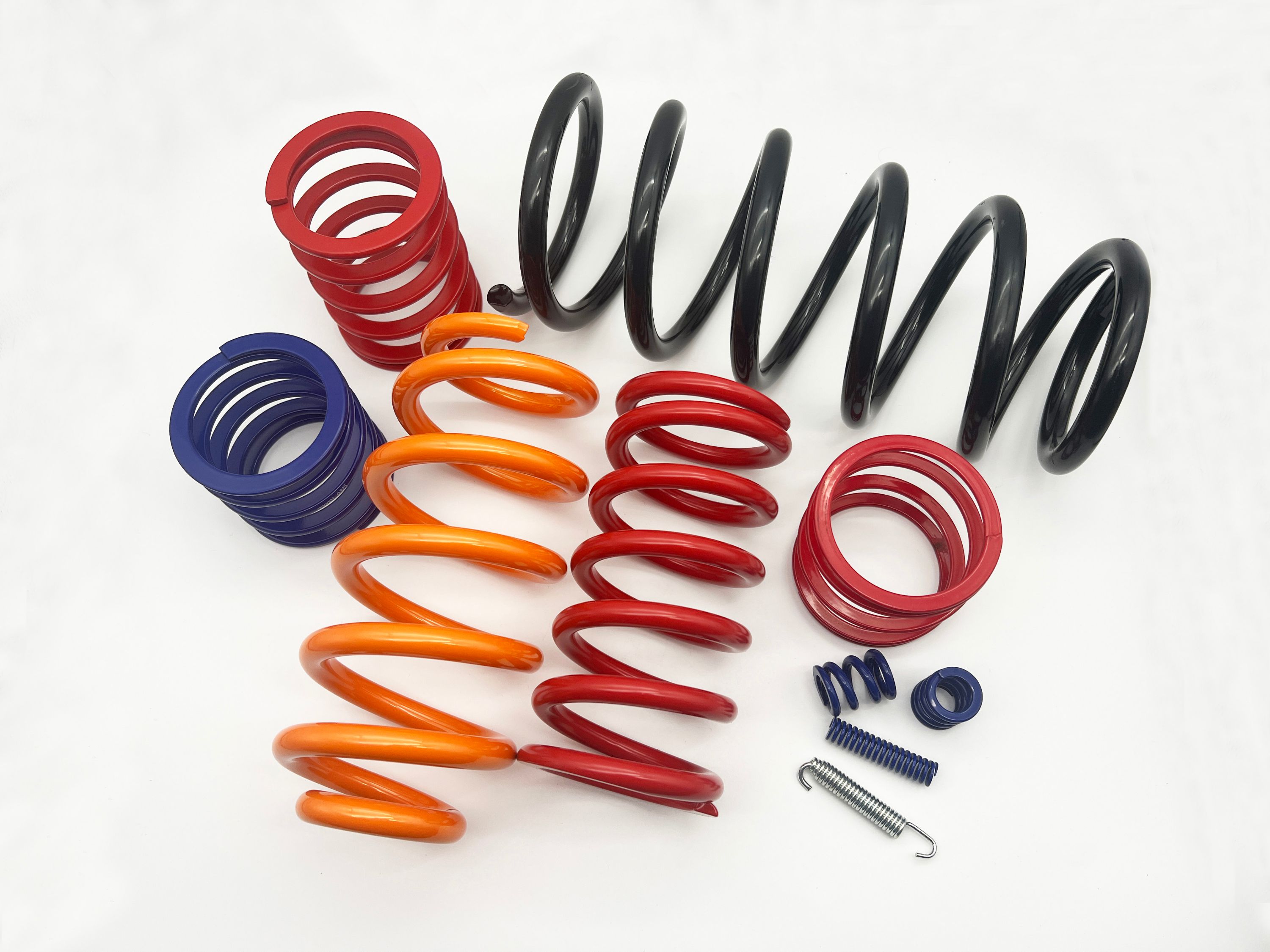
Most factory audits stop at checking whether documents exist and machines carry calibration stickers. The real risks, though, hide in questions nobody asks. How fast does the factory tell a client when a critical machine breaks down? What is the night shift turnover rate? A worn-out logbook with missing weeks often reveals more than a folder of perfectly signed training forms.
Instead of asking 'Do you keep training records?', ask the shift supervisor whether the operator hired two weeks ago can handle a non-standard defect alone. Records can be signed in advance; a supervisor's pause cannot be faked. When flipping through maintenance logs, go to the last three months and look for blank gaps or handwriting changes. A factory that hides downtime will eventually pass the cost to you through late shipments or rushed quality checks.
It also pays to ask about order priority and cash flow. If your order and a higher-margin order arrive on the same morning, which one gets the production line first? The question may feel blunt, but the answer is rarely rehearsed. A factory audit is not about collecting perfect answers; it is about spotting the weak points that management has learned to present as minor.
Matching Spring Steel and Coating to the Actual Shipping Route
A spring that survives a short truck haul across the Midwest may fall apart halfway across the Pacific. The phrase “shipping route” gets treated like a destination, but it is really a sequence of microclimates: salt fog at the port, condensation inside a sealed container, temperature swings in the hold, and sometimes weeks of waiting on a humid dock before the vessel even departs.
Choosing the right coating starts with mapping the worst leg of the journey, not the average one. For inland routes with limited humidity, a standard zinc phosphate and oil finish may be enough. For ocean freight through tropical corridors, a spring steel like 316 stainless or a high-alloy chrome-silicon with a sacrificial zinc-nickel coating holds up better. The steel grade itself matters just as much as the coating, because corrosion resistance and fatigue life are not separate decisions.
One practical approach is to ask the carrier for the container’s temperature and humidity log from a previous shipment on the same lane. That data often reveals condensation events that no specification sheet predicts. Matching the material and plating to those measured extremes prevents the classic failure mode: a spring that looks perfect on arrival but starts pitting three weeks later in the customer’s warehouse.
Reading Material Test Reports Without Taking Them at Face Value
Most people scroll through a material test report the way they skim a restaurant menu—looking for the one number that matches what engineering asked for, then moving on. That habit misses the quiet inconsistencies hiding in plain sight. A tensile strength value might look perfect on paper, but the report could reference a test standard that was retired two years ago, or list a heat treatment condition that doesn't match the actual part history. Before accepting any result, check whether the testing lab is accredited for that specific method, not just accredited in general. Accreditation scopes are narrow, and a lab can be excellent at one alloy while producing meaningless data for another.
Another overlooked clue is the traceability chain between the reported batch number and the physical material you actually received. It is not unusual for certificates to be copied, reformatted, or quietly corrected by a distributor without any note in the margin. Ask for the original document, and compare the date, signature, and unique identifier against the lab's own record system when possible. Also pay attention to rounded values that seem too clean. Real mechanical testing data rarely comes out as an exact round number like 500 MPa or 25% elongation. If every value on the report is suspiciously tidy, someone may have transcribed ideal specifications instead of measured results.
Finally, read the footnotes and fine print as if they were the main text. Conditions such as "specimens prepared from a separately cast block" or "tested after simulated post-weld heat treatment" can completely change what the numbers mean for your application. A yield strength obtained from a separately cast test bar often has little to do with the casting you are about to install. The report itself is not dishonest; it simply answers a narrower question than you might assume. Treat each certificate as a document that requires interpretation, not acceptance.
How the Exporter Reacts When Your Tolerance Change Arrives Late
When the updated tolerance finally reaches the exporter, the first thing that usually happens is a quiet check against the work already sitting on the shop floor. A late change rarely lands on an empty schedule. In many cases, raw material has already been cut, CNC programs have been proven, and some parts are waiting for final inspection. The exporter will pull the affected production orders and match the new limits against what has actually been machined, welded, or coated. If the shift is small enough to absorb with the current tooling, the change is passed to the line with a note and work continues. If the gap is wider, a supervisor or quality engineer starts walking the floor to see how many pieces need to be reworked or set aside.
The reaction also depends heavily on how the change is communicated. A clear drawing revision with marked dimensions gives the factory a path forward. A vague message asking for a "tighter fit" without updated documentation tends to stall the line while workers wait for clarification. At that point, the exporter may push back with questions about which surface matters, whether the change applies to the entire batch, and whether the old parts can still be used. This back-and-forth is not resistance for its own sake. It is usually an effort to avoid guessing, because guessing wrong on a late tolerance change means scrapping material that nobody can easily replace.
If the new tolerance cannot be met without disrupting the shipment date, the exporter will typically present a revised plan rather than staying silent. That plan might include splitting the order, sending the unaffected pieces first while the remaining parts are reworked, or holding the entire lot until the customer confirms the new cost and delivery window. In some factories, the late change triggers an internal note that freezes the old revision so operators do not keep producing to outdated prints. The smart exporters also put the commercial impact in writing quickly, because a late change often becomes the exact point where a delayed shipment turns into a dispute over who caused the delay.
The Real Cost of a Rejected Container After It Leaves the Port
Rejection at the port gate is rarely the end of the story. Once a container is refused and trucked off-site, demurrage and detention charges often keep climbing, and the carrier may start billing for storage before anyone has decided whether the cargo will be reworked, returned, or destroyed. The original freight quote becomes irrelevant.
Then come the less obvious costs: the haulage to an inspection warehouse, repacking or relabeling if the buyer agrees to accept a fix, customs formalities for re-export, or disposal fees if the goods cannot be saved. Each extra day eats into margins, and the container itself may be tied up when it should already be earning revenue on another booking.
In many cases the final bill is several times the initial shipping cost, and the dispute over who pays can drag on longer than the shipment itself took to move. Getting the destination requirements confirmed before departure is far cheaper than discovering the gap after the container is sitting in a foreign yard.
FAQ
Ask for their in-house testing data on fatigue life, load loss, and rust resistance rather than relying only on sales brochures. A dependable exporter will share batch-level reports without hesitation.
Request case studies or recent shipment records for similar applications, such as passenger cars, commercial trucks, or off-road equipment. The way they discuss spring rate, coating choices, and packaging for those segments reveals real experience.
Confirm the steel grade, such as chromium-silicon or chromium-vanadium, and whether they use phosphate coating plus powder coating or e-coating. Ask about salt spray test hours and chip resistance for markets with winter road salt or high humidity.
Look for IATF 16949 if they supply automotive customers, along with ISO 9001 as a baseline. Also check whether their raw material suppliers provide full traceability certificates and whether the exporter performs regular third-party audits.
Compare quotes using total landed cost, including scrap rate, warranty claims, and potential line downtime. Ask for a breakdown of raw material, coating, testing, and packaging; unusually low coating or testing costs often mean corners are cut.
Require rust-preventive wrapping, individual or layer separation to avoid surface damage, and labels showing part number, batch number, production date, and quantity. For sea freight, ask whether they use moisture barriers and reinforced pallets.
Start with a small trial order that includes several part numbers and ask for pre-shipment samples. Measure dimensions, spring rate, and coating thickness independently, then compare those results with the exporter's own inspection records.
Be cautious if they cannot explain production capacity, have frequent raw material shortages, avoid sharing defect rates, or change key contact people during negotiation. Reliable exporters usually give consistent lead times and clear corrective action plans when issues appear.
Conclusion
Global buyers often treat shock absorber coil spring sourcing as a simple price comparison, but a cheap quote can quietly turn into a wave of warranty claims once springs sag or crack in service. A more dependable approach is to treat exporter selection as a test of how the supplier handles pressure before and after shipment. Ask factory auditors to dig into batch traceability, rust prevention on inner surfaces, and how coils are packed for humid sea freight, not just whether the facility holds an ISO certificate. When a late tolerance change arrives, the exporter's willingness to pause production, re-run measurements, and confirm revised drawings tells you more than any polished catalogue. Material test reports also deserve a closer read: trace heat numbers, compare elongation and hardness against the specified spring steel grade, and ask for the actual lab curve rather than a summary page.
Coating choices and packaging should match the real route the container will travel. A spring that leaves the factory looking clean can arrive with surface corrosion if the coating is too thin for salt spray exposure or if bundling traps moisture. Shipping route matters as much as steel grade. Finally, calculate the full cost of a rejected container after it departs: return freight, port storage, disposal or rework, line downtime, and the commercial damage of late deliveries can quickly erase any initial saving. Selecting an exporter means choosing a partner who can respond when problems appear far from the factory gate, not one who disappears after the invoice is paid.
Contact Us
Contact Person: Leela
Email: [email protected]
Tel/WhatsApp: 8613586885132
Website: https://www.xiayishockparts.com