

Speaker Magnet Supplier: How to Source Premium Magnets for High-Fidelity Audio Systems
2026-08-28
Great sound isn't just about the driver design or cabinet wood—it starts with the magnet sitting at the heart of every high-fidelity speaker. But finding a supplier who delivers consistent, premium-grade magnetic materials without the usual supply chain headaches? That's rarer than most audio engineers admit. DAWA has built its reputation on solving exactly this problem for speaker manufacturers who refuse to compromise on acoustic performance. Before you place your next order or rethink your sourcing strategy, here are the key factors that separate a reliable magnet partner from a costly gamble.
Magnet Materials That Actually Shape Your Speaker's Voice
The magnet isn't just a lump of metal; it's the muscle behind every note. Ferrite magnets, often found in vintage and budget drivers, have a softer magnetic field that can round off transients and add a slightly warm, forgiving character. Push them hard and they compress in a way many guitarists describe as "bloom."
Alnico, an alloy of aluminum, nickel, and cobalt, sits at the opposite end. It's less powerful on paper, but its magnetic flux reacts dynamically with the voice coil. That interaction gives midrange frequencies a lively, almost vocal quality, and explains why alnico speakers are prized for blues, jazz, and classic rock where expression matters more than sheer output.
Neodymium is the modern workhorse. Its magnetic strength-to-weight ratio is staggering, allowing compact drivers to produce tight, fast bass and detailed highs without the bulk. However, that precision can feel sterile if the cabinet isn't tuned carefully. The magnet material really does shape the voice, not just the volume.
Why N52 Isn't Always the Best Magnet Grade for Speakers
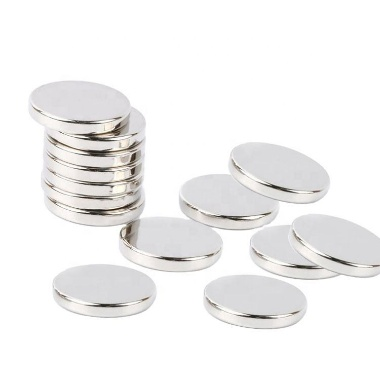
N52 magnets boast the highest energy product commercially available, which sounds impressive on a spec sheet. But in a speaker motor, raw magnetic strength doesn't automatically translate into better sound. The voice coil sits in a magnetic gap whose flux density is shaped by the entire magnetic circuit—pole piece, top plate, back plate, and the air gap itself. Once the steel parts approach saturation, adding a stronger magnet produces diminishing returns, often just a fraction of a decibel in sensitivity while driving up cost and weight.
Temperature behavior is another overlooked factor. N52 grades typically have lower intrinsic coercivity than N42 or N45 equivalents, meaning they demagnetize more easily when exposed to heat or a strong opposing field. In a compact speaker driven hard for hours, the voice coil can push temperatures past 80°C or 100°C. At those levels, an N52 magnet can lose a noticeable portion of its flux permanently, whereas a slightly lower grade with higher coercivity holds up far better.
There's also a practical manufacturing angle. N52 neodymium is more brittle and more expensive, often requiring special handling during assembly and a larger safety margin against cracking. For many speaker designs, an N42 or N45 magnet with a well-optimized magnetic circuit delivers the same acoustic output with better thermal stability and lower expense. The decision should hinge on the entire driver architecture, not just the magnet grade printed in the marketing materials.
Supplier Questions That Reveal True Quality Beyond ISO Certifications
An ISO certificate tells you a supplier has a system on paper, but it rarely shows what happens when a batch goes sideways. Ask them to walk you through a recent nonconformance and what changed afterward. A team that can describe the root cause, the correction, and the follow-up without shuffling files is one where quality is still breathing.
Dig into raw material traceability and what they do when a lot tests out of spec. A supplier with real control can name lot numbers, quarantine steps, and containment timelines off the top of their head. If the answer starts with “I’ll have to check with the lab,” that gap says more than any audit score.
The most telling question is about a defect they caught internally and how they told the customer. Strong suppliers volunteer bad news early because they understand that a delayed heads-up costs far more than a credit note. If they hesitate or cannot recall a single example, you are not talking to a quality partner—you are talking to a document keeper.
Custom Magnet Geometries That Unlock Better Driver Performance
The geometry of a magnet often matters more than its raw grade. By shifting from standard rectangular or ring shapes to segmented arcs with tailored chamfers, the magnetic flux can be concentrated exactly where the voice coil or rotor needs it. This reduces stray fields that waste energy and create uneven force delivery.
One practical approach pairs a tapered outer edge with a stepped inner face. The taper pulls the flux lines into a tighter working band, while the step counters saturation near the pole tips. The result is a more linear stroke and lower distortion under sustained load, even when thermal conditions push the driver toward its limits.
Another option is to use radial notches or asymmetric pole profiles. These small geometric breaks discourage eddy current loops and dampen high-frequency resonances that can blur transient response. When matched to the driver's suspension and voice coil layout, these custom profiles deliver tighter control without adding mass or requiring a larger magnet.
Catching Flux Inconsistencies Before They Reach Your Drivers
Most teams only notice a flux mismatch when a driver reports a visual glitch or a layout shift mid-session. By that point, the damage is already done: stale state has been served, and the user sees a frame that never existed in any single source of truth. Catching these inconsistencies early means moving validation out of the runtime and into the development loop, where a mismatch between reducer logic and selector expectations can be flagged before it ever hits a production bundle.
A practical approach is to treat flux stores as contracts, not just containers. When a store's shape drifts from what components expect, the failure often surfaces in subtle ways—an empty list that should have data, a boolean that flips one render too late. Instead of waiting for end-to-end tests to catch this, we started running a lightweight consistency checker in CI that replays every dispatched action against a snapshot of the store's expected output. The checker doesn't need a browser; it just needs the action creators and the reducers in the same module graph.
The payoff is fewer "works on my machine" moments and a noticeable drop in driver-reported rendering bugs. Once you treat flux inconsistency as a build-time issue, you stop patching symptoms like double-fetching or manual store resets in component lifecycles. The code smells that used to hide in async action chains become visible in a diff, and your drivers never have to be the first line of quality assurance.
Supply Chain Tactics for High-Fidelity Magnet Procurement Without Compromise
Sourcing magnets that preserve every nuance of an audio signal is rarely about luck. It comes down to locking in suppliers who treat magnetic tolerances as non-negotiable, not as a rounding error. We prioritize vendors that share batch-level BH curve data before a single unit ships, and we cross-check that data against in-house gauss meter readings at receiving. If a lot drifts even two percent from spec, it goes back—no exceptions.
Another tactic that keeps quality high is building redundancy into the raw material pipeline without diluting standards. Instead of chasing the lowest bid, we maintain a short list of audited foundries that can produce the same grade of neodymium or alnico with consistent coercivity. That way, a supply disruption in one region never forces us to accept magnets with lower energy product or unstable temperature coefficients. We also run accelerated aging tests on every new supplier’s samples, mimicking years of thermal cycling in a matter of weeks, so hidden demagnetization risks surface before production begins.
Finally, we treat packaging and logistics as part of the magnetic circuit, not an afterthought. Strong magnets can reorient each other in transit or pick up ferrous debris that compromises gap tolerances. So we specify individual shielded compartments, moisture-barrier wraps, and shock-absorbing crates for every shipment. Combined with real-time condition monitoring during ocean or air freight, this keeps the magnets arriving as pristine as they left the furnace—and keeps our final drivers sounding exactly as designed.
FAQ
Look for consistent flux density across batches, tight dimensional control on the air gap surfaces, and a coating process that survives at least 48 hours of salt spray without creeping corrosion. Ask for a batch control chart showing Gauss readings from the last 10 production runs, not just a sample certificate.
For neodymium, grades like N42SH or N48H strike a balance between high energy product and resistance to thermal demagnetization. Plain N42 or N52 without high-temperature ratings can lose noticeable flux once voice coils run hot. For ferrite drivers, Y35 or Y40 are common. Alnico 5 still offers the smooth top-end many classic speaker designers chase.
Tweeters need the tightest control, often ±0.03 mm on thickness and ±0.05 mm on the inner and outer diameters. Woofers can tolerate ±0.05 mm on thickness, but the gap-facing surfaces should stay within ±0.1 mm. Any misalignment caused by sloppy chamfering or uneven grinding will show up as distortion.
Nickel-copper-nickel is the standard for neodymium, but epoxy or Parylene is better when the driver sits in humid or marine environments. Ensure the coating adds no more than 15–25 microns per side, because thick uneven layers can shift the effective air gap slightly and create eddy current losses in some designs.
Standard rings and discs work well for most midrange and tweeter designs. But for large woofers and compression drivers, custom radial or segmented arc magnets can reduce flux leakage and improve voice coil linearity. A good supplier should offer FEA simulation support before you commit to cutting tooling.
Request a full BH curve at room temperature and at the estimated voice coil operating temperature, a Gauss surface scan showing field uniformity, a dimensional report with actual measured values, and a salt spray test report. If the supplier hesitates to provide thermal demagnetization data, that's a red flag.
Ask for the coercivity (Hcj) value, not just the maximum energy product (BHmax). A magnet can have high BHmax but low coercivity, which means it loses flux quickly under heat or reverse fields. Also compare the measured surface Gauss against the simulated value for your specific geometry; a large gap suggests the supplier substituted a cheaper grade.
Batch-to-batch magnetic field consistency. Many suppliers ship magnets within dimensional spec but with a flux variance of 5% or more. That leads to audible channel imbalance and uneven frequency response. Insist on a CpK of 1.67 or better for flux density across the production lot.
Conclusion
Every high-fidelity speaker starts with a magnet that shapes how the voice coil moves, yet too many sourcing teams still treat magnets as interchangeable commodities. Ferrite, alnico, and neodymium each bring distinct flux behavior, thermal stability, and weight penalties that directly color midrange warmth, treble precision, and bass control. A common mistake is assuming the highest N-grade, like N52, automatically delivers better sound. In reality, N52 often introduces more heat sensitivity and can force thicker top plates or narrower voice coil gaps, which hurts linear excursion and dynamic headroom. Savvy buyers dig into actual BH curves, coercivity at operating temperature, and how a given grade behaves after repeated high-power cycles, not just the label on a datasheet.
Supplier conversations matter just as much as material specs. Instead of leaning on ISO certificates alone, ask for batch-level flux mapping, magnetizing fixture records, and rejection data from the last twelve production runs. Custom geometries—beveled edges, radial arcs, segmented rings, or asymmetric pole profiles—can reduce eddy current losses and smooth the gap field, but only if the supplier consistently holds tight tolerances. Before magnets reach your driver line, insist on inline gauss spot checks and full-surface scanning to catch localized weak zones that cause rub, buzz, or off-center voice coils. Finally, build supply chain redundancy with dual-sourced blanks, agreed raw material allocations, and buffer stock for rare-earth volatility. Premium speaker magnets are not bought on price per kilogram; they are engineered through disciplined supplier partnership, process transparency, and a refusal to compromise on magnetic consistency.
Contact Us
Contact Person: Kelvin Lo
Email: [email protected]
Tel/WhatsApp: 0769-88561131
Website: https://dawamagnetic.com/