

Surge Protective Device Supplier: Key Factors to Evaluate Before Making a Decision
2026-10-19
Choosing a surge protective device supplier isn’t just about ticking boxes—it’s about protecting your equipment from sudden spikes that can cause real damage. Before you settle on a partner, there are key factors that separate a dependable supplier from a risky bet. Some companies, like ETEK, make it easier to spot the difference by focusing on the details that actually matter. Let’s look at what to evaluate first.
Does Their Certification Stack Up Under Real Surge Conditions?
A certification badge can look reassuring on a datasheet, but lab tests often follow a single, well-behaved surge waveform. Real grid transients come in clusters, with varied polarity, phase angles, and energy levels. If the evaluation only checks one pulse at a fixed voltage, it doesn't tell you much about how the unit will hold up when three or four back-to-back spikes hit during a storm.
Field failures usually happen when the surge's rise time or duration falls outside the standard's narrow window. For instance, a protector that passes an 8/20 µs current wave might still struggle with a fast 1.2/50 µs voltage front or a long-duration temporary overvoltage. Ask the vendor whether their certification includes multiple strikes, high-energy follow-through, or testing at different ambient temperatures.
Another thing to watch is whether the certificate references an outdated standard or only covers a single mode of protection. If the device is meant for a three-phase system but was tested line-to-neutral only, the line-to-line path could be vulnerable. A credible manufacturer will share the actual test report and explain how it maps to the electrical environment you are dealing with.
In-House Engineering Muscle vs. Reseller Talk
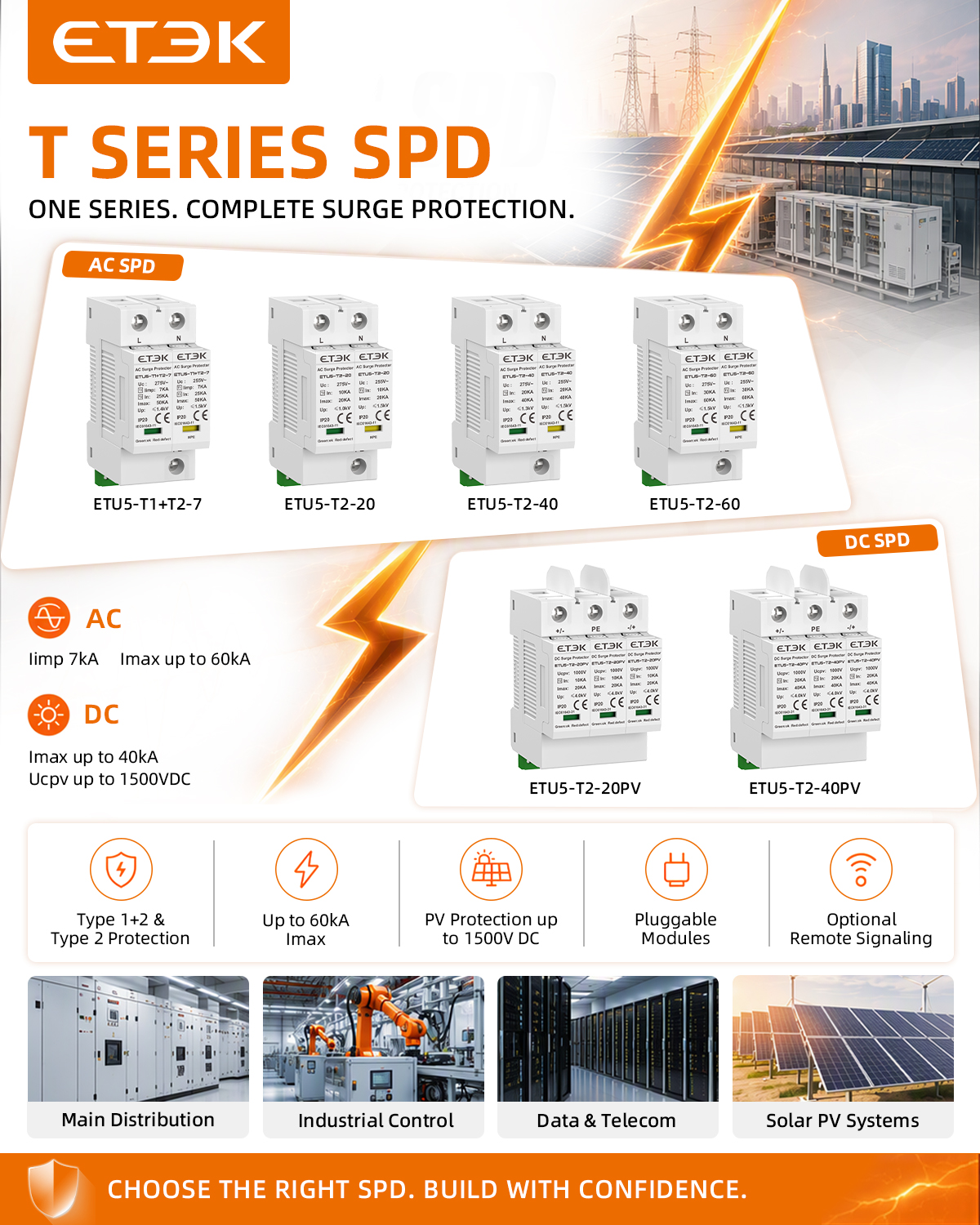
When something breaks at 2 a.m., you find out pretty quickly whether your provider has actual engineers on payroll or just a sales script. Resellers can sound confident until a problem goes off the brochure. In-house engineering muscle means the people who built your system are the same ones who answer the phone—not a middleman waiting on a vendor ticket.
That difference shows up in the small stuff too. A reseller will promise you the moon, then quietly pass your request upstream. An in-house team can open the hood, reproduce the issue, and patch it without pointing fingers. It’s the difference between buying a product and having a partner with skin in the game.
Over time, in-house engineering compounds. Roadmaps aren't dictated by third-party release schedules. Edge cases get handled before they become outages. Reseller talk may get you a shiny demo, but engineering muscle gets you a system that actually survives contact with reality.
Custom SPDs Without Endless Back-and-Forth
Most sensory profiles end up feeling like a negotiation—emails back and forth, clarifications, revisions. The real goal isn’t more paperwork, it’s knowing exactly what a child needs the moment they walk in. A custom SPD doesn’t have to be a drawn-out process. It can be a single conversation that captures the texture of a child’s day: the hum of the classroom, the scratch of a tag, the way they hide under the table after lunch.
What gets lost in typical intake forms is the nuance. You don’t need another checkbox about “seeks vestibular input.” You need to know that this specific kid spins after math, not before. That the meltdown at the grocery store isn’t about sound, it’s about the fluorescent flicker. A well-crafted sensory profile reads less like a diagnostic tool and more like a field note from someone who actually sat on the floor with the child.
The fastest way to a useful SPD is to skip the ceremony. Ask the three questions that matter: What calms them down? What sets them off? And what do they do when no one is watching? Then write it down in plain language—no jargon, no rating scales. That’s the profile a teacher can actually use on Tuesday morning, and it didn’t take a month of revisions to get there.
Test Reports That Go Beyond Marketing Brochures
Marketing brochures tend to compress a product’s strengths into glossy claims and carefully selected data points. A substantive test report moves in the opposite direction. It records the exact setup, the ambient conditions, the instruments used, and the raw numbers before any averaging or filtering takes place. That level of detail allows another engineer to reproduce the work or challenge its conclusions. When a component’s performance affects safety margins, warranty exposure, or integration with other systems, this kind of documented evidence carries more weight than a polished tagline.
Strong test reports also leave room for anomalies and marginal results instead of quietly dropping them. A near-failure under vibration, a slight drift in calibration, or an unexpected temperature spike may not change the final pass/fail decision, but those observations often point to future failure modes. In practice, design teams use these records to compare supplier batches, justify design margins, and isolate root causes when field issues appear. The report becomes a working reference for engineers rather than a one-page advertisement for management.
The long-term value becomes clear when assumptions change. If a material source shifts, a firmware update alters timing, or a customer reports a failure outside the original test envelope, a detailed historical record lets the team re-examine old data instead of starting from scratch. That continuity turns testing into an engineering asset rather than a compliance formality. Good test reports do not simply confirm what a product can do; they preserve the context needed to understand what it cannot yet do.
Warranty Promises With Actual Follow-Through
A warranty only matters if someone picks up the phone when things go wrong. We’ve seen too many brands hide behind fine print, so our approach starts with a simple rule: if a covered part fails, we fix or replace it without making you chase us. The promise isn’t just printed on a card; it’s backed by a dedicated support team that logs your claim, tracks the repair, and follows up until the item is back in your hands.
What sets real follow-through apart is how the boring details get handled. Instead of requiring you to mail in forms or wait on hold through three departments, our process uses direct contact with the person who can approve the work. That means fewer “we’ll get back to you” responses and more concrete timelines. If a replacement part is delayed, we say so early and offer options—loaner equipment, a partial refund, or an upgrade if the original item is discontinued.
The result is a warranty that feels less like a legal document and more like a working relationship. Customers often tell us they expected a hassle but ended up with a same-week fix. That kind of follow-through doesn’t happen by accident; it comes from keeping spare parts in stock, training staff to make decisions on the spot, and treating every claim as a chance to prove the promise still holds.
Track Record in Your Industry's Worst Electrical Environments
When your operation runs inside a facility where voltage sags, harmonic distortion, and transient spikes are daily occurrences, most equipment doesn't last a quarter. That's exactly where our systems have been proving themselves for over two decades. We've deployed in steel mills with arc furnaces kicking back 40% total harmonic distortion, in offshore platforms where salt spray and generator instability chew through lesser drives, and in underground mines where ground faults are a constant threat. Each installation survives not because of luck, but because the design assumes the worst from day one—oversized DC buses, conformal-coated boards, and firmware that rides through brownouts instead of tripping.
Customers don't call us when the power is clean. They call after two competitors' units failed in the same MCC room within six months. Our reference list includes a copper smelter where ambient temperatures hover at 60°C and conductive dust coats every surface, plus a wastewater treatment plant running off a backup generator whose frequency swings ±3 Hz. In those environments, a standard drive's IGBTs pop, capacitors bulge, and control boards lose their minds. Ours keep modulating. Field failure rates across those sites average under 0.4% annually—a number we don't advertise as a spec, but as a receipt from the places that punish every shortcut.
The real test isn't a datasheet temperature range; it's a five-year runtime log with zero unplanned downtime during monsoon season or a shift change when the grid collapses. We track every returned unit from harsh sites and publish the teardown lessons internally. That's why the latest generation uses ceramic gate resistors instead of thin-film, and why our surge protection stages are tested against 6 kV transients, not the 4 kV that passes most standards. If your electrical environment hasn't killed a drive yet, you might not need us. If it has, you know exactly why we're still running there.
FAQ
Many buyers fixate on the upfront price and ignore the total cost of ownership. A cheap SPD might fail prematurely during a surge event, leading to expensive equipment damage and downtime. Instead of comparing only unit prices, look at failure rates, replacement costs, and how the supplier supports product recalls or field failures. A slightly higher initial cost often pays off if the device survives multiple transient events without degradation.
Technical support is the difference between a smooth installation and a costly delay. You need a supplier that can review your electrical drawings, recommend the correct SPD type (Type 1, 2, or 3) for your distribution panel, and troubleshoot coordination issues with upstream breakers. Ask for a dedicated application engineer rather than a generic call center. If the supplier cannot explain why their product meets your specific surge current rating, move on.
At minimum, confirm the SPD meets UL 1449 4th edition for North America or IEC 61643-11 for international projects. For hazardous locations, look for ATEX or IECEx certifications. Also check if the supplier's manufacturing facility holds ISO 9001 and if their test reports come from an accredited lab like UL, TUV, or Intertek. A supplier that only provides a self-declared CE mark without third-party test data is a red flag.
Ask for the actual test reports, not just the datasheet. The report should show the SPD survived multiple 8/20 µs or 10/350 µs impulse tests without losing clamping voltage. Some suppliers test only once, which hides degradation. Request the number of test strikes and the measured let-through voltage for each mode (L-N, L-G, N-G). If they hesitate to share raw test data, treat the specification as marketing fiction.
A lifetime warranty is meaningless if the supplier takes three weeks to replace a failed unit. Look for a warranty that covers connected equipment damage up to a specific dollar amount, not just the SPD itself. Check whether they offer an advance replacement program or require you to ship the defective unit first. Also clarify the response time for technical faults during commissioning—a supplier who can dispatch a local field engineer within 48 hours is worth more than an extra five years of warranty on paper.
For standard commercial buildings, off-the-shelf SPDs work fine. But for industrial plants, data centers, or renewable energy sites, you may need custom voltage configurations, remote monitoring contacts, or DIN-rail mounting with specific form factors. A supplier with in-house engineering can modify the housing, add dry contacts for alarm integration, or adjust the surge rating for a high lightning density area. If the supplier only sells catalog items, you may end up paying an integrator to adapt the product later.
During construction, a delayed SPD can hold up the entire electrical inspection. Ask the supplier for their average lead time on standard items and whether they maintain regional stock for urgent replacements. A good supplier will offer 24-hour shipment for common models and have a buffer stock policy for long-term clients. Also ask about end-of-life product management—if a model is discontinued, will they provide a drop-in replacement or force you to redesign the panel?
Conclusion
A wall of certificates doesn't always survive contact with a genuine surge event. Push suppliers to show independent lab results from actual fault conditions—sustained overvoltage, high-energy transients, repeated strikes—rather than smooth datasheet curves. At the same time, watch for the difference between a manufacturer with real in-house engineering muscle and a reseller who just rebrands someone else's box. The former can adjust clamping voltage, response time, or footprint early in the project without endless back-and-forth; the latter often stalls on every custom request because the actual design team is three time zones away.
Request full test reports, not just a pass/fail badge: oscilloscope captures, thermal imaging, let-through voltage plots, and failure analysis when things go wrong. These are the documents that separate marketing brochures from hardware you can trust. Warranties feel reassuring until a claim is filed, so ask pointed questions about how the supplier handled replacements or field failures in the past. More revealing still is their track record in brutal electrical environments—mining operations, coastal substations, heavy manufacturing floors where harmonics, dust, and humidity never take a day off. A vendor with a proven history in those conditions is far more valuable than one with a polished pitch and a long list of unverified standards.
Contact Us
Contact Person: Andy
Email: [email protected]
Tel/WhatsApp: +86 13356133008
Website: https://www.etek-china.com/