

Thermoforming Die Making Equipment Companies: What to Look for Before You Invest
2026-10-10
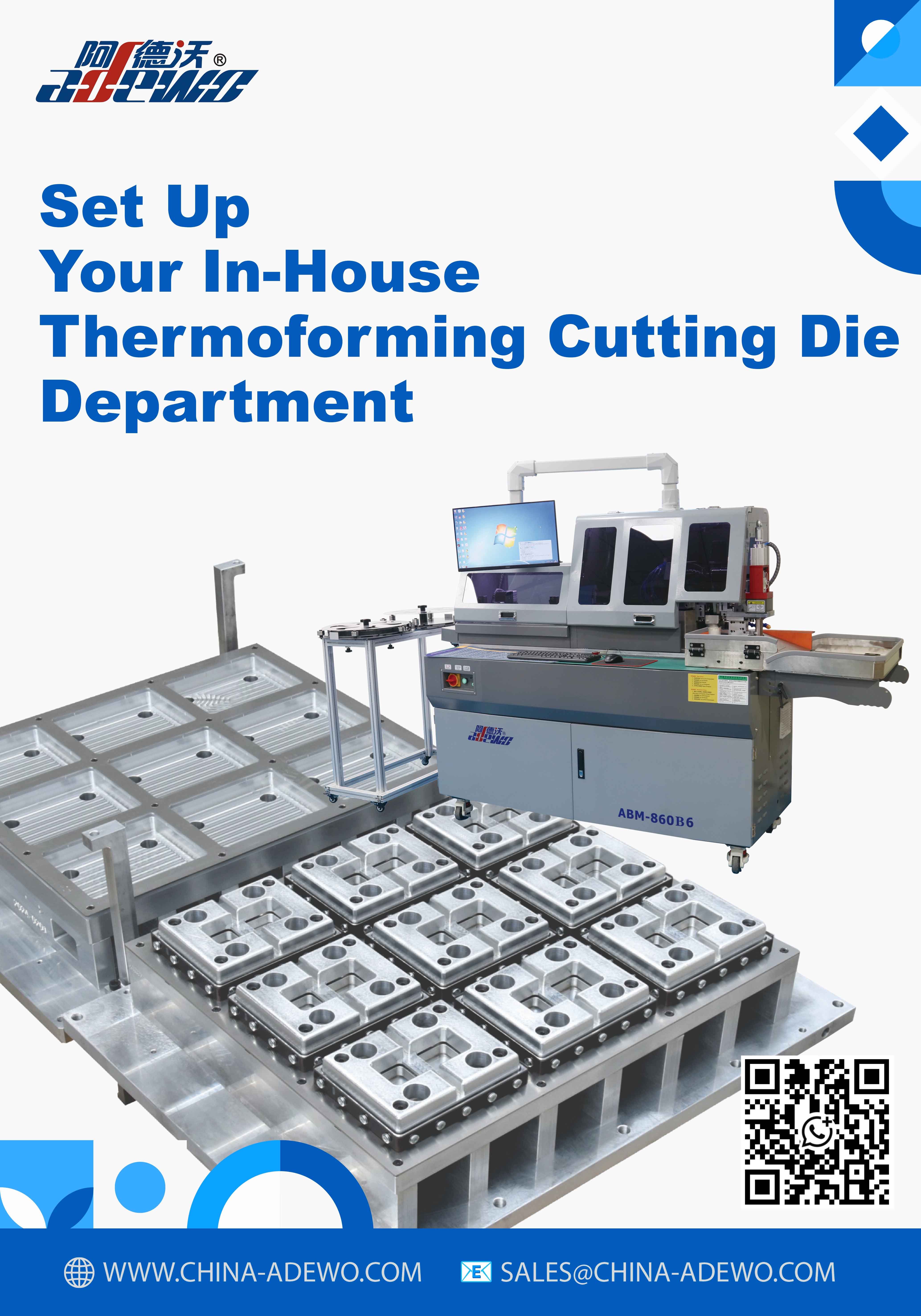
Before you sign off on thermoforming die making equipment, the real cost is rarely in the quote. A machine that holds tolerance for six months but drifts after 5,000 cycles can quietly eat your margin. The difference usually comes down to who builds the die, how they treat steel, and whether they understand your material flow — not just the spec sheet. Companies like ADEWO have shown that long-term performance depends on details most buyers never ask about. Here are the factors worth probing before your investment locks you in.
Verify Tolerance Claims on Your Own Thermoforming Materials
Don't take a supplier's tolerance sheet at face value. Run your own dimensional checks on the exact gauge and grade you'll actually use. Heat history, mold temperature, and even the direction of extrusion can shift shrinkage by a few thousandths of an inch, enough to scrap a batch if you're relying on generic numbers.
Cut test coupons from three zones: the center of the sheet, near the trim edge, and from a corner where material orientation differs. Measure thickness, width, and hole-to-hole distances after forming a simple box or tray. Compare these against the supplier's stated tolerance. If your corner sample drifts beyond spec, adjust your mold or process before committing to production.
Repeat the trial with a fresh roll from a different lot. Lot-to-lot variation in resin blend or regrind content often reveals itself only under your own tooling. A ten-minute check now saves you from discovering a 0.015-inch mismatch after the customer rejects the first shipment.
The Material Range That Actually Matches Your Production Mix
Chasing a one-size-fits-all material range usually means paying for grades you never touch while still scrambling to fill gaps when a niche order lands. The smarter move is to map your last twelve months of jobs by alloy, thickness, and finish, then build a core inventory that mirrors that actual mix instead of a supplier's default menu. You will end up with fewer dead coils, faster turnaround, and a cleaner floor because every rack earns its space.
What surprises most shops is how much of their “standard” stock was really just inherited habit. Strip out the items you hold because you always have, and keep only what your repeat customers actually consume. A tighter material range is not a limitation; it is a forcing function that pushes your team to quote from real availability rather than promising a fantasy lead time. That honesty wins more work than a bloated catalog ever did.
The reward shows up in cash flow first, then in scheduling. Instead of financing a wall of half-used remnants, your working capital goes toward replenishing the handful of SKUs that turn over every few weeks. And because your operators only handle materials they know well, setup time drops and quality complaints fade. Matching the range to the mix is not a cost-cutting exercise; it is the difference between running a warehouse and running a production line.
Spare Parts Availability Before You're in a Bind
Waiting until a machine fails to start hunting for a replacement part is a recipe for costly downtime and rushed decisions. Smart operations treat spare parts as a form of insurance—you don't want to discover the policy has lapsed right when you need to file a claim. Identifying the components most likely to wear out, break, or get damaged during normal use lets you stock the right items without tying up cash in shelves full of rarely needed extras.
A practical approach starts with reviewing your equipment's service history and maintenance logs. Which parts show up repeatedly in repair orders? Which ones have long lead times or come from suppliers who occasionally run short? Tag those as critical and keep at least one unit on hand, plus a clear reorder trigger based on usage patterns rather than guesswork. For less frequent failures, a shared inventory arrangement with a neighboring facility or a trusted distributor's consignment stock can fill the gap without bloating your own storeroom.
Build a relationship with a supplier who understands your equipment mix and can pull from regional warehouses when urgent needs arise. Ask about their emergency shipping options, after-hours support, and whether they offer kits for common repairs. The goal is not to stockpile every possible part but to have a clear path to getting what you need within hours, not weeks. Test that path before a breakdown by ordering a non-critical component and tracking how smoothly it arrives—you'll know exactly what to expect when the pressure is on.
Custom Machine Builds Without the Custom Lead Time
Most people expect a bespoke machine to mean months of back-and-forth, drawings, and waiting. We flipped that assumption by keeping a deep inventory of proven modules—frames, drives, controls—and configuring them around your process instead of designing from a blank page. That means a custom footprint, custom tooling, and custom cycle rates without the usual 14-week queue.
The result is a machine that arrives on your floor in days, not quarters. Our build team assembles and tests each configuration against your specific part samples before it ships, so what you ordered is exactly what runs. No endless revisions, no “almost right”—just production-ready equipment that fits the way you work.
Power Consumption Numbers That Don't Hide the Truth
Real power figures rarely survive contact with marketing decks. A device labeled 15 watts can spike to 40 under load, or idle at half a watt and slowly drain your patience. The honest approach starts with measuring at the wall, not trusting a spec sheet that was written before the firmware was even stable.
You need to see consumption across different states: active use, standby, and that weird middle ground where peripherals keep whispering to each other. Manufacturers love quoting the most flattering number, like a car's highway mileage on a downhill stretch. Strip away the averaging tricks and look at what the gear actually pulls over a full day, not a five-minute benchmark.
One useful habit is to log power draw for a week and check the variance. If a device spikes unpredictably, that's a hidden cost in both electricity and cooling. Honest numbers don't need asterisks, footnotes, or lab conditions that only exist in a brochure. They just show what happens when you plug it in and use it like a normal person.
Operator Training That Outlasts the Install
Many suppliers treat operator training as a one-time event that ends when the installation crew walks out the door. That approach leaves gaps: shifts change, new hires arrive, and procedures drift. A better model builds training into the rhythm of daily work, using short refreshers, visual job aids, and hands-on practice that happen where operators actually do their jobs. The goal is not just to teach someone how to push buttons, but to make safe, efficient operation feel like common sense long after the initial setup.
One practical way to make training stick is to pair each machine with a laminated quick-reference card that highlights the three most common mistakes and the exact steps to avoid them. Supervisors can then do five-minute walk-throughs during shift handovers, asking operators to demonstrate a startup sequence or a changeover in real time. These micro-checks cost almost nothing, but they turn abstract training manuals into lived habits. When a problem surfaces, the conversation is not about blame but about closing the gap between what was taught and what is actually done.
Finally, track retention without turning it into a bureaucratic burden. Keep a simple log of who has completed refresher drills each month, and note any recurring issues that come up during those sessions. If the same mistake keeps appearing, adjust the training material or the machine interface rather than repeating the same lecture. This loop of observe, correct, and refine is what separates a training program that merely checks a box from one that genuinely outlasts the install.
FAQ
Ask for sample tooling photographs with close-ups of critical features like vacuum hole placement and trim steel alignment. Request a trial run on your own sheet material if possible, and check whether they use five-axis CNC or only three-axis, since complex undercuts and sharp corner details depend on that.
Look for a maker that doesn't push a single option. Aluminum works well for short-to-medium runs and heats faster, while hardened steel makes sense for high-volume or abrasive materials. Some shops also offer hybrid tooling with steel inserts in high-wear zones, which can cut cost without sacrificing life.
It is one of the strongest signs of an experienced partner. A shop that runs plug-assist and material distribution simulations can catch thinning or webbing problems before metal is cut. That service usually pays for itself by reducing trial-and-error on your floor.
Expect more than a warranty card. A good die maker offers on-site setup help, clear maintenance instructions, and a realistic response time for adjustments. Ask if they keep digital records of your tooling so replacement inserts or modifications can be made years later without starting from scratch.
Request a documented inspection report showing dimensional checks against the original CAD model. If they can provide CMM data or a first-article inspection with critical dimensions highlighted, that is a positive signal. Avoid shops that rely only on visual checks or don't track revision history.
Lead time matters, but a shorter promise is not better if it means skipped steps. Ask how many projects are currently in their queue and whether they reserve machine time for revisions. A company that explains its scheduling openly—and builds in time for a trial run—tends to be more reliable than one that quotes the lowest number to win the job.
Yes, things like surface texture etching, vacuum hole drilling density, and trimming fixture compatibility can be quoted separately. Ask for a line-item breakdown rather than a lump sum. Also clarify who pays for design changes after the first sample, since re-cutting a cavity or adding inserts is often where budgets get strained.
Conclusion
Before committing to a thermoforming die maker, test their tolerance claims on your actual materials—not just their demo samples. A shop running mixed production needs equipment that handles the full range of resins and thicknesses you already use, not a narrow sweet spot that forces you to outsource odd jobs. Check spare parts lead times as if you’ve already broken down, because a three-week wait for a heater or seal can idle an entire line. And ask about custom builds: some companies promise made-to-order machines but quietly slot you into a standard frame with bolt-on extras, adding months to delivery.
Equally telling are the numbers they share. Compare power consumption under real cycle rates, including idle and preheat, not just the nameplate wattage. Then look at training—good suppliers don’t disappear after startup; they leave operators with troubleshooting instincts and documentation that holds up when shifts change. The right partner treats your material, your mix, and your downtime cost as the real spec sheet, not an afterthought.
Contact Us
Contact Person: KAELYN LEE
Email: [email protected]
Tel/WhatsApp: +86 15012673758
Website: https://www.china-adewo.com