

Tire Shredder Fabrication: Building Efficient Recycling Machines from Scratch
2026-05-12
Turning mountains of discarded tires into valuable resources starts with one powerful machine—the shredder. Whether you're a DIY builder or an industrial innovator, crafting an efficient tire shredder from scratch blends engineering ingenuity with sustainable vision. At the heart of this movement, solutions like Shengzhong Shredder inspire custom builds and scaled-up systems alike. Dive in to uncover the core fabrication techniques, design secrets, and material know-how that will transform scrap rubber into a recycling goldmine.
Core Design Principles for High-Throughput Tire Shredding
Designing a high-throughput tire shredding system starts with a robust rotor assembly that can handle the extreme variability of tire materials. Unlike uniform feedstocks, used tires contain steel belts, polyester cords, and thick rubber compounds that demand a cutting chamber engineered for resilience. The rotor must be dynamically balanced to minimize vibration at high rotational speeds, while the knife configuration should allow for quick replacement and adjustable clearances to maintain consistent output size without generating excessive heat.
Equally important is the integration of a smart feeding mechanism that prevents bridging and ensures a steady flow of material into the cutting zone. A ram-assisted or gravity-fed hopper, paired with a load-sensing control system, can automatically adjust feed speed based on motor amperage, preventing overload and reducing wear. This adaptive approach not only maximizes throughput but also extends the life of wear components by avoiding unnecessary stress cycles.
Finally, the material handling and separation stages downstream of the shredder must keep pace with the primary cutting action. Incorporating high-capacity discharge conveyors, magnetic separators for steel removal, and multi-stage screening systems ensures that shredded rubber is classified efficiently without bottlenecks. By treating the entire process as a synchronized system—rather than focusing on the shredder alone—facilities can achieve continuous, high-volume processing with minimal downtime and consistent product quality.
Selecting and Hardening Cutting Blades for Extended Wear Life
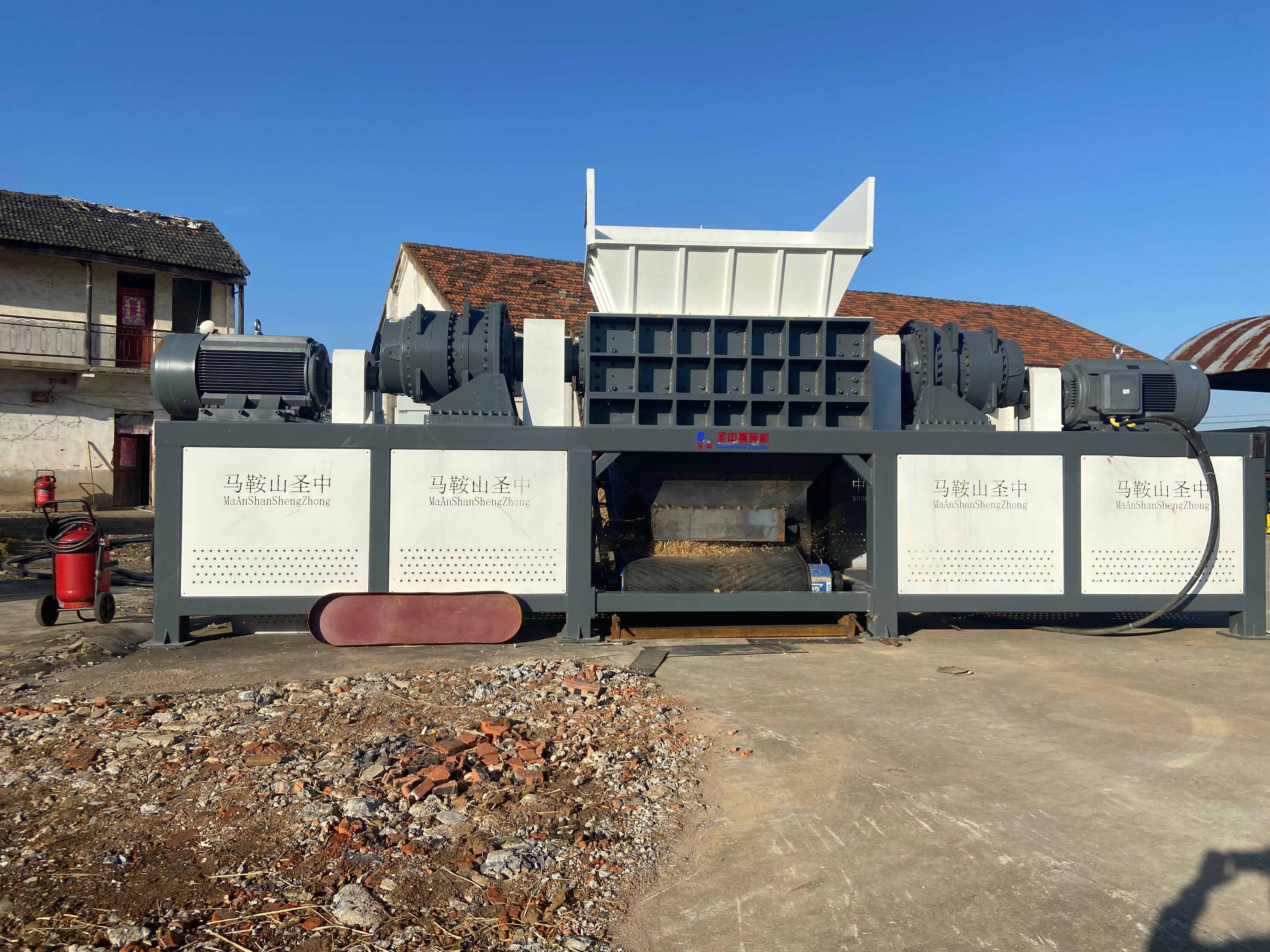
Getting the most out of cutting blades starts long before they ever touch material. The selection process must account not only for the material being cut but also for the operational environment—temperature swings, moisture, and abrasive contaminants all influence blade life. Too often, facilities default to a one-size-fits-all grade, ignoring subtle differences in carbide grain size or binder composition that can double or halve service intervals. A blade matched precisely to its application, whether it's slitting high‑silicon electrical steel or shredding fiber‑reinforced composites, resists micro‑chipping and edge rounding far longer than a general‑purpose alternative.
Hardening is where the real durability is built in, yet it's frequently mishandled. Traditional through‑hardening leaves the core brittle, inviting catastrophic failure under shock loads. A better approach for many operations is a case‑hardening or cryogenic treatment that creates a wear‑resistant shell around a tough, ductile interior. Pair this with a precision tempering cycle, and you get an edge that holds its geometry even when production speeds climb. Shot peening after heat treatment can further inhibit crack initiation by imparting compressive stress right at the surface—an extra step that pays for itself in reduced unplanned downtime.
Even the best blade will underperform if the maintenance routine doesn't match its metallurgy. Sharpening intervals should be based on measurable edge degradation, not a fixed production count. Microscopic inspection often reveals that what looks like a dull blade is actually a buildup of adhered material, easily remedied with a quick strop or chemical cleaning instead of a full regrind. Pairing these practices with the right coolant or lubricant—something that prevents both corrosion and thermal softening at the cut zone—completes a system where blade life stretches from weeks to months, delivering a genuine advantage on the factory floor.
Optimizing Motor and Drive Systems for Torque-Heavy Demands
When a machine needs to muscle through thick materials or pull a heavy load from a dead stop, the motor and drive pairing becomes the heart of the operation. Standard designs often fall short because they prioritize speed over raw twisting force, leading to stalls or erratic behavior. The real work begins in matching winding configurations, gear ratios, and control algorithms to the specific torque profile of the application—whether it's a conveyor jammed with ore or an extruder chewing through dense polymer. Ignoring these details isn't just inefficient; it can crack shafts or burn out windings before their time.
Drive tuning is where theory meets harsh reality. Vector control schemes can maintain magnetic field alignment down to zero speed, delivering full torque without the typical low-frequency jerkiness. But that precision demands careful feedback setup—encoders or resolvers that don't drift under vibration or heat. Beyond the loop parameters, supply design matters: a bus that sags under transient spikes will neuter any motor's potential. Some engineers lean on oversized components as a crutch, but a smarter path involves active damping and adaptive gain scheduling that responds to load inertia in real time.
Thermal management often separates a robust torque-heavy system from a short-lived one. Windings can handle brief overloads if the duty cycle respects cooling time, but sustained high torque pushes insulation limits. Encapsulated stators, forced-air or liquid cooling paths, and even potting compounds that wick heat away from hotspots become essential. Material choices—higher-grade laminations, copper rotor bars instead of aluminum—also shift the breakover point where torque drops off. Ultimately, optimization means treating the motor and drive as a single thermal and electromagnetic unit, not a collection of catalog parts bolted together.
Integrating Smart Controls for Automated Feed and Overload Protection
Modern machinery demands more than just basic automation—it requires adaptive intelligence that can sense load fluctuations and adjust feed rates on the fly. By embedding smart control logic directly into the drive and monitoring systems, operators gain the ability to automatically regulate material flow without constant manual intervention. Sensors continuously track torque, current draw, and vibration signatures, feeding real-time data into algorithms that decide when to speed up, slow down, or pause the process entirely.
What truly sets this approach apart is the seamless integration of overload prevention. Rather than relying on crude circuit breakers that only react after a fault occurs, these controls predict impending jams and excess loads by analyzing subtle performance shifts. If the system detects a rising trend in resistance—perhaps from a clogged chute or an unexpected obstruction—it can instantly scale back throughput or even reverse the feed momentarily to clear the issue before it escalates. This proactive behavior saves components from mechanical stress and drastically reduces unplanned downtime.
The result is a self-optimizing loop that balances throughput with equipment safety. Operators are no longer locked into static setpoints; instead, the machine continuously tunes itself to maintain peak efficiency within safe boundaries. The data gathered also feeds into longer-term analytics, helping teams spot wear patterns or process bottlenecks that manual observation would miss. Ultimately, combining automated feed control with intelligent overload protection transforms a traditional production line into a resilient, self-regulating system that requires less oversight and delivers more consistent output.
Balancing Cost-Effective Materials with Heavy-Duty Durability
Hunting for materials that don’t drain the budget yet survive daily punishment is a tightrope act. It starts with mapping out exactly where the real strain lands—high-impact corners, constant friction points, exposure to weather—and reinforcing just those spots. Elsewhere, lighter, less expensive choices can take over, trimming costs without weakening the whole.
Mixing things up often yields the best results. A product might lean on a rigid metal core for bones, then wrap it in a high-abuse polymer skin that’s cheaper to replace. Coatings and treatments add another layer of value, shielding against rust or scratches so the underlying material doesn’t need to be indestructible on its own. The trick is matching the material’s strengths to actual use, not imaginary extremes.
Durability is rarely about making everything thick and heavy; it’s about strategic design. Thoughtful joints, heat dissipation paths, and easy maintenance features can keep gear running long after brute-force alternatives would have cracked. That way, you end up with something that holds up to hard work and still makes financial sense.
Troubleshooting Common Build Challenges in Shredder Assembly
One of the first snags you might hit is misalignment of the cutting blades. Even a slight tilt can cause the shredder to jam or produce uneven strips, and you'll often hear a grinding noise or feel extra resistance when turning the shaft by hand. To fix this, loosen the blade housing bolts just enough, use a straightedge to align all blades in parallel, then retighten gradually in a cross pattern while double-checking with a feeler gauge. Don't rush this step—getting it perfect now saves hours of rework later.
Another frequent headache is the motor refusing to start or tripping the breaker instantly. It's easy to assume the motor is dead, but more often than not the issue is poor contact in the wiring connections or a misrouted belt causing excessive friction. Inspect every spade connector and terminal block for looseness or corrosion, and ensure the drive belt has about a quarter-inch of deflection when pressed firmly. If the motor still hums without turning, manually rotate the shaft to rule out a locked rotor.
Finally, the collection bin sensor can be a stealthy troublemaker. If the shredder runs only briefly or refuses to start despite an empty bin, check that the safety interlock switch isn't being triggered by a warped housing or a loose magnet on the bin lid. Sometimes simply reseating the bin with a firm push resolves it; other times you'll need to bend the metal tab slightly or replace the reed switch. Keep a multimeter handy to test continuity so you're not guessing in the dark.
FAQ
Most off-the-shelf machines are either too expensive for small-scale operations or built for a single tire size. I wanted something modular—able to handle everything from bicycle tires to light truck casings—and I knew the engineering principles well enough to create a robust frame and cutter geometry myself.
I start with D2 tool steel because it offers a decent balance between edge retention and toughness. After machining the profiles, I do a vacuum heat treat to around 58-60 HRC, then a double temper to reduce brittleness. A sub-zero step helps stabilize the microstructure before final sharpening.
Misalignment is a killer. I designed the shafts with a slight over-length so I could match-face the bearing seats while the housing was bolted together. I’m using spherical roller bearings in split plummer blocks—this gives some self-aligning capacity. The key is to carefully dial-indicate both shafts before final tightening.
Attached a grizzly-like classifier right below the cutter housing. It’s a curved perforated plate with staggered slots. Undersize material falls through, oversized chunks get kicked back into the cutting chamber by a small paddle wheel. No extra motor needed—it’s driven off the main shaft with a simple chain reduction.
I didn’t rely on horsepower ratings alone. I measured the peak cutting force with a load cell on a single-blade test rig, then multiplied by the number of teeth engaged simultaneously. With that torque number, I selected an 7.5 kW motor and a helical-bevel gearbox rated for 2x the calculated torque, plus a fluid coupling to soften startup.
Absolutely critical. I added a magnetic interlock on the hopper lid, so the machine can’t run when open. There’s an emergency stop bar across the whole front and a thermal overload relay that also senses if the grate gets too hot. I also routed the control box away from the discharge zone and wired it so the motor can’t auto-restart after a power loss.
Don’t guess on cutter clearance. Spend the time to jig everything. I built a simple grinding fixture that holds each blade pair at the exact shear angle, and I check the gap with plastic shim stock. If the clearance is inconsistent, you’ll generate more heat and rubber dust than actual chips. That gap makes the machine.
Conclusion
Effective tire shredder fabrication starts with a robust design that prioritizes high throughput and durability. The core geometry and cutting chamber must be engineered for consistent material flow, avoiding bottlenecks. Blade selection is critical—using alloy steels with proper heat treatment extends wear life significantly. The motor and drive train should be sized for extreme torque, with gear reduction and adequate cooling to handle the heavy demands of shredding tough rubber. Integrating smart controls allows automated feed rates and immediate overload protection, preventing damage and reducing manual intervention. In addition, these controls can monitor torque in real time, adjusting feed speeds to optimize throughput while protecting against jams. Properly designed feed systems also minimize recirculation of partially shredded material, which can rob efficiency.
Cost-effectiveness doesn't have to mean cutting corners; thoughtful material choices like using hardened wear plates in high-impact zones and standard structural steel elsewhere can balance budget and longevity. During assembly, common issues such as misalignment, vibration, and bearing failure need careful attention. Regular troubleshooting includes checking blade clearances, ensuring proper lubrication, and fine-tuning control parameters. For example, using a split housing design simplifies blade replacement, while thermal sensors on bearings give early warning of potential failures. Techniques like laser alignment of the rotor and using vibration-dampening mounts can preempt many operational headaches. A well-executed build results in a reliable machine that can process large volumes of scrap tires efficiently, contributing to sustainable recycling efforts.
Contact Us
Contact Person: Leon
Email: [email protected]
Tel/WhatsApp: 8615385558866
Website: https://www.shred-waste.com