

Top Concrete Laser Screed Manufacturer: A Guide to Selecting the Best
2026-06-20
Choosing the right concrete laser screed manufacturer can make or break your flooring project. With so many options on the market, it’s easy to get lost in technical specs and bold claims. That’s where this guide comes in—designed to help you cut through the noise and focus on what truly matters. Whether you’re upgrading your fleet or investing in your first screed, partnering with an innovative leader like Dynamic ensures you’re getting precision, durability, and support that the job demands. Let’s explore the key factors that set the best apart from the rest.
The True Mark of a Quality Concrete Laser Screed Maker
A quality concrete laser screed maker doesn’t always shout about its credentials. Instead, the real giveaway lies in the details that most buyers overlook until they've been burned. You’ll find it in the welds that hold the frame against relentless vibration, the precision-machined components that keep the laser receiver dead-on pass after pass, and the industrial-grade hoses that don’t crack under the sun. These aren't glamorous features, but when a machine spends eight hours a day spreading and leveling heavy concrete, it’s exactly these hidden elements that separate a reliable workhorse from a constant headache.
Another unmistakable mark is how the manufacturer handles what happens after a sale. The best ones act less like equipment vendors and more like field partners. They stock critical parts locally, answer technical calls promptly, and design their machines so a mechanic with standard tools can perform most repairs without voiding warranties. This practical support matters because every hour a screed sits idle on a pour is an hour that bleeds profit. A manufacturer that understands this builds that urgency into their entire service model, and contractors notice.
Finally, the true mark of a quality maker is a restless refusal to accept “good enough.” They don’t just copy industry standards; they quietly improve them—perhaps by tweaking the hydraulic response to reduce operator fatigue, or by hardening wear points that nobody else bothers with. These refinements rarely make it into flashy brochures, but they accumulate over years of use. When you talk to longtime owners, they’ll mention little things: a smoother joystick, a vibration mode that really works with low-slump mixes, a frame that hasn’t twisted after thousands of yards. That’s not luck. That’s design philosophy made tangible.
Why Not All Laser Screeds Are Built Equal: A Closer Look at Engineering
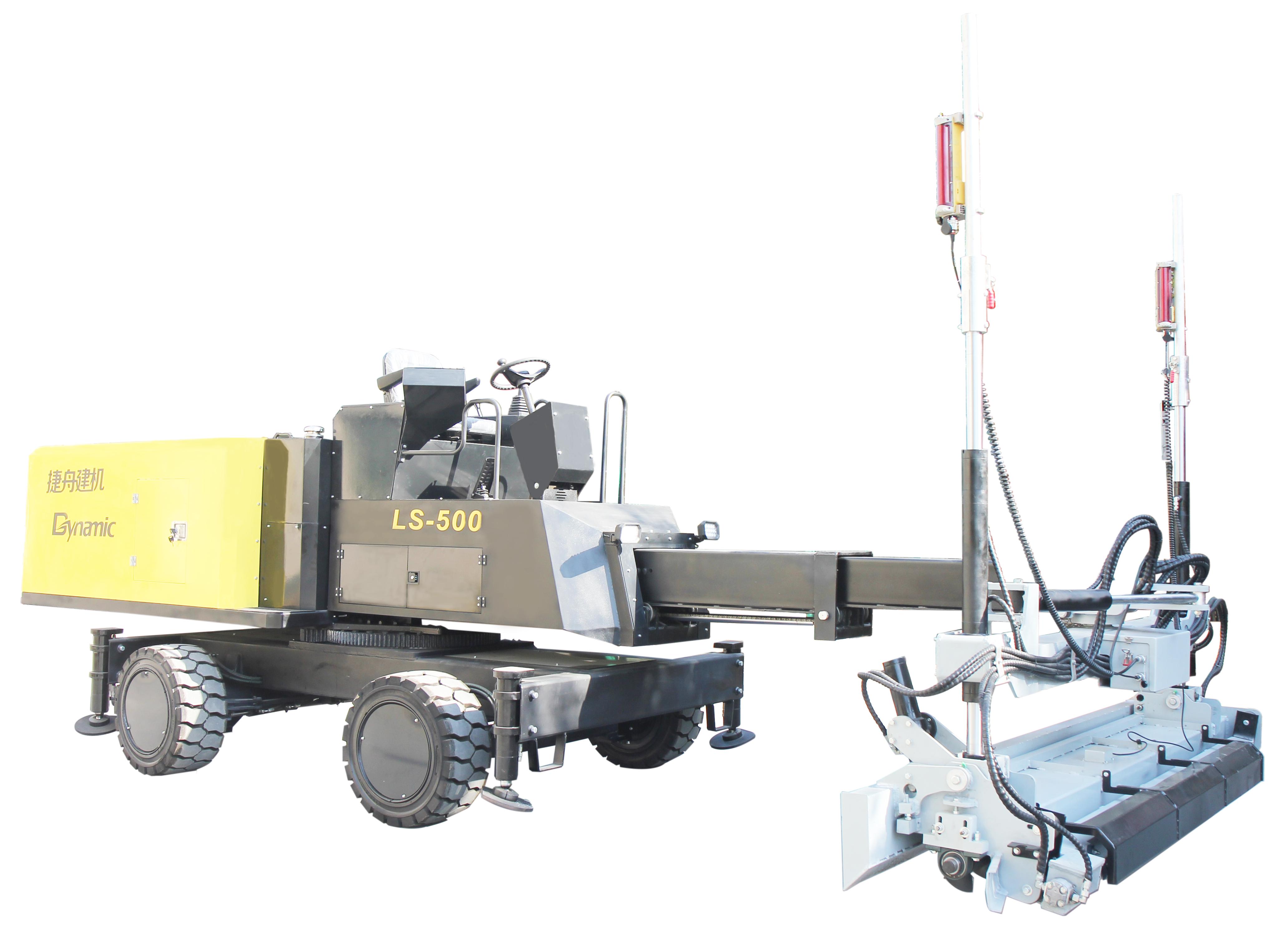
The real differentiator between a mediocre laser screed and a high-performance unit lies in the engineering of its feedback loop. The laser receiver, control module, and hydraulic actuators must communicate with almost zero latency to continuously adjust the screed head. In cheaper models, laggy or coarse corrections lead to subtle waves in the slab—defects that only reveal themselves under lights after the pour. Premium machines employ faster processors and more refined algorithms that sample and correct position hundreds of times per second, keeping the screed head within a tighter tolerance band even at higher travel speeds.
Structural rigidity is another area where engineering trade-offs become visible. The frame and telescoping sections of a laser screed are subject to constant bending and torsional forces, especially when the machine reaches far over a pour. If the truss design prioritizes weight savings over stiffness, the entire screed head can flex, creating a slightly dished or crowned surface. Top-tier manufacturers reinforce the boom with box-section members and precision-machined pivot points that resist deflection, making the machine heavier but far more consistent. This stiffness also reduces vibration-damping losses, ensuring that the vibration applied at the strike-off auger helps consolidate the concrete effectively rather than shaking the machine itself apart.
Durability engineering is the long-term story that separates workhorses from garage queens. Exposed hydraulic hoses, unsealed bearings, and inaccessible wear parts plague budget-friendly designs, turning routine maintenance into a costly downtime event. Conversely, well-engineered screeds route hoses through protected channels, use lifetime-lubricated pivot points, and incorporate easily swappable wear items like auger blades and carriage liners. A closer look at the engineering reveals whether a manufacturer considered the daily abuse of a construction site or simply assembled off-the-shelf components into a fragile package that looks good in a brochure.
From Factory Floor to Job Site: Testing Durability Where It Counts
Durability tests shouldn’t stop when a product leaves the assembly line. We take our tools straight from the factory floor to active job sites, subjecting them to the same rough handling, unpredictable weather, and relentless daily use that professionals face. From hammer drills in rain-soaked trenches to power saws caked in construction dust, every evaluation happens in the field under real workloads. This direct approach uncovers weaknesses that lab simulations often miss, like seal degradation after repeated drops or switch failure from accumulated grit.
On-site testing also exposes the cumulative effects of minor abuse—the kind that chips away at a tool’s lifespan over months, not hours. We log everything: battery runtime after repeated rapid charging, chuck wobble after hundreds of bit changes, and housing cracks from routine drops off scaffolding. These findings feed back into design iterations, tightening tolerances and reinforcing stress points long before new models reach the market.
The result is a tool that holds up when it matters most—not just on a spec sheet, but in the hands of someone relying on it to finish the job before sundown. By merging controlled factory checks with brutal job-site honesty, we build in the kind of toughness that doesn’t need a warranty claim to prove itself.
Service After the Sale: The Hidden Difference Between Good and Great
A purchase marks the beginning of a relationship, not the end of a transaction. Companies that grasp this invest real effort into what happens after the sale. It’s in the quiet moments—when something breaks, when instructions confuse, when a customer simply wonders if they made the right choice—that lasting impressions form. Good brands fulfill the warranty terms. Great ones treat every follow-up as an opportunity to reinforce trust, often before the customer even asks.
The difference often surfaces in the details. A proactive check-in call a week after delivery, a spare part shipped before the customer notices the defect, or a technical support agent who truly listens rather than reading from a script. These actions don’t just solve problems; they convey genuine care. Over time, such responsiveness becomes the quiet engine of loyalty, turning one-time buyers into vocal advocates who return again and again.
Custom Solutions: When One Size Doesn't Fit All in Concrete Flooring
Standard concrete mixes and finishes work fine for warehouses or big-box stores, but throw in a commercial kitchen that sees thermal shock daily or a brewery dealing with constant chemical exposure, and that one-size-fits-all approach crumbles fast. Custom solutions start with the mix itself—adjusting cement ratios, swapping aggregates, or adding polymers to handle specific stress points. For a food processing plant, that might mean a dense, non-absorptive surface that fends off acids and oils without sacrificing slip resistance. It’s not about reinventing the wheel; it’s about tweaking the recipe so the floor actually holds up against the punishment it takes every day.
Then there’s the finishing technique, which is where things get really tailored. A polished floor might be stunning in a showroom, but it’s a liability in a wet loading dock. One project I saw used a heavy broom finish for a dog kennel—easy to clean, plenty of grip for paws, and way more forgiving than the glossy coat the architect originally wanted. The trick is matching the texture and cure method to the real-world use, not just the spec sheet. Sometimes that means embedding a colour stain that doesn’t just look good but also hides wear patterns in high-traffic areas, or adding a metallic hardener to a workshop where dropped tools would chew up standard concrete in a month.
Underneath it all, substrate prep and joint planning can make or break a custom floor. For a refrigerated facility, ignoring the thermal contraction would mean cracks spiderwebbing across the slab before the first month is out. A custom solution there involves saw-cut joints placed miles apart from where a generic design would put them, plus a flexible epoxy filler that moves with the floor. I’ve seen jobs where the fix was as simple as a moisture barrier system nobody thought to spec because “it’s just concrete.” That’s the whole point: when you treat every pour as a unique puzzle, you don’t just get a floor—you get one that actually works for the people stepping on it every day.
Reading Between the Lines of Customer Testimonials and Case Studies
Customer testimonials and case studies rarely spell out the full story. The most valuable insights often hide in what’s left unsaid—subtle hesitations, vague praise, or carefully chosen adjectives that hint at deeper experiences. A statement like “the team was responsive” can signal genuine satisfaction, or it might mask that the product needed too much support. Learning to pick up on these nuances helps you see past the polished surface and understand what clients actually think once the contract is signed.
Case studies, even when they spotlight success, reveal patterns in problem-solving that mere numbers can’t capture. Look for recurring phrases across different clients—words like “workaround,” “eventually,” or “after some adjustments.” These suggest friction the writer may downplay but can’t completely omit. Similarly, pay attention to what’s missing: if a supposedly smooth implementation omits details about data migration or user adoption, it’s worth probing further. The gaps are often more telling than the curated highlights.
Another layer worth exploring is the emotional arc between the lines. Testimonials that jump straight to results without acknowledging any struggle often feel hollow. When a client admits “we were skeptical at first” or “it took time to see the value,” they’re not just adding color—they’re signaling authenticity. Authentic reviews, even short ones, usually include enough texture to picture the real journey. Rather than taking every word at face value, consider what the writer is really trying to say, and why they chose to say it that way.
FAQ
A concrete laser screed is a machine that uses a laser transmitter and receiver to automatically level and compact freshly poured concrete. It replaces manual screeding rails, ensuring tighter flatness and levelness tolerances. The laser guide system adjusts the screed head in real time, removing guesswork and reducing labor. This results in floors with fewer undulations, faster pour cycles, and a more durable surface that requires minimal grinding.
The manufacturer behind the machine determines build quality, component reliability, and long-term support. A reputable maker provides engineered solutions that match specific pour sizes and conditions, while lesser options may cut corners on materials or control systems. The right partner ensures you get a machine that holds calibration, has accessible parts, and comes with responsive technical backup—all of which directly affect floor flatness, uptime, and total cost of ownership.
Premium screeds often have automatic leveling with dual-axis slope control, robust frames that resist deflection, and user-friendly controls with data logging. They may include electric or hydraulically driven augers for better concrete distribution, vibration systems that consolidate without segregation, and remote diagnostics. Higher-end brands also engineer for consistent performance across wide lanes and challenging mixes, while entry-level units might lack the refinement needed for flatness-critical warehouses.
Look at how often they update drive systems, control software, and ergonomics. Manufacturers investing in R&D will offer machines with modular designs that accept upgrades, use corrosion-resistant components, and simplify daily maintenance. Check if they provide training programs and have a track record of supporting older models. A forward-thinking brand also incorporates feedback from contractors into each new generation, rather than simply cost-engineering existing designs.
Access to timely service and genuine parts can make or break a project's schedule. Top manufacturers maintain a network of factory-trained technicians who can troubleshoot on-site, plus regional parts warehouses that minimize downtime. Ask about response guarantees, availability of common wear items, and whether they offer telephonic support. A strong service infrastructure turns the machine into a reliable production asset rather than a potential liability.
Yes. Even for mid-size commercial slabs or residential basements, a compact laser screed from a quality builder delivers flatness that reduces finishing labor and callbacks. These machines often share the same laser technology as larger siblings but are more maneuverable in tight spaces. They allow contractors to deliver superior results on jobs where a full-size ride-on would be impractical, expanding the range of work they can bid competitively.
A comprehensive warranty should cover structural components and key systems like the laser receiver and hydraulics. Beyond the coverage period, evaluate the ease of obtaining advice: does the manufacturer have a dedicated support hotline, online troubleshooting guides, or regular field visits? The best companies stand behind their engineering with extended service plans and encourage a partnership approach that helps you maximize uptime and floor quality years after the sale.
Brands with a reputation for durability and continued support retain value better because buyers trust that parts will be available and the machine's history can be verified. A well-maintained unit from a recognized manufacturer often commands a higher price in the used market, making it a smarter long-term investment. Less-established names may see steeper depreciation, as uncertainty about future service and build quality discourages second owners.
Conclusion
Selecting a top concrete laser screed manufacturer isn’t just about comparing spec sheets—it’s about recognizing the engineering depth behind the machine. The true mark of a quality maker lies in how they handle the details: frame rigidity, laser precision, and the robustness of moving parts under constant vibration. Not all screeds are built equal because cost-cutting in bearings, hydraulic systems, or the laser receiver assembly can lead to grade errors that compound over large pours. That’s where factory-floor testing becomes critical. The best manufacturers subject their units to simulated job-site abuse, measuring wear on rotating components and verifying laser accuracy after thousands of cycles. Only those that survive these relentless trials prove they can handle the real-world mix of heat, dust, and operator fatigue.
But a great screed is only as reliable as the support behind it. Service after the sale separates good from great—look for manufacturers who don’t just ship a machine but embed themselves in your project’s success. They stock critical parts, dispatch technicians quickly, and understand that downtime wrecks schedules. Customization also matters because no two slab pours are identical. Whether it’s a bridge deck with tight pour restrictions or a warehouse demanding superflat tolerances, the manufacturer should adapt the machine’s wheelbase, head width, or software settings. Finally, don’t take marketing claims at face value. Reading between the lines of case studies reveals how a screed performs in conditions like yours. Seek out detailed testimonials that mention specific challenges and solutions—not just generic praise. A thorough evaluation of these factors will lead you to a partner that delivers floors that meet the highest standards.
Contact Us
Contact Person: Annie
Email: [email protected]
Tel/WhatsApp: 8613391442963
Website: https://www.dynamic-eq.com