

Top Oil-Filled Pressure Gauge Picks for Reliable Performance
2026-11-16
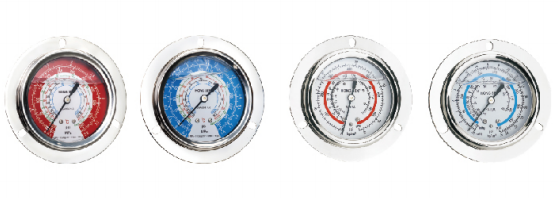
When pressure readings can't afford to waver, oil-filled gauges are the unsung heroes of industrial reliability. Choosing the right one, however, is rarely a simple glance at a spec sheet. From vibration-heavy pump systems to corrosive environments, the best performers share a few understated traits—and a brand name that keeps surfacing in field notes: HONGSEN. In this guide, we cut through the catalog clutter to highlight the oil-filled pressure gauges that actually earn their keep, so your next installation doesn't just work—it lasts.
What Makes Oil-Filled Gauges Steadier in the Field
The steady pointer movement in oil-filled gauges comes down to how the liquid dampens mechanical shock. When a pressure spike hits, the oil resists sudden motion of the Bourdon tube and linkage, spreading the impulse over a longer moment. This means the needle doesn't slam against the stop or vibrate wildly, which is common in dry gauges on compressors or hydraulic lines. The result is a reading that stays legible even with pulsating pressure nearby.
Another factor is the way the fill fluid slows down wear on moving parts. In a dry gauge, the gear teeth and pivot points rattle with every vibration cycle, gradually introducing play and erratic movement. Oil-filled models keep these components bathed in a constant film, reducing metal-to-metal contact and keeping the pointer response tight. Over months of field use, that translates to fewer adjustments and less needle drift.
Temperature swings also play a role. The oil adds thermal mass, so rapid ambient changes don't cause the internal parts to expand and contract at sharply different rates. This keeps the small clearances in the movement consistent, preventing the needle from sticking or jumping. It's a simple design advantage, but one that makes a noticeable difference when you're reading a gauge in a vibrating pump skid or near a diesel engine.
Vibration, Pulsation, and the Case for Liquid Dampening
Most discussions of rotating equipment fail to separate vibration from pulsation, yet the distinction matters more than the symptom. Vibration is a structural response—an oscillation of mass, stiffness, and damping in a mechanical system. Pulsation, on the other hand, is a fluid-borne pressure wave: a periodic fluctuation in the liquid or gas itself. The two interact, of course, but treating them as a single problem leads to misdiagnosis. A pump skid that shakes at 1x running speed might be misaligned, while a discharge line that hammers at 3x could be a pulsation resonance. Without separating the domains, you end up chasing balance weights when the real culprit is acoustic length.
Liquid dampening enters the picture precisely because liquids are nearly incompressible. Air or gas can absorb pulsation energy by compressing and expanding; liquids cannot. Any pressure ripple in a liquid-filled system travels with little attenuation until it hits a boundary—an elbow, a valve, a dead leg—where it reflects and superimposes. The result is standing-wave pulsation that can amplify tenfold or more. Traditional fixes like orifice plates or surge volumes work by adding localized compliance, but they are blunt instruments. A more precise approach is distributed dampening: introducing a controlled amount of gas entrainment or using flexible hose sections with high volumetric compliance to break up the wave front before it reaches a reflective boundary.
Consider a long transfer line from a reciprocating pump. The pump itself creates a pulsation at plunger frequency. If the line length matches a quarter wavelength of that frequency, the pressure wave reflects in phase, and the line shakes violently. Adding a pulsation dampener at the pump discharge only shifts the problem downstream. Liquid dampening, however, can be engineered by tuning the line's acoustic impedance: a short section of larger-diameter pipe with a gas-charged bladder acts as a reactive silencer, absorbing energy across a broad band rather than at a single frequency. This is not a vibration isolator; it's a fluid-dynamic solution. The case for liquid dampening is strongest when vibration measurements show high amplitudes at frequencies that correspond to known pulsation orders—and when those amplitudes drop sharply after shutting off flow but not after tightening hold-down bolts. That differential diagnosis tells you where to spend your engineering budget.
Choosing a Gauge That Won’t Quit When the Pressure Spikes
A pressure spike can turn a decent gauge into a liability in seconds. The first thing to look for is a solid overpressure rating—many cheap gauges claim 25% over range, but that margin vanishes fast in real systems where water hammer or pump cycling is common. Go for a gauge with a blowout back or internal baffle, something that redirects a sudden surge away from the delicate bourdon tube rather than letting it slam into the mechanism.
Material choice matters more than most people think. Brass internals are fine for steady air or water, but if your line sees rapid fluctuations, a stainless steel case and a filled dial (glycerin or silicone) can absorb shock and keep the needle steady. A liquid-filled gauge doesn’t just dampen vibration—it also slows the needle’s jump during a spike, so you get a readable reading instead of a blurred arc. Skip the dry, plastic-cased models for anything with even occasional surges.
Finally, check the connection and mounting. A gauge threaded directly into a high-stress point will take the full brunt of every pressure wave. Use a snubber or a needle valve upstream to filter out peaks before they reach the sensing element. And if the replacement interval is already short, don’t just buy the same model—step up to one with a thicker wall, a reinforced socket, and a documented cycle life. The cheapest gauge that survives one spike is still a false economy if you’re swapping it out every two months.
Why Budget Gauges Often Hide Calibration Drift
Inexpensive gauges tend to mask drift through their own internal noise and loose tolerance windows. A cheap sensor may fluctuate by a few percentage points on its own, so a gradual shift of two or three percent simply blends into that everyday variation. Users don't notice the drift because the needle or digital readout always seems to be moving a little anyway, and the low resolution of the display hides the trend.
Another reason is that budget instruments rarely store a stable reference point over time. Without a locked baseline, each power-up can recalibrate against whatever ambient conditions exist at that moment, effectively resetting the error. This makes the gauge appear consistent session to session, even though its absolute accuracy is slowly wandering away from the original factory setting.
Finally, the mechanical or firmware filtering used in low-cost designs is often tuned for smooth output rather than truthful reporting. Heavy averaging or dead-band logic can swallow small persistent changes, delaying any visible alarm until the drift becomes too large to ignore. By then, the user assumes a sudden fault rather than a slow, hidden decay.
Reading Accuracy Without the Needle Jitter
In a typical analog gauge, the pointer rarely stays still. Slight vibrations, electrical noise, or fluctuating input signals make the needle bounce around the true value, forcing operators to eyeball an average or wait for a brief calm. That introduces guesswork, slows down readings, and can hide real trends behind a blur of motion.
The solution lies in decoupling the display from raw sensor fluctuations. Advanced signal conditioning applies adaptive damping and selective filtering that suppress high-frequency jitter without smearing genuine changes. Instead of physically stabilizing the needle, the system processes the underlying data stream so the displayed value remains steady and readable, while still tracking actual shifts in the measured variable.
This approach pays off most in environments where precision and speed matter. Process operators spend less time interpreting a dancing pointer and more time acting on reliable numbers. Laboratory instruments produce cleaner data with fewer repeat measurements, and field devices become usable even on vibrating machinery. The accuracy comes not from a stiffer needle, but from smarter handling of the signal behind it.
From Hydraulics to HVAC: Where Oil-Filled Gauges Belong
Oil-filled gauges earn their keep wherever vibration, pulsation, or sudden pressure spikes make a standard dry gauge twitch and fail. Hydraulic power units, presses, and mobile equipment are classic examples. The fill fluid—usually glycerin or silicone—dampens the pointer movement and keeps internal components lubricated, so readings stay legible even when the pump is hammering away.
In HVAC work, the case is less obvious but just as practical. Large chillers, condenser water loops, and compressor discharge lines often deal with pressure fluctuations that cause needle flutter. An oil-filled gauge on a suction or discharge port can give a steadier read, and the sealed case keeps humidity and condensation from fogging the lens in mechanical rooms.
That said, these gauges aren’t a universal upgrade. Avoid them in food processing, pharmaceutical, or clean environments where a potential fluid leak would be a problem. Also skip them for low-pressure applications that don’t need damping—the oil can add unnecessary cost and maintenance. Match the gauge to the system, and it belongs in the rough, dynamic spots.
FAQ
The oil damps needle flutter from pulsation, which keeps readings legible and prevents internal wear. On pump skids where vibration is constant, a dry gauge often becomes unusable within weeks.
Silicone oil remains fluid at low temperatures where glycerin thickens. If temperatures drop below -20°C, silicone is the safer choice, and make sure the gauge body has a breather to handle thermal expansion.
The WIKA 213.40 is a solid mid-range choice with stainless steel wetted parts, while the Ashcroft 1008S works well for high vibration and is easy to recalibrate. For tighter budgets, Winters PFQ series offers decent performance.
Pick a range so normal operating pressure sits around 50-75% of the dial span. If the system runs at 2,000 psi, a 3,000 psi gauge avoids pegging and gives the mechanism room to move.
Threading by the case instead of the wrench flats can twist the internals. Also, mounting the gauge with the fill plug sealed traps pressure and forces oil past the gasket as temperature rises. Leave the vent open on liquid-filled models.
No, unless the gauge specifically says oxygen-cleaned and uses a compatible fluid. Standard glycerin can react dangerously with high-pressure oxygen, so always verify the fill material against the gas being measured.
A milky or darkened appearance means moisture or oxidation is present. If the needle hangs or returns erratically, internal damping is compromised. Replacing the gauge is usually cheaper than rebuilding a small dial.
They can be stem, panel, or surface mounted, but you must orient the vent valve correctly. For panel mounting, the pressure relief should be at the top or side, never at the bottom where oil can leak through the breather.
Conclusion
In demanding environments where pressure readings can swing wildly, oil-filled gauges stand out for a simple reason: the liquid inside dampens the mechanical shock that would otherwise make a needle tremble. This isn't just about comfort—it's about getting a reading you can trust. Vibration from nearby pumps, pulsation from reciprocating compressors, or sudden spikes during valve operation all conspire to blur the true pressure. A glycerin or silicone fill absorbs that energy, letting the pointer settle quickly on the actual value instead of dancing around it. Field technicians notice the difference immediately: fewer misreadings, less second-guessing, and a gauge that doesn't need constant tapping to be believed.
But not all oil-filled gauges are created equal. The budget models often hide a dirty secret: calibration drift. Cheap internals flex under repeated stress, and the dampening fluid can mask the slow creep of inaccuracy until a critical reading is off by a noticeable margin. The better picks use sturdier bourdon tubes, tighter tolerances, and a fill that stays viscous across a wide temperature range. That matters whether you're monitoring a hydraulic power unit, a chiller bank in an HVAC system, or a compressor skid on a rooftop. When the pressure spikes, a well-built oil-filled gauge doesn't quit—it just keeps telling you the truth without the needle jitter. Choose one rated for your pressure range, with a case designed for the environment, and you'll stop worrying about the gauge and start relying on it.
Contact Us
Contact Person: KOPASS HO
Email: [email protected]
Tel/WhatsApp: 8613606566112
Website: https://www.hongsenref.com/