

Top Siemens Reducers for Reliable Industrial Motion Control
2026-10-16
When downtime costs thousands per minute, the gearbox you choose isn't just a component—it's the heartbeat of your line. Siemens reducers have long set the benchmark for low-backlash precision and thermal stability, but not every model fits every axis. At Soochee, we've spent years matching the right Siemens reducer to real-world motion profiles, from high-cycle pick-and-place to heavy-duty conveyor torque. This guide cuts through the spec-sheet noise and ranks the models we trust most when reliability is non-negotiable.
Real Backlash Numbers in Siemens Gear Units for Precision Indexing
When it comes to precision indexing, the actual backlash figures in Siemens gear units depend heavily on the specific series and configuration. Standard helical-bevel units, for instance, typically exhibit torsional backlash in the range of 4 to 8 arcminutes without additional preloading. However, for applications demanding tighter control, Siemens offers low-backlash variants with values consistently below 3 arcminutes, and in some cases as low as 1 arcminute when paired with integrated preloaded output bearings. These numbers are not merely catalog specifications; they hold up under real operating conditions, provided the mounting surfaces and shaft alignment follow the prescribed tolerances.
The mechanical source of backlash in these gear units is spread across multiple stages, with the final planetary stage usually contributing the most. Siemens mitigates this through selective gear pairing and, in the case of their precision line, a split-gear or double-pinion design that actively compensates for tooth clearance. What surprises many engineers is the thermal influence: a unit measured cold at 2.2 arcminutes may settle closer to 1.8 once the housing reaches steady-state temperature due to differential expansion of the aluminum housing and steel gears. For indexing tables in automated assembly, this repeatable backlash—not just the absolute value—is what allows for consistent positioning accuracy.
It is also worth noting that Siemens publishes backlash as a range rather than a single figure, acknowledging production scatter. A typical drawing might state ≤ 3 arcmin for the standard precision version and ≤ 1.5 arcmin for the high-torque, low-backlash option. In practice, field measurements with a dial indicator on a locked output shaft often land at the lower end of that range, especially after the first 100 hours of running-in. This honest reporting of real backlash numbers, rather than idealized minimums, gives machine builders a dependable basis for calculating repeatability in rotary axes.
Sizing Siemens Reducers by Load Profile, Not Just Nameplate Horsepower
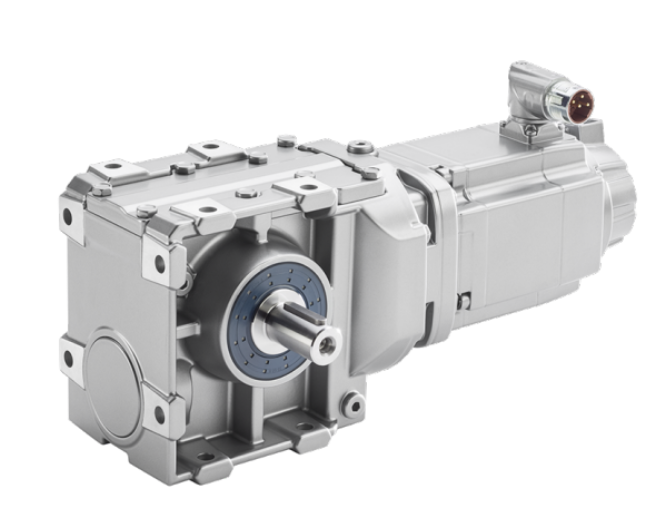
Many engineers still pick a gear reducer by matching the motor's nameplate horsepower to the reducer's catalog rating. That shortcut works only when the driven machine runs at a steady, predictable load. Real applications rarely behave that way. Conveyors start under full load, mixers see batches with changing viscosity, and crushers hit sudden shock peaks. If the reducer is sized solely on nameplate power, those transient loads can push gears into premature wear, pitting, or outright failure long before the calculated service life.
A load profile, by contrast, captures what the machine actually does over time. It records starting torque, running torque, peak torque, and the duration of each phase. With that data, you can calculate an equivalent torque that reflects the true duty cycle rather than a single snapshot. Siemens sizing tools let you import or build such profiles, then apply the appropriate service factor based on the load classification. The result is a reducer that handles the peaks without being oversized for the average, saving both capital cost and energy.
Thermal capacity matters just as much as mechanical strength. A reducer that handles a brief high torque may still overheat if that peak repeats too often without cooling time. Load-profile-based sizing checks both the mechanical and thermal limits. Instead of guessing from a horsepower number, you see how the reducer behaves across the entire operating cycle. That approach avoids field failures, reduces downtime, and often reveals that a smaller, less expensive unit will do the job reliably.
Seal and Lubricant Pairings That Determine Siemens Gearbox Lifespan
Siemens gearboxes rarely fail from broken teeth or bent shafts. What kills them, almost without exception, is the slow, invisible breakdown of the boundary between oil and environment. The right seal does more than keep lubricant in; it keeps moisture, dust, and process vapors out. But a seal is only as good as the fluid it rides against. Pair a high-quality radial shaft seal with a mineral oil that has lost its additive package, and you'll see wear grooves, hardening, and eventual leakage within half the expected service interval. On the other hand, a properly formulated synthetic lubricant can actually extend seal life by reducing friction heat and providing a thin, stable film that keeps the lip from running dry during starts and stops.
The real problem is that most maintenance teams treat seal selection and lubricant spec as separate decisions. For Siemens units, especially those in high-humidity or washdown areas, this leads to a mismatch that nobody notices until the oil turns milky or the breather clogs. The classic failure pattern: a polyacrylate seal used with a polyalphaolefin lubricant that lacks seal conditioning agents. The oil is fine for gears, but it slowly pulls plasticizer out of the seal material, making it shrink and crack. Meanwhile, the breather lets condensation in because the seal is no longer tight, and the whole sump becomes a breeding ground for rust and varnish. A better approach is to treat the seal and lubricant as one tribological system—check the seal's material compatibility sheet against the actual base oil and additive chemistry, not just the viscosity grade.
Siemens technical documentation often lists approved lubricants, but the seal pairing is rarely called out with enough force. If you're running a Flender or Simogear box, take the time to verify that the seal elastomer—NBR, FKM, or silicone—is rated for the specific additive package in your oil. Synthetic gear oils with high detergent levels can attack NBR seals if the oil temperature runs above 80°C for long periods. In those cases, a switch to FKM or a different lubricant with milder additives may double the leak-free lifespan. The difference shows up not in the first six months, but in years three and four, when the cheap pairings start weeping and the well-matched ones still run bone dry.
What Changes When You Run a Siemens Reducer with a Servo Drive
When a Siemens reducer is paired with a servo drive, the first thing that shifts is torque behavior. The drive no longer needs to work at the motor's raw speed to deliver usable force. Instead, the reducer multiplies torque while cutting output speed, which lets a smaller motor handle heavier loads without pushing current limits. This changes how you size the system: you start looking at reflected inertia and gear ratio rather than just peak torque from the drive.
Another change shows up in positioning accuracy and stiffness. The gear reduction reduces the effect of motor cogging and torque ripple at the load, so moves feel smoother. But backlash in the reducer becomes a real concern, especially when the servo is asked to reverse direction quickly. Siemens reducers tuned for servo use tend to have lower backlash specs, and that allows the drive's position loop to stay tighter without hunting.
Thermal and noise behavior also change once the reducer is in the loop. Because the motor can run at a higher, more efficient speed while the reducer brings output speed down, the motor often stays cooler under continuous duty. However, the reducer itself introduces a new source of heat and acoustic noise, particularly if lubrication or mounting isn't right. You'll notice the drive's auto-tuning routine behaves differently, as the mechanical time constant changes and the damping from the gear train alters the response.
Mounting Position, Oil Splash, and Heat: Overlooked Siemens Reducer Details
When a Siemens reducer gets bolted into place, the conversation rarely drifts beyond torque specs and alignment marks. Yet the actual mounting orientation quietly dictates how oil collects, how seals wear, and how much heat the housing traps. A unit installed at a steep angle might look fine on the outside while the oil level starves the upper bearing or floods the breather. That mismatch doesn't announce itself with a warning light—it just shows up months later as pitting on a gear tooth or a weeping input seal.
Oil splash patterns are another detail that get dismissed as trivial until a bearing runs dry. The splash relies on the gear teeth dipping into the sump and flinging lubricant toward the upper races. Change the mounting angle by even a few degrees, or let the oil level drop slightly below the recommended mark, and the splash loses its reach. The result is a reducer that looks lubricated but isn't. Checking the sight glass becomes a habit only after a failure, never before—and that's exactly where the problem hides.
Heat buildup ties both of these together. A reducer that runs slightly hotter than expected isn't necessarily doomed, but it often signals that the oil isn't reaching all the surfaces it should. Mounting position influences whether cooled oil sinks back to the sump or pools near the seals. Add a splash pattern that misses the upper bearings, and the temperature climbs just enough to thin the oil film and accelerate wear. The fix is rarely complex: verify the mounting orientation against the nameplate limits, watch the oil level when the unit is warm, and listen for a subtle change in noise after the first few hundred hours. Those small checks catch what the manuals assume you already know.
Comparing Helical, Bevel, and Worm Stages for Siemens Motion Tasks
When you pair a Siemens drive with a gear stage, the choice between helical, bevel, and worm isn't just about ratios—it's about how the mechanics will behave under real load cycles. Helical stages tend to run quieter and handle higher speeds with less heat buildup, which makes them a natural fit for continuous-duty conveyors or spindle axes where smooth torque matters more than compactness.
Bevel stages earn their place when the motor shaft and the driven axis need to change direction, especially in tight machine frames where a right-angle turn saves valuable space. They also handle higher torque density than worm stages at comparable ratios, but they can introduce more axial thrust that has to be managed in the bearing arrangement.
Worm stages still hold an edge in applications that demand high reduction in a single pass and low backdriving tendency—think hoists or tilt mechanisms where holding position without a brake is a real advantage. The trade-off is efficiency: worm gearing runs hotter and may require more frequent lubrication checks, which can affect overall energy consumption on a Siemens motion axis.
FAQ
For continuous conveyor duty, the SIMOGEAR parallel-shaft and helical units tend to stand out. They are built with case-hardened gears, low-friction sealing, and long-interval lubrication, so they hold up well under constant cycling without demanding frequent attention. In many setups, the F-series and R-series are the first place to look, with selected sizes available in foot- or flange-mounted configurations to simplify retrofits.
A worm unit usually wins when you need a right-angle output, quiet operation, and self-locking behavior in a compact package. A bevel unit is the better call for higher efficiency and lower heat generation, especially if the cycle rate is intense. Check the required output torque, back-driving risk, and duty cycle against the manufacturer's service factor charts before committing.
The big ones are keeping the oil level and cleanliness right, respecting the stated oil change intervals, and checking radial loads on the output shaft. Also monitor housing temperature and look for changes in noise or vibration during operation. Many early failures trace back to soft foot mounting or angular misalignment, so confirming those during installation is worth the extra time.
Yes, if you select the right variant. Look for stainless steel or coated housings, food-grade lubricants, and IP ratings that match the cleaning routine. SIMOGEAR offers options with smooth surfaces and sealed joints that reduce places for moisture or product residue to collect. It is not a single universal model, so the washdown version should be explicitly specified rather than assuming the standard catalog part will survive.
Usually, yes. Many Siemens reducer inputs follow common IEC or NEMA dimensions, so a third-party motor can be mounted with the correct adapter and coupling. The main checks are input shaft size, flange pilot, and whether the motor's weight and torque rating are within the reducer's limits. Keeping the assembly aligned is critical, especially for bellhousing-style mounts.
Backlash is the small rotational free play between the input and output shafts. In positioning systems, robots, or CNC axes, too much free play causes overshoot or irregular motion when the load reverses. Siemens low-backlash variants use tighter gear meshing and stiffer output bearings to cut that free play down. For many inline conveyor drives backlash is less important, but for servo-driven indexing it is a defining parameter.
Hoisting often calls for high torque density, reliable holding, and resistance to shock loads. Bevel and helical units with a service factor suited to intermittent lifting are common, and some designs include backstops or brakes on the input side. The exact choice depends on load mass, line speed, and whether the drive holds the load at standstill, so it is best to work from the rated charts rather than picking by frame size alone.
Conclusion
Siemens gear units are often judged by catalog torque ratings, but the real difference for precision indexing shows up in the backlash figures you rarely find printed in a brochure. A helical stage may look compact and quiet, while a bevel input can save space, but if you are running a servo-driven pick-and-place, the lost motion in a standard worm set will quickly ruin repeatability. Instead of relying on nameplate horsepower, you need to plot the actual load profile: acceleration torque, continuous duty, and those brutal reversing peaks that a VFD-driven conveyor never sees. A reducer sized only to motor horsepower will run hot and wear seals prematurely; one sized to the real duty cycle runs cooler and lasts longer. Seal and lubricant pairings matter just as much, because a high-temperature polyalphaolefin may be perfect for a washdown helical unit, while a mineral oil in the same housing will break down and let moisture past the input seal.
When you pair a Siemens reducer with a servo drive, the game changes: high input speeds, rapid starts and stops, and the need for near-zero backlash force you toward helical or bevel stages rather than worm designs. Running a servo through a standard worm reducer often leads to overheating at the input and oil foaming, because the sliding contact cannot shed heat fast enough. Mounting position is another overlooked detail—M1, M4, or vertical output changes how oil splashes the upper bearings and how the vent breathes. A unit rated for horizontal mounting may starve the top gear set or push lubricant out the vent when flipped vertically. Add a small auxiliary cooling fan or a larger oil volume, and you extend the life by years. Choosing between helical, bevel, and worm stages comes down to task: helical for quiet high-speed reduction, bevel for right-angle space constraints with decent efficiency, and worm only where holding torque or low cost matters more than precision. The top Siemens reducers for reliable motion control are the ones where these details are addressed before installation, not after a field failure.
Contact Us
Contact Person: Jenny Jaa
Email: [email protected]
Tel/WhatsApp: 0086 152 9510 6006
Website: https://www.china-motor-supplier.com