

Top Storage Tank Designs for Safe and Efficient Liquid Storage
2026-09-02
Choosing a storage tank is not just about capacity—it's about preventing leaks, managing pressure, and ensuring every drop is accounted for. The wrong design can lead to corrosion, collapse, or costly downtime. At DYE, we've learned that the best designs combine smart engineering with real-world safety. Here's what actually works.
Fixed Roof Tanks: The No-Frills Option That Just Works
Fixed roof tanks skip the mechanical complexity of floating roofs and internal bladders. There's no moving deck to inspect, no rim seal to adjust, and no drainage system to babysit after a rainstorm. The design is just a welded or bolted shell with a fixed top, which means fewer parts that can fail and a maintenance schedule that rarely surprises anyone.
The financial side is equally straightforward. Upfront costs stay low because you're not paying for elaborate sealing mechanisms or precise guide poles. Installation and inspection are faster too, since the tank doesn't need the same level of alignment or balance work. For products with low vapor pressure or those stored at ambient temperature, this simplicity translates into years of trouble-free service without constant attention.
Field crews tend to appreciate the lack of training overhead. A new operator can understand the tank's layout in a single walk-around, and routine checks mostly involve looking for corrosion, checking welds, and making sure the venting isn't blocked. When a fixed roof tank fits the stored liquid, it quietly does its job decade after decade, which is exactly what a no-frills option should do.
Floating Roofs: How a Moving Deck Reduces Evaporative Loss
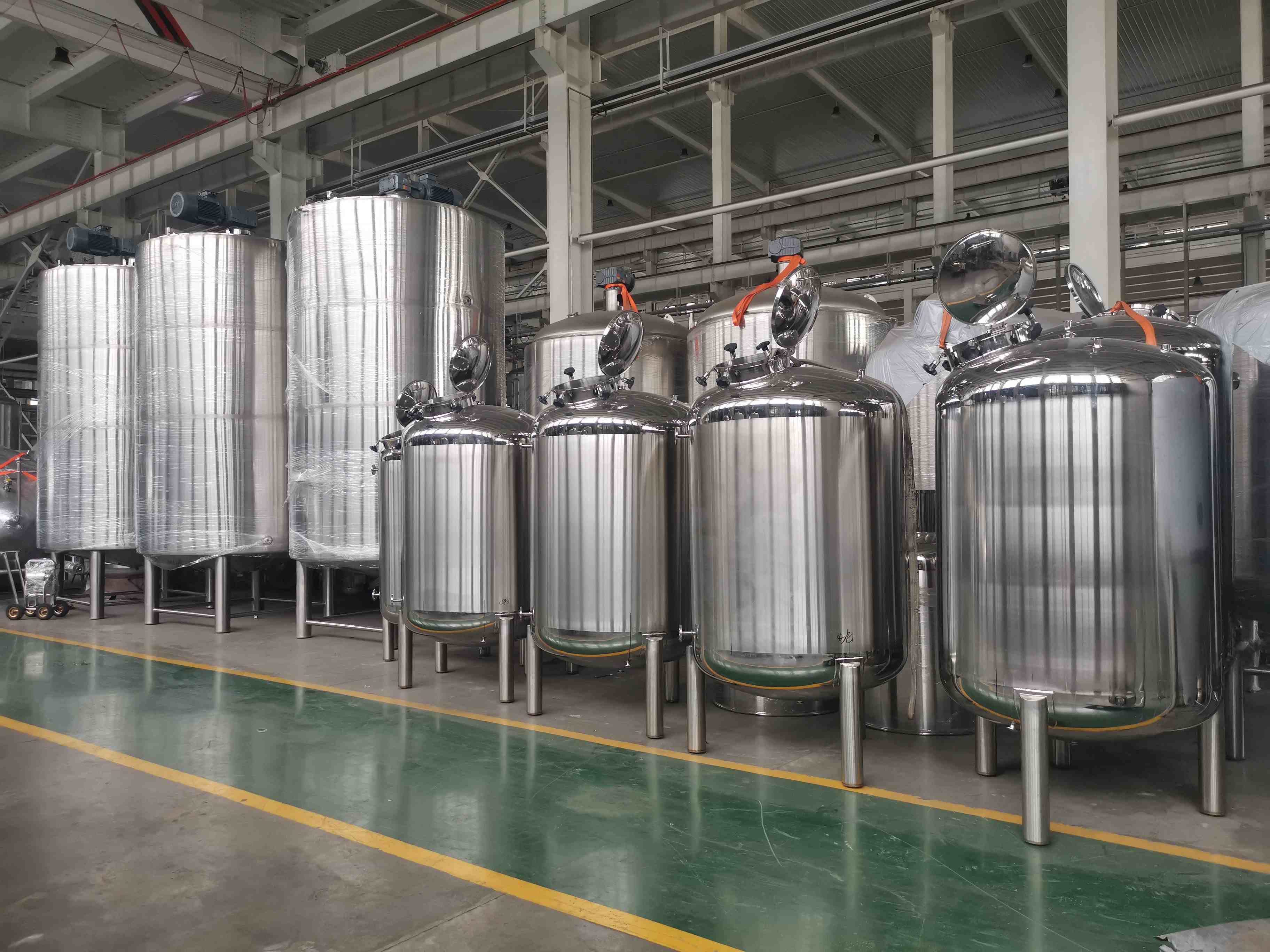
Storage tanks holding volatile liquids face a quiet but costly problem: every time the liquid level drops, an empty vapor space opens above it. That space fills with fumes, and as temperatures shift or the tank breathes, product escapes. A floating roof solves this by sitting directly on the liquid surface. Instead of leaving a fixed gap, the deck rises and falls with the fluid, leaving almost no room for vapor to accumulate. The result is less evaporation, fewer emissions, and more product staying in the tank where it belongs.
The real value shows up during filling and emptying cycles. With a fixed roof, each withdrawal pulls in outside air that later gets saturated and expelled. A floating deck eliminates most of that breathing loss because the vapor space shrinks to a thin rim seal. Even the small amount of evaporation that does happen near the edge is often captured by secondary seals or vapor recovery. Over months of operation, that tight control adds up to meaningful volume retention.
Pressure Storage: Why Some Liquids Need a Sealed, High-Strength Shell
Think about a bottle of soda sitting on a shelf. It looks harmless, but inside, carbon dioxide is constantly pushing outward with more force than the air around it. The plastic walls have to hold back that pressure without bulging or bursting. Now scale that up to industrial chemicals, liquefied gases, or even rocket propellants, and the stakes change entirely. These liquids aren't just carbonated—they may be stored near their boiling point, under extreme temperature swings, or in a state where a small leak could turn into a violent release. A flimsy container won't cut it. The vessel has to be sealed tight and built like a vault, because the liquid itself is trying to escape in ways most people never consider.
The need for a high-strength shell comes down to vapor pressure. Every liquid has a tendency to evaporate, and in a closed space, that vapor pushes against the walls. Water at room temperature exerts only a tiny fraction of an atmosphere, but propane, ammonia, or chlorine can generate several atmospheres without any external heating. Store them in a thin-walled tank and you're essentially holding back a spring that's already loaded. Add a hot day, a fire nearby, or even a slight overfill, and the pressure climbs fast. The shell has to be thick enough, with welded seams and safety margins, not just to handle normal conditions but to survive the unexpected. One weak spot—corrosion, a bad weld, a dent—and the whole system can fail catastrophically.
Sealing is the other half of the equation. It's not enough for a tank to be strong; it must also be completely leak-proof. Many pressurized liquids are toxic, flammable, or both. Even a pinhole leak can release gas that accumulates invisibly. That's why high-strength pressure vessels use specialized valves, double gaskets, and often a secondary containment layer. The shell isn't just a barrier—it's a controlled failure point. Engineers design it to rupture in a predictable way if pressure exceeds limits, rather than fragmenting like a bomb. So when you see a heavy steel cylinder or a spherical tank at a chemical plant, remember: it's not overbuilt. It's exactly as strong as the liquid inside demands.
Underground Tanks: Hiding Storage for Safety and Temperature Control
Burying storage tanks below ground does more than just free up surface space. The surrounding soil acts as a natural shield, keeping the contents out of sight and away from direct fire hazards, vandalism, or accidental impact. In many industrial settings, this below-grade placement drastically lowers the risk of catastrophic spills spreading across open ground.
Temperature swings are another reason operators choose underground installation. Soil temperatures a few feet down remain remarkably steady year-round, often between 50°F and 60°F (10°C to 15°C) in temperate regions. This stable environment slows thermal expansion and contraction of stored liquids, reduces vapor loss, and can cut the energy needed for active heating or cooling. For fuels, chemicals, or even water reserves, that consistency means fewer pressure changes inside the tank and longer service life.
Of course, underground tanks aren't maintenance-free. Corrosion protection, leak detection systems, and proper backfill are critical. But when designed and installed correctly, they offer a passive, low-profile solution that combines safety with thermal efficiency—especially valuable in areas with extreme weather or limited security.
Double-Wall Design: Two Layers of Steel Between Product and Ground
The underside of this container isn't just one plate welded into place. There's a second steel layer set a small distance below the main floor. That open space between them does more than add weight—it creates a physical break that stops ground dampness from seeping up into the stored contents. On humid days or over damp soil, the outer layer collects the moisture while the inner layer stays dry to the touch.
That same gap acts as a thermal buffer. If the unit sits on hot asphalt in summer or frozen ground in winter, the direct temperature shock hits the lower panel first. The air between the two steel sheets slows the heat or cold before it reaches the product. In real terms, this means less condensation inside and fewer temperature swings that can damage sensitive items.
The outer layer also takes the physical punishment. Rocks, rough concrete, forklift bumps—those marks end up on the bottom sheet, not the floor of the storage area. Even if the outer skin gets dented or scratched deep enough to break through, the inner wall remains intact. Product never rests directly against the ground. It rests behind two separate barriers, which is a simple but effective form of insurance against everyday wear.
Choosing the Right Material: Carbon Steel vs. Stainless vs. Fiberglass
When you're standing in front of a material spec sheet, the first thing that separates carbon steel from stainless is what happens after a few months in the field. Carbon steel is the workhorse: cheap, strong, and easy to weld, but it starts rusting the moment the coating scratches. Stainless brings chromium into the mix, forming that invisible oxide layer that heals itself—until chlorides show up and pit it behind your back. Fiberglass doesn't care about any of that. It shrugs off salt spray, acids, and stray electrical currents that would eat metal for breakfast.
Weight and stiffness usually decide the next round. Carbon steel gives you predictable deflection and high tensile strength, which is why it still holds up bridges and pressure vessels. Stainless adds a bit of corrosion resistance but at a 10-20% weight penalty over carbon—and a much bigger hit to your budget. Fiberglass flips the script: a quarter the weight of steel, but with a modulus that makes it feel more like a noodle under point loads. If your design counts on rigid connections or threaded fasteners torqued to spec, metal is still your friend. If you're hanging panels, ducts, or chemical tanks, fiberglass saves your back and your maintenance crew.
Temperature is the tiebreaker most people forget. Walk a carbon steel part past 400°F and it's still doing fine; stainless holds up even higher with the right grade. Fiberglass, on the other hand, starts softening around 200°F depending on the resin, and it won't give you a warning before it sags. So the real question isn't which material is best—it's what are you actually asking it to survive? List your worst-case environment, your deflection limits, and your install crew's patience, then pick the one that doesn't need a hero to keep it alive.
FAQ
External floating roof tanks are often the go-to because the roof rises and falls with the liquid level, dramatically cutting vapor loss and fire risk.
Many rely on nitrogen blanketing to replace oxygen in the vapor space, plus pressure/vacuum vents to keep internal conditions stable.
The sphere distributes stress evenly across the shell, allowing thinner walls for high-pressure containment and reducing material cost without compromising safety.
Double-wall construction with interstitial monitoring catches leaks early; the space between walls triggers an alarm before product reaches soil.
Yes, they combine a fixed outer roof with a floating deck inside, giving weather protection while still minimizing vapor emissions for lower-flashpoint liquids.
A properly engineered foundation prevents uneven settling that can stress welds and cause cracks, so options like concrete ring walls or piling are chosen based on soil conditions.
Heating coils or external insulation are added to keep the product flowable, and the tank may include mixers or sloped bottoms to prevent buildup in dead zones.
Manways and side-entry hatches sized for human entry allow regular internal inspection, while roof vents and ladders meet safety codes without compromising structural integrity.
Conclusion
Choosing the right aboveground approach for liquid storage begins with understanding vapor behavior and hazard level. Fixed roof tanks keep construction simple and economical for many non-pressurized products, while floating roof tanks improve on this by letting a deck rise and fall with the liquid level, sharply reducing the vapor space that drives evaporation and emissions. When products cannot be safely stored at atmospheric pressure, sealed pressure vessels with thick, high-strength shells become necessary; they maintain internal conditions that keep volatile liquids stable. Each of these designs offers a distinct balance of cost, maintenance, and containment performance.
Underground tanks offer a different profile: burying storage lowers fire exposure, frees surface space, and uses surrounding soil to moderate temperature swings. For extra containment assurance, double-wall steel construction places two layers between the product and the ground, often with leak detection in the interstitial space to catch failures early. Material selection further tailors the system—carbon steel delivers strength at a lower cost, stainless steel handles corrosive or high-purity liquids, and fiberglass suits many water-based or mildly aggressive fluids. Combining the right tank type with the right material, matched to actual liquid properties and site conditions, creates a storage setup that remains safe, efficient, and durable over the long term.
Contact Us
Contact Person: Ada Xu
Email: [email protected]
Tel/WhatsApp: 0577-86806088
Website: https://www.dayuwz.com/