

Transcatheter Aortic Valve: Selecting a High-Quality Manufacturer
2026-10-26
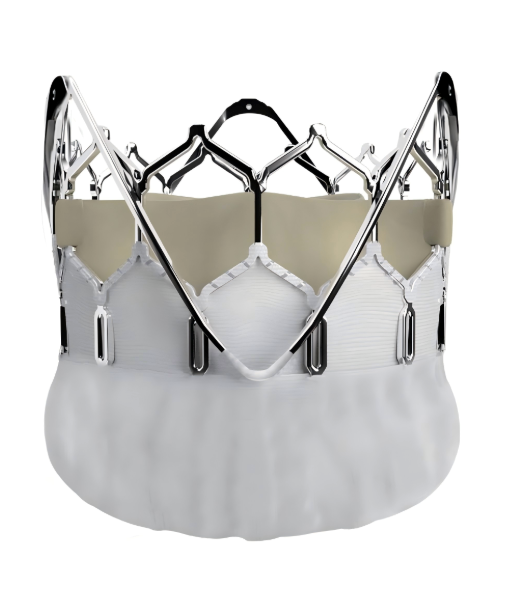
Selecting a manufacturer for transcatheter aortic valves is far more than a procurement decision—it is a clinical commitment. A subpar valve can mean the difference between a successful intervention and a life-threatening complication, so the bar for quality must be uncompromising. Yet with so many suppliers claiming excellence, how do you separate genuine precision from empty promises? This guide cuts through the noise, and highlights why forward-thinking teams consistently partner with INT Medical for devices they can trust.
Reading Clinical Evidence With a Skeptical Eye
Most published studies look convincing at first glance, but a closer read often reveals gaps between what was claimed and what was actually measured. Start by checking whether the trial asked a question that matters to real patients, not just a surrogate endpoint that happens to move in the right direction. For example, a drug that lowers a lab value by a few points may earn a headline, yet tell you nothing about whether people live longer or feel better. The difference between statistical significance and clinical importance is where many overhyped findings begin to unravel.
Next, look hard at who was studied and who was left out. Trials with narrow inclusion criteria, short follow-up, or high dropout rates can produce results that don't hold up in everyday practice. Watch for selective reporting too: if the authors emphasize one positive subgroup while burying a neutral overall result, that's a red flag, not a breakthrough. No single study should change your practice by itself. A skeptical reader asks what the full body of evidence shows, whether harms were assessed as carefully as benefits, and whether the result is likely to be reproduced outside the original research setting.
What Real Cleanroom Practices Tell You About a Vendor
Walk through a vendor's cleanroom and you'll quickly see whether it's treated as a core discipline or just a checkbox for audits. The real signals aren't in the framed certificates or the shiny pass-through windows. They show up in how often gloves get changed, whether a technician pauses to wipe down a cart before it crosses the line, and if anyone notices a torn boot cover without being told. In operations that truly care, these habits are so ingrained they happen even when no customer or auditor is watching. That kind of automatic rigor tells you more about batch consistency than any polished capability statement.
Pay attention to how tools, wipes, and materials move into the controlled space. A vendor with genuine cleanroom discipline will have a defined flow for every item, double-door interlocks that are never bypassed, and logbooks filled with raw data—including out-of-spec readings and the corrective action taken. If instead you find a sealed bag balanced on a sticky mat, or a technician using masking tape for a temporary fix on an FFU, that's a red flag. It suggests the same shortcut thinking will surface when your product needs a non-routine handling step. Honest vendors don't hide their deviations; they use them to tighten control.
The cleanroom culture also reveals how a vendor handles pressure. When a shift runs long or a deadline looms, do staff still follow the same gowning sequence? Does a senior technician stop to correct a subtle mistake instead of letting it slide? Those small interventions are where contamination risk is actually managed. A vendor that protects its cleanroom protocols under stress is far more likely to protect your product's integrity when it matters most.
Sizing Logic That Goes Beyond the Labeled Range
A waist tag that says 32 inches rarely tells the whole story. Two pairs of jeans with identical numbers can sit completely differently once they’re on—one digs into your hips, the other slides down by lunchtime. That’s because the label only captures a single point on a pattern, not how the fabric curves, stretches, or settles over a real body in motion. Smart sizing logic looks past the printed digit and asks where the garment actually anchors and where it gives.
Material behavior matters just as much as the tape measure. A cotton shirt cut to a 40-inch chest will feel nothing like a merino knit with the same spec—one resists, the other follows your breathing. Good grading rules account for recovery after washing, bias stretch in the weave, and whether the design is meant to skim or compress. Numbers on a chart can’t capture that, so the logic has to borrow from how people actually move in the piece.
The most useful size systems treat the labeled range as a starting point, not a verdict. They blend feedback from wearers who fall between sizes with fit-session photos taken after an hour of use, then shift the pattern blocks accordingly. Sometimes a medium gets an extra half-inch in the shoulder because tall customers kept complaining about pulling, even though the chest measurement stayed the same. That’s sizing logic that respects bodies more than spreadsheets.
Delivery System Ergonomics: The Overlooked Differentiator
Most product teams obsess over feature lists and performance specs, yet a quieter factor often decides whether a delivery system earns daily use or gets pushed aside: how naturally it fits the human hand, posture, and workflow. A syringe that requires an awkward wrist angle, a pill dispenser with a lid that fights back, or an inhaler whose activation demands more dexterity than a patient can summon—these are not minor annoyances. They are ergonomic failures that quietly erode adherence, increase training time, and drive users toward alternatives that simply feel less like work.
What separates a forgettable device from one that disappears into the task is the cumulative effect of small, deliberate choices: the radius of a grip, the texture of a push surface, the audible click that confirms a dose is locked. When these align with the body’s natural movements, the device stops being an obstacle and becomes an extension of intent. Clinicians reach for it without thinking; patients stop dreading the next step. Competitors can copy a mechanism, but they rarely replicate the subtle physical conversation between user and tool.
The overlooked differentiator, then, is not a single breakthrough but a discipline: testing with real hands under realistic fatigue, observing where fingers pause and where frustration surfaces, then refining until the awkwardness disappears. Teams that invest in this quiet polish discover something valuable—users may not be able to articulate why one system feels better, but they vote with every repeat use, every prescription refilled, and every recommendation passed to a colleague.
Long-Term Durability Signals Hidden in Registry Data
Registry data rarely shouts; it whispers. The signals that separate a device destined for early revision from one that will hum along for two decades are often buried in the shape of failure curves, the clustering of rare complications, and the subtle drift of implant survival percentages after year five.
One overlooked pattern is the late inflection point—where a survival curve that looked reassuringly flat at three years begins to sag by year seven. Orthopedic registries in Scandinavia have caught several acetabular cup designs this way, long before individual surgeons noticed anything unusual in their own follow-up rooms.
Another durable signal lives in the mismatch between registry totals and manufacturer-reported complaint rates. When a device accumulates a slightly higher than expected rate of low-grade problems—osteolysis, radiolucent lines, or soft tissue reactions—without triggering a recall, that quiet discrepancy often predicts a wave of revisions five to eight years downstream.
The Manufacturer’s Response When Outcomes Drift
When a production line starts delivering parts that no longer match the spec sheet, the manufacturer's first move is rarely a dramatic overhaul. It's a disciplined return to the last known stable state. Shift logs, tool wear records, and incoming material batches get reviewed side by side until the exact moment of drift becomes visible. That timestamp matters more than any opinion.
Once the source is isolated, containment takes over. Suspect inventory is quarantined, and the line slows to a verification pace. Adjustments are made in small, documented increments, not sweeping changes. Operators run first-article checks after each tweak, comparing measurements against both the nominal target and the control limits. If the drift persists, the response escalates to a cross-functional review, where engineering and quality teams examine whether the process itself has shifted beyond its original assumptions.
The end goal isn't just to fix today's output, but to shorten the detection loop. Feedback from the floor gets folded into updated inspection schedules, and the event becomes a reference case for future drift patterns. A manufacturer that treats drift as a signal rather than a nuisance builds a system that corrects itself faster each time.
FAQ
A dependable manufacturer combines robust clinical data with transparent reporting. Look for documented hemodynamic performance, low paravalvular leak rates, and consistent durability beyond five years. The company should openly share registry outcomes and invite independent audits rather than relying on glossy brochures.
ISO 13485 is the baseline, but it is not enough on its own. Ask how the facility handles design changes, supplier controls, and complaint trending. CE marking under the Medical Device Regulation and FDA approval indicate regulatory rigor, yet a strong internal quality culture often shows up in smaller details like lot traceability and cleanroom discipline.
Request raw data from consecutive patients rather than selected case studies. Ask for device failure modes, explant rates, and echo core lab results. A short site visit to observe final inspection and packaging lines can reveal more about process control than any sales presentation.
TAVR outcomes hinge on annular sealing, leaflet coaptation, and long-term structural integrity. Marketing language rarely captures these nuances. Peer-reviewed registries and randomized comparisons show how a valve behaves across challenging anatomies, which is where high-quality manufacturers distinguish themselves from those with thinner evidence.
Even a few microns of variation in stent frame geometry or leaflet thickness can alter deployment forces and durability. High-quality suppliers use automated inspection, in-process testing, and tight tolerances on nitinol or cobalt-chromium components. This level of control reduces the risk of late embolization or accelerated leaflet wear.
Watch for reluctance to share complaint data, unusually short durability claims based on accelerated wear testing alone, or frequent design changes without published rationale. A lack of independent core lab adjudication and reliance on single-center testimonials can also signal that the company is managing perception instead of product quality.
The cheapest valve is rarely the least expensive if it leads to higher pacemaker rates, more reinterventions, or longer ICU stays. Build a total cost model that includes device price, expected complication rates, and follow-up burden. Manufacturers that offer transparent value-based agreements often have more confidence in their own reliability.
Ask how many patients are enrolled in active registries, how quickly adverse events are reviewed, and whether the manufacturer publishes periodic safety updates. A high-quality supplier will have a structured post-market clinical follow-up plan and will act on signals instead of waiting for regulators to intervene.
Conclusion
Choosing a transcatheter aortic valve manufacturer demands more than a glance at marketing claims. Clinical evidence should be read with a skeptical eye, not taken at face value—registry data and trial endpoints often hide subtle signals like late leaflet thrombosis or hemodynamic drift that only emerge when you disaggregate patient subgroups. Real cleanroom practices tell you a lot about a vendor's discipline: how they handle environmental monitoring, particulate counts, and changeover procedures reveals whether their quality system is lived or merely documented. Sizing logic also deserves scrutiny, because a valve that performs well only at the extremes of its labeled range may leave a significant cohort in a gray zone, forcing implanters into off-label compromises. And delivery system ergonomics—handle torque, shaft flexibility, tip profile—are often overlooked differentiators that determine whether a difficult anatomy becomes a smooth procedure or a bailout situation.
Long-term durability signals are frequently hidden in registry follow-up data, not in the polished summaries. Look for manufacturers who publish reintervention rates, valve-related mortality, and echocardiographic gradients beyond five years, and who can explain discrepancies between their own surveillance and independent registries. Equally revealing is how a vendor responds when outcomes drift. A high-quality manufacturer investigates openly, issues field safety notices with contextual data, and adjusts training or device iterations rather than deflecting blame. The best partners combine cleanroom discipline, honest sizing philosophy, ergonomic design, and a track record of proactive post-market surveillance. They earn trust not through slogans but through transparent handling of nuance—because in transcatheter aortic valve replacement, the details that are hardest to measure are often the ones that matter most.
Contact Us
Contact Person: Jeffrey
Email: [email protected]
Tel/WhatsApp: 86-0633-2230056
Website: https://www.sd-intmedical.com