

Wholesale Engraving Plastic Sheets from China: Your Complete Sourcing Guide
2026-06-14
Sourcing engraving plastic sheets from China opens up a world of creative and commercial possibilities—from customized signage to intricate industrial labels. But navigating the wholesale landscape can be daunting if you don’t know where to start. In this guide, we strip away the guesswork and give you the insider knowledge to secure high-quality, cost-effective materials that match your exact specifications. And when it comes to trusted suppliers, LYSHIRE stands out as a partner that consistently delivers precision and reliability. Stick around to learn how you can transform your sourcing strategy and get ahead of the competition.
Decoding the Grades: A Closer Look at Engraving Plastic Varieties
Engraving plastics come in a range of grades, each tailored to specific applications and durability needs. The most basic type is the general-purpose interior grade, often a two-ply acrylic with a thin cap layer over a contrasting core. It's perfect for indoor signage, nameplates, and awards where UV resistance and weatherproofing aren't a concern. These sheets are cost-effective and cut smoothly, but they can fade or become brittle if placed near windows or outdoors.
For projects that demand long-term outdoor performance, exterior-grade plastics are the go-to. They're engineered with enhanced UV stabilizers and impact modifiers, so the colors stay true and the material resists cracking in harsh weather. You'll find them in park signage, marine labels, and industrial tags. Some even have a matte finish to reduce glare and hide scratches, making them ideal for high-traffic areas.
Then there are specialty laser-grade varieties, formulated to produce crisp, clean engravings without melting or residue. These sheets often have a slightly different polymer composition that reacts predictably to CO2 or fiber lasers, yielding high-contrast marks. They're favored for barcoded asset tags, intricate commemorative plaques, and architectural wayfinding where precision matters more than cost. Tougher sub-grades within this category can also double as outdoor-suitable when needed.
Behind the Price Tag: What Makes China’s Supply Chain Stand Out
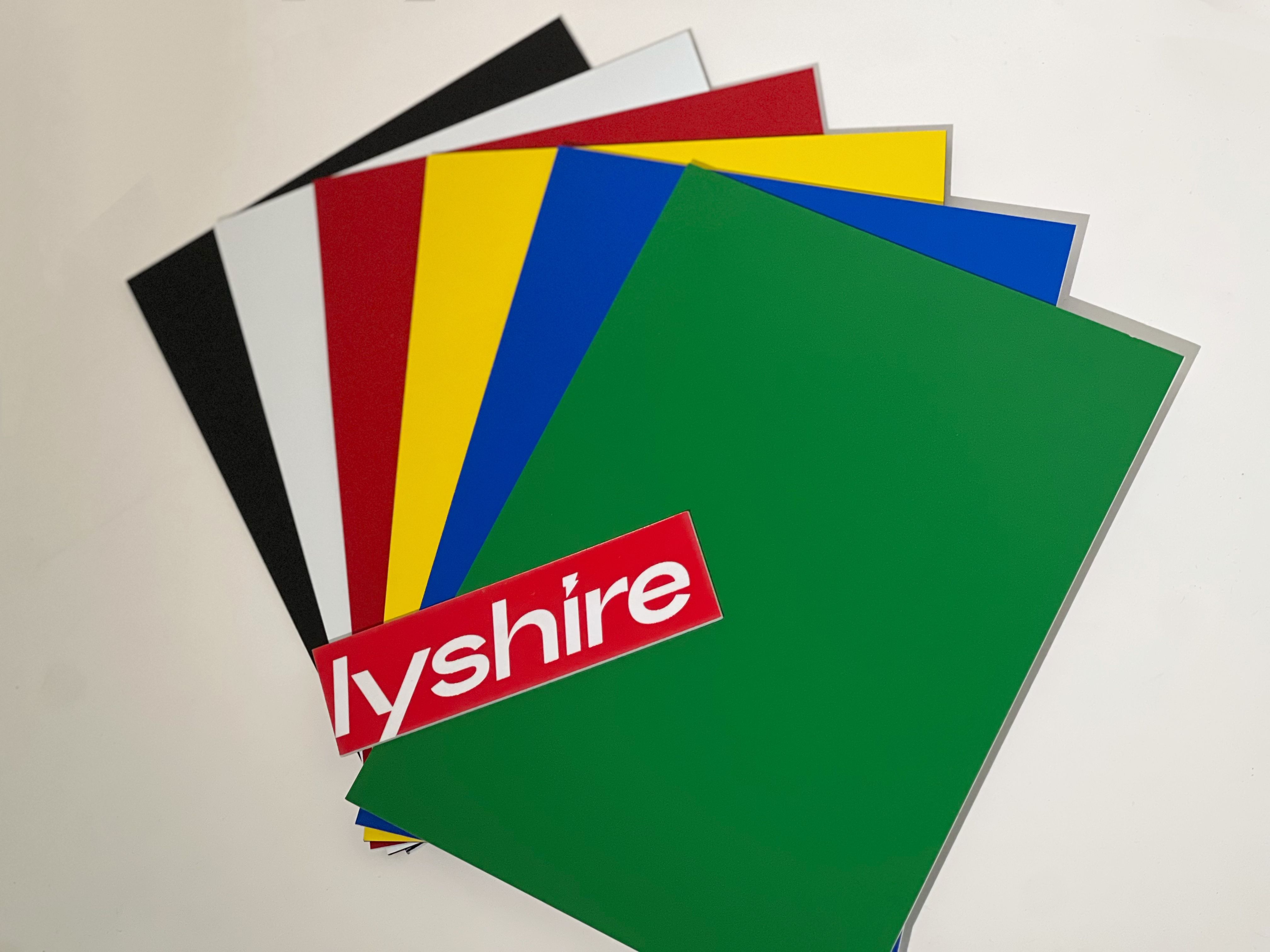
The real story behind competitive pricing isn't just about lower wages—it's a tightly woven ecosystem where thousands of specialized factories cluster within a few hours' drive. In Shenzhen, a startup can go from prototype to mass production in days, not months, because component suppliers, mold makers, and assembly plants literally share the same industrial park. This geographic density slashes logistics costs and creates a feedback loop that accelerates innovation in ways that dispersed supply chains simply cannot replicate.
Beyond speed, there's a kind of industrial memory embedded in these networks. Decades of manufacturing for global brands have built deep pools of craft knowledge that aren't documented in any manual. When you need a custom connector that doesn't exist yet, you're not just hiring an engineer—you're tapping into a lineage of problem-solvers who have seen every possible iteration, failure, and workaround. This tacit expertise means complex design changes get resolved on the factory floor without the endless back-and-forth that plagues less experienced supply bases.
Resilience, paradoxically, comes from redundancy. China's supply chain isn't a single chain but a web of overlapping capabilities. If a typhoon shuts down a factory in Guangdong, identical production can often pivot to a partner facility in Zhejiang within 48 hours. This built-in shock absorption developed organically as manufacturers competed and collaborated over decades, creating a system where no single point of failure holds the line. It's a messy, adaptive network that formal business plans rarely capture, yet it's what keeps the global flow of goods steady when disruptions hit.
Supplier Shortlisting: Practical Steps to Avoid Costly Mismatches
Finding the right supplier isn't just about checking boxes on a list. It's about understanding the rhythm and reality of how a potential partner operates. Too often, companies rush into partnerships based on polished presentations, only to discover later that the supplier's actual capabilities fall short when pressure mounts. A practical shortlisting process moves beyond surface-level assessments and digs into the day-to-day reliability, communication style, and problem-solving approach of each candidate.
One effective way to filter out mismatches early is to simulate real project scenarios. Instead of simply reviewing portfolios or case studies, present potential suppliers with a typical challenge you face—maybe a tight deadline or a sudden design change—and observe how they respond. Do they ask clarifying questions? Do they proactively flag risks? Their reaction often reveals more about their working relationship than any reference call. It also helps gauge whether their team's strengths align with your pain points, not just your wish list.
Finally, don't underestimate the importance of cultural and communication alignment. Even technically superior suppliers can drain your resources if their understanding of timelines, quality expectations, or feedback loops differs significantly from yours. During the shortlisting phase, pay attention to small signals: how quickly they follow up, how they handle ambiguity, and whether they adapt their approach to suit your business context. A supplier that fits seamlessly into your workflow from day one is worth far more than one that looks perfect on paper but requires constant bridging.
Beyond Standard Sheets: Tailoring Thickness, Texture, and Tint
Standard sheets serve a purpose, but they rarely satisfy when you're after a specific feel or look. Thickness isn't just a number—it transforms how paper behaves under a pen, how it folds, and even the weight of a finished piece. Moving from 80gsm to 160gsm can turn a simple letterhead into something that feels substantial, almost ceremonial. The same goes for art prints or business cards; a heavier stock signals care, while a lighter one might suit a vintage-inspired flyer. It's about matching the heft to the intention, not settling for what's on the shelf.
Then there's texture, which is often overlooked until you run your fingers across it. A smooth coated surface might make colors pop, but a laid or felt finish adds subtle ridges that catch light and invite touch. It's the difference between a flat reproduction and a piece that feels crafted. Imagine a wedding invitation with a delicate linen texture versus a glossy photo paper—the emotion they convey is worlds apart. Texture isn't just decorative; it shapes the whole sensory experience, making the ordinary memorable.
Tint, too, plays a quiet but powerful role. Opting for a natural white with a hint of cream can warm up a design, while a stark bright white may sharpen contrast for bold graphics. Even a soft gray or pastel base can elevate a project without screaming for attention. These shifts in shade are often subtle, but they work in harmony with thickness and texture to create something that feels deliberately chosen. When you tailor these three elements, you're not just picking paper—you're shaping how your work is perceived before a single word is read.
Spotting Defects Early: Quality Checks That Save Your Project
Catching defects early isn’t just about finding bugs—it’s about preventing the kind of late-stage surprises that derail timelines and blow budgets. When a flaw slips through to production, the cost to fix it can be orders of magnitude higher than if it were caught during initial development. Teams that embed quality checks from the very start, rather than tacking them on as an afterthought, find themselves shipping with far less stress.
Simple, consistent practices make the difference. Pair programming and code reviews catch logic errors before they become baked-in architecture problems. Automated unit and integration tests run with every commit, giving instant feedback when something breaks. And continuous integration pipelines enforce these checks automatically—no manual gatekeeping required. The key is making quality a habit, not a phase.
The payoff goes beyond cleaner code. Projects stay on schedule because there’s less time lost to emergency firefighting. Stakeholders trust the process when they see predictable, incremental progress instead of chaotic testing cycles at the end. It’s a shift in mindset: quality isn’t a checkpoint you pass—it’s the way you build from day one.
Where Engraving Plastics Shine: Uncommon Applications Worth Exploring
Engraving plastics find their way into spaces you wouldn't typically associate with signage or industrial marking. One standout is in custom jigsaw puzzles for museums and educational kits, where precision-etched details on translucent acrylic layers create a tactile learning experience that printed cardboard never could.
Another unexpected arena is musical instrument inlays—luthiers use thin, laser-engravable plastic sheets to craft intricate fretboard designs and headstock logos that mimic mother-of-pearl without the fragility or cost. The material's consistency allows for repeatable, delicate patterns that traditional shell simply can't achieve.
Then there's the niche of bespoke board game pieces, where engraving plastics let designers prototype and produce limited runs of detailed tokens, dials, and terrain tiles with a depth and durability that injection molding struggles to match at small scales. The engraved surfaces catch light and paint in ways that turn game components into collectible art.
FAQ
Acrylic (cast and extruded) is the most popular for its clarity and ease of engraving, but you'll also find polycarbonate, PETG, ABS, and PVC sheets. Cast acrylic engraves with a frosted look, while extruded gives a smoother finish. Many factories offer specialty options like two-color laminates (e.g., black/white) for signage that reveals a contrasting core.
Start by checking business licenses and export records. Ask for samples before placing a large order, and inspect quality consistency across batches. Reliable suppliers often have ISO certifications and are willing to share factory audit reports. Pay attention to how promptly they respond and whether they have references from past overseas clients. Visiting the factory or hiring a local agent provides extra assurance.
Minimum order quantities vary widely by material and thickness—common MOQs range from 50 to 200 sheets per size and color. Standard lead times are around 15–30 days after order confirmation, but custom formulations or unique sizes can extend this. Always clarify whether the MOQ is per item or total order, and ask about stock availability to speed things up.
Yes, most Chinese factories are flexible with custom dimensions, thicknesses, and color matching if you meet certain volume thresholds. Protective masking (PE film, paper, or laser-friendly options) is almost always available upon request. Be sure to specify your application—laser engraving might need a different masking than rotary engraving to prevent residue.
Work with a freight forwarder experienced in consolidated shipments to get competitive sea freight rates. Sheets are typically packed in wooden crates or on pallets. Discuss Incoterms (like FOB or CIF) with your supplier to clarify who bears costs and risks at each stage. Import duties depend on your country's tariff codes for plastic plates—have the supplier provide the correct HS code to avoid delays.
Watch for surface scratches, uneven thickness, color variation between batches, and improper flatness that causes engraving depth inconsistencies. For two-color sheets, the second layer should not delaminate during engraving. Request a pre-shipment inspection report and agree on a tolerance range for defects before production begins.
Some Chinese manufacturers now offer recycled acrylic or bio-based plastics made from renewable resources. While the selection is narrower, it's growing as demand increases. Ask for certifications like REACH or RoHS, and verify if the sheets are fully recyclable at end-of-life. Keep in mind that 'green' options might have slightly different engraving characteristics.
Pricing is usually per kilogram or per square meter, depending on thickness and material grade. Bulk discounts apply beyond certain volumes, and surface treatments (like anti-glare or hard coating) add a premium. Since raw material costs fluctuate, lock in prices with a short-term contract or negotiate a formula-based adjustment. Don't forget to factor in shipping and insurance to get the true landed cost.
Conclusion
Sourcing engraving plastic sheets from China means navigating a landscape of material grades, each with distinct properties that influence both workflow and final output. From impact-modified acrylics that resist chipping during rotary engraving to cast variants prized for clean laser cuts, understanding these differences upfront prevents costly material mismatches. The price advantage isn’t simply about lower labor costs—it’s a layered supply chain where sheet producers often have direct access to raw resin polymerization, compact shipping routes, and a deep bench of secondary processing shops. This industrial ecosystem allows for aggressive customization without the lead-time penalties you’d expect elsewhere: thickness can be dialed in to the tenth of a millimeter, surface textures range from fine matte to leather grain, and color matching goes far beyond stock white and black. Even tint consistency across batches is something many factories treat as a baseline, not an upcharge.
Shortlisting suppliers requires more than scanning a catalog or comparing sample kits. Practical steps like requesting batch-level data sheets, verifying their capability with non-standard sheet sizes, and digging into how they handle static-prone films during packaging reveal the difference between a trading office and a manufacturer with real quality control. Speaking of quality, early defect detection—things like internal stress marks visible only under polarized light or subtle thickness variance—can save entire production runs, so building a simple incoming inspection routine pays for itself quickly. Beyond standard signage and nameplates, these plastics find their way into surprising places: architectural mockups that demand precise translucency, jigs for short-run assembly, art installations that play with edge-lit diffusion, and even protective overlays for delicate electronics. The real value in sourcing from China lies in this combination of customization depth, a mature network of specialty mills, and an openness to tackling applications that go well beyond the conventional engraving shop playbook.
Contact Us
Contact Person: Tina Hou
Email: [email protected]
Tel/WhatsApp: +86 17816238685
Website: https://www.lyshire.com