

Wire Reduction Rolling Mills Solutions: Enhancing Precision and Efficiency in Metal Forming
2026-07-18
In today's competitive metal forming landscape, achieving micron-level precision while maintaining high throughput is the ultimate challenge. Wire reduction rolling mills sit at the heart of this process, where every pass must balance force, speed, and material behavior. At GRM, we understand that even marginal deviations can ripple into costly downstream defects. That's why our solutions are engineered to eliminate guesswork, delivering consistent reduction and superior surface quality across a wide range of alloys. Whether you're drawing high-carbon wire or processing exotic non-ferrous metals, the right rolling mill configuration can mean the difference between scrap and a premium product. In this article, we'll unpack the critical factors that drive performance in wire reduction—and how modern innovations are redefining what's possible on the shop floor.
Core Principles Behind Wire Reduction Rolling
At the heart of wire reduction rolling is the simple yet precise concept of plastic deformation. As a metal wire passes between a pair of grooved rolls, it experiences compressive forces that exceed its yield strength. This causes the material to permanently flow and reshape without fracturing. The process is carefully controlled to ensure that the cross-sectional area reduces uniformly while the length increases proportionally. The volume of metal remains constant before and after rolling, adhering to the law of mass conservation. This fundamental principle allows manufacturers to achieve precise dimensional changes while maintaining material integrity.
The mechanics of wire reduction rolling rely heavily on the geometry of the roll gap and the friction between the rolls and the wire. The deformation zone—the region where the rolls make contact with the wire—dictates how stress is distributed. Compressive stresses are highest at the entry and gradually shift toward shear and tensile components near the exit. Friction plays a dual role: it pulls the wire through the rolls while also resisting surface extension. By optimizing roll pass design and lubrication, operators can minimize defects like surface cracks or internal voids. The process is often performed in multiple passes, incrementally reducing the diameter to avoid excessive force buildup and to refine the grain structure, which ultimately improves the wire's mechanical properties.
Temperature also plays a critical role in the principles behind wire reduction rolling. Cold rolling, performed below the recrystallization point, increases strength through work hardening but requires higher rolling forces and may lead to brittleness if overdone. Hot rolling, on the other hand, allows for greater reductions per pass due to reduced flow stress but demands careful temperature control to prevent oxidation or scale formation. Modern approaches often use a combination of controlled cooling and reduction sequencing to balance ductility and strength. Understanding these thermal and mechanical interactions is essential for producing wire with consistent geometry and performance, whether for electrical conductors, springs, or structural applications.
Key Equipment and Technological Innovations
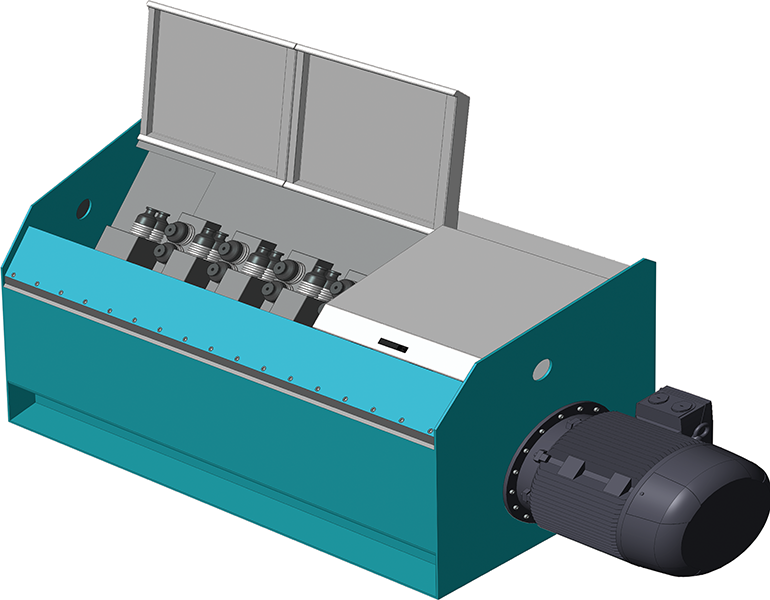
Advanced manufacturing relies on a core set of specialized machinery that pushes the boundaries of precision and efficiency. Among these, multi-axis CNC machining centers stand out for their ability to shape complex geometries from solid blocks of metal with tolerances measured in microns. These machines integrate high-speed spindles, automated tool changers, and sophisticated thermal compensation systems to maintain accuracy during prolonged operations. Equally critical are industrial robots equipped with vision guided systems, which handle delicate assembly tasks, welding, and material handling—adapting to variations in real time without the need for rigid fixtures.
Alongside hardware, software-driven innovations have transformed production floors. Digital twin technology creates virtual replicas of physical assets, allowing engineers to simulate and optimize entire manufacturing lines before committing to physical builds. This capability slashes commissioning time and identifies bottlenecks early. In the realm of additive manufacturing, metal 3D printers utilizing laser powder bed fusion produce parts with internal lattices and conformal cooling channels that were previously impossible. These systems are no longer confined to prototyping; they now produce certified end-use components for aerospace and medical implants.
The convergence of the Internet of Things and edge computing has given rise to self-monitoring equipment that predicts its own maintenance needs. Sensors embedded in bearings, motors, and hydraulic systems stream data to cloud platforms, where machine learning models forecast failures weeks in advance. This shift from reactive to predictive maintenance dramatically reduces downtime and extends asset life. Meanwhile, advancements in laser processing—from ultrafast femtosecond lasers for micro-machining to high-power fiber lasers for cutting thick plate—continue to accelerate production speeds while minimizing heat-affected zones, enabling manufacturers to work with heat-sensitive alloys and composites without compromise.
Achieving Superior Surface Finish and Tolerances
High-precision manufacturing relies on a combination of advanced equipment, careful process control, and skilled craftsmanship to produce parts with exceptional surface quality and tight dimensional tolerances. Machine tools with high static and dynamic rigidity, coupled with precision spindles and linear guideways, create the foundation for stable cutting conditions. Vibration damping, thermal stabilization, and fine-grained cutting tools with optimized coatings further reduce surface irregularities. By controlling parameters like feed rate, depth of cut, and tool path strategy, manufacturers can achieve mirror-like finishes and form accuracies measured in micrometers.
The art of attaining superior finishes often involves multi-stage processing—starting with roughing to remove bulk material, followed by semi-finishing and finishing passes that progressively reduce tool marks and stresses. Techniques such as high-speed machining, burnishing, and superfinishing can refine surfaces beyond what cutting alone can achieve, eliminating asperities and imparting a consistent lay pattern. In addition, in-process measurement and feedback systems enable adaptive control, compensating for tool wear and thermal drift in real time to hold tolerances within microns throughout long production runs.
Material selection and preparation also play a critical role. Workpieces with uniform microstructures and stress-relieved states are less prone to distortion during machining, allowing tighter geometric tolerances to be maintained. Lubrication and cooling strategies—from minimum quantity lubrication to cryogenic fluids—manage heat and chip evacuation, preventing surface oxidation and built-up edge formation. Every aspect, from fixturing design that minimizes part distortion to cleanroom-like handling for sensitive components, contributes to the final outcome. The result is not just a dimensionally accurate part, but one that meets the highest cosmetic and functional standards demanded by industries like optics, aerospace, and medical devices.
Streamlining Production for Maximum Throughput
Trimming excess steps is where the real gains hide. Instead of adding more shifts or rushing operators, we map out every handoff and inventory hold, then question why each exists. Often a simple resequencing, like kitting materials closer to the line, can slash cycle time by double digits without a single capital expense.
What separates fast plants isn't just equipment speed, it's the signal-to-action latency. We hardwire Andon triggers and automatic escalation paths so that when a station drifts even slightly off Takt, support jumps in immediately. This eliminates the slow decline into firefighting and keeps cumulative throughput loss to minutes, not hours.
Capacity modelling often misses the compounding effect of minor stops. By zooming into micro-stoppages under thirty seconds, you uncover patterns that conventional OEE dashboards gloss over. Fixing these with targeted, quick-changeover jigs or self-clearing tooling often unlocks 5–12% more output from the same footprint, and operators appreciate not babysitting unpredictable processes.
Material Versatility and Application Spectrum
The sheer range of materials at an engineer’s disposal today reshapes how we approach design challenges. From high-strength alloys that endure extreme temperatures to flexible polymers that bend without breaking, the palette is vast and still growing. Each material brings its own set of strengths and trade-offs, nudging designers to think beyond the obvious. A lightweight carbon composite might replace steel in one application, while a biocompatible ceramic becomes the heart of a medical implant in another. The real skill lies in matching the quirks of a material to the demands of a specific job, often in ways that surprise even seasoned professionals.
What truly broadens the application spectrum is the ability to blend materials or tweak their properties through modern manufacturing. Additive techniques, for instance, allow for intricate metal lattices that were unimaginable a decade ago, opening doors in aerospace and custom prosthetics. Meanwhile, smart materials respond to environmental cues, leading to self-healing surfaces or dynamic structures in architecture. This adaptability means a single material family can serve in radically different contexts—think of titanium, equally at home in a racing bike frame and a surgical tool. Such crossover disrupts traditional industry boundaries and invites fresh problem-solving.
Beyond performance, versatility also addresses pressing global needs. Lightweight materials cut fuel consumption across transportation networks, while durable, recyclable options reduce waste in consumer goods. The same polymer that makes a smartphone tough also enables flexible solar panels, proving that functionality and sustainability can go hand in hand. As material science continues to advance, the connection between laboratory discovery and real-world use becomes more immediate and more impactful, reshaping everything from everyday objects to critical infrastructure.
Operational Insights and Long-Term Performance
Gleaning operational insights starts with recognizing patterns that emerge over extended periods, not from isolated snapshots. For instance, a manufacturing plant might notice that unplanned downtime often follows maintenance windows, hinting at procedural gaps rather than machine failures. These subtle linkages, tracked over months, reveal root causes that short-term reviews miss. By connecting such dots, teams shift from reacting to disruptions to designing resilience into daily workflows. It's this continuous, quiet observation that transforms raw data into practical wisdom, guiding decisions that uphold efficiency without fanfare.
Long-term performance hinges on the ability to adapt gracefully, not on rigid targets. Consider a logistics firm that saw delivery speeds dip during seasonal peaks—initially viewed as a shortcoming. By analyzing three years of routing data, they instead identified opportunities to resequence urban drop-offs during high-volume weeks, turning a perennial headache into a competitive edge. This slow-burn improvement, often invisible to quarterly reviews, compounds into stability. It underscores a truth: sustainable success is less about heroic moments and more about the accumulated weight of small, informed adjustments made consistently over time.
Embedding these insights into an organization's rhythm requires a blend of discipline and curiosity. When customer service logs showed a recurring mention of “confusing invoices,” it wasn’t a crisis but a quiet signal. Over eighteen months, cross-functional teams unpacked the billing flow, realizing that a design tweak eliminated thousands of support tickets. The result wasn’t merely cost savings—it was a sharper focus on what truly matters to customers. Such stories remind us that long-term excellence often blooms from the seeds of everyday operational attention, tended patiently and without shortcuts.
FAQ
A wire reduction rolling mill is a specialized machine used to gradually decrease the cross-sectional area of wire or rod through a series of rolling stands. It operates by passing the metal stock through sequentially smaller grooves, which compresses and elongates the material without cutting. This process enhances the surface finish and mechanical properties while maintaining tight dimensional tolerances.
Precision is achieved through precisely engineered roll pass designs and advanced tension control systems. The rolls are manufactured with exact groove profiles, and modern mills use closed-loop feedback from laser micrometers to adjust roll gaps in real time. This ensures that the output diameter stays within microns of the target, reducing material waste and downstream processing.
The main components include the unwinding unit, a series of rolling stands with hardened alloy steel rolls, guiding systems, tension control devices, a cooling or lubrication system, and a take-up reel. Advanced mills also feature sensors and automation for monitoring thickness, speed, and temperature.
Efficiency gains come from high-speed continuous operation, rapid pass adjustments, and reduced downtime. The mills can process coils at speeds up to 30 meters per second, and automated roll changing systems minimize manual intervention. Additionally, inline annealing and quenching stages can be integrated, combining multiple steps into a single production line.
These mills handle a range of ferrous and non-ferrous metals, including carbon steel, stainless steel, aluminum, copper, brass, and titanium alloys. They are widely used in producing wire for springs, fasteners, welding electrodes, and electrical conductors.
Recent advances include modular roll cassettes for faster changeovers, direct-drive motors for greater energy efficiency, and combined drawing-rolling lines. Intelligent software now allows predictive maintenance by analyzing vibration and load data, while digital twin technology helps simulate and optimize the rolling process before production.
Routine maintenance involves regularly checking roll wear, alignment, and bearing conditions. Lubrication systems must be kept clean and functional. Periodic recalibration of sensors and tension controls is essential, and operators should follow a strict schedule for replacing worn rolls and seals. Documenting performance trends helps anticipate issues before they affect output quality.
In automotive manufacturing, these mills produce high-strength wire for engine valve springs, tire cord, seat frames, and sensor components. The ability to control grain structure and surface quality is critical for fatigue resistance and reliability in demanding environments.
Conclusion
Wire reduction rolling mills have revolutionized metal forming by integrating advanced engineering principles with innovative machinery. At its core, the process relies on precise control of roll gaps, speeds, and tension to uniformly compress wire rod or bar through a series of stands, achieving exact dimensional reductions while preserving material integrity. Modern mills feature CNC-controlled roller cassettes, quick-change systems, and real-time monitoring sensors that minimize downtime and human error. These technological leaps enable consistent production of wire with exceptional surface finish—free from scale, cracks, or laps—and tolerances as tight as ±0.02 mm, meeting the stringent demands of automotive, aerospace, and medical industries.
Beyond precision, today’s solutions emphasize efficiency without compromising flexibility. High-speed rolling lines with automated feeding and in-line annealing can handle diverse materials—from carbon steel and stainless steel to copper, aluminum, and exotic alloys—seamlessly transitioning between diameters and tempers. Streamlined workflows and predictive maintenance strategies boost throughput by up to 30%, while reducing scrap and energy consumption. Operational insights derived from data analytics further refine tension control and predictive roll wear, extending component life and sustaining peak performance. Whether producing fine medical wire or heavy-gauge construction mesh, these mills offer a versatile, future-proof investment that continuously adapts to evolving production landscapes.
Contact Us
Contact Person: Rayna
Email: [email protected]
Tel/WhatsApp: 86 -173 1474 6343
Website: https://www.grmrollingmill.com/